Antimicrobianos
Los antimicrobianos son agentes que destruyen o inhiben el crecimiento de microorganismos, incluyendo bacterias, virus, hongos y parásitos. Estos compuestos son esenciales en la prevención y tratamiento de infecciones, desempeñando un papel crucial en la medicina, la agricultura y la industria alimentaria. En CymitQuimica, ofrecemos una extensa gama de antimicrobianos de alta calidad y pureza, adecuados para diversas aplicaciones científicas e industriales. Nuestro catálogo incluye antibióticos, antifúngicos, antivirales y desinfectantes, todos diseñados para satisfacer las necesidades de investigación y desarrollo, así como para aplicaciones clínicas y de producción. Con nuestros productos, los profesionales pueden garantizar la eficacia y seguridad en el control de infecciones y en la protección de la salud pública.
Subcategorías de "Antimicrobianos"
- Antibióticos(4.129 productos)
- Antifúngicos(887 productos)
- Antiparasitarios(701 productos)
- Antivirales(764 productos)
Se han encontrado 2423 productos de "Antimicrobianos"
Ordenar por
Pureza (%)
0
100
|
0
|
50
|
90
|
95
|
100
BPH-1358
CAS:<p>BPH-1358 is a novel synthetic inhibitor, which is derived from a series of advanced chemoinformatics-based design strategies. It functions through the targeted binding to specific cell surface receptors involved in the modulation of immune responses. By blocking these receptors, BPH-1358 effectively alters signaling pathways that are crucial for immune activation and inflammatory responses.</p>Fórmula:C32H28N6O2Pureza:Min. 95%Peso molecular:528.6 g/molDeoxylapachol
CAS:<p>Deoxylapachol is a naturally occurring metabolite, which is derived from the heartwood of certain Tabebuia tree species. It is a type of naphthoquinone, recognized for its biologically active properties. The mode of action of deoxylapachol involves the inhibition of certain enzymes and signaling pathways, contributing to its potential therapeutic effects. It disrupts cellular respiration and affects redox balance, which can lead to the selective targeting of certain pathogenic organisms and cancer cells.</p>Fórmula:C15H14O2Pureza:Min. 95%Peso molecular:226.27 g/molPyraziflumid
CAS:Pyraziflumid is a fungicide, which is chemically synthesized with a specific mode of action as a succinate dehydrogenase inhibitor (SDHI). This compound is designed to target mitochondrial complex II, disrupting critical energy production within fungal cells. The inhibition of succinate dehydrogenase prevents the fungi from efficiently undergoing respiration, ultimately leading to cell death.Fórmula:C18H10F5N3OPureza:Min. 95%Peso molecular:379.3 g/molMinocycline hydrochloride dihydrate
CAS:<p>Minocycline hydrochloride dihydrate is a broad-spectrum antibiotic, which is a synthetic derivative of tetracycline. It is sourced from chemical synthesis processes and possesses potent antimicrobial properties. The mode of action involves inhibiting bacterial protein synthesis by binding to the 30S ribosomal subunit, thereby preventing the addition of amino acids to the growing peptide chain. This mechanism effectively disrupts bacterial growth and replication.</p>Fórmula:C23H32ClN3O9Pureza:Min. 95%Peso molecular:530 g/molThiabendazole NH d6
CAS:Thiabendazole NH d6 is a deuterated derivative of Thiabendazole, which is an antifungal agent and pesticide. It is derived from synthetic sources, specifically designed by incorporating deuterium atoms into the molecular structure. This subtle isotopic modification enhances its utility in research settings, particularly in studies related to pharmacokinetics and metabolic profiling. The mode of action of Thiabendazole involves the inhibition of the enzyme fumarate reductase, interfering with the energy metabolism of fungal and parasitic organisms. Additionally, it disrupts microtubule formation, preventing cell division and growth.Fórmula:C10H7N3SPureza:Min. 95%Peso molecular:207.29 g/molCarbazomycin D
CAS:<p>Carbazomycin D is a bioactive product classified as an antibiotic, which is derived from the bacterium Streptomyces. These actinomycetes are well-known for their ability to produce a wide range of secondary metabolites with antimicrobial properties. The mode of action of Carbazomycin D involves the inhibition of bacterial cell wall synthesis, effectively disrupting the growth and replication of gram-positive bacteria.</p>Fórmula:C17H19NO3Pureza:Min. 95%Peso molecular:285.34 g/molAqabamycin B
CAS:Aqabamycin B is a novel antibiotic compound, which is derived from marine microorganisms. This secondary metabolite is isolated from a marine sponge-associated bacterium, showcasing the rich potential of oceanic sources for discovering new antimicrobial agents. The mode of action of Aqabamycin B involves inhibition of bacterial cell wall synthesis, disrupting the structural integrity and leading to cell lysis. Its efficacy extends predominantly to combatting multi-drug resistant bacterial strains.Fórmula:C16H10N2O6Pureza:Min. 95%Peso molecular:326.26 g/mol(R)-(+)-Pantoprazole
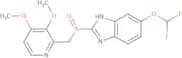
CAS:<p>(R)-(+)-Pantoprazole is a proton pump inhibitor (PPI), which is derived from benzimidazole compounds. Its mode of action involves the selective and irreversible inhibition of the H+/K+ ATPase enzyme system, commonly known as the proton pump, located on the gastric parietal cells. By binding covalently to this enzyme, (R)-(+)-Pantoprazole effectively reduces gastric acid secretion, leading to an increase in gastric pH.</p>Fórmula:C16H15F2N3O4SPureza:Min. 95%Peso molecular:383.4 g/molSitafloxacin
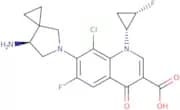
CAS:<p>Sitafloxacin is an antibacterial agent belonging to the fluoroquinolone class of antibiotics, which is synthetically derived from chemical processes involving fluorinated quinolones. Its mode of action involves the inhibition of bacterial DNA gyrase and topoisomerase IV, enzymes crucial for bacterial DNA replication and transcription. By interfering with these enzymes, Sitafloxacin effectively hampers bacterial DNA synthesis, leading to the eventual demise of the bacterial cell.</p>Fórmula:C19H18ClF2N3O3Pureza:Min. 95%Forma y color:SolidPeso molecular:409.81 g/molFamciclovir-d4
CAS:<p>Famciclovir-d4 is a deuterium-labeled antiviral nucleoside analog, which is a synthetic derivative of the guanine analog famciclovir. This compound is sourced through advanced chemical synthesis where deuterium atoms replace specific hydrogen atoms, providing an isotopic label that aids in the tracking and analysis of the pharmaceutical compound within biological systems.</p>Fórmula:C14H19N5O4Pureza:Min. 95%Peso molecular:325.36 g/molAqabamycin C
CAS:Aqabamycin C is an antibiotic compound, which is derived from marine bacteria, specifically, the actinomycete strain found in marine environments. Its mode of action involves the disruption of bacterial cell wall synthesis, making it particularly effective against certain gram-negative bacteria. This antibiotic selectively inhibits pathogens by interfering with their essential cellular processes.Fórmula:C16H10N2O5Pureza:Min. 95%Peso molecular:310.26 g/molClindamycin-2,4-diphosphate
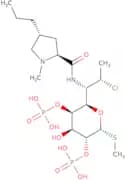
CAS:<p>Clindamycin-2,4-diphosphate is a phosphorylated derivative of the antibiotic clindamycin, which is a semi-synthetic lincosamide antibiotic originally derived from Streptomyces lincolnensis. Its mode of action involves the inhibition of bacterial protein synthesis by binding to the 50S ribosomal subunit, thereby preventing peptide chain elongation during translation. This mechanism effectively disrupts protein production in susceptible bacteria, leading to their growth inhibition or death.</p>Fórmula:C18H35ClN2O11P2SPureza:Min. 95%Peso molecular:584.94 g/molTebufenozide-1-hydroxyethyl
CAS:<p>Tebufenozide-1-hydroxyethyl is an insect growth regulator, which is a synthetic chemical derived from a modified benzoic acid structure. Its mode of action involves mimicking the molting hormone ecdysone, which disrupts the normal development process of insects by inducing premature molting. This specific interference targets lepidopteran larvae, leading to incomplete development and eventual death, thereby controlling pest populations effectively without harming non-target organisms.</p>Fórmula:C22H28N2O3Pureza:Min. 95%Peso molecular:368.5 g/molButafenacil
CAS:<p>Butafenacil is a herbicide, which is a chemical formulation sourced from synthetic compounds. It acts by inhibiting protoporphyrinogen oxidase (PPO), an enzyme critical in the biosynthesis of chlorophyll. This inhibition disrupts the photosynthetic process, leading to the accumulation of reactive oxygen species that cause cell membrane damage and ultimately result in plant death.</p>Fórmula:C17H14ClF3N2O6Pureza:Min. 95%Peso molecular:434.7 g/molAlbendazole-2-aminosulfoxide
CAS:<p>Albendazole-2-aminosulfoxide is a metabolite of the benzimidazole class of antiparasitic agents, which is derived from the biotransformation of albendazole in the liver. As a potent bioactive compound, its mode of action primarily involves the selective binding to the β-tubulin of parasitic organisms, disrupting the polymerization of microtubules necessary for their cellular structures. This disruption impedes vital processes such as glucose uptake and cellular division, leading to parasite death.</p>Fórmula:C10H13N3OSPureza:Min. 95%Peso molecular:223.3 g/molCladospirone bisepoxide
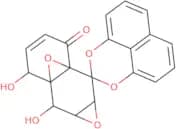
CAS:Cladospirone bisepoxide is a naturally occurring bioactive compound, classified specifically as a fungal metabolite, which is derived from species within the Cladosporium genus. The compound exhibits a complex bisepoxide structure, contributing to its unique chemical properties. Its mode of action involves disrupting microbial cellular processes, displaying potent antimicrobial activity by interfering with the synthesis and functioning of vital cellular components in targeted microorganisms.Fórmula:C20H14O7Pureza:Min. 95%Peso molecular:366.3 g/mol25-Desacetyl rifapentin
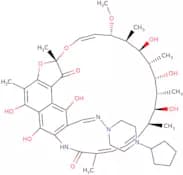
CAS:<p>25-Desacetyl rifapentin is a derivative of rifapentin, an antibiotic belonging to the rifamycin class, sourced from the bacterial species *Amycolatopsis rifamycinica*. This compound functions by inhibiting bacterial DNA-dependent RNA polymerase, which is crucial for transcription in susceptible bacterial strains. By inhibiting this enzyme, 25-Desacetyl rifapentin effectively hampers RNA synthesis, ultimately leading to bacterial cell death.</p>Fórmula:C45H62N4O11Pureza:Min. 95%Forma y color:PowderPeso molecular:834.99 g/molDaclatasvir
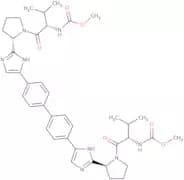
CAS:<p>Daclatasvir is a direct-acting antiviral agent, which is derived from synthetic chemical sources with a specific mode of action targeting the hepatitis C virus (HCV) replication process. It functions as an inhibitor of the HCV nonstructural protein 5A (NS5A), a vital component necessary for viral RNA replication and virion assembly. By binding to two distinct domains of NS5A, Daclatasvir disrupts its ability to function, thereby effectively halting the replication of the viral genome.</p>Fórmula:C40H50N8O6Pureza:Min. 95%Peso molecular:738.88 g/molTenofovir alafenamide (free base)
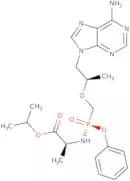
CAS:<p>Tenofovir alafenamide (free base) is a prodrug of tenofovir with action on viral reverse transcriptase to block replication and is used for treating HIV/AIDS and chronic hepatitis B with improved safety profile.</p>Fórmula:C21H29N6O5PPureza:Min. 97 Area-%Forma y color:PowderPeso molecular:476.47 g/mol7-epi-Clindamycin 2-phosphate
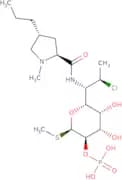
CAS:<p>7-epi-Clindamycin 2-phosphate is a semisynthetic antibiotic derivative, which is sourced from chemical modifications of the natural antibiotic lincomycin. This compound operates by inhibiting bacterial protein synthesis. It achieves this by binding to the 50S subunit of the bacterial ribosome, thereby obstructing the translocation steps in protein elongation.</p>Fórmula:C18H34ClN2O8PSPureza:Min. 95%Forma y color:White to off-white solid.Peso molecular:504.96 g/mol