Antimicrobianos
Los antimicrobianos son agentes que destruyen o inhiben el crecimiento de microorganismos, incluyendo bacterias, virus, hongos y parásitos. Estos compuestos son esenciales en la prevención y tratamiento de infecciones, desempeñando un papel crucial en la medicina, la agricultura y la industria alimentaria. En CymitQuimica, ofrecemos una extensa gama de antimicrobianos de alta calidad y pureza, adecuados para diversas aplicaciones científicas e industriales. Nuestro catálogo incluye antibióticos, antifúngicos, antivirales y desinfectantes, todos diseñados para satisfacer las necesidades de investigación y desarrollo, así como para aplicaciones clínicas y de producción. Con nuestros productos, los profesionales pueden garantizar la eficacia y seguridad en el control de infecciones y en la protección de la salud pública.
Subcategorías de "Antimicrobianos"
- Antibióticos(4.129 productos)
- Antifúngicos(887 productos)
- Antiparasitarios(701 productos)
- Antivirales(764 productos)
Se han encontrado 2423 productos de "Antimicrobianos"
Ordenar por
Pureza (%)
0
100
|
0
|
50
|
90
|
95
|
100
Clindamycin 3-phosphate
CAS:<p>Clindamycin 3-phosphate is an antibiotic prodrug, which is a derivative of clindamycin. It is semisynthetic with a synthetic origin, derived by chemically modifying the natural compound lincomycin obtained from the bacterium *Streptomyces lincolnensis*. The mode of action of Clindamycin 3-phosphate involves the inhibition of bacterial protein synthesis. It binds to the 50S subunit of the bacterial ribosome, thereby interfering with the translocation step in protein elongation, ultimately leading to the suppression of bacterial growth.</p>Fórmula:C18H34ClN2O8PSPureza:Min. 95%Forma y color:White To Off-White SolidPeso molecular:504.96 g/molAripiprazole monohydrate
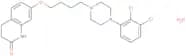
CAS:Producto controlado<p>Aripiprazole monohydrate is an atypical antipsychotic medication, which is synthesized through chemical processes involving aryl piperazine derivatives. It acts primarily as a partial agonist at dopamine D2 and serotonin 5-HT1A receptors and as an antagonist at 5-HT2A receptors, with additional activity at other neurotransmitter receptors. This unique mechanism of action sets it apart from typical antipsychotics that predominantly function as dopamine antagonists.</p>Fórmula:C23H29Cl2N3O3Pureza:Min. 95%Forma y color:PowderPeso molecular:466.4 g/molAmpicillin-sulbactam
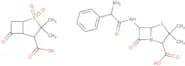
CAS:Ampicillin-sulbactam is a combination antibiotic, which is a pharmaceutical product derived from the penicillin class of beta-lactam antibiotics. Its source involves semi-synthetic processes, combining ampicillin with sulbactam. The mode of action of this compound is through the inhibition of bacterial cell wall synthesis. Ampicillin specifically binds to penicillin-binding proteins, thereby disrupting the cross-linking process essential for maintaining cell wall structural integrity, leading to bacterial lysis. Sulbactam functions as a beta-lactamase inhibitor, enhancing the efficacy of ampicillin by preventing its degradation by beta-lactamase enzymes produced by certain resistant bacterial strains.Fórmula:C25H31N3O9S2Pureza:Min. 95%Peso molecular:581.7 g/molLeptomycin B
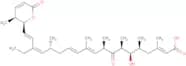
CAS:<p>Leptomycin B is a bacterial secondary metabolite, which is derived from the bacterium Streptomyces sp. This compound is a potent nuclear export inhibitor with a mechanism of action that targets and inhibits the export receptor CRM1 (Chromosomal Maintenance 1), also known as Exportin 1. By binding irreversibly to CRM1, Leptomycin B prevents the nuclear export of proteins and RNA, disrupting the nuclear-cytoplasmic transport essential for cell function.</p>Fórmula:C33H48O6Pureza:Min. 95%Peso molecular:540.73 g/molRetrocyclin-1 trifluoroacetate salt
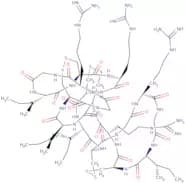
CAS:<p>Retrocyclin-1 trifluoroacetate salt is a synthetic antimicrobial peptide, which is derived from humanized sequences based on the theta-defensin family, originally found in certain primates. Retrocyclin-1 is particularly notable for its circular structure which contributes to its stability and biological activity. The peptide is produced through a process of solid-phase peptide synthesis, designed to mimic the native cyclic conformation of natural theta-defensins.</p>Fórmula:C74H128N30O18S6Pureza:Min. 95%Peso molecular:1,918.4 g/molErythromycin C
CAS:<p>Erythromycin C is a macrolide antibiotic, which is a type of product derived from the bacterium *Saccharopolyspora erythraea*. It functions by binding to the 50S subunit of the bacterial ribosome, inhibiting protein synthesis through blocking translocation of peptidyl-tRNA. This mode of action effectively prevents bacterial growth and replication, making it a potent bacteriostatic agent.</p>Fórmula:C36H65NO13Pureza:Min. 95%Peso molecular:719.9 g/molSancycline hydrochloride
CAS:<p>Sancycline hydrochloride is a tetracycline antibiotic, which is derived from the natural fermentation process of Streptomyces bacteria. The mechanism of action involves the inhibition of protein synthesis by bindin directly to the 30S ribosomal subunit, thereby preventing the attachment of aminoacyl-tRNA to the A site of the ribosome. This action effectively halts the growth of bacteria by impeding protein production, making it bacteriostatic rather than bactericidal.</p>Fórmula:C21H23ClN2O7Pureza:Min. 95%Peso molecular:450.87 g/molDicresulene Hydrate
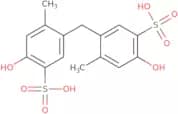
CAS:<p>Dicresulene Hydrate is an anti-inflammatory compound, which is derived from synthetic sources. It functions primarily by inhibiting specific enzymes involved in the inflammatory response. This inhibition reduces the production of pro-inflammatory mediators, thereby mitigating inflammation and associated symptoms.</p>Fórmula:C15H16O8S2•(H2O)xPureza:Min. 95%Forma y color:PowderPeso molecular:388.41 g/molSisomicin sulfate
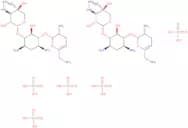
CAS:<p>Sisomicin sulfate is a sulfate salt form of sisomicin with similar action and applications as sisomicin.</p>Fórmula:C19H37N5O7·5H2SO4Pureza:Min. 95%Forma y color:PowderPeso molecular:1,385.45 g/molLaidlomycin
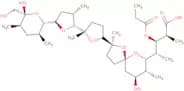
CAS:<p>Laidlomycin is an ionophore compound with a mode of action that disrupts ion gradients in bacterial cells. It is used as a feed additive to improve feed efficiency in cattle.</p>Fórmula:C37H62O12Pureza:Min. 95%Peso molecular:698.88 g/molNocardamine
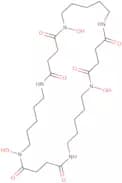
CAS:<p>Nocardamine is a siderophore-based antioxidant, which is naturally derived from the soil-dwelling actinobacteria known as Streptomyces. Its primary mode of action involves the chelation of metal ions, effectively sequestering them and preventing metal-catalyzed oxidation reactions. By binding to iron and other transition metals, Nocardamine mitigates oxidative stress at a cellular level, which could otherwise contribute to cellular damage and dysfunction.</p>Fórmula:C27H48N6O9Pureza:Min. 95%Peso molecular:600.71 g/molPolymyxin B1-I
CAS:<p>Polymyxin B1-I is an antimicrobial peptide, which is sourced from the bacterium *Bacillus polymyxa*. It functions by interacting with and disrupting the bacterial cell membranes. The polypeptide inserts into the phospholipid bilayer, causing increased permeability and eventual cell lysis. This mechanism is particularly effective against Gram-negative bacteria due to the structural composition of their outer membranes.</p>Fórmula:C56H98N16O13Peso molecular:1,203.5 g/molBleomycin A5 hydrochloride
CAS:<p>Bleomycin A5 hydrochloride is an antineoplastic antibiotic, which is derived from the bacterium Streptomyces verticillus. Its mode of action involves binding to DNA and inducing strand breaks through the generation of free radicals, specifically targeting deoxyribose units. This leads to the inhibition of DNA synthesis and cell division, ultimately resulting in cell death.</p>Fórmula:C57H89N19O21S2•HClPureza:Min. 95%Forma y color:PowderPeso molecular:1,177.03 g/molLactoferricin B (4-14) (bovine) trifluoroacetate salt
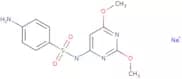
CAS:<p>Lactoferricin B (4-14) (bovine) trifluoroacetate salt is a peptide derivative, which is a fragment derived from bovine lactoferrin. It is obtained by enzymatic digestion of lactoferrin, a glycoprotein with a well-established role in the innate immune system. This specific peptide, Lactoferricin B (4-14), is known for its potent antimicrobial properties, attributed to its amphipathic structure that facilitates the disruption of microbial membranes. Additionally, it can modulate immune responses through interactions with immune cells, thereby influencing inflammatory processes.</p>Fórmula:C70H113N25O13SPureza:Min. 95%Peso molecular:1,544.87 g/molSulfadimethoxine sodium
CAS:<p>Sulfadimethoxine sodium is a sulfonamide antibiotic with action on bacterial folate synthesis inhibition and is used for treating respiratory and urinary tract infections in veterinary medicine.</p>Fórmula:C12H13N4NaO4SPureza:Min. 95%Forma y color:White Off-White PowderPeso molecular:332.31 g/molPefloxacin-d3
CAS:Producto controlado<p>Pefloxacin-d3 is a deuterated fluoroquinolone antibiotic, which is a synthetic derivative of pefloxacin utilized primarily for research purposes. This compound is chemically modified to include deuterium atoms, a stable isotope of hydrogen, thus offering unique properties essential for precise quantitative analysis in pharmacokinetic studies.</p>Fórmula:C17H17D3FN3O3Pureza:Min. 95%Peso molecular:336.38 g/molAzithromycin Dihydrate
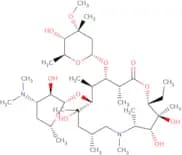
CAS:<p>Azithromycin Dihydrate is a macrolide antibiotic and is used for the treatment of various bacterial infections. It binds to the 23S rRNA of the 50S ribosomal subunit, inhibiting protein synthesis</p>Fórmula:C38H72N2O12·2H2OPureza:Min. 95 Area-%Forma y color:PowderPeso molecular:785.02 g/molNarasin sodium
CAS:Narasin sodium is an ionophore antibiotic, which is a type of compound that facilitates ion transport across biological membranes. It is derived from the fermentation of the bacterium *Streptomyces aureofaciens*. The mode of action involves the disruption of ion gradients in target organisms, specifically inhibiting the growth of certain pathogenic bacteria and protozoa by altering their cellular ionic balance.Fórmula:C43H71NaO11Pureza:Min. 95%Peso molecular:787.02 g/molOfloxacin Q acid
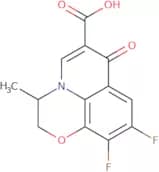
CAS:Ofloxacin Q acid is a quinolone analog, which is a synthetic derivative known for its significant antibacterial properties. This compound is sourced from the chemical synthesis of fluoroquinolone derivatives, designed to enhance reactivity and efficacy in pharmaceutical applications. Ofloxacin Q acid acts by inhibiting bacterial DNA gyrase and topoisomerase IV, enzymes critical for DNA replication, transcription, and repair, thereby leading to the cessation of bacterial growth and replication.Fórmula:C13H9F2NO4Pureza:Min. 95%Peso molecular:281.21 g/molGentamicin C1 pentaacetate
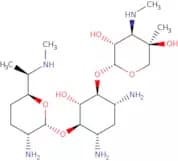
CAS:<p>Gentamicin C1 pentaacetate is an aminoglycoside antibiotic with action on bacterial protein synthesis inhibition and is used for research and analytical applications.</p>Fórmula:C21H43N5O7•(C2H4O2)5Pureza:Min. 90%Forma y color:Off-White PowderPeso molecular:777.86 g/mol