Antimicrobianos
Subcategorías de "Antimicrobianos"
- Antibióticos(4.137 productos)
- Antifúngicos(904 productos)
- Antiparasitarios(700 productos)
- Antivirales(767 productos)
Se han encontrado 2432 productos de "Antimicrobianos"
Ikarugamycin
CAS:Ikarugamycin is a polycyclic nitrogenous antibiotic, which is derived from the fermentation of Streptomyces species, a genus of gram-positive bacteria. It acts primarily by inhibiting clathrin-mediated endocytosis, a cellular process involving the internalization of various macromolecules. This inhibition disrupts cellular uptake mechanisms, which has significant implications for its utility in biological research and therapeutic applications.
Fórmula:C29H38N2O4Pureza:Min. 95%Peso molecular:478.62 g/molCarbophenothion-methyl-sulfoxide
CAS:Carbophenothion-methyl-sulfoxide is an organophosphate sulfoxide compound, which is synthesized as a sulfoxide derivative from other organophosphate precursors. It acts as an acetylcholinesterase inhibitor, disrupting the normal function of the enzyme acetylcholinesterase, which is critical for nerve signal transmission in insects. This disruption leads to an accumulation of acetylcholine and subsequent insect paralysis and death. Carbophenothion-methyl-sulfoxide is primarily used in agricultural settings to target a broad spectrum of insect pests that affect crops. Its application can significantly reduce pest populations, ensuring crop protection and yield preservation. Being a sulfoxide variant, it may possess distinctive physicochemical properties that confer specific environmental behavior and degradation pathways compared to its non-sulfoxide counterparts. Proper handling and application are essential to minimize potential ecological impacts, including non-target species effects and resistance development.Fórmula:C9H12ClO3PS3Pureza:Min. 95%Peso molecular:330.8 g/molErythromycin F
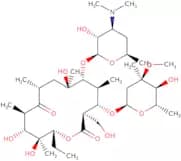
CAS:Erythromycin F is an antibiotic, which is a naturally derived product obtained from the bacterium *Streptomyces erythreus*. It operates by inhibiting bacterial protein synthesis through binding to the 50S ribosomal subunit. This binding effectively blocks the translocation steps in protein elongation, thus preventing the growth and multiplication of susceptible bacteria.Fórmula:C37H67NO14Pureza:Min. 95%Peso molecular:749.93 g/molCeftaroline fosamil acetate
CAS:Cephalosporin antibiotic active against gram-positive bacteria including MRSAFórmula:C24H25N8O10PS4Pureza:Min. 98 Area-%Peso molecular:744.74 g/molRadicinol
CAS:Radicinol is a natural compound, which is a dihydroflavonol primarily sourced from plant origins. This compound is biosynthesized in specific plant species and extracted through meticulous biochemical processes to ensure its purity and efficacy. The mode of action of Radicinol involves the modulation of specific cellular pathways, conferring antioxidative and anti-inflammatory properties. It acts by scavenging free radicals and enhancing cellular resilience against oxidative stress.
Fórmula:C12H14O5Pureza:Min. 95%Peso molecular:238.24 g/molBensulide-oxon
CAS:Bensulide-oxon is a metabolite derived from the organophosphate pesticide bensulide, which is predominantly used in agricultural settings. It forms as a result of environmental or biological processes that involve the oxidation of bensulide. As a potent acetylcholinesterase (AChE) inhibitor, bensulide-oxon disrupts normal neuronal signaling by preventing the breakdown of the neurotransmitter acetylcholine, leading to an accumulation that affects the nervous systems of target organisms.
Fórmula:C14H24NO5PS2Pureza:Min. 95%Peso molecular:381.5 g/molChloraniformethan
CAS:Please enquire for more information about Chloraniformethan including the price, delivery time and more detailed product information at the technical inquiry form on this pageFórmula:C9H7Cl5N2OPureza:Min. 95%Peso molecular:336.4 g/molTebufloquin
CAS:Tebufloquin is an insecticide, which is a synthetic compound designed to target specific pests. It is derived from chemical synthesis with a mode of action that interferes with critical biological pathways in insects, rendering them unable to survive or reproduce. Tebufloquin works primarily by targeting the nervous system of insects, leading to paralysis and eventual death.Fórmula:C17H20FNO2Pureza:Min. 95%Peso molecular:289.34 g/molErythromycin iactobionate
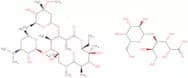
CAS:Erythromycin lactobionate is a macrolide antibiotic, which is derived from the bacterium *Saccharopolyspora erythraea*. Its mode of action involves binding to the 50S subunit of the bacterial ribosome, thereby inhibiting protein synthesis and leading to the suppression of bacterial growth. This mechanism effectively targets gram-positive bacteria and some gram-negative bacteria, making it a crucial agent in the fight against various bacterial infections.
Fórmula:C49H87NO24Pureza:Min. 95%Forma y color:White To Off-White SolidPeso molecular:1,074.21 g/mol2-(1-Hydroxyethyl)-6-ethylaniline
CAS:2-(1-Hydroxyethyl)-6-ethylaniline is an organic chemical compound, which is often utilized as an intermediate in the synthesis of dyes, pigments, and other industrial chemicals. This compound is derived from aromatic amines and undergoes specific chemical reactions that enable its functionality in various synthetic processes.
Fórmula:C10H15NOPureza:Min. 95%Peso molecular:165.23 g/molDeacetylanisomycin
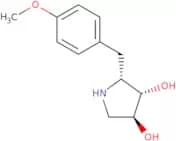
CAS:Deacetylanisomycin is a bacterial metabolite, which is derived from the soil bacterium Streptomyces griseolus. It acts as an inhibitor of protein synthesis by binding to the 60S ribosomal subunit, thus interfering with peptide bond formation during translation. This mode of action is key to its effectiveness in studying the mechanisms of protein synthesis interruption.Fórmula:C12H17NO3Pureza:Min. 95%Forma y color:White To Off-White SolidPeso molecular:223.27 g/mol11-Deoxyfusidic acid
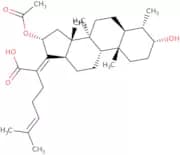
CAS:11-Deoxyfusidic acid is a steroidal antibiotic, which is derived from the fermentation broth of certain strains of fungi, specifically within the Fusidium genus. Its mode of action involves inhibiting bacterial protein synthesis by interacting with elongation factor G (EF-G) on the ribosome, thus disrupting essential processes and impeding bacterial growth.Fórmula:C31H48O5Pureza:Min. 95%Peso molecular:500.71 g/molCefotaxime sodium - Sterile grade
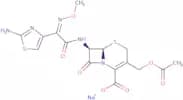
CAS:Cefotaxime sodium - Sterile grade is a cephalosporin antibiotic, which is derived from the beta-lactam class of antibacterial agents. It effectively disrupts bacterial cell wall synthesis by binding to and inhibiting penicillin-binding proteins, leading to cell lysis and death. This mechanism of action is potent against a variety of Gram-positive and Gram-negative bacteria, making it a valuable tool in clinical settings.Fórmula:C16H17N5O7S2·NaPureza:Min. 95%Peso molecular:478.46 g/molHypothemycin
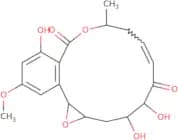
CAS:Hypothemycin is a natural product that serves as a potent inhibitor of protein kinases. It is derived from the fungus Hypomyces subiculosus and belongs to the class of resorcylic acid lactones. Its mode of action involves binding covalently to the ATP-binding site of kinases, leading to the inhibition of their activity. This covalent modification is achieved through the formation of a Michael-type addition with a reactive ene-diene functionality within its structure. By targeting these critical enzymes, hypothemycin disrupts key signaling pathways that are essential for cell growth and proliferation.Pureza:Min. 95%Capsimycin
CAS:Capsimycin is an antibiotic product, which is derived from the bacterium Streptomyces. This compound is part of a class of natural products isolated from soil-dwelling actinomycetes, known for their ability to produce a wide array of bioactive molecules. The mode of action of Capsimycin involves the inhibition of cell wall biosynthesis in susceptible bacterial strains. This specific mechanism disrupts the integrity of the bacterial cell wall, ultimately leading to cell lysis and death, making Capsimycin effective against a variety of Gram-positive bacteria.Fórmula:C30H40N2O6Pureza:Min. 95%Peso molecular:524.60 g/molSartorypyrone B
CAS:Sartorypyrone B is a secondary metabolite, which is isolated from certain fungal species, including those in the genus **Aspergillus**. This compound is part of a class of natural products known as polyketides, characterized by their diverse structural complexity and bioactivity. The mode of action of Sartorypyrone B involves the inhibition of microbial growth and disruption of cellular processes, making it a compound of interest in antibacterial and anticancer research.Fórmula:C30H42O7Pureza:Min. 95%Peso molecular:514.6 g/molPSI-352938
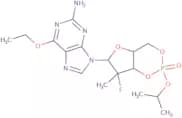
CAS:Please enquire for more information about PSI-352938 including the price, delivery time and more detailed product information at the technical inquiry form on this pageFórmula:C16H23FN5O6PPureza:Min. 95%Peso molecular:431.36 g/mol1-(4-Pentyloxy-3-trifluoromethylphenyl)-3-(pyridine-3-carbonyl)thiourea
CAS:1-(4-Pentyloxy-3-trifluoromethylphenyl)-3-(pyridine-3-carbonyl)thiourea is a synthetic compound employed largely in biochemical research and potential medicinal applications. As a small molecule derivative, it is synthesized through meticulous organic chemistry protocols designed to yield compounds with specific biophysical properties. The compound acts primarily by modulating distinct biochemical pathways, interacting with molecular targets such as enzymes or receptors, thereby influencing biological processes at the cellular level.Fórmula:C19H20F3N3O2SPureza:Min. 95%Peso molecular:411.4 g/molCeftizoxime alapivoxil
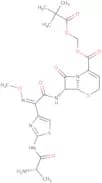
CAS:Ceftizoxime alapivoxil is a prodrug antibiotic, which is derived from ceftizoxime, a third-generation cephalosporin. This semi-synthetic source enables the compound to effectively combat a wide range of bacterial infections by improving oral bioavailability compared to its parent compound. Once administered, ceftizoxime alapivoxil is metabolized in the body to release ceftizoxime, which exerts its antibacterial activity by binding to penicillin-binding proteins (PBPs) on bacterial cell walls. This binding action inhibits the transpeptidation step critical for cell wall synthesis, leading to cell lysis and bacterial death.Pureza:Min. 95%3-Descyano fludioxonil 3-carboxylic acid
CAS:3-Descyano fludioxonil 3-carboxylic acid is a synthetic compound, which is derived from chemical modification of fludioxonil, a well-known fungicide. The compound acts by disrupting fungal cell osmoregulation through inhibition of the protein kinase pathway. This disruption inhibits spore germination and mycelial growth, contributing to its antifungal properties.Fórmula:C12H7F2NO4Pureza:Min. 95%Peso molecular:267.18 g/mol