Antimicrobianos
Subcategorías de "Antimicrobianos"
- Antibióticos(4.137 productos)
- Antifúngicos(904 productos)
- Antiparasitarios(700 productos)
- Antivirales(767 productos)
Se han encontrado 2432 productos de "Antimicrobianos"
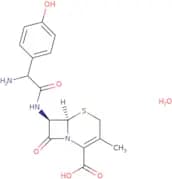
Cefadroxil monohydrate, Antibiotic for Culture Media Use Only
CAS:Cefadroxil is a broad-spectrum bactericidal antibiotic that belongs to the cephalosporin family. It is a semi-synthetic penicillin and inhibits bacterial cell wall synthesis through binding to one or more of the penicillin-binding proteins (PBPs). Cefadroxil monohydrate is used as an antibiotic for culture media and has been proven to be effective against methicillin-resistant Staphylococcus aureus (MRSA). In addition, the drug has been shown to have no significant effect on blood tests or microscopic studies.Fórmula:C16H19N3O6SPureza:Min. 97.0 Area-%Peso molecular:381.40 g/molClindamycin sulfoxide
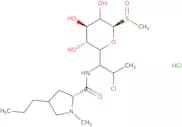
CAS:Clindamycin sulfoxide is a potent metabolite of the lincosamide antibiotic clindamycin, which is derived from the fermentation product of *Streptomyces lincolnensis*. This compound acts by inhibiting bacterial protein synthesis through binding to the 50S ribosomal subunit, thereby interfering with the translocation steps in protein elongation. The mechanism effectively suppresses the growth of a broad range of Gram-positive bacteria, including *Staphylococcus aureus*, *Streptococcus pneumoniae*, and anaerobic microorganisms.Fórmula:C18H33ClN2O6SPureza:Min. 95%Peso molecular:440.98 g/molThiamethoxam-urea
CAS:Thiamethoxam-urea is an advanced agrochemical formulation, which is a synthetic compound derived from the integration of the neonicotinoid insecticide thiamethoxam and the stabilizing agent urea. This product is engineered from laboratory synthesis, where chemical reactions enable the effective combination of these components to ensure optimal stability and efficacy. The mode of action of Thiamethoxam-urea involves neurotoxic interference within the central nervous system of target organisms, primarily acting as an agonist at nicotinic acetylcholine receptors in insects. This disrupts neural transmission, leading to paralysis and eventual death of the pest.Fórmula:C8H10ClN3O2SPureza:Min. 95%Peso molecular:247.7 g/mol1,4-Dihydro-2,3-benzodithiine
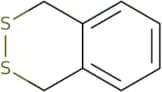
CAS:1,4-Dihydro-2,3-benzodithiine is a synthetic organic compound, which is often utilized in the field of material science and chemical research. It is derived from aromatic dithiins, characterized by a unique heterocyclic structure containing sulfur atoms within its ring system. The compound’s mode of action primarily involves its ability to partake in various cycloaddition reactions due to the electron-rich nature of the dithiine ring, which can facilitate interactions with electrophiles.
Fórmula:C8H8S2Pureza:Min. 95%Peso molecular:168.3 g/molAmidosulfuron-o-desmethyl
CAS:Amidosulfuron-o-desmethyl is a metabolite derivative, which is studied primarily as a secondary product originating from the breakdown of the herbicide amidosulfuron. Synthesized through microbial and environmental degradation processes, it is part of the sulfonylurea class of compounds. The mode of action involves inhibition of the plant enzyme acetolactate synthase (ALS), leading to disrupted synthesis of essential branched-chain amino acids, ultimately affecting plant growth and survival.Fórmula:C8H13N5O7S2Pureza:Min. 95%Peso molecular:355.4 g/molTulathromycin B - 95%
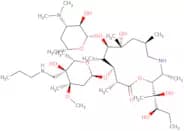
CAS:Inhibitor of protein synthesis; macrolide classFórmula:C41H79N3O12Pureza:Min. 95%Peso molecular:806.08 g/molSofosbuvir impurity M
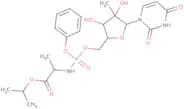
CAS:Sofosbuvir impurity M is a chemical impurity, which is a by-product identified during the synthesis and manufacturing of the antiviral drug Sofosbuvir. This impurity originates from the complex chemical reactions involved in the production of nucleoside analogues, which are crucial in the formation of the active pharmaceutical ingredient.
Fórmula:C22H30N3O10PPureza:Min. 95%Peso molecular:527.5 g/molN4-Methyl-5-(3,4,5-trimethoxybenzyl)-pyrimidine-2,4-diamine
CAS:N4-Methyl-5-(3,4,5-trimethoxybenzyl)-pyrimidine-2,4-diamine is a synthetic organic compound, classified as an antimicrobial agent. This compound is developed through chemical synthesis processes, derived from pyrimidine analogs, and is commonly used in medicinal chemistry and pharmacology research. It operates by inhibiting key enzymes involved in the folic acid pathway, crucial for bacterial growth and proliferation. By targeting this pathway, the compound prevents nucleic acid synthesis, ultimately leading to bacterial cell death.
Fórmula:C15H20N4O3Pureza:Min. 95%Peso molecular:304.34 g/molAliconazole
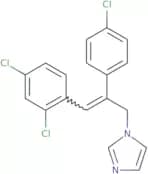
CAS:Aliconazole is a triazole-based antifungal agent, which is a synthetic derivative developed through chemical synthesis. It functions by inhibiting the enzyme lanosterol 14α-demethylase, crucial in the biosynthesis of ergosterol, a vital component of fungal cell membranes. By disrupting ergosterol production, aliconazole compromises the structural integrity of the cell membrane, leading to increased permeability and eventual cell death.
Fórmula:C18H13Cl3N2Pureza:Min. 95%Peso molecular:363.7 g/molNeticonazole hydrochloride
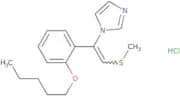
CAS:Neticonazole hydrochloride is an antifungal agent, which is a synthetic imidazole derivative with potent antifungal properties. It is synthesized through a multi-step chemical process in a laboratory setting, designed to enhance its efficacy and stability. Its mode of action involves the inhibition of ergosterol synthesis, a critical component of fungal cell membranes. By hindering this pathway, Neticonazole hydrochloride compromises the integrity and function of the fungal cell membrane, ultimately leading to cell death.
Fórmula:C17H23ClN2OSPureza:Min. 95%Peso molecular:338.9 g/molTriadimenol-tert-butylhydroxy
CAS:Triadimenol-tert-butylhydroxy is a systemic fungicide, originating from synthetic chemical processes, characterized by its ability to inhibit fungal sterol biosynthesis. This sterol biosynthesis disruption occurs through the demethylation of lanosterol or 24-methylene dihydrolanosterol, which impedes the production of ergosterol, a crucial component in fungal cell membranes. The inhibition results in disrupted cell membrane integrity and impaired fungal growth, leading to effective control over a range of plant-pathogenic fungi.
Fórmula:C14H18ClN3O3Pureza:Min. 95%Peso molecular:311.76 g/molClindamycin-2,3-diphosphate
Clindamycin-2,3-diphosphate is a biochemical compound, which is derived from the antibiotic clindamycin, sourced through chemical modification to include diphosphate groups. Its mode of action involves inhibiting bacterial protein synthesis by binding to the 50S ribosomal subunit, thus interfering with peptide chain initiation and elongation. This disruption effectively halts bacterial growth, particularly in Gram-positive bacteria, and is crucial in combatting infections resistant to other antibiotics.Fórmula:C18H35ClN2O11P2SPureza:Min. 95%Peso molecular:584.94 g/molPolymyxin E2 sulfate
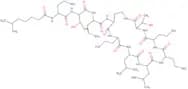
CAS:Polymyxin E2 sulfate is a cyclic polypeptide antibiotic, which is derived from the bacterium *Paenibacillus polymyxa*. This compound acts by disrupting the bacterial cell membrane, specifically interacting with the lipopolysaccharides and phospholipids in the outer membrane, leading to increased permeability and eventual cell death. It primarily targets gram-negative bacteria, making it effective against a range of pathogens responsible for serious infections.
Fórmula:C52H98N16O13Pureza:Min. 95%Peso molecular:1,155.4 g/molRibocil-C (R enantiomer)
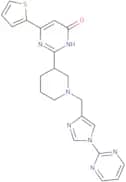
CAS:Ribocil-C (R enantiomer) is a synthetic small molecule, which is designed as an antibacterial agent specifically targeting the bacterial riboflavin synthesis pathway. This compound is derived from chemical synthesis methodologies, tailored to exploit the protonation state and steric configuration unique to the R enantiomer. Ribocil-C functions by selectively inhibiting riboswitch-mediated regulation in the flavin mononucleotide (FMN) riboswitch, disrupting the synthesis of riboflavin in bacteria. This targeted inhibition disrupts essential metabolic processes, critically hampering bacterial growth and viability.
Fórmula:C21H21N7OSPureza:Min. 95%Peso molecular:419.5 g/molELQ-300
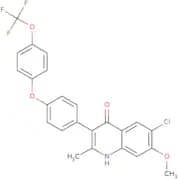
CAS:ELQ-300 is a potent antimalarial compound, which is a synthetic quinolone derivative. As a product of chemical synthesis and medicinal chemistry, it targets the electron transport chain in the mitochondrial cytochrome bc1 complex. This compound acts by selectively inhibiting the cytochrome bc1 complex, a critical component of the parasite's mitochondrial respiratory chain, thus preventing ATP synthesis and ultimately leading to the death of the parasite.Fórmula:C24H17ClF3NO4Pureza:Min. 95%Peso molecular:475.8 g/molPseudomonic acid F
CAS:Pseudomonic acid F is a naturally occurring secondary metabolite, which is derived from the bacterium *Pseudomonas fluorescens*. Its mode of action involves the inhibition of bacterial protein synthesis by targeting the bacterial isoleucyl-tRNA synthetase enzyme. This inhibition disrupts the addition of isoleucine to the growing polypeptide chain, effectively impeding bacterial growth and proliferation.Fórmula:C24H40O9Pureza:Min. 95%Peso molecular:472.60 g/molChlortetracycline-13C-d3 hydrochloride
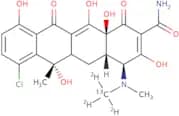
Producto controladoChlortetracycline-13C-d3 hydrochloride is a stable isotope-labeled antibiotic with action on bacterial protein synthesis inhibition and is used for research in bacterial resistance and analytical studies.Fórmula:C2113CH21D3Cl2N2O8Forma y color:PowderPeso molecular:519.35 g/molImipenem Monohydrate, Antibiotic for Culture Media Use Only
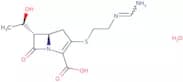
CAS:Imipenem acts as an antimicrobial through inhibiting cell wall synthesis of various gram-positive and gram-negative bacteria. It remains very stable in the presence of beta-lactamase (both penicillinase andcephalosporinase) produced by some bacteria, and is a strong inhibitor of beta-lactamases from some gram-negative bacteria that are resistant to most beta-lactam antibiotics.Fórmula:C12H19N3O5SPureza:Min. 98.0 Area-%Peso molecular:317.36 g/molML303
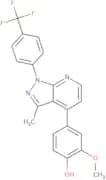
CAS:Please enquire for more information about ML303 including the price, delivery time and more detailed product information at the technical inquiry form on this pageFórmula:C21H16F3N3O2Pureza:Min. 95%Peso molecular:399.4 g/molBRL 42715
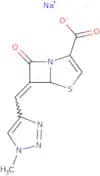
CAS:BRL 42715 is an antibacterial agent, which is a synthetic compound with a unique mechanism of action. This compound is derived from rational drug design aimed at targeting specific bacterial enzymes critical for cell wall synthesis. By irreversibly inhibiting these enzymes, BRL 42715 disrupts the bacterial cell wall formation, leading to cell lysis and death.Fórmula:C10H7N4NaO3SPureza:Min. 95%Peso molecular:286.24 g/mol