Antimicrobianos
Subcategorías de "Antimicrobianos"
- Antibióticos(4.505 productos)
- Antifúngicos(939 productos)
- Antiparasitarios(807 productos)
- Antivirales(1.057 productos)
Se han encontrado 2643 productos de "Antimicrobianos"
Momfluorothrin
CAS:Momfluorothrin is a synthetic pyrethroid insecticide, which is a man-made derivative based on the natural pyrethrins. It functions primarily as a neurotoxic agent, targeting the sodium channels in the nervous system of insects, leading to paralysis and eventual death. This specific mode of action involves delaying the closing of the sodium channels, resulting in prolonged nerve impulses.Fórmula:C19H19F4NO3Pureza:Min. 95%Peso molecular:385.4 g/molFosravuconazole L-lysine ethanolate
CAS:Fosravuconazole L-lysine ethanolate is an antifungal prodrug, which is a derivative of the widely used antifungal agent ravuconazole. This compound is synthesized through chemical modification to enhance its bioavailability and aqueous solubility, addressing limitations found in its parent compound. Fosravuconazole is designed to undergo in vivo conversion to ravuconazole, its active form, by enzymatic processes within the body.
Fórmula:C31H40F2N7O8PSPureza:Min. 95%Peso molecular:739.7 g/molTylosin D
CAS:Tylosin D is an antibiotic product, which is derived from the bacterium *Streptomyces fradiae*. Its mode of action involves binding to the 50S subunit of the bacterial ribosome, thereby inhibiting protein synthesis essential for bacterial growth and replication. This mechanism is particularly effective against Gram-positive bacteria and mycoplasma species, making it a crucial agent in combatting infections in the veterinary field.
Fórmula:C46H79NO17Pureza:Min. 95%Peso molecular:918.1 g/molPenipurdin A
CAS:Please enquire for more information about Penipurdin A including the price, delivery time and more detailed product information at the technical inquiry form on this pageFórmula:C18H16O6Pureza:Min. 95%Peso molecular:328.3 g/molHerbimycin
CAS:Herbimycin is an antibiotic, which is a natural product derived from Streptomyces bacteria. It functions primarily as a tyrosine kinase inhibitor, disrupting cellular signaling pathways by binding to the ATP-binding site of kinases and inhibiting phosphorylation events. This mode of action makes it an effective tool for scientists studying signal transduction processes and oncogenic transformation.Fórmula:C30H42N2O9Pureza:Min. 95%Peso molecular:574.66 g/molAcephate d3
CAS:Acephate d3 is an isotopically labeled organophosphorus insecticide, which is a synthetic chemical compound used primarily for its insecticidal properties. It is derived by incorporating deuterium, a stable hydrogen isotope, into the molecular structure of acephate. The inclusion of deuterium isotopes is instrumental in tracing and studying the biochemical pathways and metabolic degradation of acephate within target organisms and ecosystems.
Fórmula:C4H10NO3PSPureza:Min. 95%Peso molecular:186.19 g/molParvodicin C2
CAS:Parvodicin C2 is a natural antibiotic compound, which is derived from the fermentation of specific actinomycete strains. This antibiotic functions through the inhibition of bacterial protein synthesis, specifically targeting the ribosomal subunits and leading to disruption in the peptide chain elongation process. The targeted mode of action allows it to effectively limit the replication and survival of susceptible bacterial strains.
Fórmula:C83H88Cl2N8O29Pureza:Min. 95%Peso molecular:1,732.5 g/molAtherosperminine
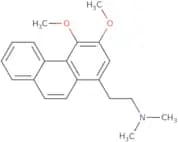
CAS:Producto controladoAtherosperminine is an alkaloid compound, which is a bioactive chemical derived from plants. Specifically, it is sourced from members of the Lauraceae family, such as Atherosperma moschatum. This compound exhibits a range of pharmacological activities that are of significant interest to researchers. The mode of action of atherosperminine involves interactions with various biological pathways, potentially affecting physiological processes and exhibiting therapeutic effects.Fórmula:C20H23NO2Pureza:Min. 95%Peso molecular:309.4 g/mol3-(2,4,6-Trimethylphenylsulfonyl)-1,2,4-triazole
CAS:3-(2,4,6-Trimethylphenylsulfonyl)-1,2,4-triazole is a sulfonyl-triazole reagent, which is widely utilized in the field of organic chemistry. This compound is synthetically derived, serving as an important tool in the construction of sulfonyl-protected intermediates and heterocyclic structures. Its mode of action involves acting as a versatile electrophile in conditions favoring nucleophilic attack, facilitating the formation of carbon-nitrogen and carbon-sulfur bonds.Fórmula:C11H13N3O2SPureza:Min. 95%Peso molecular:251.31 g/molDDD107498 succinate
CAS:DDD107498 succinate is a potent antimalarial agent, which is a synthetic compound discovered through target-based drug screening. This compound is derived from intensive research initiatives focusing on eliminating malaria by disrupting a unique biochemical pathway in the parasite. It primarily acts by inhibiting the translation elongation factor 2, a critical protein that facilitates protein synthesis within the Plasmodium species responsible for malaria. By targeting this specific mechanism, the compound effectively halts the growth and replication of the parasite within the human bloodstream.Fórmula:C31H37FN4O6Pureza:Min. 95%Peso molecular:580.6 g/molClofoctol
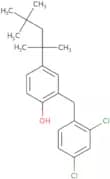
CAS:Clofoctol is an antibacterial agent, which is derived from synthetic origins, specifically designed for therapeutic applications in bacterial infections. Its mode of action involves inhibiting bacterial protein synthesis, thereby preventing the growth and proliferation of harmful bacteria. This compound is particularly effective against Gram-positive bacteria.
Fórmula:C21H26Cl2OPureza:Min. 95%Peso molecular:365.34 g/molAmrubicin hydrochloride
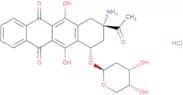
CAS:Amrubicin hydrochloride is an anthracycline chemotherapeutic agent, which is a synthetic anthracycline derivative derived from reductive amination. It functions primarily by intercalating into DNA and inhibiting topoisomerase II, an enzyme crucial to DNA replication. This mode of action disrupts DNA synthesis, leading to apoptosis in rapidly proliferating cancer cells.
Fórmula:C25H25NO9•HClPureza:Min. 95%Peso molecular:519.93 g/molRibocil B
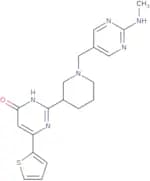
CAS:Ribocil B is an analog of riboflavin, functioning as a synthetic antibiotic. It is derived from chemical synthesis, designed to mimic the structure of natural riboflavin analogs which are crucial for bacterial growth. Ribocil B acts by specifically inhibiting riboswitches, a type of non-coding RNA that regulates gene expression in response to small molecules. This inhibition disrupts RNA synthesis in bacteria by targeting the flavin mononucleotide (FMN) riboswitch.
Fórmula:C19H22N6OSPureza:Min. 95%Peso molecular:382.5 g/mol(E)-Cefotaxime
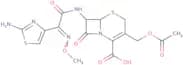
CAS:(E)-Cefotaxime is a third-generation cephalosporin antibiotic, which is derived from the actinomycete mold Acremonium. Its mode of action involves inhibiting bacterial cell wall synthesis by binding to penicillin-binding proteins, leading to cell lysis and death. This mechanism is highly effective against a wide range of Gram-positive and Gram-negative bacteria, including strains resistant to earlier cephalosporins and penicillins.Fórmula:C16H17N5O7S2Pureza:Min. 95%Peso molecular:455.5 g/molBiotinyl tobramycin amide
CAS:Biotinyl tobramycin amide is a biotinylated form of the antibiotic tobramycin, which is derived from the actinobacterium Streptomyces tenebrarius. It features a tobramycin core, a potent aminoglycoside antibiotic, chemically linked to biotin. This modification allows for the specific attachment to avidin or streptavidin-labeled probes due to the strong biotin-streptavidin interaction, facilitating various labeling and detection techniques in research.Fórmula:C28H51N7O11SPureza:Min. 95%Peso molecular:693.81 g/molHBV-IN-4
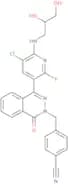
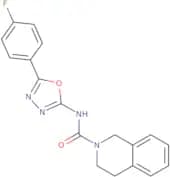
CAS:HBV-IN-4 is an antiviral compound that serves as a potent and selective inhibitor of hepatitis B virus (HBV). It is derived from chemical synthesis with a focus on targeting the viral replication machinery. The mode of action involves interrupting the HBV lifecycle by inhibiting the functioning of viral polymerase, thereby preventing the synthesis of viral DNA and subsequent viral propagation.
Fórmula:C24H19ClFN5O3Pureza:Min. 95%Peso molecular:479.9 g/mol4''-(p-Fluorobenzyl)tylosin A
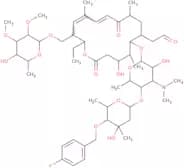
CAS:4''-(p-Fluorobenzyl)tylosin A is a semi-synthetic derivative of tylosin, which is a macrolide antibiotic produced by fermentation of the bacterium *Streptomyces fradiae*. This compound demonstrates a modified structure by incorporating a p-Fluorobenzyl group at the 4'' position of tylosin, enhancing its pharmaceutical properties. The mode of action involves binding to the 50S subunit of the bacterial ribosome, thereby inhibiting protein synthesis and exerting its bacteriostatic effects against Gram-positive bacteria.Fórmula:C53H82FNO17Pureza:Min. 95%Peso molecular:1,024.2 g/molCyclosporin L
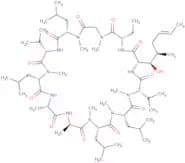
CAS:Cyclosporin L is an immunosuppressive agent, which is a cyclic polypeptide derived from the soil fungus Tolypocladium inflatum. It primarily functions by inhibiting the activity of calcineurin, a key phosphatase involved in the activation of T-cells. This inhibition prevents the transcription of interleukin-2 and other cytokines critical for T-cell proliferation.
Fórmula:C61H109N11O12Pureza:90%MinPeso molecular:1,188.59 g/molPhenamacril
CAS:Phenamacril is a synthetic fungicide, which is derived from chemical synthesis processes with a unique mode of action that targets fungal signaling pathways. It operates by inhibiting the myosin-5 ATPase activities within filamentous fungi, disrupting key cellular functions and effectively halting fungal growth.
Fórmula:C12H12N2O2Pureza:Min. 95%Peso molecular:216.24 g/molMBX-4132
CAS:Please enquire for more information about MBX-4132 including the price, delivery time and more detailed product information at the technical inquiry form on this pageFórmula:C18H15FN4O2Pureza:Min. 95%Peso molecular:338.3 g/mol