Antimicrobianos
Subcategorías de "Antimicrobianos"
- Antibióticos(4.506 productos)
- Antifúngicos(939 productos)
- Antiparasitarios(807 productos)
- Antivirales(1.057 productos)
Se han encontrado 2643 productos de "Antimicrobianos"
Didesethyl chloroquine hydroxyacetamide-d4
CAS:Didesethyl chloroquine hydroxyacetamide-d4 is a deuterated pharmaceutical compound, which serves as a stable isotope-labeled analog. Such compounds are often synthesized in specialized laboratories for research purposes, providing insightful data on pharmacokinetics and metabolic pathways. The deuteration, involving the replacement of hydrogen atoms with deuterium, offers enhanced accuracy in mass spectrometry analysis due to its unique isotopic signature.
Fórmula:C16H20ClN3O2Pureza:Min. 95%Peso molecular:325.82 g/mol2-(2-Methyl-4-nitro-1H-imidazol-1-yl)ethyl benzoate
CAS:2-(2-Methyl-4-nitro-1H-imidazol-1-yl)ethyl benzoate is a synthetic chemical compound, classified as an organic ester. It originates from the reaction between benzoic acid and a derivative of nitroimidazole, a class of compounds known for their bioactivity. The molecular framework includes a benzoate ester linked to an imidazole ring, which is substituted with nitro and methyl groups, contributing to its unique characteristics.
Fórmula:C13H13N3O4Pureza:Min. 95%Peso molecular:275.26 g/molCefoxitin EP impurity B
Cefoxitin EP impurity B is a chemical reference standard, which is derived from the synthesis and purification processes involved in producing Cefoxitin. As an impurity standard, its primary role is to serve as a benchmark for quality control in pharmaceutical formulations. The mode of action of Cefoxitin EP impurity B involves the structural analysis and quantification of impurity levels, ensuring that the primary pharmaceutical products meet necessary safety and efficacy criteria.Fórmula:C16H17N3O7S2Pureza:Min. 95%Peso molecular:427.45 g/molAureonitol
CAS:Aureonitol is a fungal metabolite, which is sourced from specific species of fungi, primarily within the Aspergillus and Penicillium genera. This is a naturally occurring compound that functions as an antibiotic, disrupting the biosynthesis processes within certain microorganisms. It achieves this action by inhibiting key enzymes involved in cell wall formation or by interfering with nucleic acid pathways, thereby impeding the growth and proliferation of bacterial cells.Fórmula:C13H18O2Pureza:Min. 95%Peso molecular:206.28 g/molDimethenamid-ethane sulfonic acid (esa) sodium
CAS:Dimethenamid-ethane sulfonic acid (ESA) sodium is a herbicide metabolite, which is derived from Dimethenamid, an active ingredient in pre-emergent herbicides used for controlling grass and broadleaf weeds. The compound is formed through the metabolic degradation of the parent herbicide in soil and plants, largely influenced by microbial activity and environmental conditions.
Fórmula:C12H18NNaO5S2Pureza:Min. 95%Peso molecular:343.4 g/molBromobutide-desbromo
CAS:Bromobutide-desbromo is a chemical compound that functions as a selective herbicide. It is derived from synthetic sources and is specifically formulated to interfere with photosynthesis in target plants. The mode of action of bromobutide-desbromo involves inhibiting photosystem II, a crucial component of the photosynthetic electron transport chain in plants. This inhibition disrupts the energy conversion process, leading to a decrease in ATP and NADPH production, which are essential for plant growth.
Fórmula:C15H23NOPureza:Min. 95%Peso molecular:233.35 g/molStreptidine
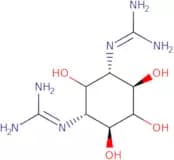
CAS:Streptidine is an amino cyclitol, which is a component of certain aminoglycoside antibiotics. This compound originates from the actinomycete *Streptomyces griseus*, a soil bacterium known for its ability to produce a variety of antibiotics. Streptidine plays a crucial role in the mechanism of aminoglycosides by contributing to the binding affinity of these antibiotics to the bacterial ribosome.Fórmula:C8H18N6O4Pureza:Min. 95%Peso molecular:262.13895CAP 3
CAS:CAP 3 is an enzymatic product, derived from genetically engineered microorganisms, known for its specificity and efficiency in catalyzing biochemical reactions. This enzyme functions via the hydrolysis of specific chemical bonds, promoting reaction pathways that enhance productivity in various industrial and laboratory settings.
Fórmula:C52H82N6O11Pureza:Min. 95%Peso molecular:967.20 g/molTri-O-benzyl FR 900098
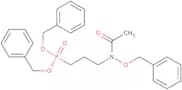
CAS:Tri-O-benzyl FR 900098 is a chemical compound, often referenced in biochemical research contexts. It is a synthetic derivative that originates from complex chemical synthesis, involving multiple benzylation steps to modify the original molecular framework. This structural transformation lends the compound unique chemical properties.
Fórmula:C26H30NO5PPureza:Min. 95%Peso molecular:467.49 g/molPyrenophorin
CAS:Pyrenophorin is a polyketide metabolite, which is derived from certain fungi, specifically from the genus Pyrenophora. This compound demonstrates its biological efficacy through its unique mode of action as an antimicrobial agent, interfering with cellular processes in target microorganisms, leading to their inhibition or death.Fórmula:C16H20O6Pureza:Min. 95%Peso molecular:308.33 g/molBAY-Y 3118
CAS:BAY-Y 3118 is a synthetic compound specifically designed as a radiolabeled dopamine D4 receptor antagonist. It is sourced from chemical synthesis processes that enable modification of molecular structures to target specific biological receptors. The mode of action of BAY-Y 3118 involves binding to the D4 subtype of dopamine receptors, which are G protein-coupled receptors located in the central nervous system. This binding is typically labeled with a radiolabel to facilitate tracking and visualization in biological assays.Fórmula:C20H21ClFN3O3Pureza:Min. 95%Peso molecular:405.8 g/molCefluprenam
CAS:Cefluprenam is a cephalosporin antibiotic, which is a synthetic derivative of the fungus Cephalosporium. It functions by inhibiting bacterial cell wall synthesis, effectively disrupting the peptidoglycan cross-linking process essential for bacterial structural integrity. This inhibition leads to cell lysis and ultimately bacterial death.
Fórmula:C20H25FN8O6S2Pureza:Min. 95%Peso molecular:556.60 g/molSofosbuvir impurity N
CAS:Sofosbuvir impurity N is a chemical impurity found as a byproduct in the synthesis of sofosbuvir, a nucleotide analog used as an antiviral drug. Its origin is directly linked to the complex chemical processes involved in producing the active pharmaceutical ingredient. This impurity is specifically identified and analyzed to ensure the purity and efficacy of the sofosbuvir drug. Impurities like these are of significant interest in pharmaceutical development, as they provide insights into the synthetic pathways and potential degradation products.
Fórmula:C20H25FN3O9PPureza:Min. 95%Peso molecular:501.4 g/molAcetyl-pepstatin
CAS:Acetyl-pepstatin is a potent protease inhibitor, which is synthesized from a naturally occurring peptide source. Its primary mode of action involves the inhibition of aspartic proteases, a class of enzymes responsible for protein digestion and processing within biological systems. By specifically targeting these enzymes, Acetyl-pepstatin effectively halts the hydrolytic activity, which makes it an invaluable tool in the study of protease function and the regulation of proteolytic pathways.Fórmula:C31H57N5O9Pureza:Min. 95%Peso molecular:643.8 g/molTylosin D
CAS:Tylosin D is an antibiotic product, which is derived from the bacterium *Streptomyces fradiae*. Its mode of action involves binding to the 50S subunit of the bacterial ribosome, thereby inhibiting protein synthesis essential for bacterial growth and replication. This mechanism is particularly effective against Gram-positive bacteria and mycoplasma species, making it a crucial agent in combatting infections in the veterinary field.
Fórmula:C46H79NO17Pureza:Min. 95%Peso molecular:918.1 g/mol(E)-Ceftriaxone disodium
CAS:(E)-Ceftriaxone disodium is a broad-spectrum cephalosporin antibiotic, which is derived from the fermentation of the fungus Acremonium. This semi-synthetic antibiotic works by inhibiting bacterial cell wall synthesis. It achieves this by binding to the penicillin-binding proteins (PBPs) in the bacterial cell membrane, which ultimately interferes with peptidoglycan cross-linking, leading to cell lysis and death.
Fórmula:C18H16N8Na2O7S3Pureza:Min. 95 Area-%Peso molecular:598.54 g/molAmpicillin amino-benzeneacetaldehyde
CAS:Ampicillin amino-benzeneacetaldehyde is a specialized biochemical compound, which is a derivative of the well-known antibiotic ampicillin. This compound serves as an advanced progenitor in the synthesis of tailored antibiotics, stemming from both natural and semi-synthetic sources. The primary mode of action for this derivative involves its transformation into active ampicillin forms, which then inhibit bacterial cell wall synthesis by binding to penicillin-binding proteins. This mechanism effectively compromises the structural integrity of bacterial cells, leading to their eventual lysis.Fórmula:C24H26N4O5SPureza:Min. 95%Peso molecular:482.6 g/mol21-Norrapamycin
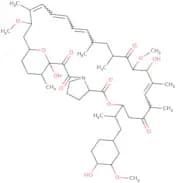
CAS:21-Norrapamycin is a macrocyclic lactone antibiotic, which is derived from the bacterium Streptomyces hygroscopicus. Its chemical structure is closely related to that of rapamycin, a well-known immunosuppressant. The mode of action of 21-Norrapamycin involves the inhibition of the mechanistic target of rapamycin (mTOR) signaling pathway. By binding to the FK506-binding protein 12 (FKBP12), it forms a complex that then inhibits mTOR, a crucial regulator of cell growth, proliferation, and survival.
Fórmula:C50H77NO13Pureza:Min. 95%Peso molecular:900.1 g/molMomfluorothrin
CAS:Momfluorothrin is a synthetic pyrethroid insecticide, which is a man-made derivative based on the natural pyrethrins. It functions primarily as a neurotoxic agent, targeting the sodium channels in the nervous system of insects, leading to paralysis and eventual death. This specific mode of action involves delaying the closing of the sodium channels, resulting in prolonged nerve impulses.Fórmula:C19H19F4NO3Pureza:Min. 95%Peso molecular:385.4 g/molBesifloxacin hydrochloride
CAS:Besifloxacin hydrochloride is a fourth-generation fluoroquinolone antibiotic, which is a synthetic derivative of the broad-spectrum quinolone class. Its origin can be traced to laboratory chemical synthesis, tailored specifically to target bacterial infections in ocular applications. The mode of action of besifloxacin involves the inhibition of bacterial enzymes DNA gyrase and topoisomerase IV. These enzymes play crucial roles in bacterial DNA replication, transcription, repair, and recombination. By disrupting these processes, besifloxacin effectively impedes bacterial cell division, leading to the death of the bacterial cells.Fórmula:C19H21ClFN3O3·HClPureza:Min. 95%Peso molecular:430.3 g/mol