


Antiparasitarios
Los antiparasitarios son compuestos diseñados para tratar y prevenir infecciones parasitarias mediante la inhibición del crecimiento y la supervivencia de los parásitos. Esta categoría incluye una variedad de agentes antiparasitarios destinados exclusivamente para uso en laboratorio y no para el consumo humano. Estos productos son esenciales para fines de investigación, permitiendo a los científicos estudiar los ciclos de vida de los parásitos, los mecanismos de acción y el desarrollo de resistencia. El uso de antiparasitarios en entornos de laboratorio ayuda en el descubrimiento y la optimización de nuevos tratamientos para enfermedades parasitarias, contribuyendo a los avances en parasitología médica y veterinaria. Los investigadores dependen de estos productos para mejorar su comprensión de las infecciones parasitarias y desarrollar terapias más efectivas.
Se han encontrado 704 productos de "Antiparasitarios"
Ordenar por
Pureza (%)
0
100
|
0
|
50
|
90
|
95
|
100
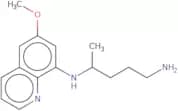
Primaquine
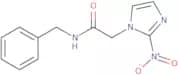
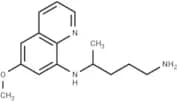
CAS:<p>Primaquine is an antimalarial agent with action on Plasmodium hypnozoites in the liver and is used for preventing relapses of malaria caused by Plasmodium vivax and Plasmodium ovale.</p>Fórmula:C15H21N3OPureza:Min. 95%Forma y color:PowderPeso molecular:259.35 g/molBenznidazole
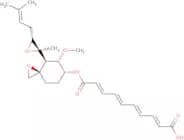
CAS:<p>Benznidazole is an antiprotozoal agent and is used for the treatment of Chagas disease. It generates free radicals that damage the DNA and other cellular components of the parasite.</p>Fórmula:C12H12N4O3Pureza:Min. 97 Area-%Forma y color:White PowderPeso molecular:260.25 g/molFumagillin
CAS:<p>Inhibits methionine aminopeptidase-2; anti-angiogenic; antibiotic</p>Fórmula:C26H34O7Pureza:Min. 95%Forma y color:White PowderPeso molecular:458.54 g/molHexadecylphosphocholine
CAS:<p>Hexadecylphosphocholine, better known as miltefosine, belongs to the group of phospholipids. The long alkyl chain and a polar group of a molecule proved to be essential for antitumor activity, especially to cure breast cancer cells. The apoptotic process takes place in the plasma membrane, where molecules are inserted and then influence signaling pathways. Moreover, during preclinical studies hexadecylphosphocholine (He-PC) found to be highly effective in inhibiting the growth of chemically induced rat mammary carcinomas, and even a high percentage of the tumors regressed completely. The He-PC has many more applications such as antifungal agent, antiprotozoal drug, protein kinase inhibitor or immunomodulator. Even though miltefosine was originally developed in the 1980s as an anti-cancer agent, new studies have demonstrated activity against Leishmania parasites and neoplastic cells, and due to broad spectrum of antimicrobial effects, it is recommended as a first line treatment for free-living amebae infections.</p>Fórmula:C21H46NO4PPeso molecular:407.57 g/molRef: 3D-M-7200
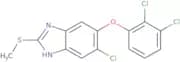
1gA consultar5gA consultar10gA consultar500mgA consultar2500mgA consultar-Unit-ggA consultarTriclabendazole
CAS:<p>Triclabendazole is a benzimidazole anthelmintic with action on liver flukes by disrupting their microtubule formation and is used for treating fascioliasis in humans and animals.</p>Fórmula:C14H9Cl3N2OSPureza:Min. 95%Forma y color:White PowderPeso molecular:359.66 g/molMebendazole
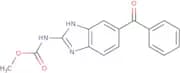
CAS:<p>Mebendazole is a benzimidazole anthelmintic with action on microtubule formation in parasitic worms and is used for treating intestinal worm infections like threadworms and roundworms.</p>Fórmula:C16H13N3O3Pureza:99.0 To 101.0%Forma y color:PowderPeso molecular:295.29 g/molFenbendazole
CAS:<p>Fenbendazole is a benzimidazole anthelmintic with action on microtubule formation in parasites and is used for treating gastrointestinal parasites in animals.</p>Fórmula:C15H13N3O2SPureza:Min. 97.5 Area-%Forma y color:PowderPeso molecular:299.35 g/molN-Desethyl Amodiaquine-d5 DiHCl
CAS:<p>N-Desethyl Amodiaquine-d5 DiHCl is a deuterated compound of N-Desethyl Amodiaquine DiHCl. N-Desethyl Amodiaquine DiHCl has a CAS number of 79352-78-6. N-Desethyl amodiaquine dihydrochloride is an antiparasitic agent,is the major biologically active Amodiaquine metabolite .</p>Fórmula:C18H15D5Cl3N3OForma y color:SolidPeso molecular:405.76Tafenoquine
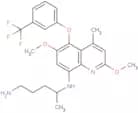
CAS:<p>Tafenoquine (WR 238605) is an antimalarial prophylactic agent with schizonticidal activity, useful in hemolytic anemia research.</p>Fórmula:C24H28F3N3O3Pureza:99.56%Forma y color:SolidPeso molecular:463.49Primaquine
CAS:<p>Primaquine is an antimalarial compound and a gametocytocide, clearing liver schizonts and dormant forms of Plasmodium vivax.</p>Fórmula:C15H21N3OPureza:98.62%Forma y color:SolidPeso molecular:259.35Dehydrocorydaline nitrate
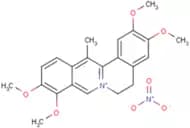
CAS:<p>DHC curbs antibody and cell-mediated allergies, inhibits mitochondrial potential in macrophages, and has antinociceptive, anti-inflammatory effects.</p>Fórmula:C22H24N2O7Pureza:99.79% - 99.92%Forma y color:SolidPeso molecular:428.44(+)-Isopulegol
CAS:<p>(+)-Isopulegol is a monoterpenoid from Mentha canadensis L.</p>Fórmula:C10H18OPureza:99.885%Forma y color:SolidPeso molecular:154.25Farnesal
CAS:Producto controlado<p>Applications Farnesal is a reagent in the synthesis of farnesylpyrophosphate analogues which acts as bisubstrate inhibitors of protein farnesyltransferase and has antiparasitics properties.<br>References Duez, S. et al.: Bioorg. Med. Chem., 18, 543 (2010);<br></p>Fórmula:C15H24OForma y color:NeatPeso molecular:220.35Amopyroquine
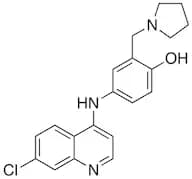
CAS:Producto controlado<p>Applications Antimalarial agent. The compound showed antimalarial activity similar to that of Chloroquine.<br>References Desjardins, R., et al.: Antimicrob. Agents Chemother., 16, 710 (1979), McKie, J., et al.: J. Med. Chem., 41, 1367 (1998), Gozalbes, R., et al.: J. Pharm. Pharmacol., 52, 111 (1999), Marrero-Ponce, Y., et al.: Bioorg. Med. Chem., 13, 1293 (2005),<br></p>Fórmula:C20H20ClN3OForma y color:NeatPeso molecular:353.855-Amino-1-(1,1-dimethylethyl)-3-[(3-methylphenyl)methyl]-1H-pyrazole-4-carbonitrile
Producto controlado<p>Applications 5-Amino-1-(1,1-dimethylethyl)-3-[(3-methylphenyl)methyl]-1H-pyrazole-4-carbonitrile is an derivative in the synthesis of small molecule inhibitors of calcium-dependent protein kinase 1 to prevent infection by toxoplasma gondii.<br>References Lourido, S., et al.: J. Med. Chem., 56, 3068 (2013);<br></p>Fórmula:C17H22N4Forma y color:NeatPeso molecular:282.383Methyl 2-((1R,3R,4''S,5R,5'S,7R)-Dispiro[adamantane-2,3'-[1,2,4]trioxolane-5',1''-cyclohexan]-4''-yl)acetate
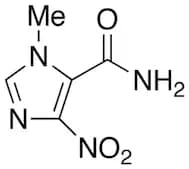
CAS:Producto controlado<p>Applications Methyl 2-((1R,3R,4''S,5R,5'S,7R)-dispiro[adamantane-2,3'-[1,2,4]trioxolane-5',1''-cyclohexan]-4''-yl)acetate is an intermediate for the synthesis of Arterolane p-Toluenesulfonic Acid (A614161), which is an antimalaria agent.<br>References Valecha, N., et al.: Clin Infect Dis. 55, 663 (2012); Patil, C. Y., et al.: Ann Med Health Sci Res. 4, 466 (2014)<br></p>Fórmula:C19H28O5Forma y color:NeatPeso molecular:336.421-Methyl-4-nitro-1H-imidazole-5-carboxamide
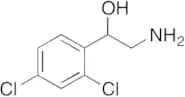
CAS:Producto controlado<p>Applications A substituted imidazolothiazole derivative as possible antiparasitic agents.<br>References Sarasin, J., et al.: Helv. Chim. Acta, 7, 713 (1924),<br></p>Fórmula:C5H6N4O3Forma y color:NeatPeso molecular:170.13(±)-2-(2,4-Dichlorophenyl)-2-hydroxyethylamine
CAS:Producto controlado<p>Applications (±)-2-(2,4-Dichlorophenyl)-2-hydroxyethylamine is an intermediate in the synthesis of Aminoazabenzimidazoles, a novel class of orally active antimalarial agent.<br>References Hameed, P., et al.: J. Med. Chem., 57, 5702 (2014);<br></p>Fórmula:C8H9Cl2NOForma y color:NeatPeso molecular:206.07cis-Dispiro[cyclohexane-1,3'-[1,2,4]trioxolane-5',2''-tricyclo[3.3.1.13,7]decane]-4-acetic Acid
CAS:Producto controlado<p>Applications cis-Dispiro[cyclohexane-1,3'-[1,2,4]trioxolane-5',2''-tricyclo[3.3.1.13,7]decane]-4-acetic Acid is an intermediate for the synthesis of Arterolane p-Toluenesulfonic Acid (A614161), which is an antimalaria agent.<br>References Valecha, N., et al.: Clin Infect Dis. 55, 663 (2012); Patil, C. Y., et al.: Ann Med Health Sci Res. 4, 466 (2014)<br></p>Fórmula:C18H26O5Forma y color:NeatPeso molecular:322.4N-(2-Indol-3-ylethyl)-succinamic Acid Methyl Ester
CAS:Producto controlado<p>Applications N-(2-Indol-3-ylethyl)-succinamic Acid Methyl Ester is an intermediate in the synthesis of Canthin-6-one (C175635), which is used as an anticancer agent compromising cancer cells showing multi-drug resistance. Also used in the synthesis of β-carbolinium compounds as antimalarial agents.<br>References Murakami, C. et al.: Bioorg. Med. Chem., 12, 4963 (2004); Takasu, K. et al.: Chem. Pharm. Bull., 53, 653 (2005);<br></p>Fórmula:C8H12N3O5PForma y color:NeatPeso molecular:261.172







![5-Amino-1-(1,1-dimethylethyl)-3-[(3-methylphenyl)methyl]-1H-pyrazole-4-carbonitrile](/_next/image/?url=https%3A%2Fstatic.cymitquimica.com%2Fproducts%2FTR%2Fthumb-webp%2FA605035.webp&w=3840&q=75)
![Methyl 2-((1R,3R,4''S,5R,5'S,7R)-Dispiro[adamantane-2,3'-[1,2,4]trioxolane-5',1''-…](/_next/image/?url=https%3A%2Fstatic.cymitquimica.com%2Fproducts%2FTR%2Fthumb-webp%2FM858575.webp&w=3840&q=75)
![cis-Dispiro[cyclohexane-1,3'-[1,2,4]trioxolane-5',2''-tricyclo[3.3.1.13,7]decane]-4-acetic Acid](/_next/image/?url=https%3A%2Fstatic.cymitquimica.com%2Fproducts%2FTR%2Fthumb-webp%2FD784595.webp&w=3840&q=75)
