Ácidos grasos
Los ácidos grasos son ácidos carboxílicos con largas cadenas de hidrocarburos, que pueden ser saturados o insaturados. Son componentes esenciales de los lípidos, sirviendo como building blocksclave para lípidos complejos, fuentes de energía y moléculas de señalización. Los ácidos grasos están involucrados en varios procesos biológicos, incluyendo el metabolismo, la estructura de las membranas celulares y la inflamación. En CymitQuimica, ofrecemos una amplia gama de ácidos grasos de alta calidad para apoyar su investigación en bioquímica de lípidos, nutrición y campos relacionados.
Subcategorías de "Ácidos grasos"
- Acilgliceroles / Glicéridos(43 productos)
- Eicosanoides(6 productos)
- Ésteres de ácidos grasos(946 productos)
- Ácidos grasos halogenados(32 productos)
Se han encontrado 2447 productos de "Ácidos grasos"
Ordenar por
Pureza (%)
0
100
|
0
|
50
|
90
|
95
|
100
Carbon(isothiocyanatidic)acid Ethyl Ester
CAS:Producto controlado<p>Applications Carbon(isothiocyanatidic)acid Ethyl Ester (cas# 16182-04-0) is a compound useful in organic synthesis.<br></p>Fórmula:C4H5NO2SForma y color:NeatPeso molecular:131.15(2E)-2,4-Pentadienoic Acid Ethyl Ester
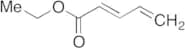
CAS:Producto controladoFórmula:C7H10O2Forma y color:NeatPeso molecular:126.153Acetyl Coenzyme A Trisodium Salt
CAS:<p>Applications Acetyl Coenzyme A Trisodium Salt is used in skin-lightening cosmetics.<br></p>Fórmula:C23H38N7O17P3S·3NaForma y color:NeatPeso molecular:878.54Ethyl Propargylate
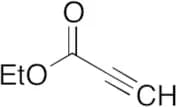
CAS:Producto controlado<p>Applications Ethyl Propargylate is used in the synthesis of substituted anthraquinones. Also used in the preparation of inhibitory pyrazolo[1,5-a]pyridines for anti-inflammatory activity.<br> Not a dangerous good if item is equal to or less than 1g/ml and there is less than 100g/ml in the package<br>References Chang, M. et al: Synth. Comm., 43, 3363 (2013); Kojima, A. et al.: Bioorg. Med. Chem. Lett., 23, 5311 (2013);<br></p>Fórmula:C5H6O2Forma y color:NeatPeso molecular:98.1(E/Z)-2-Propyl-2,4-pentadienoic Acid Ethyl Ester-d5
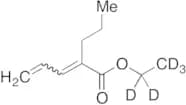
CAS:Producto controladoFórmula:C10H11D5O2Forma y color:NeatPeso molecular:952.038Elaidic Acid Ethyl Ester
CAS:Producto controladoFórmula:C20H38O2Forma y color:NeatPeso molecular:545.535Estradiol 17-Palmitate-d31
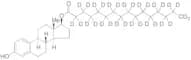
CAS:Producto controlado<p>Applications Estradiol 17-Palmitate-d31 is the isotope analog of Estradiol 17-Palmitate. Estradiol 17-Palmitate is a metabolite of estradiol (E888000) which is the major estrogen secreted by the premenopausal ovary.<br>References Salole, E.G., et al.: Anal. Profiles Drug Subs., 15, 283 (1986), Lievertz, R.W., et al.: Am. J. Obstet. Gynecol., 156, 1289 (1987),<br></p>Fórmula:C34H23D31O3Forma y color:NeatPeso molecular:399.48Shikimic Acid Ethyl Ester
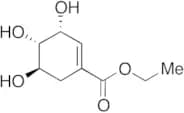
CAS:Producto controladoFórmula:C9H14O5Forma y color:NeatPeso molecular:202.22-Bromo-4-chloro-4-oxo-butanoic Acid Ethyl Ester
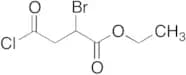
CAS:Producto controladoFórmula:C6H8BrClO3Forma y color:NeatPeso molecular:243.483(2S,3S,5S)-5-[(N-Formyl-L-leucyl)oxy]-2-hexyl-3-hydroxyhexadecanoic acid
CAS:<p>Please enquire for more information about (2S,3S,5S)-5-[(N-Formyl-L-leucyl)oxy]-2-hexyl-3-hydroxyhexadecanoic acid including the price, delivery time and more detailed product information at the technical inquiry form on this page</p>Fórmula:C29H55NO6Pureza:Min. 95%Peso molecular:513.75 g/molGlycidyl palmitate
CAS:<p>Glycidyl palmitate is a synthetic fatty acid ester that has reactive hydroxyl groups. It is used in the production of polylactic acid, a biodegradable polymer. Glycidyl palmitate can be prepared by reacting a fatty acid with glycerol and an epichlorohydrin. The elimination rate of glycidyl palmitate from the body has been shown to be activated by surface methodology such as chemical ionization mass spectrometry. Glycidyl palmitate can also be analyzed using gas chromatography with flame ionization detection (GC-FID) or gas chromatography-mass spectrometry (GC-MS). A sample preparation technique for glycidyl palmitate is to dissolve it in sodium salts and use filtration as the final step before analysis. The most common fatty acids present in glycidyl palmitate are oleic acid and linoleic acid.</p>Fórmula:C19H36O3Pureza:Min. 95%Peso molecular:312.49 g/mol4-Oxo-1-piperidinecarboxylic acid ethyl ester
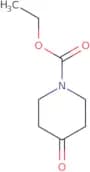
CAS:Producto controlado<p>4-Oxo-1-piperidinecarboxylic acid ethyl ester is an antimicrobial agent that belongs to the group of unsaturated ketones. It has been shown to have clinical activity against gram-positive bacteria, including Staphylococcus aureus, Enterococcus faecalis and Streptococcus pneumoniae, as well as Candida albicans. It also exhibits significant antiinflammatory activity in mice with chronic inflammation induced by carrageenan or LPS. 4-Oxo-1-piperidinecarboxylic acid ethyl ester inhibits the enzyme dpp-4, which is involved in the production of amyloid beta peptides and type II diabetes. This compound was also shown to possess anticholinesterase activity in vitro.</p>Fórmula:C8H13NO3Pureza:Min. 95%Peso molecular:171.19 g/molrac 1,2-Bis-palmitoyl-3-chloropropanediol-D5
CAS:Producto controlado<p>Rac-1,2-Bis-palmitoyl-3-chloropropanediol (rac1,2BPC) is a dispersive compound that has been used in the experimental phase of extraction. It has been shown to be efficient in the quantification and screening of fatty acids. Rac1,2BPC has also been used as a spiking agent for food samples to identify contaminants. The recoveries have been validated and linearity has been demonstrated. Rac1,2BPC is an anion that can be quantified by liquid chromatography with wavelength detection at 202 nm.</p>Fórmula:C35H62D5ClO4Pureza:Min. 95%Peso molecular:592.38 g/molMethyl palmitate
CAS:<p>Methyl palmitate is a chemical compound that belongs to the group of esters. It is a colorless liquid with a melting point of -17 °C, boiling point of 113 °C, and density of 0.834 g/mL. Methyl palmitate has shown genotoxic activity in a water vapor-resistant strain of Salmonella typhimurium TA100 and in the Ames assay. This chemical also has metabolic response properties, which may be due to its ability to induce prostaglandin J2 production and inhibit cyclic AMP accumulation in cells. Methyl palmitate is used as an additive for cosmetics, such as skin care products, perfumes, and hair dyes. It can also be found in food products such as margarine and coffee creamer.</p>Fórmula:C17H34O2Pureza:Min. 95%Peso molecular:270.45 g/mol(aS,2S)-α-Phenyl-2-piperidineacetic acid Ethyl ester hydrochloride
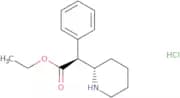
CAS:Producto controladoPlease enquire for more information about (aS,2S)-alpha-Phenyl-2-piperidineacetic acid Ethyl ester hydrochloride including the price, delivery time and more detailed product information at the technical inquiry form on this pageFórmula:C15H21NO2·HClPureza:Min. 95%Peso molecular:283.79 g/molBoc-L-Propargylglycine
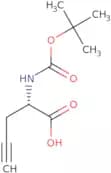
CAS:<p>Boc-L-Propargylglycine is an antibacterial agent that can be used for the treatment of cancer. It has been shown to have specificities against cancer cells, as well as a high potency and low toxicity. Boc-L-Propargylglycine may be useful in biochemistry experiments because it can form conjugates with amines, hydroxyl groups, and amino acids. This drug also binds to DNA by forming triplexes and high-potency complexes with guanine residues. Boc-L-propargylglycine has been shown to inhibit the growth of cancer cells in vitro. It is orally bioactive, which means that it is absorbed and distributed throughout the body when taken by mouth.</p>Fórmula:C10H15NO4Pureza:Min. 95%Peso molecular:213.23 g/molRac 1,2-bis-palmitoyl-3-chloropropanediol
CAS:<p>Rac-1,2-bis-palmitoyl-3-chloropropanediol is a dispersive molecule that is composed of a fatty acid and a chlorinated derivative of palmitic acid. It is used to calibrate the mass spectrometer and as an internal standard in quantitative analysis. Rac-1,2-bis-palmitoyl-3-chloropropanediol reacts with electrospray ionization with a dose-dependent response. It has been shown to be toxic to kidney cells at high doses but not at low doses. This chemical has been detected in food samples after being absorbed from the gastrointestinal tract. Rac 1,2-bis-palmitoyl 3 chloropropanediol can be found in the dipalmitate form or as formic acid.</p>Fórmula:C35H67ClO4Pureza:95%NmrForma y color:PowderPeso molecular:587.36 g/mol3,7,11,15-Tetramethyl-1,2,3-hexadecane-triol
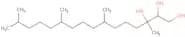
CAS:<p>3,7,11,15-Tetramethyl-1,2,3-hexadecane-triol is a fatty alcohol that is used in detergent compositions. It has been shown to be biocompatible with human skin cells and does not show any carcinogenic potential. 3,7,11,15-Tetramethyl-1,2,3-hexadecane-triol is chemically stable and can be used for sample preparation and light exposure. The particle size of this compound is about 1 micrometer. This substance does not have any toxic effects on skin cells or other cells when it is exposed to light.</p>Fórmula:C20H42O3Pureza:Min. 95%Peso molecular:330.55 g/molrac 2-palmitoyl-3-chloropropanediol
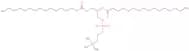
CAS:<p>Please enquire for more information about rac 2-palmitoyl-3-chloropropanediol including the price, delivery time and more detailed product information at the technical inquiry form on this page</p>Fórmula:C19H37ClO3Pureza:Min. 95%Peso molecular:348.95 g/mol2,3-Dipalmitoyl-sn-glycero-1-phosphocholine
CAS:<p>2,3-Dipalmitoyl-sn-glycero-1-phosphocholine is a synthetic lipid that is used as a surfactant in biological research. It is a proton donor that destabilizes membranes and interacts with phosphatidylcholine. The deformation of the lipid bilayer may be due to its protonation state. This synthetic lipid has been shown to increase fluidity of the membrane by changing the acyl chain composition and surfactant properties. 2,3-Dipalmitoyl-sn-glycero-1-phosphocholine also increases membrane transport by interacting with the bilayer and forming lamellar structures. The enantiomeric form of this lipid has been found to be more effective than its racemic mixture in the inhibition of cholesterol biosynthesis.</p>Fórmula:C40H80NO8PPureza:Min. 95%Peso molecular:734.04 g/mol




![(2S,3S,5S)-5-[(N-Formyl-L-leucyl)oxy]-2-hexyl-3-hydroxyhexadecanoic acid](/_next/image/?url=https%3A%2Fstatic.cymitquimica.com%2Fproducts%2F3D%2Fthumb-webp%2FFF23586.webp&w=3840&q=75)