Esteroides
Los esteroides son una clase de compuestos orgánicos con una estructura molecular característica compuesta por cuatro anillos fusionados. Desempeñan un papel vital en diversos procesos biológicos, actuando como hormonas que regulan el metabolismo, la función inmunitaria y la reproducción. Los esteroides se utilizan ampliamente en medicina por sus propiedades antiinflamatorias, inmunosupresoras y anabólicas. En la investigación, se estudian por su potencial terapéutico en el tratamiento de afecciones como la artritis, el asma y los desequilibrios hormonales. En CymitQuimica, encontrarás una amplia selección de esteroides, esenciales para la investigación en farmacología, bioquímica y el desarrollo de terapias basadas en esteroides.
Subcategorías de "Esteroides"
Se han encontrado 1702 productos de "Esteroides"
Ordenar por
Pureza (%)
0
100
|
0
|
50
|
90
|
95
|
100
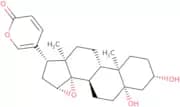
Marinobufagenin
CAS:<p>Marinobufagenin is a bufadienolide compound, which is isolated from the skin and parotid glands of toads, primarily those belonging to the Bufo genus. This compound is characterized by its ability to inhibit Na⁺/K⁺-ATPase, an enzyme crucial for maintaining the electrochemical gradients of sodium and potassium ions across the cell membrane. By inhibiting this enzyme, Marinobufagenin disrupts ion homeostasis, which can lead to increased intracellular calcium concentrations in cardiac muscle cells. This action enhances the force of cardiac contraction, conferring potent cardiotonic effects.</p>Fórmula:C24H32O5Pureza:Min. 95%Peso molecular:400.51 g/molEstetrol
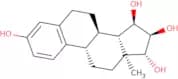
CAS:<p>Estetrol (E4) is a naturally occurring estrogen, which is synthesized by the human fetal liver. It acts as a selective estrogen receptor modulator with a unique mode of action differentially impacting various tissues. Estetrol selectively binds to estrogen receptors, thereby facilitating a range of estrogenic activities. Interestingly, it exhibits modest estrogenic effects on both the endometrium and breast tissue, reducing potential risks typically associated with hormone therapies.</p>Fórmula:C18H24O4Pureza:Min. 95%Forma y color:PowderPeso molecular:304.38 g/molBetamethasone valerate EP Impurity D
Producto controladoBetamethasone valerate EP Impurity D is a synthetic steroid compound, specifically an impurity of betamethasone valerate. This impurity is typically derived from the chemical synthesis processes associated with the production of betamethasone valerate. It serves as a reference standard in the analytical and pharmaceutical research fields.Fórmula:C27H37BrO6Pureza:Min. 95%Peso molecular:537.49 g/mol1-Dehydroepiandrosterone
CAS:Producto controlado<p>1-Dehydroepiandrosterone is a steroid hormone and a metabolic intermediate in the biosynthesis of androgen and estrogen sex steroids, which is derived from cholesterol in the adrenal glands, gonads, and brain. Acting primarily as a prohormone, it facilitates the synthesis of active steroid hormones by serving as a precursor molecule that undergoes enzymatic conversion into potent androgens like testosterone and dihydrotestosterone, as well as estrogens such as estradiol within peripheral tissues.</p>Fórmula:C19H28O2Pureza:Min. 95%Forma y color:PowderPeso molecular:288.42 g/molDeoxy miroestrol
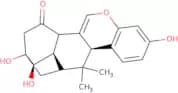
CAS:<p>Deoxy miroestrol is a phytoestrogen compound, which is primarily sourced from the root of the Pueraria mirifica plant, indigenous to Thailand. Its mode of action involves mimicking the biological activity of estrogen by binding to estrogen receptors in the body. This estrogenic activity is due to its structural similarity to estrogens naturally produced in the body, allowing it to interact with estrogen receptors and modulate their activity.</p>Fórmula:C20H22O5Pureza:Min. 95%Peso molecular:342.39 g/molDioscin
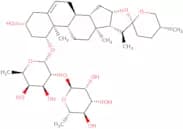
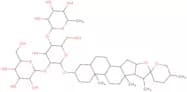
CAS:Dioscin is a type of steroidal saponin, which is a naturally occurring glycoside. It is primarily derived from various plant sources, including members of the Dioscorea family, such as wild yam species. Dioscin exhibits its biological activity through modulation of multiple molecular pathways, notably exhibiting anti-inflammatory, antioxidative, and antiproliferative effects.Fórmula:C45H72O16Pureza:Min. 98.0 Area-%Peso molecular:869.04 g/molRef: 3D-Q-100228
5gA consultar10gA consultar25gA consultar50gA consultar2500mgA consultar-Unit-ggA consultarOtophylloside B
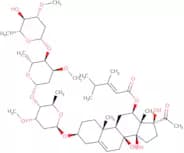
CAS:<p>Otophylloside B is a naturally occurring triterpenoid saponin, which is a secondary metabolite derived from the roots of the plant **Ophiorrhiza pumila**. This compound is characterized by its complex glycosidic structure, featuring a unique arrangement of sugar moieties attached to its aglycone core. The mode of action of Otophylloside B involves modulation of cellular pathways, particularly influencing apoptosis and cell cycle regulation. Its structure allows interaction with specific cellular receptors, leading to potential inhibition of tumor growth and metastasis.</p>Fórmula:C49H78O16Pureza:Min. 95%Peso molecular:923.13 g/molDeoxycorticosterone
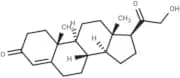
CAS:Deoxycorticosterone, an adrenal steroid, is an aldosterone precursor with mineralocorticoid effects.Fórmula:C21H30O3Pureza:98.19%Forma y color:SolidPeso molecular:330.46Pregna-4,8-diene-3,20-dione
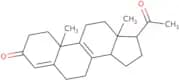
CAS:Producto controlado<p>Pregna-4,8-diene-3,20-dione is a synthetic corticosteroid, which is an analog of naturally occurring hormones produced by the adrenal cortex. This compound is synthesized through complex chemical pathways utilizing steroidal intermediates to produce a substance with potent biological activity. The mode of action of Pregna-4,8-diene-3,20-dione involves its ability to alter the transcription of certain genes by binding to glucocorticoid receptors. This interaction induces the synthesis of proteins that inhibit the inflammatory response and suppress the immune system.</p>Fórmula:C21H28O2Pureza:Min. 95%Peso molecular:312.45 g/molFormononetin-7-acetate
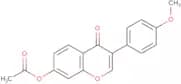
CAS:<p>Formononetin-7-acetate is a naturally-derived isoflavonoid, which is a product of acetylation of formononetin, predominantly sourced from red clover and other leguminous plants. Its mode of action involves mimicking the effects of estrogens by binding to estrogen receptors, though with less potency than endogenous estrogens. This interaction may lead to modulation of various estrogen-mediated physiological processes.</p>Fórmula:C18H14O5Pureza:Min. 95%Peso molecular:310.3 g/molOphiopogonin B
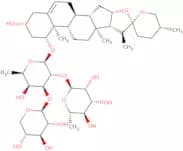
CAS:Ophiopogonin B is a steroidal saponin compound, which is primarily derived from the root tubers of the plant Ophiopogon japonicus. This plant source, commonly used in traditional Chinese medicine, contributes to the compound's extraction. Ophiopogonin B exhibits a multifaceted mode of action, primarily recognized for its biological activities, including antioxidant, anti-inflammatory, and cardioprotective effects.Pureza:Min. 95%7α-Hydroxy-4-cholesten-3-one
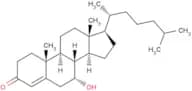
CAS:7α-Hydroxy-4-cholesten-3-one is a PXR agonist that can be used to study diseases associated with defects in bile acid biosynthesis.Fórmula:C27H44O2Pureza:99.14%Forma y color:White SolidPeso molecular:400.64Isodeoxycholic Acid
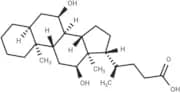
CAS:<p>Isodeoxycholic Acid, an epimer of deoxycholic acid by gut bacteria, has lower detergent activity and inhibits C. difficile germination and toxicity.</p>Fórmula:C24H40O4Pureza:98.12%Forma y color:SolidPeso molecular:392.5711-Dehydrocorticosterone
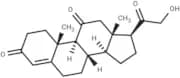
CAS:11-Dehydrocorticosterone is a metabolite of corticosteroids and a sodium-retaining agent, increasing the expression of SGK mRNA in cardiac fibroblasts.Fórmula:C21H28O4Forma y color:SolidPeso molecular:344.45epi-Glycochenodeoxycholic Acid Sodium Salt-d7
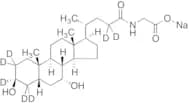
CAS:Producto controlado<p>Applications epi-Glycochenodeoxycholic Acid Sodium Salt-d7 is a labelled epimer analogue of Glycochenodeoxycholic Acid Sodium Salt (G641255), which is a bile salt formed in the liver from chenodeoxycholate and glycine. It acts as a detergent to solubilize fats for absorption and is itself absorbed. It is a cholagogue and choleretic.<br>References Ollila, F., et al.: Langmuir, 17, 7107 (2001); Uekama, K., et al.: Chem. Pharm. Bull., 52, 900 (2004); Tongiani, S., et al.: J. Pharm. Sci., 94, 2380 (2005);<br></p>Fórmula:C26D7H35NNaO5Forma y color:NeatPeso molecular:478.648Asparanin B
CAS:<p>Asparanin B is a natural compound, which is a specialized saponin derived from the roots of asparagus plants, specifically from Asparagus officinalis. It exerts its effects through the modulation of cellular pathways, including the inhibition of cell proliferation, induction of apoptosis, and disruption of key signaling mechanisms involved in cancer development and progression. As a result, Asparanin B is being studied for its potential anticancer properties.</p>Fórmula:C45H74O17Pureza:75%MinPeso molecular:887.1 g/molEstradiol 17-propionate
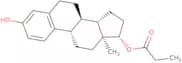
CAS:<p>Estradiol 17-propionate is a synthetic estrogenic compound, which is derived from the natural estrogen hormone, estradiol. It is produced through chemical modification to enhance its stability and efficacy, allowing it to be studied as a model of estrogenic action in scientific research. The compound exerts its effects by interacting with estrogen receptors, initiating a cascade of transcriptional events that influence gene expression and cellular function.</p>Fórmula:C21H28O3Pureza:Min. 95%Forma y color:PowderPeso molecular:328.45 g/molOphiopogonin D
CAS:<p>Ophiopogonin D is a steroidal glycoside, which is a secondary metabolite sourced from the plant Ophiopogon japonicus. This compound is characterized by its presence in the roots, commonly referred to as radix Ophiopogonis, and is part of the broader group of ophiopogonins. Its mode of action primarily involves exerting anti-inflammatory and antioxidant effects. Ophiopogonin D has been shown to modulate signaling pathways that influence cellular oxidative stress and inflammatory responses, which are key in various pathological conditions.</p>Fórmula:C44H70O16Pureza:Min. 95%Forma y color:PowderPeso molecular:855.02 g/mol3,9-Di-O-methylcoumestrol
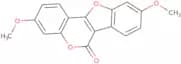
CAS:<p>3,9-Di-O-methylcoumestrol is a synthetic coumestan derivative, which is primarily derived or synthesized from various plant sources that produce isoflavonoids and related compounds. As a type of phytoestrogen, it exhibits selective estrogen receptor modulating activity, interacting with estrogen receptors in a manner similar to endogenous hormones but with distinctive affinity and specificity. This mode of action suggests it could influence estrogen-responsive pathways, making it of particular interest in fields like endocrinology and pharmacology.</p>Fórmula:C17H12O5Pureza:Min. 95%Peso molecular:296.27 g/molγ-Bufotalin
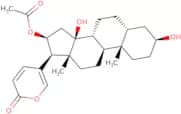
CAS:gamma-Bufotalin is a bufadienolide compound, which is a type of steroid. It is sourced from toad venom, specifically from the parotoid glands of toads belonging to the Bufonidae family. This compound exhibits its mode of action primarily through inhibition of cellular ion pumps, particularly the Na⁺/K⁺-ATPase, leading to an increase in intracellular calcium levels. This mechanism induces apoptosis in certain cancer cell lines, providing a potential pathway for therapeutic intervention.Fórmula:C26H36O6Pureza:Min. 95%Peso molecular:444.56 g/mol