Terpenoides
Los terpenoides, también conocidos como isoprenoides, son la clase más grande de compuestos orgánicos naturales, derivados de unidades de isopreno de cinco carbonos. Se encuentran en una variedad de plantas y son conocidos por sus propiedades aromáticas, así como por su papel en la defensa y señalización de las plantas. Los terpenoides han sido ampliamente estudiados por sus efectos terapéuticos, incluidas sus propiedades antiinflamatorias, antimicrobianas y anticancerígenas. Se utilizan en las industrias farmacéutica, cosmética y alimentaria por sus beneficios para la salud y sus cualidades aromáticas. En CymitQuimica, encontrarás una amplia selección de terpenoides, esenciales para la investigación en biología vegetal, farmacología y síntesis de productos naturales.
Subcategorías de "Terpenoides"
- Diterpenos (C₂₀)(671 productos)
- Hemiterpenos (C₅)(21 productos)
- Monoterpenos (C₁₀)(709 productos)
- Sesquiterpenos (C₂₅)(452 productos)
- Tetraterpenos (C₄₀)(63 productos)
- Triterpenos (C₃₀)(1.130 productos)
Se han encontrado 1423 productos de "Terpenoides"
Ordenar por
Pureza (%)
0
100
|
0
|
50
|
90
|
95
|
100
Ginkgolide C
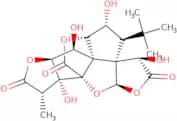
CAS:Ginkgolide C is a terpenoid lactone, which is a natural compound isolated from the leaves of the Ginkgo biloba tree. Ginkgolide C is primarily known for its activity as a specific antagonist of platelet-activating factor (PAF), a potent phospholipid activator and mediator of many leukocyte functions, including platelet aggregation. Its mode of action involves the inhibition of PAF binding to its receptor, thereby reducing PAF-related inflammatory responses and platelet aggregation.Fórmula:C20H24O11Pureza:Min. 95%Forma y color:PowderPeso molecular:440.4 g/molCantharidin
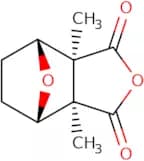
CAS:Natural toxin; protein phosphatase inhibitorFórmula:C10H12O4Pureza:Min. 98 Area-%Forma y color:White/Off-White SolidPeso molecular:196.2 g/molLoganic acid
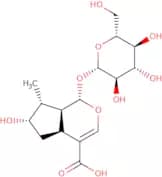
CAS:Loganic acid is a natural iridoid glycoside, which is primarily derived from plants belonging to the Loganiaceae family, such as the genus Strychnos. As a bioactive compound, it plays a significant role in plant defense mechanisms and possesses potential therapeutic properties that are of great interest to the scientific community.Fórmula:C16H24O10Pureza:Min. 95%Forma y color:PowderPeso molecular:376.36 g/mol(-)-Vinigrol
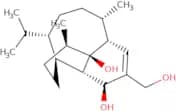
CAS:<p>(-)-Vinigrol is a naturally occurring diterpenoid, which is originally isolated from the fungal species Virgaria nigra, known for its complex stereochemistry and unique structure. It functions as a bioactive compound with multiple mechanisms of action, including modulation of signal transduction pathways and inhibition of specific enzymes, contributing to its broad spectrum of biological activities.</p>Pureza:Min. 95%Aescin
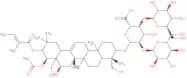
CAS:Beta-Aescin (also known as beta-escin) is a mixture of saponins produced by the horse chestnut tree, Aesculus hippocastanum, with most published reports relating to the pharmacological properties that it shows. It is reported that beta-aescin is a safe and very tolerable drug in the treatment of post thrombotic syndrome and chronic venous insufficiency. Aescin shows promise in the treatment of arthritis and appears to have potential as an anti-cancer drug. In fact, beta-aescin is active on glioblastoma-initiating cells (GIC), which have the ability to initiate glioblastoma growth. Glioblastoma multiform is the most abundant primary tumor of the human nervous system. Beta-aescin was more efficient in diminishing GIC growth compared to present clinically used drugs.Fórmula:C55H85O24Forma y color:PowderPeso molecular:1,131.26 g/molEffusanin E
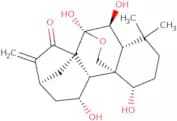
CAS:Effusanin E is a specialized natural compound that falls under the category of secondary metabolites. It is derived from microorganisms, specifically isolated from bacterial sources, which include soil-dwelling bacteria known for their unique biosynthetic capabilities. This compound's mode of action primarily involves inhibiting the growth of certain pathogenic bacteria. It achieves this by disrupting vital bacterial processes, potentially targeting aspects of cell wall synthesis or protein production, although the exact mechanisms may vary and require further elucidation.Fórmula:C20H28O6Pureza:Min. 95%Peso molecular:364.43 g/molSaikosaponin A
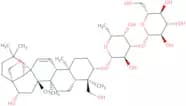
CAS:Saikosaponin A is a triterpene saponin, which is a bioactive compound extracted from the roots of the Bupleurum species, primarily Bupleurum falcatum. As a phytochemical, it interacts with cell membranes to exert its effects. Saikosaponin A is known to modulate inflammatory pathways by inhibiting the production of pro-inflammatory cytokines and influencing the NF-κB signaling pathway. Additionally, it can enhance immune responses by regulating T-cell proliferation and differentiation.Fórmula:C42H68O13Pureza:Min. 95%Forma y color:White Off-White PowderPeso molecular:780.98 g/molSaikosaponin B2
CAS:Saikosaponin B2 is a naturally occurring triterpenoid saponin, which is a secondary metabolite primarily sourced from the roots of Bupleurum species. These plants are widely used in traditional Chinese medicine, valued for their diverse pharmacological activities. The mode of action of Saikosaponin B2 involves modulation of inflammatory pathways, specifically through the inhibition of pro-inflammatory cytokines and reduction of oxidative stress. It also exhibits potential in modulating immune responses and possesses hepatoprotective effects.Fórmula:C42H68O13Pureza:Min. 95%Forma y color:White Off-White PowderPeso molecular:780.98 g/molGinsenoside Rb1 - 98%
CAS:<p>Ginsenoside Rb1 - 98% is a purified chemical compound, specifically a saponin, derived from the roots of Panax ginseng, a perennial plant native to East Asia. The compound belongs to the ginsenoside family, which constitutes the primary active components of ginseng.</p>Fórmula:C54H92O23Pureza:Min. 98 Area-%Forma y color:White Off-White PowderPeso molecular:1,109.32 g/mol20(R)Ginsenoside Rh2
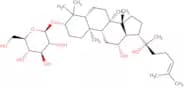
CAS:<p>20(R)Ginsenoside Rh2 is a bioactive compound, specifically a ginsenoside, which is derived from the roots of Panax ginseng. This compound is categorized as a rare saponin, produced through the enzymatic or acidic hydrolysis of protopanaxadiol-type ginsenosides found naturally in ginseng. Its mode of action involves modulating various cellular pathways, including signaling pathways related to apoptosis, inflammation, and immune responses. It has been shown to exert anticancer effects through induction of apoptosis, inhibition of cell proliferation, and disruption of cell cycle progression in cancer cells. Additionally, it may influence the immune system by enhancing or regulating immune cell activity.</p>Fórmula:C36H62O8Pureza:Min. 98 Area-%Forma y color:PowderPeso molecular:622.87 g/molHarpagide
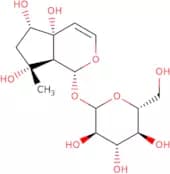
CAS:Harpagide is a bioactive compound classified as an iridoid glycoside, which is extracted primarily from the roots of the plant *Harpagophytum*, commonly known as the "devil’s claw." This compound plays a significant role in the plant's secondary metabolism, contributing to its defense mechanisms.Fórmula:C15H24O10Pureza:Min. 95%Forma y color:PowderPeso molecular:364.35 g/mollnuchinenolide B
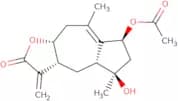
CAS:<p>Lnuchinenolide B is a bioactive compound, which is a type of natural product often isolated from various plant species. This compound has garnered interest due to its origins in diverse botanical sources. Its mode of action is typically associated with its interaction at the molecular level with specific biological targets, potentially inhibiting or modulating particular enzymatic activities or receptor pathways. Such interaction underscores its capacity to influence biological processes, making it a compound of interest in pharmacological research.</p>Fórmula:C17H22O5Pureza:Min. 95%Peso molecular:306.35 g/molβ-Eudesmol
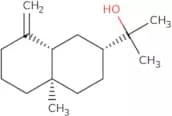
CAS:Beta-Eudesmol is a sesquiterpenoid alcohol, which is a naturally occurring compound found in several essential oils extracted from plants, particularly those belonging to the genus Zingiberaceae. It is a major component in some aromatic species, manifesting as a colorless or pale yellow viscous liquid at room temperature.Fórmula:C15H26OPureza:Min. 95%Forma y color:White PowderPeso molecular:222.37 g/molEpibetulinic acid
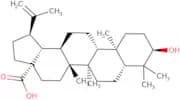
CAS:<p>Epibetulinic acid is a naturally occurring triterpenoid acid, which is a derivative of betulinic acid. This compound is primarily sourced from the bark of birch trees, specifically from the Betula genus. It is a pentacyclic compound characterized by its typical lupane skeleton. Epibetulinic acid is noted for its diverse biological activities, underscoring its potent mode of action as a modulator of various cellular pathways.</p>Fórmula:C30H48O3Pureza:Min. 98 Area-%Forma y color:White PowderPeso molecular:456.7 g/molSantalol, α and β isomers
CAS:Santalol, alpha and beta isomers are terpenes that belong to the class of natural compounds. They are found in the essential oils of sandalwood tree (Santalum album) and have been shown to have various biological activities, including anti-skin cancer activity in vivo models. Santalol has been shown to inhibit the production of epidermal growth factor by human prostate cancer cells. This compound also has an effect on oral pathogens, such as Streptococcus mutans and Lactobacillus acidophilus, which may be due to its ability to bind with bacterial receptors.Fórmula:C15H24OPureza:(%) Min. 70%Forma y color:Colorless Clear LiquidPeso molecular:220.35 g/molCryptotanshinone
CAS:<p>Cryptotanshinone is a naturally occurring bioactive compound, which is an abietane diterpenoid sourced from the roots of *Salvia miltiorrhiza*, commonly known as Danshen. This compound exhibits a distinct mode of action characterized by its inhibition of the STAT3 signaling pathway, which is crucial in the regulation of gene expression involved in cell growth and survival. Furthermore, Cryptotanshinone demonstrates the ability to modulate various other molecular targets, such as the androgen receptor, rendering it valuable in the pharmacological landscape.</p>Fórmula:C19H20O3Pureza:Min. 98 Area-%Forma y color:PowderPeso molecular:296.36 g/molBetulinic acid
CAS:Betulinic acid is a pentacyclic triterpenoid, which is derived from the bark of birch trees among other plants. This compound exerts its effects primarily through the induction of apoptosis in cancer cells, interference with viral replication, and modulation of inflammatory pathways. Its mode of action includes mitochondrial membrane potential disruption, inhibition of topoisomerase, and interaction with the NF-kB signaling pathway.Fórmula:C30H48O3Pureza:Min. 95%Forma y color:White PowderPeso molecular:456.7 g/molCitronellal
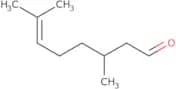
CAS:<p>Citronellal is a monoterpenoid, which is derived from natural sources such as the oils of citronella, lemongrass, and other related plants. It is chemically characterized by its role in the biosynthetic pathway of several essential oils.</p>Fórmula:C10H18OPureza:Min. 95%Forma y color:Colorless PowderPeso molecular:154.25 g/mol(-)-Perillyl alcohol
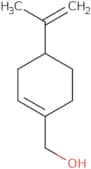
CAS:<p>(-)-Perillyl alcohol is a monoterpene alcohol, which is a naturally occurring compound primarily extracted from the essential oils of lavender, peppermint, and other plants in the Lamiaceae family. It is characterized by its ability to interfere with cellular processes, notably through its modulation of signaling pathways and induction of apoptosis, as well as inhibition of cell proliferation.</p>Fórmula:C10H16OPureza:Min. 90%Forma y color:Clear LiquidPeso molecular:152.23 g/molGibberellic acid
CAS:Gibberellic acid is a plant growth regulator, which is derived from fungal species, particularly Gibberella fujikuroi. It functions by stimulating and regulating various growth and developmental processes within plants. Gibberellic acid works through promoting cell elongation, breaking seed dormancy, and influencing enzyme production that leads to plant growth and development.Fórmula:C19H22O6Pureza:(Hplc) Min. 90.0%Forma y color:White PowderPeso molecular:346.37 g/mol