Fenilpropanoides
Les phénylpropanoïdes sont un groupe diversifié de métabolites végétaux dérivés de l'acide aminé phénylalanine. Ils jouent des rôles importants dans la structure des plantes, la défense et la pigmentation. De plus, les phénylpropanoïdes ont été étudiés pour leurs propriétés anti-inflammatoires, antioxydantes et antimicrobiennes. Ces composés sont utilisés dans la recherche sur les produits naturels, la biologie végétale et la pharmacologie.
Subcategorías de "Fenilpropanoides"
Se han encontrado 1290 productos de "Fenilpropanoides"
Ordenar por
Pureza (%)
0
100
|
0
|
50
|
90
|
95
|
100
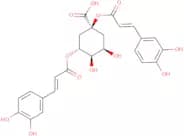
1,5-Dicaffeoylquinic acid
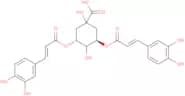
CAS:<p>1,5-Dicaffeoylquinic acid is a polyphenolic compound, which is naturally occurring in various plants, including artichokes and coffee. This compound is part of a larger group of chlorogenic acids that are esterified products of caffeic acid and quinic acid. The mode of action of 1,5-dicaffeoylquinic acid involves its ability to scavenge free radicals, thereby exhibiting potent antioxidant activity. Additionally, it modulates signaling pathways involved in inflammation, contributing to its anti-inflammatory effects.</p>Fórmula:C25H24O12Pureza:Min. 95%Forma y color:White PowderPeso molecular:516.45 g/molCaffeic acid phenethyl ester
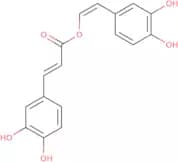
CAS:<p>Caffeic acid phenethyl ester (CAPE) is an active phenolic compound found in honeybee propolis that has the potential to downregulate inflammation in mammals. Studies demonstrated that CAPE specifically inhibits the protein complex NF-κB - a key player in inflammation, associated with the pathogenesis of chronic inflammatory diseases. Moreover, CAPE inhibits the activity of the enzyme cyclooxygenase and the production of nitric oxide by macrophages, also responsible for inflammation. By acting on T cells, CAPE can reduce the production of pro-inflammatory cytokines and increase the production of anti-inflammatory ones, leading to a less overwhelming immune response to allergens.</p>Fórmula:C17H16O4Pureza:Min. 98.0 Area-%Peso molecular:284.31 g/molButein
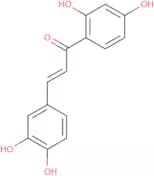
CAS:Butein is a chalcone compound, which is a naturally occurring flavonoid found primarily in plants such as Rhus verniciflua and other members of the Anacardiaceae family. It is characterized by its notable biological activities, particularly due to its antioxidant and anti-inflammatory properties. Butein exerts its effects through various modes of action, including the inhibition of specific enzyme activities like tyrosinase and cyclooxygenase, as well as the downregulation of pro-inflammatory cytokines.Fórmula:C15H12O5Pureza:Min. 98 Area-%Forma y color:PowderPeso molecular:272.25 g/mol4’-demethyldehydropodophyllotoxin
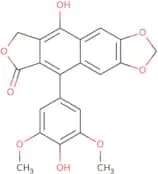
CAS:<p>4’-Demethyldehydropodophyllotoxin is a semi-synthetic lignan, which is a refined and modified product from natural lignans found in certain plant species, particularly those in the genus Podophyllum. This compound undergoes a sophisticated extraction and synthesis process to enhance its biological activity and pharmacological properties.</p>Fórmula:C21H16O8Pureza:Min. 95%Peso molecular:396.35 g/molConiferyl alcohol
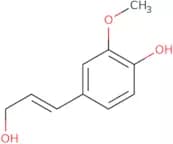
CAS:<p>Coniferyl alcohol is a monolignol compound, which is a significant precursor in the biosynthesis of lignin, a major structural component of plant cell walls. It is primarily sourced from the metabolic pathways of various vascular plants, where it plays a crucial role in lignin polymerization. The mode of action involves its enzymatic conversion into lignin through oxidative coupling reactions catalyzed by peroxidases and laccases. This process contributes to the rigidity and impermeability of the plant cell walls, enhancing the plant's structural integrity and resistance to pathogens.</p>Fórmula:C10H12O3Pureza:90%Forma y color:White PowderPeso molecular:180.2 g/molPodophyllotoxin
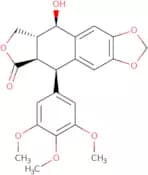
CAS:<p>Podophyllotoxin is a potent antimitotic agent, which is derived from the roots and rhizomes of plants belonging to the genus Podophyllum, such as Podophyllum peltatum and Podophyllum emodi. Its mode of action involves the inhibition of microtubule assembly, leading to the disruption of mitotic spindle formation during cell division. This results in the arrest of cell proliferation, making it particularly effective against rapidly dividing cells.</p>Fórmula:C22H22O8Pureza:Min. 98 Area-%Forma y color:PowderPeso molecular:414.41 g/molSinapinic acid
CAS:<p>Sinapinic acid is a small, organic phenolic compound, which is derived primarily from plant sources, notably from the seeds of plants in the Brassicaceae family. It functions as a matrix in matrix-assisted laser desorption/ionization (MALDI) mass spectrometry, where it facilitates the ionization and desorption of analytes. This process involves the transfer of energy from the laser to the sample via the matrix, resulting in the ionization of the analyte molecules for subsequent mass spectrometric analysis.</p>Fórmula:C11H12O5Pureza:(%) Min. 90%Forma y color:Slightly Yellow PowderPeso molecular:224.21 g/molCryptochlorogenic acid
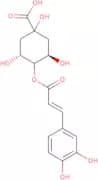
CAS:<p>Cryptochlorogenic acid is an isomer of chlorogenic acid and is found in plants. Cryptochlorogenic acid is the major component of the extract of mulberry leaves that is traditionally used to treat diabetes mellitus. In a diabetic model in rats, cryptochlorogenic acid alleviated symptoms, such as, blood glucose levels, accumulation of lipid peroxides, and iron content alterations. In vitro studies with RAW 264.7 macrophages, cryptochlorogenic acid showed antioxidant and anti-inflammatory activity by increasing both the cellular content of reduced glutathione, and the expression of superoxide dismutase activity, while inhibiting the nuclear translocation of the nuclear factor erythroid 2ârelated factor 2 (Nrf2).</p>Fórmula:C16H18O9Pureza:Min. 98 Area-%Forma y color:PowderPeso molecular:354.31 g/molRosmarinic acid
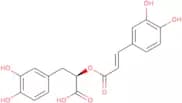
CAS:<p>Anti-cancer agent; anti-oxidant; anti-inflammatory; antimicrobial</p>Fórmula:C18H16O8Pureza:Min. 94 Area-%Forma y color:Off-White PowderPeso molecular:360.31 g/molIsoliquiritigenin
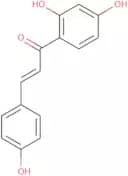
CAS:<p>Isoliquiritigenin is a flavonoid compound, which is derived primarily from the root of the licorice plant (Glycyrrhiza spp.). Known for its yellow coloration, isoliquiritigenin is a chalcone, a type of compound found in many types of fruits, vegetables, and other plants. This natural product is extracted and purified from plant sources for research and potential therapeutic applications.</p>Fórmula:C15H12O4Pureza:Min. 95%Forma y color:PowderPeso molecular:256.25 g/mol3,5-Dicaffeoylquinic acid
CAS:<p>3,5-Dicaffeoylquinic acid is a polyphenolic compound, which is naturally found in various plant species, particularly in coffee and certain herbal plants. This compound serves as a secondary metabolite within these plants, contributing to their defense mechanisms against pathogens and environmental stress. The compound exhibits its mode of action primarily through its powerful antioxidant activity. By scavenging free radicals and inhibiting oxidative stress pathways, it helps in protecting cellular components from oxidative damage.</p>Fórmula:C25H24O12Pureza:Min. 98 Area-%Forma y color:Off-White PowderPeso molecular:516.45 g/molMalabaricone C
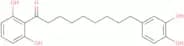
CAS:<p>Malabaricone C is a bioactive compound which is extracted from the roots of trees belonging to the genus Myristica. These trees are well-known for producing a diverse array of secondary metabolites with unique biological activities. Derived primarily through careful extraction processes from these natural sources, Malabaricone C has been characterized by its distinct ability to modulate inflammatory pathways and exhibit antimicrobial properties. The compound is known to interfere with specific biochemical targets, potentially inhibiting the expression of pro-inflammatory cytokines and disrupting microbial cell mechanisms.</p>Fórmula:C21H26O5Pureza:Min. 95%Forma y color:SolidPeso molecular:358.43 g/molSesamin
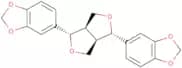
CAS:<p>Sesamin is a lignan compound, which is a type of phytoestrogen, derived from sesame seeds (Sesamum indicum). It is a naturally occurring substance with potent biological efficacy. Sesamin functions primarily through its antioxidant and anti-inflammatory mechanisms. It scavenges free radicals, thereby protecting cellular components from oxidative stress. Additionally, sesamin interacts with various metabolic pathways, modulating lipid metabolism and enhancing the body's anti-inflammatory response.</p>Fórmula:C20H18O6Pureza:Min. 95%Forma y color:PowderPeso molecular:354.35 g/mol1-Caffeoylquinic acid
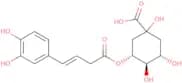
CAS:<p>1-Caffeoylquinic acid is a naturally occurring phenolic compound, which is a type of organic substance commonly found in various plants. This compound is derived primarily from sources such as coffee beans, artichokes, and numerous fruits and vegetables, reflecting its widespread occurrence in the plant kingdom. As a chlorogenic acid, 1-Caffeoylquinic acid functions primarily as an antioxidant, neutralizing free radicals and reducing oxidative stress. It also demonstrates anti-inflammatory properties by inhibiting the production of pro-inflammatory mediators.</p>Fórmula:C16H18O9Pureza:Min. 98 Area-%Forma y color:White To Off-White SolidPeso molecular:354.31 g/molChlorogenic acid
CAS:<p>Chlorogenic acid is a derivative of caffeic acid and quinic acid; it has an antioxidant activity. Chlorogenic acid has been combined with gadolinium to develop a therapeutic and diagnostic nanodelivery system for MRI imaging. In a rat model of diabetes mellitus, chlorogenic acid counteracted the alterations in lipid profiles typical of type-2 diabetes, especially when administered in combination with tetrahydrocurcumin. In mice fed with a high-fat diet, the consumption of chlorogenic acid resulted in an anti-obesity action that lowered the blood levels of cholesterol and triglycerides. In humans, it is readily absorbed in the intestinal tract.</p>Fórmula:C16H18O9Peso molecular:354.32 g/molNepetoidin B
CAS:<p>Nepetoidin B is a natural compound, specifically a type of iridoid, which is isolated from plants belonging to the Nepeta genus, commonly known as catmint or catnip. These plants are well-known for producing a variety of iridoid compounds that have ecological roles, especially in plant-insect interactions. Nepetoidin B acts primarily as a natural repellent and deterrent against various insect species. Its effectiveness stems from its ability to interfere with the sensory receptors of insects, altering their behavior and reducing their interaction with the plant.</p>Pureza:Min. 95%Peso molecular:314.29 g/mol(+)-Dehydrodiconiferyl alcohol
CAS:(+)-Dehydrodiconiferyl alcohol is a lignan, which is a type of phenolic compound naturally occurring in a variety of plant species, including those in the families Magnoliaceae, Lauraceae, and others. As a secondary metabolite derived from the oxidative coupling of coniferyl alcohol, it plays roles in plant defense and structural integrity.Fórmula:C20H22O6Pureza:Min. 95%Peso molecular:358.39 g/mol3,5-Dimethoxy-4-hydroxyhydrocinnamyl alcohol
CAS:3,5-Dimethoxy-4-hydroxyhydrocinnamyl alcohol is a phenolic compound, which is a derivative of cinnamyl alcohol and known for its antioxidant properties. It is typically isolated from plant sources, especially those with rich secondary metabolite profiles such as certain herbs and spices. The compound functions by donating hydrogen atoms to free radicals, thereby neutralizing them and preventing oxidative stress on cells.Fórmula:C11H16O4Pureza:Min. 95%Forma y color:White PowderPeso molecular:212.24 g/molE/E-Desmethoxycurcumin
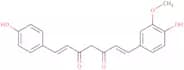
CAS:<p>E/E-Desmethoxycurcumin is a polyphenolic compound, which is a derivative of curcumin. It is sourced from the rhizome of the Curcuma longa plant, commonly known as turmeric. As a demethoxylated analog of curcumin, its structure contains one less methoxy group, allowing it to interact with biological systems in distinctive ways. The mode of action of E/E-Desmethoxycurcumin involves modulation of various cellular signaling pathways, including the inhibition of nuclear factor kappa-light-chain-enhancer of activated B cells (NF-kB) and downregulation of pro-inflammatory cytokines. This makes it a subject of interest for its potential anti-inflammatory and antioxidant properties.</p>Fórmula:C20H18O5Pureza:Min. 95%Forma y color:Orange To Red SolidPeso molecular:338.35 g/mol3,4-Dicaffeoylquinic acid
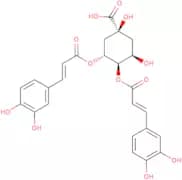
CAS:<p>3,4-Dicaffeoylquinic acid is a naturally occurring polyphenolic compound, which is predominantly found in various plants and herbal sources such as artichokes, echinacea, and certain species of coffee. Its structure consists of quinic acid esterified with two caffeic acid moieties, making it a member of the chlorogenic acid family. This compound is well-recognized for its potent antioxidant properties, exerting its effects by scavenging free radicals and reducing oxidative stress within biological systems.</p>Fórmula:C25H24O12Pureza:Min. 98 Area-%Forma y color:PowderPeso molecular:516.45 g/mol