Flavonoides
Subcategorías de "Flavonoides"
- Antocianidinas(46 productos)
- Antocianina(46 productos)
- Catequina(88 productos)
- Chalconas(237 productos)
- Pterocarpan(28 productos)
Se han encontrado 2410 productos de "Flavonoides"
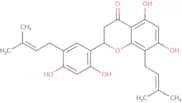
Euchrestaflavanone B
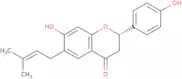
CAS:Euchrestaflavanone B is a naturally occurring flavonoid, which is a type of polyphenolic compound. It is primarily sourced from various plant species, particularly those found in the Leguminosae family. The mode of action of Euchrestaflavanone B involves its interaction with cellular signaling pathways, where it exhibits a broad spectrum of bioactive effects. These include anti-inflammatory, antioxidant, and anticancer properties, potentially through modulation of enzyme activities and gene expression.Fórmula:C25H28O6Pureza:Min. 95%Peso molecular:424.5 g/molBavachin
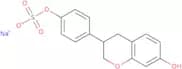
CAS:Phytoestrogen; estrogen receptor agonist; PPARγ ligandFórmula:C20H20O4Pureza:Min. 95%Forma y color:SolidPeso molecular:324.37 g/molR,S equol 4'-sulfate sodium salt
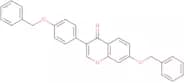
CAS:R,S equol 4'-sulfate sodium salt is a synthetic derivative of equol, which is a type of flavonoid metabolite. This compound is primarily sourced from the biotransformation of the isoflavone daidzein through gut microbiota activity. As a sulfate salt, it is more soluble in aqueous environments, which may facilitate its use in various biological contexts.Fórmula:C15H13NaO6SPureza:Min. 95%Peso molecular:344.32 g/mol7,4'-Dibenzyl daidzein
CAS:7,4'-Dibenzyl daidzein is a synthetic isoflavonoid, derived from the modification of natural isoflavones commonly found in soy products. These isoflavones are known for their estrogenic activity and potential therapeutic benefits. The source of inspiration for this compound lies in natural phytoestrogens, which exhibit significant interaction with human estrogen receptors. This synthetic analog is designed to enhance specific bioactivities beyond those of its natural counterparts.
Fórmula:C29H22O4Pureza:Min. 95%Peso molecular:434.48 g/mol2,3-Dihydrohinokiflavone
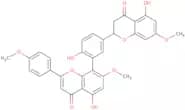
CAS:2,3-Dihydrohinokiflavone is a natural bioflavonoid compound, which is typically derived from various plant sources, particularly those native to East Asia. This compound belongs to the broader flavonoid family, known for their antioxidant properties. Its mode of action involves modulating various signaling pathways, which can lead to anti-inflammatory and antioxidant effects. It achieves this by inhibiting the production of pro-inflammatory cytokines and scavenging free radicals, thus reducing oxidative stress in biological systems.Fórmula:C30H20O10Pureza:Min. 95%Peso molecular:540.47 g/mol6,2',4'-Trimethoxyflavone
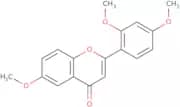
CAS:6,2',4'-Trimethoxyflavone is a flavonoid compound, which is a type of phytochemical found in various plant species. It is derived from natural sources, including certain medicinal herbs and plants known for their bioactive properties. This specific flavone is characterized by its three methoxy groups attached at distinct positions on the flavonoid backbone, which confer unique chemical properties and biological activities.
Fórmula:C18H16O5Pureza:Min. 95%Peso molecular:312.32 g/mol3,7,4'-Trihydroxy-5-methoxy-8-prenylflavanone, (2R,3S)-
3,7,4'-Trihydroxy-5-methoxy-8-prenylflavanone, (2R,3S)- is a naturally occurring prenylated flavanone, which is primarily sourced from various plant species. This compound is part of the larger flavonoid family and is often found in certain medicinal plants known for their wide range of therapeutic properties. Its structure comprises a flavanone backbone, modified by hydroxyl, methoxy, and prenyl groups that contribute to its distinctive chemical profile.Pureza:Min. 95%Quercetin 3-(2''-galloyl-alpha-L-arabinopyranoside)
CAS:Quercetin 3-(2''-galloyl-alpha-L-arabinopyranoside) is a flavonoid derivative, which is found predominantly in plants. It is derived from the modifications of quercetin, a widely studied polyphenolic compound endemic to many fruits, vegetables, and grains. The compound acts primarily as an antioxidant, engaging in scavenging free radicals and chelating metal ions, which contributes to reducing oxidative stress in biological systems.Fórmula:C27H22O15Pureza:Min. 95%Peso molecular:586.45 g/molQuercetin 3-O-rutinoside-7-O-glucoside
CAS:Quercetin 3-O-rutinoside-7-O-glucoside is a flavonoid derivative, which is a specialized plant metabolite known for its diverse bioactive properties. Extracted primarily from plant sources, this compound is a glycoside derivative of quercetin, a well-known flavonoid found abundantly in fruits and vegetables. The specific glycosylation at the 3-O-rutinoside and 7-O-glucoside positions enhances its solubility and bioavailability compared to its aglycone form.
Fórmula:C33H40O21Pureza:Min. 95%Peso molecular:772.66 g/molVincetoxicoside B
CAS:Vincetoxicoside B is a natural compound, specifically a glycoside, which is derived from plant sources, notably within the genus Vincetoxicum. This compound, isolated from certain medicinal plants, represents a significant interest in phytochemistry due to its complex molecular structure and potential biological activities.
Pureza:Min. 95%2',5,7-Trihydroxy-8-methoxyflavanone
CAS:2',5,7-Trihydroxy-8-methoxyflavanone is a polyphenolic flavanone compound, which is a type of flavonoid. It is sourced primarily from plant materials, particularly those rich in flavonoid content, such as specific fruits, vegetables, and herbs. This compound exerts its effects primarily through its antioxidant properties, where it functions by scavenging free radicals and inhibiting oxidative stress within biological systems.
Fórmula:C16H14O6Pureza:Min. 95%Peso molecular:302.28 g/molWarangalone
CAS:Warangalone is a type of flavonoid compound, which is derived from the roots of the medicinal plant Abrus precatorius. This compound is characterized by its polyphenolic structure, making it an excellent candidate for various biochemical interactions. Warangalone exhibits its mode of action primarily through the disruption of microbial cell walls, leading to effective antimicrobial activity. Its interactions with microbial membranes result in altered permeability, ultimately inhibiting the growth and replication of various bacterial and fungal species.
Fórmula:C25H24O5Pureza:Min. 95%Peso molecular:404.46 g/molPodocarpus flavanone
CAS:Podocarpus flavanone is a naturally occurring flavonoid derivative, which is sourced from the Podocarpus genus, a group of coniferous trees native to the Southern Hemisphere. The compound is characterized by its polyphenolic structure, contributing to its ability to engage in a range of biochemical interactions. Its mode of action primarily involves the inhibition of microbial growth through disruption of microbial cell membranes and interference with key enzymatic pathways necessary for cell survival.Fórmula:C33H26O10Pureza:Min. 95%Peso molecular:582.6 g/mol6-Chloroflavone
CAS:6-Chloroflavone is a synthetic flavonoid derivative, which is a modified chemical compound originating from naturally occurring flavonoids found in various plants. Structurally, it is characterized by the substitution of a chlorine atom at the 6th position on the flavone backbone. This chemical modification is designed to alter its physicochemical properties and enhance its biological activity.Fórmula:C15H9ClO2Pureza:Min. 95%Peso molecular:256.68 g/mol5,7,2',4'-Tetrahydroxy-8,3'-di(gamma,gamma-dimethylallyl)-isoflavanone
CAS:5,7,2',4'-Tetrahydroxy-8,3'-di(gamma,gamma-dimethylallyl)-isoflavanone is a prenylated isoflavanone, which is a type of flavonoid compound extensively studied in natural product chemistry. It is primarily sourced from specific plant species known for their rich secondary metabolite profiles, often within the Fabaceae family. The mode of action of this compound involves its interaction at the molecular level with various biological targets, potentially leading to antioxidant, anti-inflammatory, or antimicrobial effects. These actions are mediated through the compound’s ability to modulate enzyme activities, interact with cellular membranes, and influence signaling pathways.Fórmula:C25H28O6Pureza:Min. 95%Peso molecular:424.50 g/molIso-Osajin
CAS:Iso-Osajin is a naturally occurring compound that falls under the category of prenylated flavonoids. It is isolated from the seeds of Psoralea corylifolia, a plant traditionally used in various medicinal systems. The compound exhibits its mode of action primarily through antimicrobial activities, potentially disrupting microbial cell membranes or inhibiting essential enzymes. Iso-Osajin has been of considerable interest due to its promising pharmacological effects, including antibacterial, antifungal, and possibly antiviral properties.Fórmula:C25H24O5Pureza:Min. 95%Forma y color:PowderPeso molecular:404.46 g/molScutellarin methylester
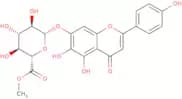
CAS:Scutellarin methylester is a flavonoid derivative, which is a modified form of the naturally occurring compound scutellarin. It originates from plant sources, notably from species within the *Scutellaria* genus. The modification to a methyl ester potentially increases its bioavailability and modifies its pharmacokinetic properties.Pureza:Min. 95%2-O-beta-L-Galactopyranosylorientin
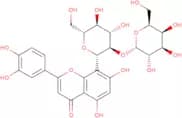
CAS:2-O-beta-L-Galactopyranosylorientin is a flavonoid glycoside, which is a subclass of naturally occurring polyphenolic compounds. This product is typically isolated from plant sources, notably those belonging to the family Poaceae. Its structure consists of an orientin molecule glycosylated with a galactose sugar moiety, enhancing its solubility and biological activity.Pureza:Min. 95%2-(3,4-Dihydroxyphenyl)-3,7-dihydroxy-4H-chromen-4-one hydrate
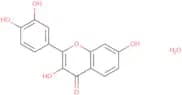
CAS:2-(3,4-Dihydroxyphenyl)-3,7-dihydroxy-4H-chromen-4-one hydrate is a flavonoid compound, which is a polyphenolic molecule derived primarily from plant sources, particularly fruits, vegetables, and certain herbs. This compound functions as a potent antioxidant, neutralizing free radicals and reducing oxidative stress at the cellular level by donating hydrogen atoms, which plays a critical role in protecting biological macromolecules from damage and contributing to cellular homeostasis.Fórmula:C15H10O6·H2OPureza:Min. 95%Peso molecular:304.25 g/molGrosvenorine
CAS:Grosvenorine is a biochemical compound, which is a natural glycoside extracted from the fruit of Siraitia grosvenorii, commonly known as monk fruit. This compound is primarily sourced from the cucurbitaceae family of plants, renowned for their sweet-tasting fruits. The mode of action of grosvenorine involves its interaction with various metabolic pathways, exhibiting antioxidant and anti-inflammatory properties.Pureza:Min. 95%