Flavonoides
Los flavonoides son un grupo de metabolitos vegetales con propiedades antioxidantes que contribuyen al color de frutas y flores. Desempeñan un papel significativo en la protección de las plantas contra la radiación UV y los patógenos. Los flavonoides se estudian por sus potenciales beneficios para la salud, incluidas propiedades antiinflamatorias, antivirales y anticancerígenas. Son ampliamente investigados en los campos de la farmacología, la nutrición y la biología molecular.
Subcategorías de "Flavonoides"
- Antocianidinas(46 productos)
- Antocianina(46 productos)
- Catequina(88 productos)
- Chalconas(237 productos)
- Pterocarpan(28 productos)
Se han encontrado 2408 productos de "Flavonoides"
Ordenar por
Pureza (%)
0
100
|
0
|
50
|
90
|
95
|
100
Lupinalbin B
CAS:<p>Lupinalbin B is a bioactive compound, specifically classified as an alkaloid, which is derived from the seeds of the Lupinus plant species. These plants, commonly known as lupins, are a part of the legume family and are cultivated primarily for their seeds that contain high protein content. The presence of alkaloids like Lupinalbin B in lupin seeds is a result of the plant's secondary metabolism, which serves various ecological functions, including defense against herbivores.</p>Fórmula:C20H16O6Pureza:(%) Min. 95%Forma y color:PowderPeso molecular:352.34 g/mol4'-o-Methyllicoflavanone
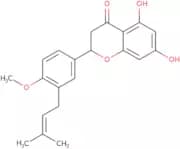
CAS:<p>4'-O-Methyllicoflavanone is a flavonoid compound, which is a naturally occurring chemical typically found in various plants. It belongs to a class of secondary metabolites known for their wide array of biological activities. The source of 4'-O-Methyllicoflavanone is primarily from plant species, where it serves as a part of the plant’s defense mechanism against environmental stressors and pathogens.</p>Fórmula:C21H22O5Pureza:Min. 95%Peso molecular:354.4 g/molMilldurone
CAS:<p>Please enquire for more information about Milldurone including the price, delivery time and more detailed product information at the technical inquiry form on this page</p>Fórmula:C19H16O7Pureza:Min. 95%Forma y color:PowderPeso molecular:356.33 g/mol5-Hydroxy-7,8-dimethoxyflavone
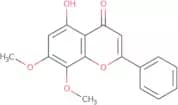
CAS:5-Hydroxy-7,8-dimethoxyflavone is a naturally occurring flavonoid compound, which is typically isolated from plant sources, most notably citrus fruits. The compound functions primarily as a modulator of various biological pathways through its interaction with enzyme systems and receptor sites. This includes the modulation of signaling pathways involved in inflammation, oxidative stress, and cellular apoptosis.Fórmula:C17H14O5Pureza:Min. 95%Peso molecular:298.29 g/mol3',5-Dihydroxy-4',6,7-trimethoxyflavanone
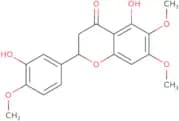
CAS:3',5-Dihydroxy-4',6,7-trimethoxyflavanone is a naturally occurring flavonoid, which is a type of polyphenolic compound. This product is primarily sourced from various plant species known to produce flavonoids as secondary metabolites. Its mode of action involves the inhibition of specific enzymes and modulation of signaling pathways, which can lead to antioxidant and anti-inflammatory effects.Fórmula:C18H18O7Pureza:Min. 95%Peso molecular:346.3 g/molPinobanksin acetate
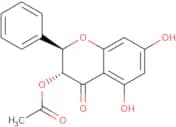
CAS:Pinobanksin acetate is a flavonoid compound, which is naturally sourced from bee propolis. Propolis, a resinous substance collected by bees from tree buds, is renowned for its complex chemical composition integrated from various botanical sources. Pinobanksin acetate is one of the active polyphenolic constituents identified within propolis, exhibiting intriguing bioactive properties.Fórmula:C17H14O6Pureza:Min. 95%Peso molecular:314.29 g/mol2,3-Dehydrokievitone
CAS:<p>2,3-Dehydrokievitone is a phytoalexin, which is a naturally occurring antimicrobial compound. It is derived from leguminous plants, such as those in the Fabaceae family. Phytoalexins are synthesized de novo by plants in response to pathogen attack, and 2,3-Dehydrokievitone plays a role in the plant’s defense mechanisms.</p>Fórmula:C20H18O6Pureza:Min. 95%Peso molecular:354.35 g/mol3',4',7-Trihydroxyflavanone
CAS:<p>3',4',7-Trihydroxyflavanone is a natural flavonoid compound, which is predominantly found in various plant sources, such as flowers, fruits, and leaves. This compound is known for its significant antioxidative properties, attributed to its polyphenolic structure. The mechanism of action involves the scavenging of free radicals, thereby reducing oxidative stress within biological systems. Additionally, its molecular configuration allows it to interact with various cellular pathways that modulate inflammation and cellular signaling.</p>Fórmula:C15H12O5Pureza:Min. 95%Peso molecular:272.25 g/mol5,7,4'-Trihydroxyisoflavanone
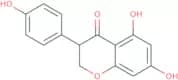
CAS:5,7,4'-Trihydroxyisoflavanone is a bioactive isoflavonoid, which is typically derived from various plant sources, including legumes and certain medicinal herbs. This compound belongs to the class of natural products known as isoflavonoids, which are structurally characterized by the presence of a 3-phenylchroman skeleton.Fórmula:C15H12O5Pureza:Min. 95%Forma y color:White to beige solid.Peso molecular:272.25 g/mol3'-Hydroxyflavanone
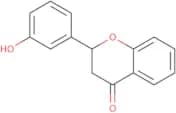
CAS:<p>3'-Hydroxyflavanone is a naturally occurring flavanone, which is a type of polyphenolic compound found in various plants and fruits. Known for its presence in citrus fruits and certain herbal sources, 3'-Hydroxyflavanone is characterized by its unique structural configuration, featuring a hydroxyl group that is crucial for its bioactivity.</p>Fórmula:C15H12O3Pureza:Min. 95%Peso molecular:240.26 g/mol(-)-Epiafzelechin
CAS:(-)-Epiafzelechin is a flavan-3-ol compound, which is a type of flavonoid. It is derived primarily from plant sources, including various tea leaves and cocoa. The compound is known for its potent antioxidant properties, which act by neutralizing free radicals and thereby reducing oxidative stress within biological systems. This action helps in maintaining cellular integrity and function, which is crucial in preventing various oxidative damage-related diseases.Fórmula:C15H14O5Pureza:Min. 95%Forma y color:PowderPeso molecular:274.27 g/molKumatakenin
CAS:Kumatakenin is a naturally occurring flavonoid compound, which is derived from various plant sources, particularly in the Meliaceae family. It functions as an antioxidant by scavenging free radicals and reducing oxidative stress at the molecular level. The compound interacts with reactive oxygen species (ROS) using its phenolic hydroxyl groups, effectively neutralizing them and preventing cellular damage.Fórmula:C17H14O6Pureza:(%) Min. 95%Forma y color:PowderPeso molecular:314.29 g/molIsosinensetin
CAS:<p>Isosinensetin is a polymethoxyflavone, which is a type of flavonoid compound. It is primarily sourced from citrus fruits, particularly those belonging to the genus Citrus, such as oranges and tangerines. The compound's mode of action is largely attributed to its various biochemical interactions, such as modulation of signaling pathways, antioxidant activity, and potential anti-inflammatory effects. These actions may influence cellular processes, contributing to its health-promoting properties.</p>Fórmula:C20H20O7Pureza:Min. 95%Forma y color:PowderPeso molecular:372.37 g/molDaidzein diacetate
CAS:Daidzein diacetate is a synthetic derivative of the isoflavone daidzein, which is a bioactive compound found primarily in soybeans and other legumes. The acetylation process enhances the compound's stability and solubility, potentially improving its bioavailability compared to its parent compound. Daidzein itself is naturally occurring and has been studied for its various health-promoting properties, including estrogenic and antioxidant activities.Fórmula:C19H14O6Pureza:Min. 95%Peso molecular:338.31 g/mol4'-O-Hexanoyldaidzein
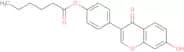
CAS:<p>4'-O-Hexanoyldaidzein is a chemically modified isoflavone, which is a derivative of daidzein. This compound is sourced from soybeans, renowned for being rich in naturally occurring isoflavones. The modification entails the addition of a hexanoyl group to the daidzein molecule, altering its physicochemical properties and potentially enhancing its biological activity.</p>Fórmula:C21H20O5Pureza:Min. 95%Peso molecular:352.38 g/molQuercetin 3,7,4'-trimethylether
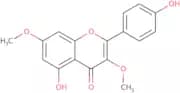
CAS:<p>Quercetin 3,7,4'-trimethylether is a flavonoid derivative, which is a naturally occurring compound. It is sourced from various plants where it acts as a secondary metabolite. Its mode of action involves the modulation of signaling pathways and the inhibition of certain enzymes. Specifically, it has demonstrated the ability to interfere with cellular processes fundamental to cancer progression, such as proliferation and apoptosis.</p>Fórmula:C18H16O7Pureza:Min. 95%Peso molecular:344.32 g/molNeoastilbin
CAS:Neoastilbin is a natural flavonoid compound, which is derived from the plant species *Smilax glabra*. It acts by modulating immune responses and inhibiting specific enzymatic pathways associated with inflammation, making it an effective agent in reducing inflammatory processes.Fórmula:C21H22O11Pureza:Min. 95%Forma y color:PowderPeso molecular:450.39 g/mol6,4'-Dihydroxy-7-methoxyflavanone
CAS:<p>6,4'-Dihydroxy-7-methoxyflavanone is a naturally occurring flavanone compound, which is typically derived from various plant sources known for their rich polyphenolic content. This compound is characterized by its unique chemical structure, including hydroxyl and methoxy functional groups, contributing to its bioactivity.</p>Fórmula:C16H14O5Pureza:Min. 95%Peso molecular:286.28 g/mol3',5,5',7-Tetrahydroxyflavanone
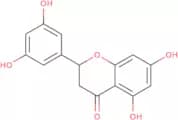
CAS:<p>3',5,5',7-Tetrahydroxyflavanone is a flavonoid compound, which is a type of naturally occurring polyphenolic. It is primarily derived from certain plants, often found in those with known medicinal properties. Flavonoids are secondary metabolites in plants and play crucial roles in various biological activities.</p>Fórmula:C15H12O6Pureza:Min. 95%Peso molecular:288.25 g/molBavachinin A
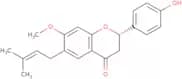
CAS:<p>Bavachinin A is a prenylated flavanone, which is a type of natural compound. It is sourced from the seeds of Psoralea corylifolia, a plant commonly found in traditional Chinese and Indian medicine. The compound exhibits its mode of action primarily through the modulation of specific cellular pathways, including the inhibition of certain enzymes and interaction with receptor sites that play a crucial role in inflammatory and oxidative stress responses.</p>Fórmula:C21H22O4Pureza:Min. 95%Forma y color:SolidPeso molecular:338.4 g/mol