Nucleótidos
Subcategorías de "Nucleótidos"
Se han encontrado 2635 productos de "Nucleótidos"
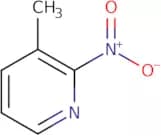
3-Methyl-2-nitropyridine
CAS:3-Methyl-2-nitropyridine is a high yield byproduct of formamide, which can be activated to form an intermediate for the synthesis of nucleosides. The kinetics and labeling of this intermediate were studied using a transfer experiment. 3-Methyl-2-nitropyridine is acidic, with a pKa value of 3.6, and is reactive towards nucleophiles. It is also catalytic, yielding methyl groups and dioxane as products when heated at temperatures between 180°C and 220°C. In addition, it undergoes nucleophilic substitutions at methoxy groups.
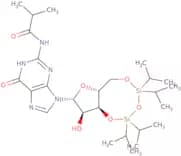
Fórmula:C6H6N2O2Pureza:Min. 95%Forma y color:PowderPeso molecular:138.12 g/molN2-Isobutyryl-3',5'-O-(1,1,3,3-tetraisopropyl-1,3-disiloxanediyl)guanosine
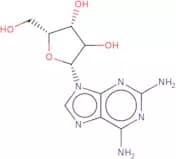
CAS:N2-Isobutyryl-3',5'-O-(1,1,3,3-tetraisopropyl-1,3-disiloxane-diyl)guanosine is a nucleoside that is activated by phosphorylation. It has been shown to be an inhibitor of cancer cell growth and proliferation in vitro. This compound was also found to inhibit the expression of two oncogenes (c-MYC and c-Ki67) and induce the expression of the tumor suppressor gene p53. This nucleoside is synthesized from 2'-deoxyadenosine monophosphate (2'-DAMP) with a modified DNA synthesis protocol.Fórmula:C26H45N5O7Si2Pureza:Min. 95 Area-%Forma y color:White Off-White PowderPeso molecular:595.84 g/mol2-Aminoadenosine
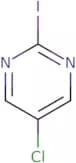
CAS:2-Aminoadenosine is a synthetic nucleoside analog of adenosine in which the purine base is 2,6-diaminopurine, featuring an additional amino group at the C2 position. This modification enhances hydrogen bonding potential and alters base-pairing specificity, allowing it to form three hydrogen bonds with uracil or thymine, in contrast to adenine's two. As a result, 2-aminoadenosine has been studied for its impact on nucleic acid stability, replication fidelity, and enzymatic recognition. It has also shown potential in antiviral and anticancer research due to its ability to disrupt normal RNA and DNA metabolism.Fórmula:C10H14N6O4Pureza:Min. 98 Area-%Forma y color:White PowderPeso molecular:282.26 g/mol5-Chloro-2-iodopyrimidine
CAS:5-Chloro-2-iodopyrimidine is an organic molecule that belongs to the class of trifluoromethylated molecules. It was discovered by a team of chemists in 2006 and has been used as a reagent for the efficient trifluoromethylation of organic molecules. 5-Chloro-2-iodopyrimidine can be catalyzed with copper, which is responsible for its unique reactivity. The synthesis of this molecule has been shown to be efficient in organic chemistry. END>Fórmula:C4H2ClIN2Pureza:Min. 95%Forma y color:PowderPeso molecular:240.43 g/mol2,8-Dimethyladenosine
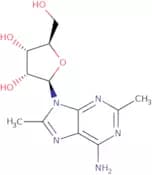
CAS:2,8-Dimethyladenosine is a methylated derivative of the purine nucleoside adenosine, in which methyl groups are added at the 2-position and 8-position of the adenine base.Fórmula:C12H17N5O4Pureza:Min. 95%Forma y color:White PowderPeso molecular:295.29 g/mol3'-Deoxythymidine
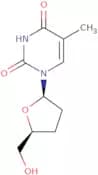
CAS:3'-Deoxythymidine (3DT) is a nucleoside analog that has high resistance to HIV. It is an analogue of the human insulin-like growth factor-1 (IGF-1), which binds to the IGF-1 receptor and inhibits the binding of IGF-1 to its receptor, thereby inhibiting the growth of cells. 3DT has been shown to have a protective effect against radiation in mice, with an LD50 at a dose of 5.0 mg/kg for radiation exposure. 3DT also has antiviral activity against murine sarcoma virus, as well as other biological properties such as enzyme activities and disease activity. This drug may be used in future research on polymerase chain reactions (PCRs) and DNA sequencing, since it is chemically stable and can be easily synthesized.Fórmula:C10H14N2O4Pureza:Min. 95%Forma y color:White PowderPeso molecular:226.23 g/molN4-Benzoyl-2'-deoxy-a-cytidine
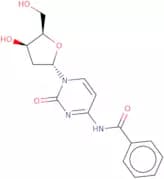
CAS:N4-Benzoyl-2'-deoxy-a-cytidine is a novel, modified nucleoside that has shown anticancer and antiviral activity. It is synthesized by the enzymatic oxidation of 2'-deoxyadenosine with benzoyl chloride and sodium bicarbonate. N4-Benzoyl-2'-deoxy-a-cytidine has been shown to activate transcription, increase DNA synthesis, and inhibit virus replication. It also inhibits bacterial growth, but does not appear to have any effect on mammalian cells.Fórmula:C16H17N3O5Pureza:Min. 95%Forma y color:PowderPeso molecular:331.32 g/mol2’-Deoxyisoguanosine
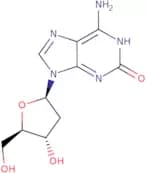
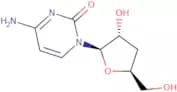
CAS:Incorporated in DNA/RNA hybrids and mismatch pairs to analyse helix stabilityFórmula:C10H13N5O4Pureza:Min. 95%Forma y color:PowderPeso molecular:267.24 g/mol3'-Deoxycytidine
CAS:3'-Deoxycytidine is a nucleoside analog used to treat hepatitis. It is an inhibitor of the viral enzyme reverse transcriptase and prevents the synthesis of viral DNA by blocking the formation of low-energy hydrogen bonds between the 3'-hydroxyl group and the 5'-phosphate group of deoxyribonucleotide triphosphates. 3'-Deoxycytidine can be synthesized using solid-phase methods, and has been shown to inhibit human immunodeficiency virus (HIV) in control experiments. This drug also has been shown to have anti-inflammatory effects in experimental bladder inflammation models.Fórmula:C9H13N3O4Pureza:Min. 95%Forma y color:White PowderPeso molecular:227.22 g/mol7-Deaza-2',3'-dideoxyguanosine
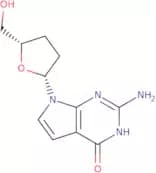
CAS:7-Deaza-2',3'-dideoxyguanosine is a nucleoside analogue that is silylated on the 2' and 3' hydroxyl groups. It is also substituted with a deoxygenated 7-deaza-2',3'-dideoxyribose moiety. The substitution of the ribose sugar with deoxygenated 7-deaza-2',3'-dideoxyribose prevents the formation of hydrogen bonds between the sugar and phosphate backbones, which inhibits the enzyme ribonucleotide reductase from catalyzing the conversion of ribonucleotides to deoxynucleotides. This in turn blocks DNA synthesis, leading to cell death.br>
7-Deaza-2',3'-dideoxyguanosine has been shown to be effective against Mycobacterium tuberculosis and Mycobacterium avium complex.Fórmula:C11H14N4O3Pureza:Min. 95%Forma y color:PowderPeso molecular:250.26 g/mol2,2'-Anhydrocytidine HCl
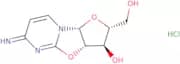
CAS:2,2'-Anhydrocytidine HCl is a nucleoside for use as a DNA synthesis inhibitor
Fórmula:C9H11N3O4·HClPureza:Min. 98 Area-%Forma y color:White PowderPeso molecular:261.66 g/molN1-Methylguanosine
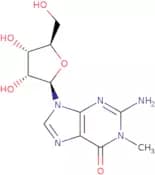
CAS:Producto controladoN1-Methylguanosine is a methylated nucleotide that is incorporated into the growing DNA chain during protein synthesis. The incorporation of N1-methylguanosine into the growing DNA chain can cause frameshifting, which creates an unusual amino acid sequence. This effect has been shown in model organisms, such as Saccharomyces cerevisiae and Escherichia coli. In these organisms, N1-methylguanosine has been shown to induce cancer when added to the growth medium. It is also found in urine samples from people with bladder cancer and has been used to identify urinary tract cancers. Titration calorimetry studies have shown that N1-methylguanosine binds to a chelate ligand and forms a disulfide bond with cysteine residues on proteins or peptides, which may lead to mitochondrial dysfunction by interfering with hydrogen bonding interactions. Messenger RNA studies show that N1-methylguanosine inhibits translation of mRNA by binding to
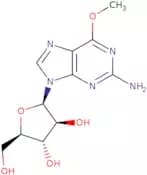
Fórmula:C11H15N5O5Pureza:Min. 95%Forma y color:White PowderPeso molecular:297.27 g/molNelarabine
CAS:Nelarabine is a drug that prevents the growth of cells by inhibiting the bcr-abl kinase, which is an intracellular target. This drug has been shown to be effective against pediatric patients with t-cell acute lymphoblastic leukemia and adults with chronic myeloid leukemia. Nelarabine has minimal toxicity in humans and is not toxic to healthy cells. It has been shown to have anti-inflammatory properties and may be used as a biomarker for autoimmune diseases. Nelarabine also inhibits angiogenesis, which may be due to its effects on nuclear DNA.
Fórmula:C11H15N5O5Pureza:Min. 95%Forma y color:White PowderPeso molecular:297.27 g/molN-Phenylpyridin-4-amine
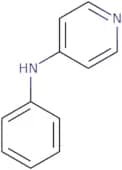
CAS:N-Phenylpyridin-4-amine is a tautomeric compound that has been shown to inhibit the growth of cancer cells. It is able to bind to tyrosine kinase and inhibit its activity, which affects the proliferation of cancer cells. N-Phenylpyridin-4-amine also inhibits mitochondrial functions by inhibiting cytochrome c oxidase. This drug also has an anti-inflammatory effect, inhibiting the production of cytokines such as IL1β, IL6, and TNFα. The biological function of N-Phenylpyridin-4-amine is not yet fully understood. It may be due to the inhibition of protein tyrosine phosphatases (such as PTP1B), which are involved in insulin signalling pathways.Fórmula:C11H10N2Pureza:Min. 95%Forma y color:White Off-White PowderPeso molecular:170.21 g/mol2,3,5-Tri-O-acetyl α-adenosine
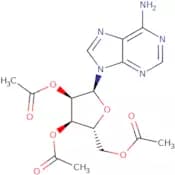
CAS:2,3,5-Tri-O-acetyl α-adenosine is a nucleoside analog of adenosine that has been tri-acetylated. This molecule can be used in research.Fórmula:C16H19N5O7Pureza:Min. 95%Forma y color:PowderPeso molecular:393.35 g/mol2'-O-Propargylcytidine
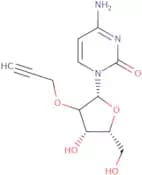
CAS:2'-O-Propargylcytidine is a novel nucleoside that has been modified from cytidine. It is designed to inhibit the activity of RNA polymerase and to be used in anticancer therapy. The synthesis of 2'-O-propargylcytidine has been achieved by modifying the nucleotide with propargylic chloride, which is then reacted with sodium cyanide. The resulting product is purified by column chromatography and recrystallization.
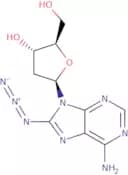
2'-O-Propargylcytidine is a phosphoramidite that can be used for DNA synthesis or as a monophosphate in RNA synthesis. This high purity product has a CAS number of 206552-85-4 and it can be used as an activator for ribonucleosides, such as adenosine, guanosine, uridine, cytidine, and thymidine.Fórmula:C12H15N3O5Pureza:Min. 95%Forma y color:PowderPeso molecular:281.26 g/mol8-Azido-2'-deoxyadenosine
CAS:8-azido-2-deoxyadenosine is an azide funcationalised nuceleoside
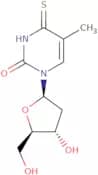
Fórmula:C10H12N8O3Pureza:Min. 95%Forma y color:PowderPeso molecular:292.25 g/mol4-Thiothymidine
CAS:4-Thiothymidine is a nucleoside analog that is converted to thymidine by the enzyme thymidine kinase. It has been shown to inhibit the growth of human skin cancer cells by binding to DNA duplexes and inhibiting the synthesis of new DNA strands. 4-Thiothymidine has also been shown to be effective against radiation-induced damage in cultured human cells and inhibits tumor growth in mice bearing a transplantable mouse skin cancer. 4-Thiothymidine can be used as an inhibitor for chemotherapy or radiation therapy for cancer patients. It is active on both site-specific and cell-specific gene targets, with a reactive hydrogen bond that helps stabilize its formation.Fórmula:C10H14N2O4SPureza:Min. 98 Area-%Forma y color:Yellow PowderPeso molecular:258.3 g/molN6-Methyl-2'-O-methyladenosine
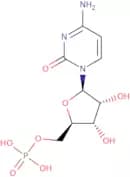
CAS:N6-Methyl-2'-O-methyladenosine is a nucleoside that is found in DNA. In some cases, the methyl group in this molecule can be modified, which can change its biological activity. N6-Methyl-2'-O-methyladenosine has been shown to reduce the severity of bowel disease and myocardial infarcts in experimental models. The structural analysis of vessels from patients with atherosclerosis revealed that this molecule inhibits vascular calcification. It also decreases expression of MMP-9, a protein involved in nephropathy and diabetic kidney disease. N6-Methyl-2'-O-methyladenosine is able to inhibit the development of vascular injury by blocking the activation of cells and reducing inflammation through pharmacological agents that are used in experimental models for blood vessel injury.Fórmula:C12H17N5O4Pureza:Min. 97 Area-%Forma y color:White PowderPeso molecular:295.29 g/molCytidine 5'-monophosphate free acid
CAS:Cytidine 5'-monophosphate is a nucleotide that is important in the synthesis of DNA and RNA. It is a precursor to uridine monophosphate (UMP) and uridylic acid (UDP). Cytidine 5'-monophosphate has been found to inhibit the growth of antibiotic-resistant strains of bacteria, such as those resistant to ampicillin, chloramphenicol, tetracycline, kanamycin, and streptomycin. Cytidine 5'-monophosphate also has inhibitory properties against energy metabolism and protein oxidation in bowel disease. This nucleotide has been shown to increase the rate constant for polymerase chain reaction (PCR) by up to 10-fold.Fórmula:C9H14N3O8PPureza:Min. 98 Area-%Forma y color:White Off-White PowderPeso molecular:323.2 g/mol