Nucleótidos
Subcategorías de "Nucleótidos"
Se han encontrado 2638 productos de "Nucleótidos"
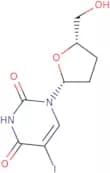
2',3'-Dideoxy-5-iodouridine
CAS:2',3'-Dideoxy-5-iodouridine is a synthetic nucleoside analog derived from uridine, one of the natural building blocks of RNA. This molecule has been chemically modified to disrupt the normal processes of DNA and RNA synthesis, making it a candidate for antiviral and anticancer research.Fórmula:C9H11IN2O4Pureza:Min. 95%Forma y color:PowderPeso molecular:338.1 g/mol2'-O-Methyl-5-propynyluridine
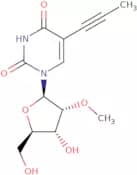
CAS:2'-O-Methyl-5-propynyluridine is a nucleoside that is selective to bacterial DNA. It has been shown to inhibit the binding of RNA polymerase and DNA gyrase, as well as the synthesis of RNA and DNA. This nucleoside also inhibits the formation of triplexes in vitro with oligonucleotides complementary to sequences in the 16S ribosomal RNA gene. 2'-O-Methyl-5-propynyluridine has been used for the measurement of RNA polymerase activity in bacteria, and its affinity for triplexes can be measured by gel shift assay.Fórmula:C13H16N2O6Pureza:Min. 95%Forma y color:PowderPeso molecular:296.28 g/molAdenosine
CAS:Endogenous adenosine receptor ligand; regulator of innate immunityFórmula:C10H13N5O4Pureza:(Titration) 99.0 To 101.0%Forma y color:White PowderPeso molecular:267.25 g/mol8-Azaadenosine
CAS:8-Azaadenosine is a purine nucleoside that is used as a template for DNA replication. The zwitterionic form of 8-Azaadenosine is found in plants and is converted to the charged form by enzymatic reactions. 8-Azaadenosine binds to the dna template strand and acts as a hydrogen bond donor, which stabilizes the transition state of the reaction and inhibits enzyme activity. This drug has been shown to affect polymerase chain reaction (PCR) by inhibiting DNA synthesis and it has been used in cancer cell lines with resistant mutants, such as Herpes simplex virus type 1 (HSV1).Fórmula:C9H12N6O4Pureza:Min. 97 Area-%Forma y color:Off-White PowderPeso molecular:268.23 g/mol2',3',5'-Tri-O-benzoyl-N6-benzyl-2'-C-methyladenosine
CAS:2',3',5'-Tri-O-benzoyl-N6-benzyl-2'-C-methyladenosine is an adenosine analog for potential use in research into antiviral drug development or nucleoside analogs.Fórmula:C39H33N5O7Pureza:Min. 95%Forma y color:PowderPeso molecular:683.71 g/mol2'-O-Methyl-N6-phenoxyacetyladenosine
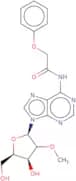
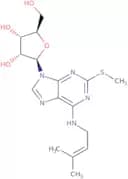
CAS:2'-O-Methyl-N6-phenoxyacetyladenosine is a phosphoramidite nucleoside that is used in the synthesis of DNA and RNA. It has antiviral, anticancer, and antiribonucleases properties. The chemical structure of 2'-O-Methyl-N6-phenoxyacetyladenosine is similar to that of adenosine, but contains a methyl group on C2' position and an oxyalkyl group on N6. This compound can be used as a novel anticancer agent and has been shown to have high affinity for the purine receptor, inhibiting cancer cell proliferation by activating the p53 tumor suppressor pathway.Fórmula:C19H21N5O6Pureza:Min. 95%Forma y color:White to off-white solid.Peso molecular:415.41 g/mol2-Methylthio-N6-isopentenyladenosine
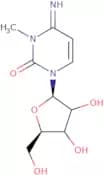
CAS:A nucleoside analogue of adenosine that arises from post-transcriptional modification. In humans, this is mediated by the enzyme CDK5RAP1 in mitochondrial transfer RNA (tRNA) at amino acid 37. Deficiency for this modification, for example due to CDK5RAP1 deficiency, leads to impaired mitochondrial protein synthesis. This has implications for mitochondrial diseases, as well as cancer, type II diabetes and vitiligo. Synthetic ms2i6A can be used to raise monoclonal antibodies against this nucleotide in vivo.Fórmula:C16H23N5O4SPureza:Min. 95%Forma y color:White PowderPeso molecular:381.45 g/molN3-Methylcytidine
CAS:N3-Methylcytidine is a synthetic analog of uridine. It is used for the treatment of syncytial virus infection, which is a group of diseases caused by viruses that have an RNA genome and replicate by forming syncytia—large groups of infected cells. N3-Methylcytidine inhibits the synthesis of proteins in cells and inhibits the growth of bacteria. This drug has been shown to inhibit actin polymerization and prevents cell spreading. N3-Methylcytidine also binds to RNA polymerase II and blocks its interaction with DNA, inhibiting protein synthesis at the ribosome level. N3-Methylcytidine is metabolized in vivo into methylated cytidine, which can be detected in urine samples using chemical biology methods or fluorescence resonance energy transfer (FRET) analysis. Synonyms: N3-methyluridine; 3-methyluridineFórmula:C10H15N3O5Pureza:Min. 95%Forma y color:White PowderPeso molecular:257.24 g/mol2'-Amino-2'-deoxyadenosine
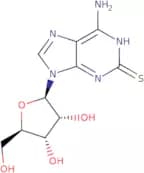
CAS:2'-Amino-2'-deoxyadenosine is a modified nucleoside, closely related to adenosine in which the 2'-hydroxyl group is replaced by an amino group. This compound has potential research applicationsFórmula:C10H14N6O3Pureza:Min. 95%Forma y color:PowderPeso molecular:266.26 g/mol2-Thioadenosine
CAS:Intermediate in the synthesis of cangrelor
Fórmula:C10H13N5O4SPureza:Min. 95%Forma y color:White PowderPeso molecular:299.31 g/mol1-(2'-Deoxy-5'-O-DMT-2'-fluoro-β-D-arabinofuranosyl)thymine
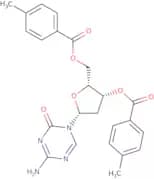
CAS:1-(2'-Deoxy-5'-O-DMT-2'-fluoro-b-D-arabinofuranosyl)thymine is a chemically modified nucleoside that contains a fluorinated sugar moiety and a thymine base, with a dimethoxytrityl (DMT) protecting group on the 5'-hydroxyl of the sugar.Fórmula:C31H31FN2O7Pureza:Min. 95%Peso molecular:562.6 g/mol1-(2'-Deoxy-3',5'-di-O-toluoyl-b-D-ribofuranosyl)-4-amino-1,2-dihydro-2-oxo-1,3,5-triazine
CAS:1-(2'-Deoxy-3',5'-di-O-toluoyl-b-D-ribofuranosyl)-4-amino-1,2-dihydro-2-oxo-1,3,5-triazine is a nucleoside derivative that features a modified pyrimidinone (triazine) base attached to a protected deoxyribose sugar. This molecule can be used in research.Fórmula:C24H24N4O6Pureza:Min. 95%Forma y color:White To Off-White SolidPeso molecular:464.48 g/molInosine 5'-triphosphate trisodium
CAS:Inosine 5'-triphosphate trisodium (ITP) is a nucleotide that is found in human cells. It is produced by the enzyme inosine monophosphate dehydrogenase and acts as an intermediate in cellular metabolism. ITP has been shown to be involved in a number of diseases, such as infectious, autoimmune, and cardiovascular diseases. For example, ITP has been shown to induce the expression of TLR-2 and TLR-4 on human monocyte-derived dendritic cells. The molecule also plays a role in pediatric disease activity, bowel disease, and congestive heart failure.Fórmula:C10H12N4O14P3Na3Pureza:Min. 90 Area-%Forma y color:PowderPeso molecular:574.11 g/mol6-Benzyl-2-thiouracil
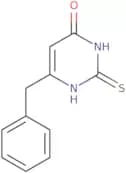
CAS:6-Benzyl-2-thiouracil (BTS) is a benzyl group with the chemical formula C12H8N2OS. It has been used as an anti-infective agent and has been shown to have a clinical relevance in treating hepatitis, cutaneous lesions, and inflammatory bowel disease. BTS is metabolized through oxidation of the benzyl group by cytochrome P450 enzymes. This active form has been shown to inhibit mitochondrial fatty acid synthesis, which may be a pathogenic mechanism for BTS in women with metabolic syndrome. The metabolism of BTS also results in its conversion to 2-benzylpyrimidine, which can be converted into a carcinogen by N-nitrosation.
Fórmula:C11H10N2OSPureza:Min. 95%Forma y color:PowderPeso molecular:218.28 g/mol1-(3',5'-Di-O-benzoyl-2'-deoxy-2'-fluoro-β-D-arabinofuranosyl)thymine
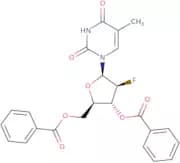
CAS:1-(3',5'-Di-O-benzoyl-2'-deoxy-2'-fluoro-b-D-arabinofuranosyl)thymine is a chemically modified nucleoside analog. This compound contains a thymine base, a 2'-fluoro-β-D-arabinofuranose sugar, which alters biological stability and function and benzoyl protecting groups at the 3' and 5' positions, commonly used in nucleoside synthesis to control selective modifications.Fórmula:C24H21FN2O7Pureza:Min. 95%Forma y color:White To Off-White SolidPeso molecular:468.43 g/mol3',5'-O-(1,1,3,3-Tetraisopropyl-1,3-disiloxanediyl)uridine
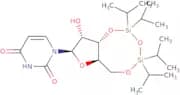
CAS:Used as aprotected uridine nucleoside in RNA synthesis. The 1,1,3,3-tetraisopropyl-1,3-disiloxanediyl (TIPDS or TBDPSi2) group serves as a bulky and selectively acid-labile protecting group for the 3' and 5' hydroxyl groups of the uridine ribonucleoside during RNA oligonucleotide synthesis.Fórmula:C21H38N2O7Si2Pureza:Min. 95%Forma y color:White PowderPeso molecular:486.71 g/mol7-Deaza 2-C-methyl-N6-methyladenosine
CAS:7-Deaza 2-C-methyl-N6-methyladenosine is a nucleoside that is modified with a methyl group at the 7 position of the deoxyribose ring. It has antiviral and anticancer properties. 7-Deaza 2-C-methyl-N6-methyladenosine is an activator of phosphoramidites, which are compounds that can be used to synthesize DNA or RNA.Fórmula:C13H18N4O4Pureza:Min. 95 Area-%Peso molecular:294.31 g/mol8-Bromoadenosine
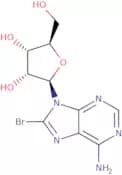
CAS:8-Bromoadenosine is a nucleotide that is structurally related to adenosine. It can be used as an inhibitor of guanine nucleotide-binding proteins and has shown biological properties in vitro. 8-Bromoadenosine has been shown to inhibit the mitochondrial membrane potential, cytosolic Ca2+, and the synthesis of RNA and protein. 8-Bromoadenosine also inhibits leukemia inhibitory factor (LIF) production by 3T3-L1 preadipocytes and induces apoptosis in T84 cells. The drug may be useful for the treatment of leukemia or obesity-related diseases such as diabetes mellitus type 2.
Fórmula:C10H12BrN5O4Pureza:Min. 95%Forma y color:Yellow PowderPeso molecular:346.14 g/mol4-Amino-1-(2-deoxy-α-D-erythro-pentofuranosyl)-5-methyl-2(1H)-pyrimidinone
CAS:4-Amino-1-(2-deoxy-α-D-erythro-pentofuranosyl)-5-methyl-2(1H)-pyrimidinone is a novel phosphate derivative of ribonucleosides, including 2'-deoxyadenosine and 2'-deoxycytidine. 4ADP has antiviral and anticancer activities, and can be used as a substrate for the synthesis of phosphoramidites. These derivatives are modified by the introduction of substituents at the 5' position of the pentose sugar. The monophosphate form is synthesized by reacting with sodium hydroxide followed by hydrolysis with dilute acid. The diphosphate form is synthesized by reacting with phosphorus oxychloride in presence of pyridine.Fórmula:C10H15N3O4Pureza:Min. 95%Peso molecular:241.24 g/mol2'-O-(2-Methoxyethyl)-5-methylcytidine
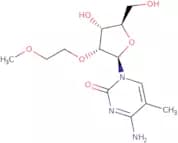
CAS:2'-O-(2-methoxyethyl)-5-methylcytidine is a novel antiviral monophosphate nucleoside that has been shown to be a potent activator of the immune system. It was synthesized by modifying a deoxyribonucleoside and phosphoramidite. 2'-O-(2-methoxyethyl)-5-methylcytidine is synthetic and can be used as an anticancer drug for the treatment of leukemia, lymphoma, and other cancers. This compound has also shown efficacy in treating diphosphate nucleotides such as HIV-1 reverse transcriptase, which is an enzyme crucial for viral replication.Fórmula:C13H21N3O6Pureza:Min. 98 Area-%Forma y color:PowderPeso molecular:315.32 g/mol3',5'-O-(1,1,3,3-Tetraisopropyl-1,3-disiloxanediyl)guanosine
CAS:Used as a protected guanosine nucleoside in RNA synthesis. The 1,1,3,3-tetraisopropyl-1,3-disiloxanediyl (TIPDS or TBDPSi2) group acts as a bulky and selectively acid-labile protecting group for the 3' and 5' hydroxyl groups of the guanosine ribonucleoside during RNA oligonucleotide synthesis.Fórmula:C22H39N5O6Si2Pureza:Min. 97 Area-%Forma y color:PowderPeso molecular:525.76 g/moltrans-Zeatin riboside
CAS:Trans-zeatin riboside is a cytokinin that is structurally related to adenosine. It has been shown to inhibit the adenosine a3 receptor, which decreases the production of reactive oxygen species in human serum and enhances the uptake of glucose. Trans-zeatin riboside also inhibits nuclear DNA fragmentation and increases water permeability in plant tissues. This chemical has been shown to stimulate photosynthetic activity in plants at an optimum concentration of 10 μg/ml. Trans-zeatin riboside should be stored at -20 degrees Celsius for long-term storage.Fórmula:C15H21N5O5Forma y color:White Off-White PowderPeso molecular:351.36 g/molCoenzyme A trilithium salt
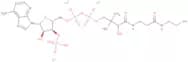
CAS:Coenzyme A trilithium salt is a synthetic cofactor that is used in the synthesis of long-chain fatty acids. It is membrane permeable and has minimal toxicity, making it an attractive candidate for treating hepatic steatosis. Coenzyme A trilithium salt also activates human mitochondrial beta-oxidation by increasing the availability of substrate and enhancing the expression of genes involved in beta-oxidation. This molecule has been shown to be effective in improving the symptoms of X-linked adrenoleukodystrophy (X-ALD) by stimulating creatine kinase activity and suppressing lysosomal accumulation of long chain fatty acids.
Fórmula:C21H33Li3N7O16P3SPureza:Min. 80%Forma y color:White Off-White PowderPeso molecular:785.33 g/mol5'-O-DMT-N2-isobutyryl-2'-O-methylguanosine
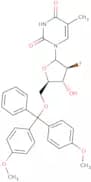
CAS:5'-O-DMT-N2-isobutyryl-2'-O-methylguanosine is a nucleoside that has been synthesized using an oxime opening of the 5' position and a methylation at the 2' position. It has been shown to have an affinity for tissues in a chemotactic assay. The compound is minimised to remove non-specific binding sites, avoiding false positives on the checklist. This molecule has been analysed with fluorescence spectroscopy and microscopy techniques, which revealed that it is distributed in tissues as well as being found in dragonflies. It was also shown to be transduced by muscle cells and geochemically detected in limestone from China.Fórmula:C36H39N5O8Pureza:Min. 95%Forma y color:PowderPeso molecular:669.74 g/mol2'-Deoxy-5'-O-DMT-2'-fluoro-5-methyluridine
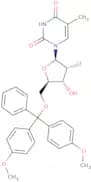
CAS:This is a nucleoside analog that has antiviral properties. It is a monophosphate derivative of 2'-deoxy-5'-O-DMT-2'-fluoro-5-methyluridine and has been shown to be an activator of RNA polymerase II transcription in vitro. This compound is also a novel, high quality, high purity reagent for the synthesis of phosphoramidites. 2'-Deoxy-5'-O-DMT-2'-fluoro-5-methyluridine is CAS No. 133324-02-4 and can be used as a diphosphate or DNA nucleoside analog with antiviral properties. 2'-Deoxy-5'-O-DMT-2'-fluoro-5-methyluridine is synthesized by reacting 5' deoxyribose phosphate with the corresponding 2',3' or 4' fluoro amidite in the presence of a base. The ribonucleFórmula:C31H31FN2O7Pureza:Min. 95%Forma y color:White PowderPeso molecular:562.59 g/molGuanosine-5'-[(b,γ)-imido]triphosphate sodium salt
CAS:Guanosine-5'-[(b,gamma)-imido]triphosphate sodium salt is a novel antiviral agent that has been shown to inhibit the replication of human adenovirus type 5 (AdV-5) and herpes simplex virus type 1 (HSV-1). It is phosphorylated by adenylate kinase to guanosine diphosphate. Guanosine-5'-[(b,gamma)-imido]triphosphate sodium salt is an activator for DNA polymerase alpha and DNA topoisomerase I. It also inhibits the proliferation of tumor cells in culture.Fórmula:C10H17N6O13P3·xNaPureza:Min. 95%Forma y color:White PowderPeso molecular:522.2 g/mol2-Chloro-N6-cyclopentyladenosine hemihydrate
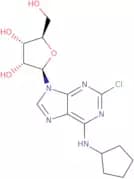
CAS:2-Chloro-N6-cyclopentyladenosine hemihydrate is a synthetic adenosine analog with potential research applicationsFórmula:C15H20ClN5O4H2OPureza:Min. 98 Area-%Forma y color:PowderPeso molecular:378.81 g/mol5'-O-[Bis(4-methoxyphenyl)(phenyl)methyl]-2'-deoxy-N-isobutyrylguanosine
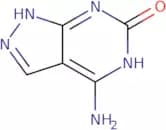
CAS:5'-O-[Bis(4-methoxyphenyl)(phenyl)methyl]-2'-deoxy-N-isobutyrylguanosine is a synthetic nucleoside that is used as a building block in the synthesis of oligonucleotides. This chemical has an electronegativity value of 1.7, which means that it is more electronegative than guanine (1.0). It also has a conjugated system and is stable under a range of conditions. 5'-O-[Bis(4-methoxyphenyl)(phenyl)methyl]-2'-deoxy-N-isobutyrylguanosine reacts with tetrazole in the presence of phosphoramidite, yielding the corresponding 5'-O-(4,4'-dimethoxytrityl)-2'-deoxy-N-isobutyrylguanosine, which can then be used toFórmula:C35H37N5O7Pureza:Min. 98 Area-%Forma y color:White PowderPeso molecular:639.71 g/mol4-Amino-6-hydroxypyrazolo(3,4-D)pyrimidine
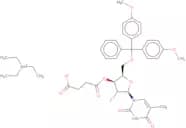
CAS:4-Amino-6-hydroxypyrazolo(3,4-D)pyrimidine is an anti-inflammatory drug that is used to treat bowel disease. It is also used as a polymer conjugate to treat cancer, and in the prevention of transplant rejection. 4-Amino-6-hydroxypyrazolo(3,4-D)pyrimidine has been shown to have antioxidant properties and may be effective in preventing inflammatory diseases such as inflammatory bowel disease. It has also been shown to act as an antihypertensive agent by inhibiting angiotensin I converting enzyme (ACE).Fórmula:C5H5N5OPureza:Min. 95%Peso molecular:151.13 g/mol1-(2'-Deoxy-5'-O-DMT-2'-fluoro-β-D-arabinofuranosyl)thymine 3'-O-succinate triethylammonium
1-(2'-Deoxy-5'-O-DMT-2'-fluoro-b-D-arabinofuranosyl)thymine 3'-O-succinate triethylammonium salt is a compound used in the synthesis of oligonucleotides. The synthesis of such compounds often involves the use of protecting groups, such as the 4,4'-dimethoxytrityl (DMT) group, to prevent unwanted reactions during the synthesis process. The 2'-fluoro modification is of particular interest due to its potential to alter the chemical and biological properties of the resulting oligonucleotides. Fluorinated nucleosides and their analogs have been extensively studied for their antiviral and anticancer activitiesFórmula:C35H34FN2O10•C6H16NPureza:Min. 95%Peso molecular:763.87 g/mol6-Chloro-7-deaza-9-(b-D-ribofuranosyl)purine
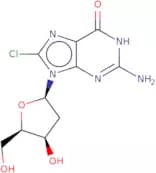
CAS:6-Chloro-7-deaza-9-(b-D-ribofuranosyl)purine is a novel nucleoside that has been shown to be an efficient activator of the transcription factor NFκB in vitro. 6-Chloro-7-deaza-9-(b-D-ribofuranosyl)purine is synthesized by phosphoramidite chemistry and purified by HPLC. It has been demonstrated to inhibit the replication of human immunodeficiency virus (HIV) in a dose dependent manner, which may be due to its ability to inhibit the synthesis of viral DNA and RNA. This product is highly pure and can be used for many purposes, including as a synthetic building block for DNA or as an antiviral drug.Fórmula:C11H12ClN3O4Pureza:Min. 95%Forma y color:White PowderPeso molecular:285.69 g/mol8-Chloro-2'-deoxyguanosine
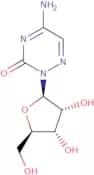
CAS:8-Chloro-2'-deoxyguanosine is a reactive oxygen species that can cause oxidative damage to DNA. This compound is generated by the hypochlorous acid (HOCl) in cells and can be found in human tissues. 8-Chloro-2'-deoxyguanosine can also be generated by the HOCl in diabetic patients, where it has been shown to cause oxidative damage to DNA. 8-Chloro-2'-deoxyguanosine is a product of the reaction between hydrogen peroxide and catalase, and it is activated by HOCl. It has been shown to be carcinogenic in animal models, where it causes DNA damage that leads to cancer.Fórmula:C10H12ClN5O4Pureza:Min. 95%Forma y color:PowderPeso molecular:301.69 g/mol6-Azacytidine
CAS:6-Azacytidine is a molecule that contains a hydroxyl group and a glycosidic bond. It has been shown to inhibit the growth of mollicutes, which are non-cellular bacteria. 6-Azacytidine has also been shown to be toxic in animal tissue culture studies. The drug can be eliminated through the urine or bile after being metabolized by the liver. 6-Azacytidine is not active against human cells in cell culture, but it does show some toxicity against human liver cells.Fórmula:C8H12N4O5Pureza:Min. 95%Forma y color:PowderPeso molecular:244.2 g/mol5'-Carboxy-2-chloro-2'-3'-O-isopropylideneadenosine
CAS:5'-Carboxy-2-chloro-2'-3'-O-isopropylideneadenosine is a monophosphate nucleoside that inhibits viral replication by inhibiting the synthesis of both DNA and RNA. This compound is used to treat cancers such as leukemia, lymphoma, and multiple myeloma. It also has antiviral properties that are active against herpes simplex virus (HSV) and human cytomegalovirus (CMV). 5'-Carboxy-2-chloro-2'-3'-O-isopropylideneadenosine is a modified nucleoside with a phosphoramidite group on the 2' position of the ribose sugar.Fórmula:C13H14ClN5O5Pureza:Min. 95%Forma y color:Off-White PowderPeso molecular:355.74 g/molGuanosine 3',5'-cyclic monophosphate sodium salt
CAS:Guanosine 3',5'-cyclic monophosphate sodium salt (cGMP) is a cyclic nucleotide that is involved in the regulation of many cellular processes. It binds to specific guanine nucleotide-binding proteins (G proteins) and activates protein kinase A, which regulates glucose metabolism and energy production. cGMP also affects neuronal death, axonal growth, and bowel disease by acting as a cyclase inhibitor or activating the immune system. It has been shown to reduce the severity of infectious diseases such as HIV and malaria by activating the immune system.Fórmula:C10H11N5NaO7PPureza:Min. 95%Forma y color:PowderPeso molecular:367.19 g/mol5'-O-Tritylthymidine
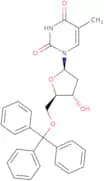
CAS:5'-O-Tritylthymidine is a nucleoside that is found in human mitochondrial DNA. It is synthesized from uridine by the enzyme thymidylate synthase and can be converted to thymine by the enzyme thymidine phosphorylase. 5'-O-Tritylthymidine has been shown to inhibit cancer cell growth, but its mechanism of action is not clear. It may inhibit xylene production. 5'-O-Tritylthymidine also causes an increase in p53 activity, which may lead to apoptosis of cancer cells.Fórmula:C29H28N2O5Pureza:Min. 95%Peso molecular:484.54 g/mol9-Deazaguanosine
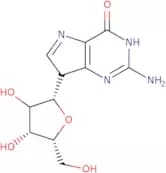
CAS:9-Deazaguanosine is a naturally occurring purine, which has been shown to inhibit the binding of adenosine deaminase enzyme. This enzyme is responsible for the conversion of adenosine to inosine, and plays a role in the replication of viruses. 9-Deazaguanosine has also been shown to have an inhibitory effect on trichomonas vaginalis, benzyl groups, and anomers. The hydroxyl group on 9-Deazaguanosine interacts with mammalian cells which may be related to its inhibitory effect on leishmania and hepatitis.
Fórmula:C11H14N4O5Pureza:Min. 95%Forma y color:PowderPeso molecular:282.25 g/mol2'-Deoxy-2'-fluoro-N2-isobutyrylguanosine
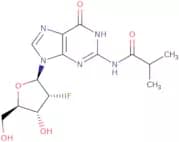
CAS:2'-Deoxy-2'-fluoro-N2-isobutyrylguanosine is a modified nucleoside analog for research applicationsFórmula:C14H18FN5O5Pureza:Min. 95%Forma y color:White PowderPeso molecular:355.33 g/molPalmitoyl coenzyme A potassium salt
CAS:Palmitoyl coenzyme A potassium salt is a novel, modified nucleoside that has antiviral and anticancer activities. It is a phosphoramidite with a phosphate group at one end and a palmitoyl group at the other. The phosphate group is attached to the 5' position of the sugar, while the palmitoyl group is attached to the 3' position of the sugar. Palmitoyl coenzyme A potassium salt can be used in DNA synthesis.Fórmula:C37H65N7O17P3SKPureza:Min. 95%Forma y color:White PowderPeso molecular:1,044.03 g/mol2'-O-(2-Methoxyethyl)-5-methyluridine
CAS:2'-O-(2-Methoxyethyl)-5-methyluridine is a uridine nucleoside that has been prepared by the reaction of amidite with 5-methyluridine. 2'-O-(2-Methoxyethyl)-5-methyluridine is an important intermediate in the synthesis of oligonucleotides, which are synthesized from phosphoramidites. The phenyl group on the amido group is a reactive group that reacts with other functional groups to form an oligonucleotide. 2'-O-(2-Methoxyethyl)-5-methyluridine has a high yield and can be used as a reagent for organic chemistry.Fórmula:C13H20N2O7Pureza:Min. 98 Area-%Forma y color:White PowderPeso molecular:316.31 g/mol2,6-Dichloro-9-(β-D-ribofuranosyl)purine
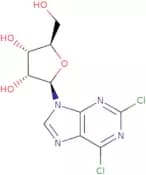
CAS:2,6-Dichloro-9-(β-D-ribofuranosyl)purine is a nucleoside analog composed of a modified purine base and a ribose sugar. It has possible applications as an intermediate in nucleoside chemistry, particularly for the synthesis of functionalized purine nucleosides used in biological and pharmaceutical research.Fórmula:C10H10Cl2N4O4Pureza:Min. 95%Forma y color:PowderPeso molecular:321.12 g/mol8-Aza-6-hydroxy-2-mercaptopurine
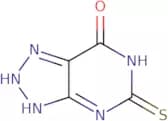
CAS:8-Aza-6-hydroxy-2-mercaptopurine (8AzaMP) is a novel nucleoside analog that is an activator of the thymidylate synthase enzyme. It has been shown to inhibit the replication of many DNA viruses and to inhibit tumor growth in animal models. 8AZA MP has been evaluated in Phase I and II clinical trials for the treatment of various cancers, including malignant melanoma, renal cell carcinoma, and chronic lymphocytic leukemia. This drug has also shown promise as a chemotherapeutic agent for AIDS patients with HIV infection or AIDS-related complex.Fórmula:C4H3N5OSPureza:Min. 95%Forma y color:PowderPeso molecular:169.17 g/molN4-Acetyl-2'-deoxy-5'-O-DMT-2'-fluorocytidine
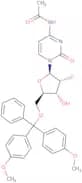
CAS:N4-Acetyl-2'-deoxy-5'-O-DMT-2'-fluorocytidine is a cytosine analog with high affinity for the T cell receptor. It can be used to generate antibodies against cytosine and as a screening tool for plasmon resonance.
Fórmula:C32H32FN3O7Pureza:Min. 95%Forma y color:White PowderPeso molecular:589.61 g/molCytidine 5'-monophosphate disodium salt
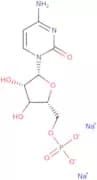
CAS:Cytidine 5'-monophosphate disodium salt (CMPDS) is a prodrug that is converted to cytidine 5'-monophosphate, an active form, in the acidic environment of cancer cells. CMPDS has been shown to inhibit the growth of squamous carcinoma and other solid tumours by binding to survivin, which regulates cell growth and apoptosis. CMPDS also inhibits the activity of matrix metalloproteinases-9 (MMP-9), an enzyme that promotes tumor growth by breaking down connective tissue. This drug can be used as a therapeutic agent for treatment of congestive heart failure due to its ability to increase mitochondrial membrane potential and decrease myocardial infarct size.Fórmula:C9H12N3Na2O8PPureza:Min. 95 Area-%Forma y color:White PowderPeso molecular:367.16 g/molGuanosine 5'-O-(2-thiodiphosphate) trilithium salt
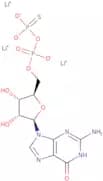
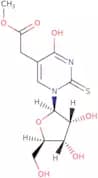
CAS:Guanosine 5'-O-(2-thiodiphosphate) trilithium salt (GTPTS) is a membrane-permeable molecule that hyperpolarizes cells by inhibiting the movement of ions through the cell membrane. GTPTS is activated by extracellular calcium and potassium ions, which are involved in signal transduction pathways. It has been shown to inhibit the release of neurotransmitters, such as acetylcholine, dopamine, serotonin, and norepinephrine. GTPTS also blocks voltage-gated sodium channels, which leads to a reduction in neuronal excitability. The drug has been shown to have analgesic effects in animal models of pain and can be used to treat chronic pain due to nerve damage.Fórmula:C10H12Li3N5O10P2SPureza:Min. 85 Area-%Forma y color:PowderPeso molecular:477.06 g/mol5-Methoxycarbonylmethyl-2-thiouridine
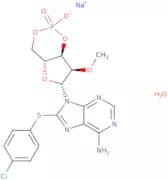
CAS:Nucleoside functionalised on the baseFórmula:C12H16N2O7SPureza:Min. 95 Area-%Forma y color:White Off-White PowderPeso molecular:332.33 g/mol8-(4-Chlorophenylthio)-2'-O-methyladenosine 3',5'-cyclic monophosphate sodium salt
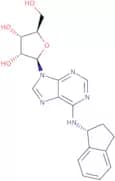
CAS:8-(4-Chlorophenylthio)-2'-O-methyladenosine 3',5'-cyclic monophosphate sodium salt (8-CPT-cAMP) is a cyclic nucleotide that activates adenyl cyclase, which increases intracellular levels of the second messenger cAMP. It also inhibits P2Y receptors and other ion channels. 8-CPT-cAMP has been shown to be effective in activating cells expressing the enzyme camp levels, such as those found in heart muscle cells. This drug is used clinically to lower blood pressure, as it has been shown to activate amp-activated protein kinase and calcium chelator. 8-CPT-cAMP may have clinical applications for the treatment of cancer due to its ability to induce cell cycle arrest and apoptosis.Fórmula:C17H16ClN5O6PS·NaPureza:Min. 95%Forma y color:PowderPeso molecular:507.82 g/mol(R)-N-(2,3-Dihydro-1H-indenyl)adenosine
CAS:(R)-N-(2,3-Dihydro-1H-indenyl)adenosine is a purine nucleoside with the attachment of a 2,3-dihydro-1H-indenyl group via a nitrogen atom. This adenosine-based product can be used for research purposesFórmula:C19H21N5O4Pureza:Min. 95 Area-%Forma y color:White PowderPeso molecular:383.4 g/mol5-(Cyanomethyl)-uridine
CAS:5-(Cyanomethyl)-uridine (5-CMU) is a monophosphate nucleoside that is synthetically derived from uracil. This nucleoside has antiviral activity and can be used to treat infections caused by the herpesviridae family, such as herpes simplex virus type 1 and 2. 5-CMU is modified with cyanomethyl groups on the ribose moiety. It is also a phosphoramidite building block for DNA synthesis and can be used in the preparation of oligonucleotides. The CAS number for 5-CMU is 58479-73-5.Fórmula:C11H13N3O6Pureza:Min. 95%Forma y color:PowderPeso molecular:283.24 g/mol5-Fluorocytosine
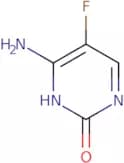
CAS:Flucytosine is an antifungal agent that inhibits the synthesis of DNA by preventing the conversion of deoxyuridine monophosphate to uracil monophosphate. It is used as an antiretroviral therapy in combination with other drugs, such as zidovudine and dideoxyinosine, to treat HIV infections. Flucytosine has been shown to have a strong antitumor response in a model system involving mice with sarcoma 180. This drug can cause serious side effects, including drug interactions and resistance mutations in microorganisms. These side effects are often observed in patients undergoing cancer chemotherapy or immunosuppressive therapy.Fórmula:C4H4FN3OPureza:Min. 95%Forma y color:White PowderPeso molecular:129.09 g/mol









![Guanosine-5'-[(b,γ)-imido]triphosphate sodium salt](/_next/image/?url=https%3A%2Fstatic.cymitquimica.com%2Fproducts%2F3D%2Fthumb-webp%2FNG35450.webp&w=3840&q=75)
![5'-O-[Bis(4-methoxyphenyl)(phenyl)methyl]-2'-deoxy-N-isobutyrylguanosine](/_next/image/?url=https%3A%2Fstatic.cymitquimica.com%2Fproducts%2F3D%2Fthumb-webp%2FND02998.webp&w=3840&q=75)