Nucleótidos
Los nucleótidos son compuestos orgánicos que sirven como building blocks de los ácidos nucleicos, esenciales para la formación del ADN y ARN. Cada nucleótido está compuesto por una base nitrogenada, una molécula de azúcar y uno o más grupos fosfato. Estos nucleótidos se unen para formar largas cadenas, creando el material genético que lleva y transmite la información genética en todos los organismos vivos. En esta sección, encontrará una amplia variedad de nucleótidos cruciales para la investigación en genética, biología molecular y bioquímica. Son fundamentales para estudiar los procesos genéticos, sintetizar ácidos nucleicos y desarrollar herramientas diagnósticas y terapéuticas. En CymitQuimica, ofrecemos nucleótidos de alta calidad para apoyar su investigación científica y aplicaciones, asegurando precisión y fiabilidad en sus experimentos.
Subcategorías de "Nucleótidos"
Se han encontrado 2634 productos de "Nucleótidos"
Ordenar por
Pureza (%)
0
100
|
0
|
50
|
90
|
95
|
100
9-(2'-Deoxy-2'-fluoro-β-D-arabinofuranosyl)guanine
CAS:<p>9-(2'-Deoxy-2'-fluoro-b-D-arabinofuranosyl)guanine is a nucleoside phosphorylase inhibitor that is used to treat inflammatory bowel disease. It has been shown to be effective in treating women with inflammatory bowel disease, and has no significant side effects. 9-(2'-Deoxy-2'-fluoro-b-D-arabinofuranosyl)guanine inhibits the bacterial enzyme nucleoside phosphorylase, which is responsible for the conversion of guanosine triphosphate (GTP) to guanosine diphosphate (GDP). This inhibition prevents the synthesis of DNA and RNA by blocking the conversion of GTP and GDP into AMP and GMP. The drug binds to the active site of nucleoside phosphorylase, which is located in the bacterial cytoplasmic membrane. 9-(2'-Deoxy-2'-fluoro</p>Fórmula:C10H12FN5O4Pureza:Min. 97 Area-%Forma y color:PowderPeso molecular:285.24 g/mol2'-Amino-2'-deoxyadenosine-5'-triphosphate sodium salt - aqueous solution
CAS:<p>2'-Amino-2'-deoxyadenosine-5'-triphosphate sodium salt - aqueous solution is a modified ATP analog, where the ribose has a 2'-amino substitution. This compound has potential research applications</p>Fórmula:C10H17N6O12P3·xNaPureza:Min. 95 Area-%Forma y color:PowderPeso molecular:506.2 g/molAdenosine 5'-diphosphate disodium salt
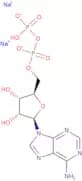
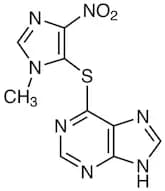
CAS:<p>Adenosine 5'-diphosphate disodium salt is a sodium salt of adenosine 5'-diphosphate. It is found in the extract of plants such as salvianolic acid and rhizoma gastrodiae, as well as in dinucleotide phosphate. This product has been shown to have cardioprotective effects against ischemia reperfusion injury in animal models. It also has congestive heart failure activity, which may be due to its ability to relax vascular smooth muscle and increase the diameter of lymphatic vessels. Adenosine 5'-diphosphate disodium salt has been shown to inhibit the binding of serotonin (5-hydroxytryptamine) to 5-HT2 receptors, which are present in heart tissue.</p>Fórmula:C10H13N5Na2O10P2Pureza:Min. 95 Area-%Forma y color:White PowderPeso molecular:471.16 g/molAzathioprine
CAS:Fórmula:C9H7N7O2SPureza:>98.0%(T)(HPLC)Forma y color:Light yellow to Yellow to Green powder to crystalPeso molecular:277.268-Chloro-2'-deoxyadenosine
CAS:<p>8-Chloro-2'-deoxyadenosine is a nucleoside analogue and a disinfectant that inhibits the synthesis of DNA. It has been used to control active viruses and to induce apoptotic cell death in cancer cells. 8-Chloro-2'-deoxyadenosine binds to viral RNA and DNA, preventing viral replication by inhibiting the activity of reverse transcriptase, which is an enzyme that copies the virus's genetic information from RNA into DNA. This drug has also been shown to be effective for the treatment of HIV infection. 8-Chloro-2'-deoxyadenosine disrupts DNA synthesis and cellular metabolism by blocking transcription and protein synthesis.</p>Fórmula:C10H12ClN5O3Pureza:Min. 95%Forma y color:PowderPeso molecular:285.69 g/mol7-Methyl-6-thioguanosine inner salt
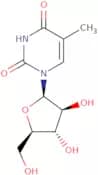
CAS:<p>7-Methyl-6-thioguanosine inner salt is a compound that inhibits the activity of creatine kinase and phosphatase, which are enzymes involved in energy metabolism. It also binds to actin filaments and prevents their depolymerization. The binding mechanism of 7-methyl-6-thioguanosine inner salt is believed to be due to its ability to form disulfide bonds with cysteine residues on the surface of the enzyme. This inhibition has been shown to reduce the ATP production in mammalian cells and has been used as a model system for studying cellular processes.</p>Fórmula:C11H15N5O4SPureza:Min. 95 Area-%Forma y color:White PowderPeso molecular:313.33 g/mol1-(β-D-Arabinofuranosyl)thymine
CAS:<p>1-(β-D-Arabinofuranosyl)thymine is a nucleoside analog. It has a similar structure to thymidine. It has possible applications in research into the specificity and kinetics of thymidine kinases and has demonstrated antiviral activity against some viruses.</p>Fórmula:C10H14N2O6Pureza:Min. 95%Forma y color:White PowderPeso molecular:258.23 g/mol5-Aza-7-deazaguanosine
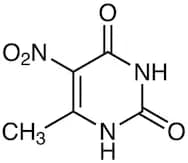
CAS:<p>5-Aza-7-deazaguanosine is a nucleoside analogue that has antiviral activity against herpes simplex virus, influenza, and other DNA viruses. 5-Aza-7-deazaguanosine is an analog of guanosine with the addition of a 7-deaza group on the nitrogen atom. This drug inhibits viral replication by inhibiting the polymerase function of the viral NS5B protein, which is essential for DNA synthesis. The structure activity relationship studies have shown that this compound has anti-hepatitis B virus activity, but not against hepatitis C virus. 5-Aza-7-deazaguanosine has been shown to be effective in animal models as well as in humans without any significant toxicity issues.</p>Fórmula:C10H13N5O5Pureza:Min. 95%Forma y color:PowderPeso molecular:283.24 g/mol6-Methyl-5-nitrouracil
CAS:Fórmula:C5H5N3O4Pureza:>95.0%(T)(HPLC)Forma y color:Light orange to Yellow to Green powder to crystalPeso molecular:171.11β-Nicotinamide Adenine Dinucleotide oxidized form [for Biochemical Research]
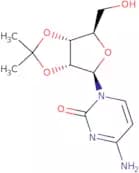
CAS:Fórmula:C21H27N7O14P2Pureza:>95.0%(T)(HPLC)Forma y color:White to Almost white powder to crystalPeso molecular:663.432',3'-O-Isopropylidenecytidine
CAS:<p>2',3'-O-Isopropylidenecytidine is a nucleoside for use in research applications</p>Fórmula:C12H17N3O5Pureza:Min. 95%Forma y color:PowderPeso molecular:283.28 g/molUridine
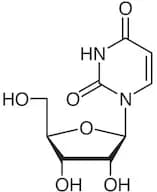
CAS:Fórmula:C9H12N2O6Pureza:>98.0%(T)(HPLC)Forma y color:White powder to crystalPeso molecular:244.205-Methyl-2-thiouracil
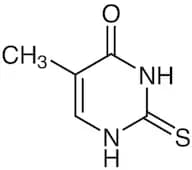
CAS:Fórmula:C5H6N2OSPureza:>98.0%(T)(HPLC)Forma y color:White to Almost white powder to crystalPeso molecular:142.182'-Deoxy-L-uridine
CAS:<p>2'-Deoxy-L-uridine is a nucleoside that is found in the human body. It phosphorylates l-thymidine, which is a natural substrate, and this reaction prevents the formation of diphosphate from d-ribose 5'-monophosphate. 2'-Deoxy-L-uridine is an exogenous substance that inhibits cell growth by affecting protein synthesis and DNA replication. 2'-Deoxy-L-uridine has been shown to be more efficient than wild type uridine in inhibiting cell growth in vitro at concentrations of 1 mM or greater. The enantiomers of 2'-deoxy-L-uridine affect cell growth differently, with the (R)-enantiomer being more potent than the (S)-enantiomer.</p>Fórmula:C9H12N2O5Pureza:Min. 95%Forma y color:White PowderPeso molecular:228.2 g/mol2'-Deoxycytidine-5'-diphosphate trisodium salt hydrate
CAS:2'-Deoxycytidine-5'-diphosphate trisodium salt hydrate is a nucleoside that is used as an antiviral agent in the treatment of herpes zoster and varicella zoster. This drug also has anticancer properties, which may be due to its ability to inhibit DNA synthesis. 2'-Deoxycytidine-5'-diphosphate trisodium salt hydrate is a novel nucleotide analogue that has been modified to improve its stability, solubility and bioavailability. It can be used as a starting material for the synthesis of phosphoramidites by reacting with phosphorous pentoxide at elevated temperatures and pH. CAS No. 151151-32-5Fórmula:C9H12N3O10P2·Na3Pureza:Min. 95%Forma y color:White Off-White PowderPeso molecular:453.12 g/mol2'-O-(2-Methoxyethyl)cytidine
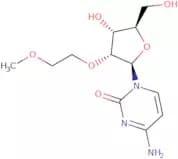
CAS:<p>2'-O-(2-Methoxyethyl)cytidine is a nutrient that is used to maintain the dry weight of Lactobacillus acidophilus cultures. It is also used as a texturizing agent in food products. 2'-O-(2-Methoxyethyl)cytidine has been shown to increase the rate of lactose hydrolysis and reduce the viscosity of yogurt by activating L. acidophilus. 2'-O-(2-Methoxyethyl)cytidine is also used as a dietary supplement for people with intestinal disorders, such as irritable bowel syndrome. It can be found in sodium salts and n-methyl-d-glucamine.</p>Fórmula:C12H19N3O6Pureza:Min. 95%Forma y color:PowderPeso molecular:301.3 g/mol2-Chloroadenosine hemihydrate
CAS:<p>2-Chloroadenosine hemihydrate is a synthetic purine nucleoside analog, closely related to adenosine, with a chlorine atom substituted at the 2-position on the adenine ring. This molecule has potential application in research.</p>Fórmula:C10H12ClN5O4H2OPureza:Min. 95%Forma y color:PowderPeso molecular:310.69 g/mol8-Methyladenosine
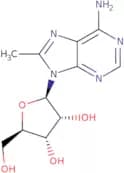
CAS:<p>8-Methyladenosine is an acid conjugate that can be found in the urine of healthy people. It is a protonated molecule that binds to a p2 subtype of the G protein-coupled receptor, which is activated by adenosine and 8-methyladenosine. This drug has been used in clinical trials for the treatment of herpes simplex virus and cervical cancer. The intramolecular hydrogen bond between the methyl group and the adenosine ring is responsible for its high binding affinity for this receptor. The glycosidic bond is formed when an 8-methyladenosine molecule attaches to a receptor on a cell surface, forming an intramolecular hydrogen bond with the receptor's amino acid side chain. This bond is broken when a protonated molecule of 8-methyladenosine enters the cell and interacts with the receptor, resulting in activation of this receptor.</p>Fórmula:C11H15N5O4Pureza:Min. 95%Forma y color:White PowderPeso molecular:281.27 g/molCytidine 5'-diphosphocholine
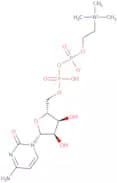
CAS:<p>Cytidine 5'-diphosphocholine is a nucleotide that is a precursor of uridine 5'-triphosphate and cytidine 5'-monophosphate, which are important for DNA synthesis. Cytidine 5'-diphosphocholine is used in the preparation of samples for experiments. This compound has been shown to induce neuronal death in an experimental model. It has also been shown to inhibit polymerase chain reactions and affect the activity of enzymes such as alpha-7 nicotinic acetylcholine receptors and glutamate decarboxylase. Cytidine 5'-diphosphocholine has been found to have no effect on basic fibroblast cells, but it does have physiological effects on human erythrocytes.</p>Fórmula:C14H26N4O11P2Pureza:Min. 98 Area-%Forma y color:White PowderPeso molecular:488.32 g/moldNTP bundle, 4 x 100mM aqueous solution
CAS:Each dNTP supplied in a separate vialPureza:Min. 99 Area-%Forma y color:Clear Liquid






![β-Nicotinamide Adenine Dinucleotide oxidized form [for Biochemical Research]](/_next/image/?url=https%3A%2Fstatic.cymitquimica.com%2Fproducts%2F3B%2Fthumb-webp%2FD0919.webp&w=3840&q=75)