Nucleótidos
Los nucleótidos son compuestos orgánicos que sirven como building blocks de los ácidos nucleicos, esenciales para la formación del ADN y ARN. Cada nucleótido está compuesto por una base nitrogenada, una molécula de azúcar y uno o más grupos fosfato. Estos nucleótidos se unen para formar largas cadenas, creando el material genético que lleva y transmite la información genética en todos los organismos vivos. En esta sección, encontrará una amplia variedad de nucleótidos cruciales para la investigación en genética, biología molecular y bioquímica. Son fundamentales para estudiar los procesos genéticos, sintetizar ácidos nucleicos y desarrollar herramientas diagnósticas y terapéuticas. En CymitQuimica, ofrecemos nucleótidos de alta calidad para apoyar su investigación científica y aplicaciones, asegurando precisión y fiabilidad en sus experimentos.
Subcategorías de "Nucleótidos"
Se han encontrado 2634 productos de "Nucleótidos"
Ordenar por
Pureza (%)
0
100
|
0
|
50
|
90
|
95
|
100
N4-Acetyl-5'-O-DMT-2'-O-methylcytidine
CAS:N4-Acetyl-5'-O-DMT-2'-O-methylcytidine is a cytidine analogue that has been synthesized to be used as an enzyme-linked probe. It is labelled with biotin and can be detected by binding to an antibody which has been labelled with a fluorescent tag. Cytidine analogues are synthesized on a solid phase and then cleaved from the support material. The spacer arm is added to the 5' end of the nucleotide and the 3'-OH group is modified with 2'-O-methyl groups. N4-Acetyl-5'-O-DMT-2'-O-methylcytidine has been shown to be sensitive in techniques such as solid phase synthesis, nucleic acid research, and immunoassays.Fórmula:C33H35N3O8Pureza:Min. 95%Forma y color:Off-White PowderPeso molecular:601.65 g/mol5-Aminoimidazole-4-carboxamide-1-b-D-ribofuranose
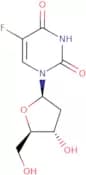
CAS:Acadesine is a purine nucleoside analogue that inhibits the synthesis of ATP in cells. Acadesine blocks phosphorylation of adenosine monophosphate (AMP) to adenosine triphosphate (ATP) by inhibiting the activity of kinase-3, an enzyme involved in the production of ATP. Acadesine also inhibits the release of ATP from muscle cells into the blood stream and preferentially targets kidney cells, thereby reducing renal injury. Acadesine has been shown to be effective at reducing proteinuria and improving renal function in rats with acute kidney injury. Acadesine also has anti-inflammatory properties due to its ability to inhibit proteins that are involved in inflammation.Fórmula:C9H14N4O5Pureza:Min. 98 Area-%Forma y color:PowderPeso molecular:258.23 g/mol2'-Deoxy-5-fluorouridine
CAS:<p>2'-Deoxy-5-fluorouridine is a nucleoside analog that inhibits the enzyme ribonucleotide reductase, which is involved in the synthesis of DNA. It has been shown to inhibit the growth of cancer cells and induce apoptosis in vivo. 2'-Deoxy-5-fluorouridine has also been shown to inhibit tumor growth in animal models by inhibiting the production of reactive oxygen species and upregulating tumor suppressor genes, such as p53. This drug also has inhibitory effects on enzymes that are involved in cell proliferation, such as protein kinase C and tyrosine kinases. 2'-Deoxy-5-fluorouridine is metabolized by water vapor, so it must be administered with a humidifier or nebulizer. 2'-Deoxy-5-fluorouridine may cause side effects such as nausea, vomiting, and diarrhea.</p>Fórmula:C9H11FN2O5Pureza:Min. 98 Area-%Forma y color:White Off-White PowderPeso molecular:246.2 g/mol5-Methylcytidine-5'-triphosphate sodium salt - 100mM aqueous solution
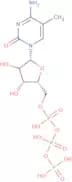
CAS:<p>5-Methylcytidine-5'-triphosphate sodium salt is a nucleoside diphosphate that is used as an activator in the synthesis of DNA. It is also used as a building block in the synthesis of anticancer agents, such as 5-methylcytosine monophosphate and phosphoramidites. The chemical name for this product is 5-methylcytidine-5'-triphosphate sodium salt and its CAS number is 327174-86-7. This product is available for purchase at Sigma Aldrich with a purity of 99%.</p>Fórmula:C10H18N3O14P3·xNaPureza:Min. 95%Forma y color:PowderPeso molecular:497.18 g/molAdenosine 5'-diphosphate monosodium salt
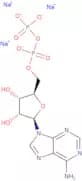
CAS:Used for energy storage and in nucleic acid metabolismFórmula:C10H14N5NaO10P2Pureza:Min. 98 Area-%Forma y color:White Off-White PowderPeso molecular:449.18 g/molAbacavir
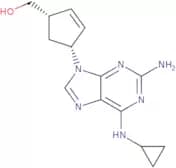
CAS:<p>Abacavir is a carbocyclic 2'-deoxyguanosine nucleoside reverse transcriptase (RT) inhibitor with anti-retroviral activity against HIV. Good oral bioavailability, high aqueous solubility and good cerebrospinal fluid penetrance. Synergistic with other nucleoside RT inhibitors such as AZT.</p>Fórmula:C14H18N6OPureza:Min. 98 Area-%Forma y color:White PowderPeso molecular:286.33 g/mol2-Amino-2'-deoxyadenosine
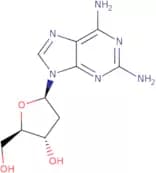
CAS:<p>2-Amino-2'-deoxyadenosine is a modified nucleoside, closely related to adenosine in which the 2'-hydroxyl group is replaced by an amino group. This compound has potential research applications</p>Fórmula:C10H14N6O3Pureza:Min. 98 Area-%Forma y color:White PowderPeso molecular:266.26 g/molAdenylyl-3'-5'-cytidine
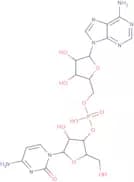
CAS:<p>Adenylyl-3'-5'-cytidine (3'-5'-CYT) is a postulated naturally occurring dinucleoside that has been shown to be involved in many metabolic processes. It has been found to interact with serum albumin, which may be related to the molecule's ability to bind with the ligand and form a complex. 3'-5'CYT can be synthesized from cytidine using an enzyme called adenosine deaminase. This process is known as deamination. The product of this reaction can either be uracil or thymine, depending on the enzyme used. 3'-5'CYT is also a component of recombinant human polypeptides that have been shown to have anti-cancer properties.</p>Fórmula:C19H25N8O11PPureza:Min. 95%Forma y color:PowderPeso molecular:572.42 g/molRibavirin 5'-triphosphate tetrasodium salt - 10mM aqueous solution
CAS:<p>Ribavirin triphosphate is the biologically active metabolite of antiviral nucleoside analog ribavirin. In cells, the prodrug ribavirin gets triphosphorylated and in it inhibits viral RNA polymerases, interfering with the synthesis of newly formed RNA.</p>Fórmula:C8H15N4O14P3·Na4Pureza:Min. 95 Area-%Forma y color:PowderPeso molecular:576.1 g/molp-Coumaryl-coenzyme A
CAS:<p>Please enquire for more information about p-Coumaryl-coenzyme A including the price, delivery time and more detailed product information at the technical inquiry form on this page</p>Fórmula:C30H42N7O18P3SPureza:Min. 95%Forma y color:PowderPeso molecular:913.68 g/mol5'-Azido-5'-deoxyguanosine
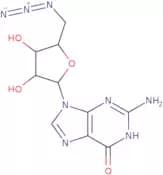
CAS:<p>5'-Azido-5'-deoxyguanosine is an analog of guanosine that can be synthesized in a solid-phase reaction. It can also be enzymatically generated from 5'-azido-5'-deoxyadenosine. This molecule is reactive and has been shown to be an effective inhibitor of DNA synthesis in vivo assays. The use of 5'-azido-5'-deoxyguanosine has been explored as a potential treatment for leishmaniasis, a disease caused by the protozoan parasite Leishmania donovani.</p>Fórmula:C10H12N8O4Pureza:Min. 95 Area-%Forma y color:PowderPeso molecular:308.25 g/molN4-Benzoyl-5'-O-DMT-cytidine
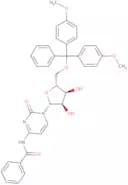
CAS:N4-Benzoyl-5'-O-DMT-cytidine is a novel modified nucleoside that can be phosphorylated by T4 kinase to form 5'-O-DMT-N4-benzoyl cytidine, which is an antiviral agent. This active compound is also an activator of DNA polymerases and has anticancer properties. N4-Benzoyl-5'-O-DMT cytidine has been shown to inhibit the replication of HIV in human cells and inhibit tumor growth in animal models. It has been synthesized with high quality and high purity, and has been assigned CAS No. 81246-76-6.Fórmula:C37H35N3O8Pureza:Min. 95 Area-%Forma y color:White PowderPeso molecular:649.69 g/molAlloxan hydrate
CAS:A pyrimidine derivative, widely used for the induction of diabetes in experimental animals. It preferentially accumulates in pancreatic β cells in Langerhans islets via glucose transporter GLUT2. In the presence of intracellular thiols such as glutathione, it gets involved in a cyclic redox reaction with its reduction product, dialuric acid. This triggers the production of toxic levels of reactive oxygen species (ROS) and directs the cells in necrosis. Alloxan also inhibits glucokinase, which regulates glucose-induced insulin secretion.Fórmula:C4H2N2O4•xH2OPureza:Min. 95%Peso molecular:142.07 g/mol5-Carboxy-2'-deoxyuridine
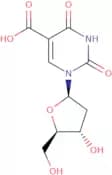
CAS:5-Carboxy-2'-deoxyuridine is a nucleoside analogue that inhibits herpes simplex virus type 1 (HSV-1) and 2 (HSV-2) replication. It is used to treat genital herpes infections caused by HSV-1 or HSV-2. 5-Carboxy-2'-deoxyuridine has been shown to inhibit the growth of human cancer cells in culture, and is currently being investigated as a potential anticancer drug. This drug binds with high affinity to the viral DNA polymerase, forming a covalent bond with the uracil base in the viral DNA chain. This prevents further elongation of the chain, inhibiting viral replication. 5-Carboxy-2'-deoxyuridine also inhibits cellular protein synthesis and cell division, which may be due to its ability to bind with aldehyde groups on surfactant proteins.END>Fórmula:C10H12N2O7Pureza:Min. 95%Forma y color:PowderPeso molecular:272.21 g/molAdenosine-5'-O-(1-thiotriphosphate) lithium salt - 100 mM aqueous solution
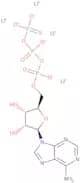
CAS:<p>Adenosine-5'-O-(1-thiotriphosphate) lithium salt is an inhibitor of the guanine nucleotide-binding protein that is reversibly inhibited by adenosine triphosphate. It has been shown to inhibit HIV infection by binding to the Ryanodine receptor and blocking the release of calcium ions from intracellular stores. This prevents the activation of caspases, which are enzymes that cause cell lysis. Adenosine-5'-O-(1-thiotriphosphate) lithium salt also blocks transcription and polymerase chain reactions, and may inhibit the growth of cancer cells by inhibiting epidermal growth factor receptors on the cell surface.</p>Fórmula:C10H12Li4N5O12P3SPureza:Min. 95%Forma y color:PowderPeso molecular:546.98 g/molN6-Benzyl-2-deoxyadenosine
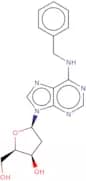
<p>N6-Benzyl-2-deoxyadenosine is a modified nucleotide that can be incorporated into DNA during replication. The compound has antiviral properties and can act as an activator for the transcription of genes involved in the immune response. It is synthesized by coupling two phosphate groups to adenosine monophosphate, which is then modified with a benzyl group. This modification prevents N6-benzyl-2-deoxyadenosine from being phosphorylated and degraded to adenosine monophosphate, resulting in a stable molecule that can be incorporated into DNA.</p>Fórmula:C17H19N5O3Pureza:Min. 95%Forma y color:PowderPeso molecular:341.36 g/mol9-(2'-Deoxy-2'-fluoro-β-D-arabinofuranosyl)adenine
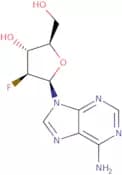
CAS:9-(2'-Deoxy-2'-fluoro-b-D-arabinofuranosyl)adenine (9dFdA) is a potent inhibitor of the enzyme s-adenosylhomocysteine hydrolase, which is involved in the synthesis of adenosine. 9dFdA inhibits the growth of Trichomonas vaginalis and has shown good activity against other pathogens, such as Staphylococcus aureus and Mycobacterium tuberculosis. It also has been shown to have potent inhibitory activity against adenosine deaminase, which prevents an immune response by preventing cells from producing the amino acid adenosine. This compound also inhibits uridine phosphorylase, which is involved in nucleotide biosynthesis.Fórmula:C10H12FN5O3Pureza:Min. 95%Forma y color:PowderPeso molecular:269.24 g/molCytidine 5'-triphosphate disodium dihydrate
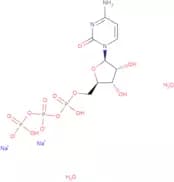
CAS:<p>Cytidine 5'-triphosphate (CTP) disodium dihydrate prevents the action of aspartate carbamoyltransferase, an enzyme involved in pyrimidine biosynthesis. CTP serves as a molecule of high energy and acts as a coenzyme in glycerophospholipid biosynthesis and protein glycosylation.</p>Fórmula:C9H16N3O14P3•(H2O)2•Na2Pureza:Min. 95%Forma y color:PowderPeso molecular:565.17 g/mol2'-Deoxy-2-fluoroadenosine
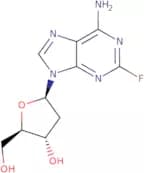
CAS:<p>2'-Deoxy-2-fluoroadenosine is an adenosine member and an organofluorine compound</p>Fórmula:C10H12FN5O3Pureza:Min. 98 Area-%Forma y color:White PowderPeso molecular:269.23 g/molCytidine-5-carboxylic acid sodium
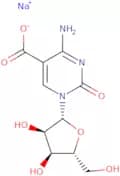
CAS:<p>Cytidine-5-carboxylic acid sodium salt is a nucleoside that is used as an activator for the synthesis of phosphoramidites. It is also used in anticancer and antiviral research as a component of DNA. Cytidine-5-carboxylic acid sodium salt is available in high purity, with a monophosphate form and diphosphate forms available.</p>Fórmula:C10H12N3O7·NaPureza:Min. 95%Forma y color:PowderPeso molecular:309.21 g/mol