Nucleótidos
Subcategorías de "Nucleótidos"
Se han encontrado 2636 productos de "Nucleótidos"
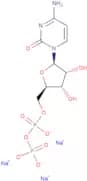
Cytidine-5'-diphosphate trisodium
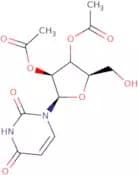
CAS:Cytidine-5'-diphosphate trisodium (CDP-Tris) is a copolymerization agent that contains a formamide molecule, which is used to increase the viscosity of the polymer. It is also used as a hydrogen bond donor and acceptor in the synthesis of polymers. CDP-Tris can be used for DNA replication and repairs damaged DNA by binding to 7-methylguanine, one of the most common lesions found in DNA. This agent has been shown to be effective in diluting crude cell extracts from E. coli bacteria. CDP-Tris is also used to synthesize polymers with 3-methylcytidine monomers that contain nitrogen atoms. These polymers are then used as substitutes for natural polymers such as cellulose and starch, which can be difficult to process because they are hydrophobic.Fórmula:C9H12N3Na3O11P2Pureza:Min. 95 Area-%Forma y color:White Yellow PowderPeso molecular:469.12 g/mol2',3'-Di-O-acetyl-D-uridine
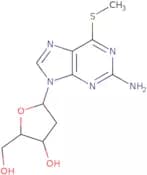
CAS:2',3'-Di-O-acetyl-D-uridine is a nucleoside for use in research applicationsFórmula:C13H16N2O8Pureza:Min. 98 Area-%Forma y color:White PowderPeso molecular:328.27 g/mol2'-Deoxy-6-methylthioguanosine
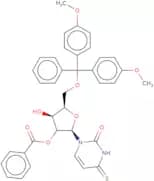
CAS:2'-Deoxy-6-methylthioguanosine is a novel nucleoside and nucleotide analog with antiviral and anticancer activities. It has been shown to inhibit the replication of DNA by inhibiting the activity of DNA polymerase. The target of this drug is not related to any virus or bacterial species, but it inhibits the growth of cancer cells in vitro. The synthesis of 2'-deoxy-6-methylthioguanosine can be achieved by modifying commercially available phosphoramidites.Fórmula:C11H15N5O3SPureza:Min. 95%Forma y color:PowderPeso molecular:297.33 g/mol2'-O-Benzoyl-5'-O-DMT-4-thiouridine
2'-O-Benzoyl-5'-O-DMT-4-thiouridine is a phosphoramidite monophosphate nucleoside analog. It has antiviral and anticancer properties, and has been shown to activate the immune system in mice. 2'-O-Benzoyl-5'-O-DMT-4-thiouridine is also novel because it is structurally different from all other nucleosides that have been studied for antiviral and anticancer activity. This drug can be used as an activator of DNA synthesis in vitro.Fórmula:C37H34N2O8SPureza:Min. 95%Forma y color:Yellow SolidPeso molecular:666.76 g/mol3',5'-O-(1,1,3,3-Tetraisopropyldisiloxane-1,3-diyl)-2'-ketouridine
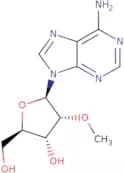
CAS:Used as a protected 2'-ketouridine nucleoside in the synthesis of modified RNA oligonucleotides. The 1,1,3,3-tetraisopropyldisiloxane-1,3-diyl (TIPDS or TBDPSi2) group protects the 3' and 5' hydroxyl groups, while the 2'-keto (or 2'-oxo) modification introduces a specific functional group at the 2' position of the ribose sugar.Fórmula:C21H36N2O7Si2Pureza:Min. 95%Forma y color:White PowderPeso molecular:484.69 g/mol2'-O-Methyladenosine
CAS:2'-O-Methyladenosine (2'-OMeA) is a nucleoside that is a low-energy analog of adenosine. It has been shown to be an effective inhibitor of protein synthesis in vitro, by inhibiting RNA polymerase in the process of transcription. 2'-OMeA has also been shown to inhibit virus replication in vitro and to have potent inhibitory activity against human immunodeficiency virus type 1 (HIV-1). 2'-OMeA inhibits viral replication by binding to the viral ribonucleotide reductase enzyme and blocking the conversion of ribonucleotides into deoxyribonucleotides. The chemical structures of 2'-OMeA are similar to those found in fatty acids and can be detected using chemical ionization mass spectroscopy. The sequence for 2'-OMeA was determined through sequencing methods including NMR spectroscopy and nuclear magnetic resonance data analysis.Fórmula:C11H15N5O4Pureza:Min. 98 Area-%Forma y color:White Off-White PowderPeso molecular:281.27 g/mol2'-Deoxy-a-cytidine
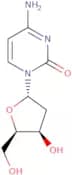
CAS:2'-Deoxy-a-cytidine is a nucleoside analog that inhibits the growth of bacteria by competitively binding to the 5' position of the ribose sugar in RNA. This prevents the enzyme from adding a new linkage to the ribose, which results in an irreversible blockage of RNA synthesis. 2'-Deoxy-a-cytidine has been shown to be bacteriostatic against Escherichia coli and other bacterial species. It is also able to inhibit adenosine production, although it does not show any activity against DNA synthesis.
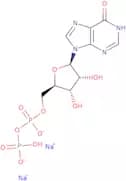
2'-Deoxy-a-cytidine has been shown to be effective against E. coli and other bacterial species, but does not show any activity against DNA synthesisFórmula:C9H13N3O4Pureza:Min. 95 Area-%Forma y color:PowderPeso molecular:227.22 g/molInosine 5'-diphosphate disodium salt
CAS:Inosine-5'-diphosphate disodium salt (IDPS) is a nitro compound that is used in the synthesis of antibacterial drugs. It is also used in the production of polymers and as a precursor to other organic compounds. IDPS has been shown to have antibacterial activity against halogeno bacteria, such as buprestidae, and many Gram-positive bacteria, including encapsulated strains. IDPS has been shown to be effective against both damaged cells and healthy cells in culture. The mechanism of action may involve inhibition of protein synthesis by blocking the ribosomes or by interfering with DNA replication. This drug also inhibits growth rate of japonica rice and heterocycles.Fórmula:C10H12N4Na2O11P2Pureza:Min. 90.0 Area-%Forma y color:White PowderPeso molecular:472.15 g/molBucladesine calcium salt
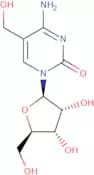
CAS:Protein kinase A inhibitor; cAMP agonistFórmula:C18H24N5O8PCaPureza:Min. 95%Forma y color:PowderPeso molecular:489.42 g/mol5-Hydroxymethylcytidine
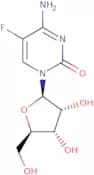
CAS:5-Hydroxymethylcytidine is a nucleoside that has been shown to inhibit the activity of RNA polymerase by forming hydrogen bonds with the enzyme. It is used in vitro to study the role of messenger RNA in regulating gene expression, and also as a probe for transcriptase activity. 5-Hydroxymethylcytidine has also been shown to have a biological function in solid tumours and may be an analytical method for detecting cancer.Fórmula:C10H15N3O6Pureza:Min. 95 Area-%Forma y color:White PowderPeso molecular:273.24 g/mol5-Fluorocytidine
CAS:5-Fluorocytidine (5FC) is an antiviral drug that inhibits the synthesis of DNA. 5FC is a prodrug that is converted to cytosine in vivo, and then incorporated into viral DNA by polymerase chain reactions. The incorporation of 5FC into viral DNA prevents replication and transcription, which can lead to the death of cells infected with HIV. In addition, 5FC has been shown to be effective in treating chronic viral hepatitis and bowel diseases such as Crohn's disease. It also has potential use as a drug target for cancer treatments. 5FC has been shown to inhibit transcription activators in murine hepatoma cells and inhibit the growth of tumors in transfection experiments using human colon cancer cells. This antiviral agent has also been shown to have antimicrobial activity against Gram-positive bacteria, including Clostridium difficile, Staphylococcus aureus, Streptococcus pyogenes and Enterococcus faecFórmula:C9H12FN3O5Pureza:Min. 99 Area-%Forma y color:White PowderPeso molecular:261.21 g/molOrotidine
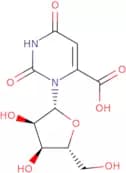
CAS:Orotidine is a decarboxylase inhibitor. It inhibits the enzyme that converts orotate to uridine and the enzyme that converts orotate to decarboxylase. Orotidine has been shown to inhibit the growth of opportunistic fungal organisms and may be useful in treating infections caused by these pathogens. Orotidine is an analytical method for measuring the activity of orotidase, which catalyzes conversion of orotate to uridine. The enzyme form of orotidase found in human erythrocytes is very sensitive to inhibition by picolinic acid, which is used as a substrate for this reaction.
Fórmula:C10H12N2O8Pureza:Min. 95 Area-%Forma y color:White PowderPeso molecular:288.21 g/mol2'-Deoxypseudoisocytidine
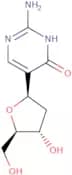
CAS:2'-Deoxypseudoisocytidine is a synthetic nucleoside that is structurally similar to pseudoisocytidine. It is used as an anti-cancer agent in labeling studies. The compound exhibits cytotoxic activity against tumor cells and inhibits the growth of cultured human cancer cell lines. 2'-Deoxypseudoisocytidine has been shown to be effective in preventing the growth of brain tumors in mice by targeting DNA synthesis, which may be due to its ability to act as an analog of cytosine and bind to DNA. This drug also has potential for use as a chemotherapeutic agent for leukemia and other cancers.Fórmula:C9H13N3O4Pureza:Min. 95%Forma y color:PowderPeso molecular:227.22 g/mol2'-Chloro-2'-deoxycytidine
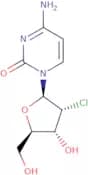
CAS:2'-Chloro-2'-deoxycytidine is a synthetic nucleoside analog. It is a modified deoxycytidine with a chlorine atom at the 2'-position of the deoxyribose sugar. This molecule can be used in research applicationsFórmula:C9H12ClN3O4Pureza:Min. 95%Forma y color:PowderPeso molecular:261.66 g/mol5'-O-DMT-5-iodo-2'-O-methyluridine
CAS:5'-O-DMT-5-iodo-2'-O-methyluridine is an activator and antitumor agent that is used in the synthesis of 5'-O-DMT-5-iodo-2'-O-(2,4,6-trimethoxybenzoyl)uridine for cancer research. This chemical is a novel synthetic nucleoside with a high purity and quality that can be used to synthesize deoxyribonucleosides, nucleosides, and phosphoramidites. It has a CAS number of 588691-24-1. 5'-O-DMT-5-iodo-2'-O-(2,4,6 trimethoxybenzoyl)uridine can be used as an antiviral agent against HIV and other retroviruses.Fórmula:C31H31IN2O8Pureza:Min. 98 Area-%Forma y color:PowderPeso molecular:686.49 g/mol2',3'-Dideoxy-2',3'-didehydroadenosine
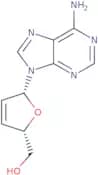
CAS:2′,3′-Dideoxy-2′,3′-didehydroadenosine, abbreviated to d4A, is a synthetic purine nucleoside analog. Possible applications are its use to study antiviral activity.Fórmula:C10H11N5O2Pureza:Min. 95%Forma y color:Off-White PowderPeso molecular:233.23 g/mol3'-Amino-3'-deoxythymidine
CAS:Also known as AMT, this is a catabolite of the nucleoside analog zidovudine (AZT), a drug used to treat HIV infection.Fórmula:C10H15N3O4Pureza:Min. 98 Area-%Forma y color:PowderPeso molecular:241.24 g/molAdenosine-3'-monophosphate
CAS:Adenosine-3'-monophosphate is a nucleotide that is an important precursor in the synthesis of proteins. The ribosome, which is a large macromolecular complex that catalyzes protein synthesis, binds to the 3' end of the mRNA and adds adenosine-3'-monophosphate to the growing polypeptide chain. Adenosine-3'-monophosphate plays an important role in bacterial ribosomal RNA termination and protein synthesis. It also has sequence analysis capabilities and helps determine the sequence of subunits in the ribosome by providing a terminal nucleotide.Fórmula:C10H14N5O7PPureza:Min. 95%Forma y color:White PowderPeso molecular:347.22 g/mol5'-(N-Cyclopropyl)carboxamidoadenosine
CAS:5'-(N-Cyclopropyl)carboxamidoadenosine (5' CAPA) is a cyclic nucleotide analog. It has been shown to have photochemical properties and can be used as a fluorescent probe for the detection of DNA. 5' CAPA binds to the α subunit of RNA polymerase and inhibits transcription, which may result in reduced expression of proteins involved in growth control. Structural analysis has revealed that 5' CAPA binds to the catalytic site of the enzyme, sterically interfering with ATP binding. The inhibitory effect is reversible by removal of 5' CAPA from the reaction solution or by addition of cytosolic calcium chelators. 5' CAPA was found to have no effect on phycocyanin production by phytoplankton when added at concentrations up to 1 mM and did not affect transcription-polymerase chain reactions or regulatory processes in bacterial cells. 5'-(N-CyFórmula:C13H16N6O4Pureza:Min. 95%Peso molecular:320.31 g/mol5'-O-DMT-5-methyluridine
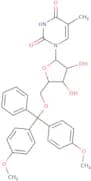
CAS:5'-O-DMT-5-methyluridine is a mesylate that is used as a chemical building block in the synthesis of unmodified, modified, and conjugate nucleosides. 5'-O-DMT-5-methyluridine can be used to modify ribonucleotides and derivates. It has been shown to be useful for labeling DNA probes with fluorescein and rhodamine dyes. 5'-O-DMT-5-methyluridine also has affinity for nucleophile groups such as phosphate, hydroxyl and amino groups. This compound is used in the incorporation of labeled polypeptides into proteins by ligation.Fórmula:C31H32N2O8Pureza:Min. 95%Peso molecular:560.59 g/mol