Vitaminas
Se han encontrado 1120 productos de "Vitaminas"
β-Tocopherol
CAS:β-Tocopherol is a type of product known as a naturally occurring form of vitamin E, which is a crucial lipid-soluble antioxidant. This compound is sourced primarily from plant-based oils, such as those derived from nuts, seeds, and vegetables. As an antioxidant, β-Tocopherol plays a pivotal role in the biological systems by scavenging free radicals. It interrupts the propagation of free radical chain reactions, thereby protecting cell membranes from oxidative damage. This is achieved through the donation of hydrogen atoms, which neutralize harmful free radicals.Fórmula:C28H48O2Pureza:Min. 95%Peso molecular:416.68 g/molRiboflavin-2,4,4α,10α-13C4-1,3-15N2
CAS:Riboflavin-2,4,4α,10α-13C4-1,3-15N2 is a stable isotope-labeled form of riboflavin, which is a type of vitamin B2 molecule. This compound is synthesized with carbon-13 and nitrogen-15 isotopes, providing a distinct mass that enables precise tracking in metabolic studies. The source of this compound is derived from isotopically enriched materials, employing advanced chemical synthesis processes to incorporate stable isotopes into the riboflavin structure without altering its fundamental biochemical properties.Fórmula:C13C4H20N2N2O6Pureza:Min. 95%Peso molecular:382.32 g/molVitamin D3 - 0.5m IU/g=500000 IU/g
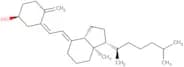
CAS:Vitamin D3 is a fat-soluble vitamin that can be obtained from some fish, mushrooms, and dairy products. The most common form of the vitamin is cholecalciferol (vitamin D3) which can be converted in the liver to calcidiol (25-hydroxycholecalciferol) and in the kidneys to calcitriol (1,25-dihydroxycholecalciferol). Vitamin D3 has been shown to have a positive effect on calcium absorption and bone mineralization. It also has important physiological functions such as regulation of cell growth and differentiation. The solubility of vitamin D3 is dependent on the presence of a hydroxy group at position 3' or 25'. This liquid chromatography method uses an experimental solubility data set for the determination of solubility data for compounds with a hydroxy group at position 3'.
Fórmula:C27H44OPureza:Min. 95%Forma y color:PowderPeso molecular:384.64 g/molD-Biotin - 2%
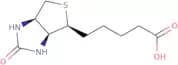
CAS:Biotin is a water-soluble vitamin, also known as vitamin B7. Biotin is an essential coenzyme for five carboxylases in mammalian cells, which play key roles in the metabolism of glucose, amino acids and fatty acids (Zempleni, 2014). Biotin is also used in biochemistry in affinity purification of proteins in the biotin-avidin and biotin-streptavidin systems. Herein, free biotin is used in the elution step to release the recombinant protein from the resin (Diamandis and Christopoulos, 1991).Remainder of the material is maltodextrin.Fórmula:C10H16N2O3SPureza:Min. 95%Forma y color:PowderPeso molecular:244.31 g/mol5-Ethyl-3-methyllumiflavinium perchlorate
CAS:5-Ethyl-3-methyllumiflavinium perchlorate is an organic compound that serves as a specialized biochemical reagent. It is synthetically derived, typically from the modification of flavin structures, which are known for their versatile roles in biological systems. The compound's unique configuration allows it to interact with various enzymes and proteins, often acting as an electron mediator due to its lumiflavinium core.Fórmula:C16H19N4O2ClO4Pureza:Min. 95%Peso molecular:398.8 g/mol(R)-Acenocoumarol
CAS:(R)-Acenocoumarol ((R)-Acenocoumarin; (R)-Nicoumalone) is a short-acting, orally administered anticoagulant that works by inhibiting vitamin K epoxide reductase (vitamin K1 recycling), similar to Warfarin. It demonstrates greater anticoagulant potency in vivo compared to Warfarin. This compound has a single chiral center, resulting in two enantiomeric forms. The (R)-enantiomer has a longer plasma elimination half-life of 6.6 hours, slower plasma clearance of 1.9 L/h, and stronger anticoagulation effects than the (S)-enantiomer.Fórmula:C19H15NO6Peso molecular:353.33Pyridoxamine Dihydrochloride Monohydrate
CAS:Fórmula:C8H12N2O2·2HCl·H2OPureza:>98.0%(HPLC)(N)Forma y color:White to Almost white powder to crystalPeso molecular:259.13Folic Acid Related Compound A (Calcium Formyltetrahydrofolate) (DISCONTINUED)
CAS:Other vitamins and their derivatives, nesoiFórmula:C20H23N7O7·CaForma y color:PowderPeso molecular:513.12849Ref: IN-DA00IBRW
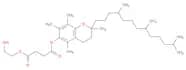
Producto descatalogadoPoly(oxy-1,2-ethanediyl),a-[4-[[(2R)-3,4-dihydro-2,5,7,8-tetramethyl-2-[(4R,8R)-4,8,12-trimethyltridecyl]-2H-1-benzopyran-6-yl]oxy]-1,4-dioxobutyl]-w-hydroxy-
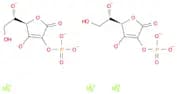
CAS:Fórmula:C39H66O8Forma y color:SolidPeso molecular:662.9365L-Ascorbic acid, 2-(dihydrogen phosphate), magnesium salt (2:3)
CAS:Fórmula:C12H12Mg3O18P2Pureza:98%Forma y color:SolidPeso molecular:579.0754Ref: IN-DA00HCOA
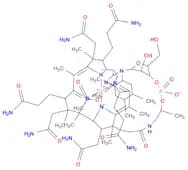
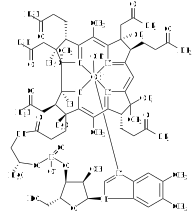
Producto descatalogadoCobinamide, Co-(acetato-kO)-, dihydrogen phosphate (ester), innersalt, 3'-ester with(5,6-dimethyl-1-a-D-ribofuranosyl-1H-benzimidazole-kN3)
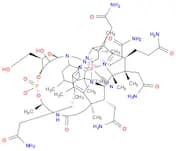
CAS:Fórmula:C64H91CoN13O16PPureza:98%Forma y color:SolidPeso molecular:1388.3918Ref: IN-DA00I4FP
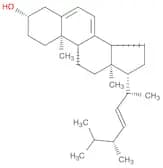
Producto descatalogadoErgosta-5,7,22-trien-3-ol, (3b,22E)-
CAS:Fórmula:C28H44OPureza:95%Forma y color:SolidPeso molecular:396.6484Pyridoxine-d3 Hydrochloride (contains ~1% d0)
CAS:Fórmula:C8H9ClD3NO3Pureza:≥98 atom % D, ≥96% (CP) ;Forma y color:SolidPeso molecular:208.6573Ref: 4Z-V-1458
Producto descatalogadoRef: 4Z-V-1233
Producto descatalogadoRef: 4Z-V-1232
Producto descatalogadoRef: 4Z-V-1423
Producto descatalogadoRef: 4Z-V-1466
Producto descatalogadoRef: 4Z-V-035026
Producto descatalogadoRef: 4Z-V-035009
Producto descatalogadoRef: 4Z-V-045002
Producto descatalogadoRef: 4Z-V-1476
Producto descatalogadoRef: 4Z-V-035016
Producto descatalogadoRef: 4Z-V-083
Producto descatalogadoRef: 4Z-V-035024
Producto descatalogadoRef: 4Z-V-035025
Producto descatalogadoRef: 4Z-V-1415
Producto descatalogadoRef: 4Z-V-035015
Producto descatalogadoRef: 4Z-V-038013
Producto descatalogadoRef: 4Z-V-038014
Producto descatalogadoRef: 4Z-V-1475
Producto descatalogadoRef: 4Z-V-035017
Producto descatalogadoRef: 4Z-V-1473
Producto descatalogadoRef: 4Z-V-1249
Producto descatalogadoRef: 4Z-V-035020
Producto descatalogadoRef: 4Z-V-1248
Producto descatalogadoRef: 4Z-V-035023
Producto descatalogadoRef: 4Z-V-035019
Producto descatalogadoRef: 4Z-V-033024
Producto descatalogadoRef: 4Z-V-035022
Producto descatalogadoRef: 4Z-V-033012
Producto descatalogadoRef: 4Z-V-035021
Producto descatalogadoRef: 4Z-V-1426
Producto descatalogadoRef: 4Z-V-1474
Producto descatalogado