


Glicerofosfolípidos / Fosfolípidos
Se han encontrado 382 productos de "Glicerofosfolípidos / Fosfolípidos"
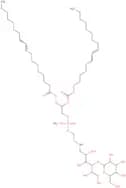
1,2-Dioleoyl-sn-glycero-3-phosphoethanolamine-N-lactosyl ammonium
CAS:Please enquire for more information about 1,2-Dioleoyl-sn-glycero-3-phosphoethanolamine-N-lactosyl ammonium including the price, delivery time and more detailed product information at the technical inquiry form on this page
Fórmula:C53H103N2O18PPureza:Min. 95%Peso molecular:1,087.4 g/mol1-Stearoyl-3-oleoyl-rac-glycerol
Please enquire for more information about 1-Stearoyl-3-oleoyl-rac-glycerol including the price, delivery time and more detailed product information at the technical inquiry form on this page
Pureza:Min. 95%1-Myristoyl-2-Hydroxy-sn-Glyc-3-Phosphatidylethanolamine
CAS:1-Myristoyl-2-hydroxy-sn-glyc-3-phosphatidylethanolamine is a phospholipid with various applications, mostly relating to membrane biochemistry studies.Fórmula:C19H40NO7PPureza:Min. 95%Peso molecular:425.5 g/mol2-O-Hexadecyl-rac-glycero-3-phosphocholine
2-O-Hexadecyl-rac-glycero-3-phosphocholine is a high quality reagent that can be used as an intermediate for the synthesis of complex compounds. It has been shown to be a useful scaffold for research chemicals, and is a versatile building block that can be used in reactions with many other substances. This compound is also a speciality chemical, and has been shown to have many uses including as a reaction component. The CAS number for this compound is 68415-87-6.Fórmula:C24H52NO6PPureza:Min. 95 Area-%Peso molecular:481.65 g/mol1,2-Di-o-dodecyl-sn-glycero-3-phosphocholine
CAS:1,2-Di-O-dodecyl-sn-glycero-3-phosphocholine (DODPC) is a lipid molecule that is used in the preparation of liposomes. Liposomes are spherical structures consisting of a phospholipid bilayer membrane enclosing an inner aqueous phase. The structure and properties of liposomes depend on the type of phospholipid used to form the bilayer membrane. DODPC forms large unilamellar vesicles with an average diameter of about 150 nm, which are stable for months at 4°C as well as at room temperature. DODPC can be used to diagnose bacterial infections by monitoring changes in the orientation and transmembrane protein distribution when bacteria attach to the surface of a liposome. This molecule is also used in environmental monitoring, filtration, and magnetic separation processes.Fórmula:C32H68NO6PPureza:Min. 95%Peso molecular:593.9 g/mol1,2-Dipalmitoyl-sn-glycero-3-phosphoethanolamine-N-(glutaryl) sodium
CAS:Please enquire for more information about 1,2-Dipalmitoyl-sn-glycero-3-phosphoethanolamine-N-(glutaryl) sodium including the price, delivery time and more detailed product information at the technical inquiry form on this pageFórmula:C42H79NNaO11PPureza:Min. 95%Peso molecular:828 g/mol1,2-Dioleoyl-sn-glycero-3-phospho-L-serine sodium salt
CAS:DOPS; negatively charged cell membrane phospholipidFórmula:C42H77NO10PNaPureza:Min. 95%Peso molecular:810.0 g/mol1,2-Dioleoyl-sn-glycero-3-phosphoethanolamine-N-(dodecanoyl) sodium
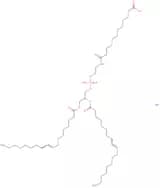
CAS:Please enquire for more information about 1,2-Dioleoyl-sn-glycero-3-phosphoethanolamine-N-(dodecanoyl) sodium including the price, delivery time and more detailed product information at the technical inquiry form on this page
Fórmula:C53H98NNaO11PPureza:Min. 95%Peso molecular:979.3 g/mol18:1-14:0 PC
CAS:18:1-14:0 PC is a phospholipid that belongs to the group of fatty acids. It is a component of cell membranes and has an acyl chain composition of 18:1-14:0. 18:1-14:0 PC can be found in the lamellar phase, which is the most prevalent lipid phase in biological membranes. It has been shown that 18:1-14:0 PC has a higher melting temperature than other phosphatidylcholines, which may be due to its increased content of polyunsaturated fatty acids. The biogenic amine profiles for 18:1-14:0 PC include dopamine, norepinephrine, epinephrine, serotonin, histamine, and tyramine. The biochemical pathway for 18:1-14:0 PC includes glycerophospholipid metabolism.Fórmula:C40H78NO8PPureza:Min. 95%Peso molecular:732.02 g/mol1-Palmitoyl-rac-glycero-3-phosphocholine
1-Palmitoyl-rac-glycero-3-phosphocholine is a hydrophobic molecule that binds to the substrate binding site on the enzyme. This binding increases the fluorescence of fluorogenic substrates and provides information about the interaction between the substrate and enzyme. This protein has been shown to be localized in cellular membranes and cytosol, as well as in micelles and polymerized lipids. It is a member of a family of enzymes that catalyze phospholipid synthesis, including sphingomyelin, phosphatidylcholine, phosphatidylethanolamine, and phosphatidylserine. 1-Palmitoyl-rac-glycero-3-phosphocholine has been shown to have kinetic properties that are similar to those of pancreatic acyl coenzyme A:cholesterol acyltransferase.
Pureza:Min. 95%1-Octanoyl-2-hydroxy-sn-glycero-3-phosphocholine
CAS:Lecithin is a lipid that is found in the cell membranes of all living organisms. It is made up of glycerol and fatty acids, with an ester bond between the two. Lecithin can be hydrolyzed by phospholipase to produce lysolecithin and glycerophosphoric acid. Lecithin has been shown to have a high content of choline, which can be used as an energy source for cells. Lecithin also has a high content of other lipids such as cholesterol, phosphatidylcholine, and stearic acid. The lecithins are classified into four groups based on their fatty acid composition: monoglycerides (MG), diglycerides (DG), triglycerides (TG), and phosphatidylcholines (PC). The MG lecithins are found in animal sources while DG, TG, and PC lecithins are mainly found in plantFórmula:C16H34NO7PPureza:Min. 95%Peso molecular:383.42 g/mol19:0 PC
CAS:19:0 PC is a fatty acid that is found in phospholipids and glycolipids. It can be detected by a lipidomic technique called phase chromatography. This technique separates lipids based on the length of their acyl chains. The detection sensitivity of this technique is 0.1% of the total lipid content in the sample and it has been used to detect fatty acids that are not easily detectable by other techniques, such as gas chromatography or thin-layer chromatography. 19:0 PC has been shown to play an important role in metabolic disorders and in the regulation of cb2 receptor activity. It also participates in biosynthesis and cellular metabolism, where it plays a role in membrane fluidity and stability. 19:0 PC has also been shown to be important for lipidome analysis, which studies the metabolites produced by cells during lipid metabolism.Fórmula:C46H92NO8PPureza:Min. 95%Peso molecular:818.2 g/mol06:0 PE
CAS:06:0 PE is a supramolecular polymer that has been developed as an efficient method for the detection of infectious diseases. It is based on the interaction energies between the polymeric scaffold and the fluorescent probe molecules, which are attached to the polymeric scaffold by covalent bonds. 06:0 PE has a high signal-to-noise ratio and can be used to measure metabolomics changes in infectious diseases at early stages. This polymer also has sixfold symmetry, which allows it to emit light over a wide range of angles, making it easier to detect than other polymers with only twofold symmetry.Fórmula:C17H34NO8PPureza:Min. 95%Peso molecular:411.43 g/mol1,2-Distearoyl-sn-glycero-3-phosphoethanolamine-N-[carboxy(polyethylene glycol)-2000] (ammonium salt)
CAS:Please enquire for more information about 1,2-Distearoyl-sn-glycero-3-phosphoethanolamine-N-[carboxy(polyethylene glycol)-2000] (ammonium salt) including the price, delivery time and more detailed product information at the technical inquiry form on this pageFórmula:C134H267N2O57PPureza:Min. 95%Peso molecular:2,849.51 g/mol1-Oleoyl-2-[12-biotinyl(aminododecanoyl)]-sn-glycero-3-phosphoinositol-3,4,5-trisphosphate sodium
CAS:Please enquire for more information about 1-Oleoyl-2-[12-biotinyl(aminododecanoyl)]-sn-glycero-3-phosphoinositol-3,4,5-trisphosphate sodium including the price, delivery time and more detailed product information at the technical inquiry form on this page
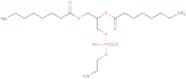
Fórmula:C49H87N3Na4O24P4SPureza:Min. 95%Peso molecular:1,350.1 g/mol1,2-Dioctanoyl-sn-glycero-phosphoethanolamine
CAS:1,2-Dioctanoyl-sn-glycero-phosphoethanolamine is a synthetic amphiphilic compound that is used as an excipient in pharmaceutical formulation. It forms liposomes and microparticles and can be used to encapsulate drugs. 1,2-Dioctanoyl-sn-glycero-phosphoethanolamine has been shown to have anti-cancer properties in mice. It penetrates the blood brain barrier and accumulates in the endoplasmic reticulum (ER), which leads to cell death by apoptosis. The compound also inhibits the synthesis of fatty acids and surfactants, which are known to promote tumor growth.Fórmula:C21H42NO8PPureza:Min. 95%Peso molecular:467.5 g/molL-α-Phosphatidylinositol (sodium salt)
CAS:Please enquire for more information about L-α-Phosphatidylinositol (Liver, Bovine) (sodium salt) including the price, delivery time and more detailed product information at the technical inquiry form on this page
Pureza:Min. 95%Phosphatidylinositol-bis-4,5-phosphate sodium salt
Please enquire for more information about Phosphatidylinositol-bis-4,5-phosphate sodium salt including the price, delivery time and more detailed product information at the technical inquiry form on this pagePureza:Min. 95%1-O-Octadecyl-2-O-methyl-sn-glycero-3-phosphocholine
CAS:Edelfosine is a novel antiparasitic drug that has been shown to be effective against diseases caused by parasites. It binds to the nuclear DNA of the parasite, triggering apoptosis and preventing cell division, which leads to the death of the parasite. Edelfosine can also act as an anti-inflammatory agent and has been shown to inhibit leishmania in vitro assays. The drug is not toxic for normal cells but may cause some toxicity in cancer cells. Edelfosine was found to be safe in mice with a tumor and was found to inhibit hl-60 cells without any adverse effects on cellular physiology.
Fórmula:C27H58NO6PPureza:Min. 95 Area-%Forma y color:PowderPeso molecular:523.73 g/mol1,2-distearoyl-sn-glycero-3-phosphoethanolamine-N-[folate(polyethylene glycol)-2000] (ammonium salt)
CAS:Producto controlado1,2-distearoyl-sn-glycero-3-phosphoethanolamine-N-[folate(polyethylene glycol)-2000] (ammonium salt) is a compound that combines the benefits of pioglitazone and lycobetaine. It has anti-fibrotic properties and can be used in conjunction with medications like canagliflozin to treat various conditions. This compound belongs to the class of phospholipids and has been found to have antifibrotic effects similar to nintedanib.Fórmula:C151H286N11O59PPureza:Min. 95%Forma y color:PowderPeso molecular:3,230.9 g/mol








![1,2-Distearoyl-sn-glycero-3-phosphoethanolamine-N-[carboxy(polyethylene glycol)-2000] (ammonium sa…](/_next/image/?url=https%3A%2Fstatic.cymitquimica.com%2Fproducts%2F3D%2Fthumb-webp%2FZTA92220.webp&w=3840&q=75)
![1-Oleoyl-2-[12-biotinyl(aminododecanoyl)]-sn-glycero-3-phosphoinositol-3,4,5-trisphosphate sodium](/_next/image/?url=https%3A%2Fstatic.cymitquimica.com%2Fproducts%2F3D%2Fthumb-webp%2FZGB81270.webp&w=3840&q=75)


![1,2-distearoyl-sn-glycero-3-phosphoethanolamine-N-[folate(polyethylene glycol)-2000] (ammonium sal…](/_next/image/?url=https%3A%2Fstatic.cymitquimica.com%2Fproducts%2F3D%2Fthumb-webp%2FLZB28825.webp&w=3840&q=75)