Nucleósidos
Los nucleósidos son building blocks fundamentales de los ácidos nucleicos, compuestos por una base nitrogenada unida a una molécula de azúcar. En esta sección, puede encontrar una amplia variedad de nucleósidos esenciales para la investigación en biología molecular, bioquímica y farmacología. Estos compuestos juegan roles cruciales en la síntesis de ADN y ARN, y son vitales en varios procesos metabólicos. Los nucleósidos se utilizan para estudiar material genético, desarrollar terapias antivirales y anticancerígenas, y comprender los mecanismos celulares. En CymitQuimica, proporcionamos nucleósidos de alta calidad para apoyar sus necesidades de investigación y desarrollo, asegurando pureza y fiabilidad para sus aplicaciones experimentales.
Se han encontrado 3569 productos de "Nucleósidos"
Ordenar por
Pureza (%)
0
100
|
0
|
50
|
90
|
95
|
100
Zebularine 3'-CE phosphoramidite
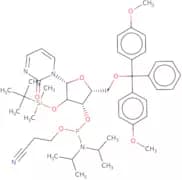
CAS:Zebularine 3'CE phosphoramidite is a novel, high quality activator for modified DNA monophosphate. It is used as an anticancer drug and antiviral agent. Zebularine 3'CE phosphoramidite is a synthetic, diphosphate with high purity and high reactivity. It has been shown to activate deoxyribonucleosides to ribonucleosides in DNA synthesis, as well as being able to inhibit viral RNA synthesis by inhibiting viral polymerase.Fórmula:C45H61N4O8PSiPureza:Min. 95%Forma y color:Off-white solid.Peso molecular:845.04 g/molN4,3'-O-Dibenzoyl-2'-deoxycytidine
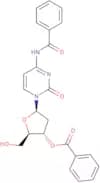
CAS:N4,3'-O-Dibenzoyl-2'-deoxycytidine is a nucleoside that functions as a base. It is a diester of the naturally occurring nucleoside cytidine and 2′,6′-dibenzoyl-deoxyribose. The compound has been shown to be an inhibitor of DNA polymerases and nuclease activity in vitro. N4,3'-O-Dibenzoyl-2'-deoxycytidine has been shown to inhibit the growth of certain strains of bacteria and can be used for the treatment of tuberculosis. This drug also has anti-inflammatory properties that may be due to its ability to inhibit prostaglandin synthesis. !-- END OF PRODUCT DESCRIPTIONS -->Fórmula:C23H21N3O6Pureza:Min. 95%Forma y color:PowderPeso molecular:435.44 g/mol3'-O-Benzoyl-2'-deoxyuridine
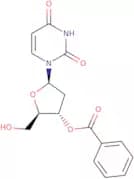
CAS:3'-O-Benzoyl-2'-deoxyuridine is a synthetic nucleoside that is used in the synthesis of DNA and RNA. 3'-O-Benzoyl-2'-deoxyuridine is also an antiviral agent that has shown efficacy against HIV, HSV, and influenza virus. 3'-O-Benzoyl-2'-deoxyuridine is a phosphoramidite monophosphate that can be used as a building block for DNA or RNA synthesis. It is also a diphosphate that can be used to synthesize modified nucleosides. This product has novel properties and high purity, making it suitable for research purposes.Fórmula:C16H16N2O6Pureza:Min. 95%Forma y color:PowderPeso molecular:332.31 g/mol9-(2'-Deoxy-2'-fluoro-β-D-arabinofuranosyl)hypoxantine
CAS:9-(2'-Deoxy-2'-fluoro-β-D-arabinofuranosyl)hypoxantine is a synthetic nucleoside that can be phosphorylated to form 9-(2'-Deoxy-2'-fluoro-β-D-arabinofuranosyl)hypoxantine 5'-triphosphate. This compound has been shown to have antitumor and antiviral activities. It inhibits DNA synthesis by inhibiting the activity of DNA polymerase and RNA polymerase, which are enzymes necessary for the replication of cellular DNA and RNA, respectively. 9-(2'-Deoxy-2'-fluoro-β-D-arabinofuranosyl)hypoxantine is high quality, novel, and CAS No. 98983-40-5.Fórmula:C10H11FN4O4Pureza:Min. 95%Forma y color:White Off-White PowderPeso molecular:270.22 g/mol7-Deaza-2'-deoxyadenosine
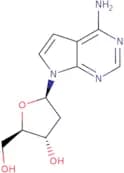
CAS:7-Deaza-2'-deoxyadenosine is an oligodeoxynucleotide analog that has been shown to be a potent inhibitor of human ovarian carcinoma cells. It inhibits the uptake of organic anion transporters, which are proteins found in the cell membrane that transport organic anions such as nucleosides and nucleotides. 7-Deaza-2'-deoxyadenosine has also been shown to inhibit DNA synthesis and polymerase chain reactions by binding to the enzyme RNA polymerase II. This drug can be synthesized with solid phase chemistry, making it a highly reproducible product.Fórmula:C11H14N4O3Pureza:Min. 98 Area-%Forma y color:White PowderPeso molecular:250.26 g/mol2,4,6-Trichloro-5-methylpyrimidine
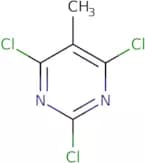
CAS:2,4,6-Trichloro-5-methylpyrimidine is a nucleoside for use in research applicationsFórmula:C5H3Cl3N2Pureza:Min. 95%Forma y color:PowderPeso molecular:197.45 g/mol6-Amino-1-(2'-deoxy-a-D-ribofuranosyl)-4-methoxy-1H- pyrazolo[3,4-d]pyrimidine
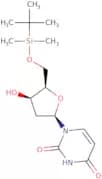
6-Amino-1-(2'-deoxy-a-D-ribofuranosyl)-4-methoxy-1H- pyrazolo[3,4-d]pyrimidine is a modified nucleoside that is an antiviral agent and anticancer drug. It inhibits viral replication by inhibiting the activity of DNA polymerase. 6-[Amino(2'-deoxyribofuranosyl)]-1-(2'-deoxyribofuranosyl)-4-methoxypyrazolo[3,4-d]pyrimidine has been shown to inhibit the growth of cancer cells without affecting healthy cells.Pureza:Min. 95%5'-O-tert-Butyldimethylsilyl-2'-deoxyuridine
5'-O-tert-Butyldimethylsilyl-2'-deoxyuridine (5'-O-TBDMSU) is a modified nucleoside that has antiviral, anticancer and novel activities. It is synthesized by the reaction of 5'-O-tert-butyldimethylsilyl-2'-deoxyuridine with methyl chloroformate. 5'-O-TBDMSU has been shown to inhibit viral replication in cell culture. The antiviral activity of 5'-O-TBDMSU may be due to its ability to inhibit DNA synthesis by inhibiting the incorporation of deoxyribonucleotide triphosphates into DNA or by inhibiting the activity of DNA polymerases. This compound also inhibits the replication of RNA viruses such as HIV and hepatitis C virus, which are dependent on deoxyribonucleosides for their replication.Fórmula:C15H26N2O5SiPureza:Min. 95%Peso molecular:342.47 g/molN4-Benzoyl-3'-deoxycytidine
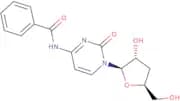
CAS:N4-Benzoyl-3'-deoxycytidine is a novel antiviral agent that has shown activity against DNA and RNA viruses. It is an activator of DNA polymerase, which is essential for replication of viral nucleic acids. The compound is a modified nucleoside with a benzoyl group at the 4' position of the ribose moiety. It also has phosphoramidite, monophosphate, and diphosphate analogues. N4-Benzoyl-3'-deoxycytidine binds to the enzyme DNA polymerase, thereby inhibiting its ability to synthesize deoxyribonucleotides from ribonucleotides. This results in inhibition of viral DNA synthesis and subsequent inhibition of viral replication.Fórmula:C16H17N3O5Pureza:Min. 95%Forma y color:White To Off-White SolidPeso molecular:331.32 g/mol5'-(4-Fluorosulfonylbenzoyl)adenosine HCI
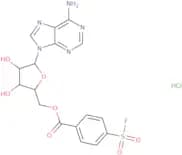
CAS:5'-(4-Fluorosulfonylbenzoyl)adenosine HCI is an inhibitor of adenosine deaminase. It has been used as a tool in the diagnosis of autoimmune diseases. 5'-(4-Fluorosulfonylbenzoyl)adenosine HCI binds to the α subunit of mitochondrial ATPase and inhibits its function, leading to a drop in mitochondrial membrane potential. This can be measured by electron paramagnetic resonance spectroscopy, which can detect changes in redox potentials and the presence of disulfide bonds. 5'-(4-Fluorosulfonylbenzoyl)adenosine HCI also binds to DNA synthetase and metal chelate, inhibiting protein synthesis.
5'-(4-Fluorosulfonylbenzoyl)adenosine HCI has been shown to inhibit various enzymes such as phosphofructokinase, glycogen phosphFórmula:C17H17ClFN5O7SPureza:Min. 97.0 Area-%Peso molecular:489.86 g/molRef: 3D-W-203807
1gA consultar100mgA consultar250mgA consultar500mgA consultar2500mgA consultar-Unit-ggA consultarL-Thymidine
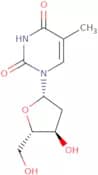
CAS:L-Thymidine is an antiviral drug that is used in the treatment of chronic hepatitis. It has been shown to be active against a range of viruses, including HIV, HSV, and HBV. L-Thymidine can also be used to treat patients with cancer as an anti-cancer agent. L-Thymidine is a prodrug that is converted into thymidine triphosphate (TTP), which inhibits viral DNA polymerase by competitive inhibition. The antiviral activity of L-Thymidine may be due to its ability to inhibit the synthesis of viral proteins required for viral replication by interfering with the protein production process or by inhibiting the formation of dsDNA during reverse transcription.Fórmula:C10H14N2O5Pureza:Min. 95%Forma y color:PowderPeso molecular:242.23 g/mol1-Methylpseudouridine
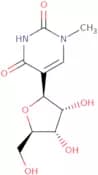
CAS:1-Methylpseudouridine is a substitute for uridine in modified mRNA. This substitution has shown to increase transfection by reducing immuogenicity. The 1-methylpseudouridine substituted mRNA increases protein expression due to low immune stimulation as it evades detection by the edosomal Toll-like receptor (TLR3).Fórmula:C10H14N2O6Pureza:Min. 95 Area-%Forma y color:PowderPeso molecular:258.23 g/mol5'-O-Benzoyl-2',3'-dideoxy-3'-fluorouridine
5'-O-Benzoyl-2',3'-dideoxy-3'-fluorouridine is a novel nucleoside that is synthesized from ribonucleosides. It is an inhibitor of the RNA polymerase enzyme, which prevents the transcription and replication of DNA. 5'-O-Benzoyl-2',3'-dideoxy-3'-fluorouridine also inhibits viral DNA synthesis by preventing viral RNA from being translated into DNA. This product has been shown to be active against a wide range of viruses, including influenza A virus, herpes simplex virus type 1, and vaccinia virus.Fórmula:C16H15FN2O5Pureza:Min. 95%Peso molecular:334.35 g/molEdU
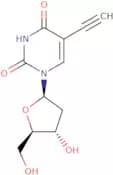
CAS:2'-Deoxy-5-ethynyluridine (5-EdU) is a modified thymidine analogue containing a terminal alkyne group, which is used for nucleotide labelling. 5-Edu is easily taken up by cells and incorporated by metabolic activation during DNA synthesis. By adding an azide conjugated to a fluorophore or a biotin moiety, a click reaction occurs from the labelled nucleotide linked by a triazole group. 5-Edu are employed in cell proliferation assays, to study DNA and RNA localisation, structure and dynamics, in the synthesis of aptamers with the click-SELEX method, and in other applications such as the preparation of oligonucleotide microarrays and nanoelectronic devices.Fórmula:C11H12N2O5Pureza:Min. 98 Area-%Forma y color:PowderPeso molecular:252.23 g/mol6-O-Methylinosine
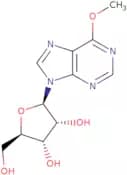
CAS:6-O-Methylinosine is a modified nucleoside that is used in the synthesis of recombinant proteins. It is synthesized from the reaction of methylphosphate and 6-O-methylguanosine. The phosphate group of the 6-O-methylguanosine molecule reacts with methylphosphate in an acid or neutral environment, while it reacts with phosphoric acid in a basic environment. This reaction can be monitored by measuring the amount of free phosphate groups present after the reaction. The rate of this reaction can be increased by increasing temperature and pH. 6-O-Methylinosine has been shown to have anticancer activity, which may be due to its ability to inhibit enzyme catalysis and modify DNA structure.Fórmula:C11H14N4O5Pureza:Min. 95%Forma y color:White PowderPeso molecular:282.25 g/mol2-Amino-9-(β-D-ribofuranosyl)purine
CAS:2-Amino-9-(β-D-ribofuranosyl)purine is a purine nucleoside consisting of the base 2-aminopurine linked via an N9-glycosidic bond to β-D-ribofuranose. As an analog of adenosine, it retains structural compatibility with nucleic acids but exhibits distinct biochemical properties, most notably intrinsic fluorescence. This makes it a valuable probe in molecular biology for studying nucleic acid structure, base pairing, and conformational changes, as its fluorescence is sensitive to local stacking interactions and environmental conditions.Fórmula:C10H13N5O4Pureza:Min. 95%Forma y color:White PowderPeso molecular:267.24 g/molN6-Benzoyl-2'-deoxy-5'-O-DMT-adenosine 3'-CE phosphoramidite
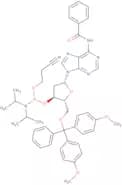
CAS:N6-Benzoyl-2'-deoxy-5'-O-DMT adenosine 3'-CE phosphoramidite is a protected adenosine amidite.Fórmula:C47H52N7O7PPureza:Min. 98 Area-%Forma y color:White PowderPeso molecular:857.93 g/mol2'-Azido-2'-deoxy-5'-O-DMT-uridine
CAS:2'-Azido-2'-deoxy-5'-O-DMT-uridine is a nucleoside that has been modified with an azido group at the 2' position. The azido group is used to modify DNA and RNA nucleosides, which are monophosphate, ribonucleosides, and deoxyribonucleosides. This drug may be used as an activator of DNA synthesis or as a antiviral agent. It has been shown to inhibit HIV replication in vitro.Pureza:Min. 95%5'-Azido-5'-deoxyuridine
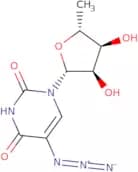
CAS:5'-Azido-5'-deoxyuridine is a synthetic nucleobase that is used in the synthesis of oligodeoxynucleotides. It has been shown to have an inhibitory effect on tumor cells, which may be due to its ability to interact with guanosine diphosphate (GDP) and prevent the formation of GTP. 5'-Azido-5'-deoxyuridine has also been shown to have an inhibitory effect on Mycobacterium tuberculosis and Mycobacterium avium complex, but does not affect other bacteria. 5'-Azido-5'-deoxyuridine interacts with RNA by binding to the phosphate group and inhibiting the synthesis of proteins and DNA.Pureza:Min. 95%N4-Benzoyl-3'-O-tert-butyldimethylsilyl-5'-O-DMT-N4-methylcytidine
N4-Benzoyl-3'-O-tert-butyldimethylsilyl-5'-O-DMT-N4-methylcytidine is a nucleoside that is chemically modified by the addition of a benzoyl group. It has antiviral, anticancer and antiretroviral activities. N4-Benzoyl-3'-O-tert-butyldimethylsilyl-5'-O-DMT-N4-methylcytidine inhibits viral DNA synthesis by inhibiting both viral DNA polymerase and reverse transcriptase, which are enzymes required for the production of viral DNA. It also inhibits cancer cell growth by forming covalent bonds with deoxyribonucleic acid (DNA) in the cancer cells and initiating apoptosis. This nucleoside has been shown to be active against HIV, Herpes Simplex Virus Type 1 (HSV1), and Human CytomegalovPureza:Min. 95%


![6-Amino-1-(2'-deoxy-a-D-ribofuranosyl)-4-methoxy-1H- pyrazolo[3,4-d]pyrimidine](/_next/image/?url=https%3A%2Fstatic.cymitquimica.com%2Fproducts%2F3D%2Fthumb-webp%2FNA162964.webp&w=3840&q=75)