Nucleósidos
Se han encontrado 3569 productos de "Nucleósidos"
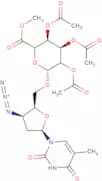
3'-Azido-3'-deoxythymidine 2,3,4-tri-O-acetyl-b-D-glucuronide methyl ester
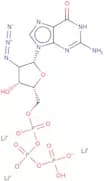
3'-Azido-3'-deoxythymidine 2,3,4-tri-O-acetyl-b-D-glucuronide methyl ester is a novel nucleoside analogue with anticancer and antiviral properties. It is an activator of ribonucleosides and deoxyribonucleosides, which are used for the synthesis of DNA and RNA respectively. 3'-Azido-3'-deoxythymidine 2,3,4-tri-O-acetyl-b-D-glucuronide methyl ester can be used to synthesize phosphoramidites and modified nucleosides. The compound has been shown to have antitumor activity in vitro against human leukemia cells.Fórmula:C23H29N5O13Pureza:Min. 95%Peso molecular:583.5 g/mol2'-Azido-2'-deoxyguanosine-5'-triphosphate lithium salt - 100mM aqueous solution
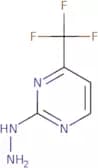
2'-Azido-2'-deoxyguanosine-5'-triphosphate lithium salt is a chemically modified nucleotide analog in which the 2'-hydroxyl group of guanosine is replaced by an azido group, and the molecule is phosphorylated at the 5' position with a triphosphate moiety, forming a lithium salt for stability and solubility. This molecule has potential in research applicationsFórmula:C10H15N8O13P3Pureza:Min. 95%Forma y color:Clear LiquidPeso molecular:548.19 g/mol2-Hydrazino-4-(trifluoromethyl)pyrimidine
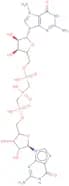
CAS:2-Hydrazino-4-(trifluoromethyl)pyrimidine is a cancer drug that is used in the treatment of various types of cancers. It is a chelate ring with a coordination geometry group P2, which has been shown to have low detection in urine and blood samples. 2-Hydrazino-4-(trifluoromethyl)pyrimidine binds copper ions, forming a copper complex, which causes the release of chloride ions. This process leads to an increased level of hydrogen peroxide and hydroxyl radicals that induce cancer cell death by inhibiting DNA synthesis and protein synthesis. 2-Hydrazino-4-(trifluoromethyl)pyrimidine also inhibits the production of certain enzymes (such as cyclooxygenase), which are involved in the production of prostaglandins that promote tumor growth.Pureza:Min. 95%m7G(5')ppp(5')Guanosine
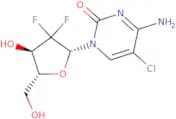
CAS:A cap analog that can incorporated into mRNAFórmula:C21H29N10O18P3Pureza:Min. 95%Peso molecular:802.43 g/mol2'-Deoxy-5- chloro -2', 2'- difluorocytidine
CAS:2'-Deoxy-5-chloro-2',2'-difluorocytidine is a monophosphate nucleoside with antiviral and anticancer activity. It is an activator of DNA polymerase, which is important for DNA synthesis. 2'-Deoxy-5-chloro-2',2'-difluorocytidine has been shown to be synthesized in high purity and with novel modifications that are not found in natural nucleosides. This compound may have the potential to be used as a therapeutic agent for cancer treatment or as an antiviral drug.Pureza:Min. 95%N6-Benzoyl-5'-O-DMT-2'-O-(2-methoxyethyl)adenosine 3'-O succinate TEA salt
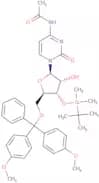
N6-Benzoyl-5'-O-DMT-2'-O-(2-methoxyethyl)adenosine 3'-O succinate TEA salt is a modified nucleotide that has been shown to have anticancer and antiviral activity. N6-Benzoyl-5'-O-DMT-2'-O-(2-methoxyethyl)adenosine 3'-O succinate TEA salt inhibits the synthesis of viral DNA and also inhibits the production of DNA in tumor cells. This compound is a phosphoramidite, which is an activated ester of a nucleoside with a phosphate group. The active form of this drug is adenosine triphosphate (ATP), which acts as an activator for DNA synthesis, leading to the production of deoxyribonucleosides and monophosphate, which are necessary for DNA replication.Pureza:Min. 95%N4-Acetyl-3'-O-tert-butyldimethylsilyl-5'-O-DMT-cytidine
CAS:N4-Acetyl-3'-O-tert-butyldimethylsilyl-5'-O-DMT-cytidine is a novel nucleoside analogue that was synthesized from a cytidine analogue. This compound has antiproliferative activity against cancer cells in vitro and in vivo. The mechanism of action is not yet known, but it is thought to be due to the inhibition of DNA synthesis and/or the induction of apoptosis. N4-Acetyl-3'-O-tert-butyldimethylsilyl-5'-O-DMT-cytidine is not active against HIV, herpes simplex virus type 1, or herpes simplex virus type 2. It also has no effect on the replication of the influenza A virus and cannot inhibit the replication of poliovirus type 1.
Fórmula:C38H47N3O8SiPureza:Min. 95%Peso molecular:701.88 g/molCytarabine-5-b,Y-(1-hydroxyethylidene) triphosphate-d3
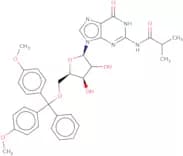
Cytarabine-5-b,Y-(1-hydroxyethylidene) triphosphate-d3 is a novel nucleotide analogue that is synthesized from the corresponding phosphoramidite. It has antiviral activity and can be used as an analog of cytosine arabinoside for the treatment of herpes zoster. Cytarabine-5-b,Y-(1-hydroxyethylidene) triphosphate-d3 has been shown to inhibit viral replication by interacting with DNA and RNA synthesis. This drug also inhibits DNA polymerase activity in vitro and blocks viral transcription. Cytarabine can be used in combination with other antiviral drugs such as acyclovir or ganciclovir.Pureza:Min. 95%5'-O-DMT-N2-isobutyryl-9-(b-D-arabinofuranosyl)guanine
5'-O-DMT-N2-isobutyryl-9-(b-D-arabinofuranosyl)guanine is a nucleoside analog drug that has antiviral and anticancer properties. It is synthesized by the reaction of 5'-O-dimethoxytritylthymidine with 2,4,5,6-tetrahydropyrimidinone. This compound has been shown to be active in vitro against several viruses including herpes simplex virus type 1 (HSV1) and human immunodeficiency virus type 1 (HIV1). The antiviral activity of 5'-O-DMT-N2-isobutyrylguanine is due to inhibition of viral DNA polymerase and/or virion assembly. It also inhibits tumor cell growth in vitro.Fórmula:C35H37N5O8Pureza:Min. 95%Peso molecular:655.71 g/mol2',3'-Didehydro-3'-deoxy-thymidine-5'-triphosphate, lithium salt
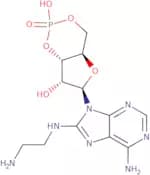
2',3'-Didehydro-3'-deoxy-thymidine-5'-triphosphate, lithium salt is a nucleoside analog that inhibits DNA synthesis by inhibiting the enzyme DNA polymerase. It has been shown to be effective against cancer cells in vitro and in vivo. Although it is not active against mycobacterium and other acid-fast bacteria, 2',3'-didehydro-3'-deoxy-thymidine-5'-triphosphate, lithium salt has shown promising anticancer properties and may be useful for the treatment of leukemia, lymphoma, and breast cancer.Pureza:Min. 95%8-(2-Aminoethyl)aminoadenosine 3',5'-cyclic monophosphate
CAS:8-(2-Aminoethyl)aminoadenosine 3',5'-cyclic monophosphate (8-AEACMP) is a structural analog of the purine nucleotide adenosine. It has been shown to be an effective inhibitor of HIV replication in vitro and in vivo. 8-AEACMP blocks HIV transcription by binding to the cellular target, the enzyme ribonucleotide reductase. This binding prevents the formation of an enzyme-substrate complex that is required for DNA synthesis. 8-AEACMP binds to two sites on this enzyme: one site is at a catalytic site that is not involved in substrate binding, and the other site is at a regulatory site. The inhibitory effect of 8-AEACMP on HIV transcription results from its ability to bind at both sites simultaneously.Fórmula:C12H18N7O6PPureza:Min. 95%Peso molecular:387.29 g/mol2',3'-Dideoxyguanosine-5'-triphosphate lithium salt - 100mM aqueous solution
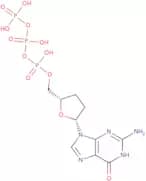
CAS:2',3'-Dideoxyguanosine-5'-triphosphate lithium salt (ddGTP) is a nucleotide analogue that inhibits the activity of DNA polymerase, RNA polymerase, and other enzymes. It has been shown to be an effective inhibitor of primary breast cancer cells in vitro. ddGTP is also a fluorescent compound with a light emission maximum at about 520 nm. The fluorescence intensity increases with increasing concentrations of ddGTP. This product is supplied as a 100mM aqueous solution containing ddGTP.Fórmula:C10H16N5O12P3Pureza:Min. 95%Peso molecular:491.18 g/mol[(2R,3S,4R,5R)-5-(4-Benzamido-2-oxo-1,2-dihydropyrimidin-1-yl)-3-(benzoyloxy)-4-fluoro-4-methyloxolan-2-yl]methyl benzoate
CAS:[(2R,3S,4R,5R)-5-(4-Benzamido-2-oxo-1,2-dihydropyrimidin-1-yl)-3-(benzoyloxy)-4-fluoro-4-methyloxolan-2-yl]methyl benzoate is a novel anticancer drug that selectively inhibits the proliferation of cancer cells. It binds to the DNA and RNA in tumor cells to inhibit nucleotide synthesis and leads to cell death. This product has high purity and is modified for use.Fórmula:C31H26FN3O7Pureza:Min. 95%Peso molecular:571.6 g/mol4'-C-Azido-2'-deoxy-2'-fluoro-uridine
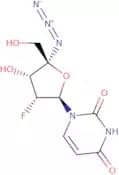
CAS:4'-C-Azido-2'-deoxy-2'-fluoro-uridine is a novel nucleoside with antiviral and anticancer properties. 4'-C-Azido-2'-deoxy-2'-fluoro-uridine is activated by ribonucleoside kinase, which phosphorylates the 4'-C position on the sugar moiety to form the monophosphate. This drug has been shown to inhibit proliferation of human lymphoid leukemia cells in culture and to inhibit replication of HIV in cell culture. 4'-C-Azido-2'-deoxy-2'-fluoro-uridine also inhibits herpes simplex virus type 1 (HSV1) replication in vitro.
Fórmula:C9H10FN5O5Pureza:Min. 95%Peso molecular:287.2 g/mol8-Allyloxy-N2-(dimethylaminomethylidene)-2-deoxyguanosine
CAS:8-Allyloxy-N2-(dimethylaminomethylidene)-2-deoxyguanosine is an anti-cancer, antiviral, and anticancer agent. It has shown anticancer activity in a number of animal models. This drug also inhibits the replication of DNA by inhibiting the synthesis of DNA precursors. 8-Allyloxy-N2-(dimethylaminomethylidene)-2-deoxyguanosine is synthesized from 2,6-diaminohexane and 1,3,5-triazine by reaction with formaldehyde and allyl bromide in the presence of potassium hydroxide. The product is purified by chromatography on silica gel using a mixture of chloroform/methanol (1:1) as eluent to yield a colorless liquid. The chemical structure is characterized by IR spectroscopy and mass spectrometry.Fórmula:C16H22N6O5Pureza:Min. 95%Peso molecular:378.38 g/mol1-(2'-Deoxy-5'-O-DMT-b-D-lyxofuranosyl)thymine
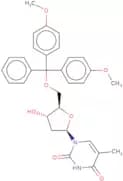
CAS:1-(2'-Deoxy-5'-O-DMT-b-D-lyxofuranosyl)thymine is a nucleoside that can be used as a reagent in the synthesis of oligodeoxynucleotides. It has been shown to bind to DNA, and it is phosphoramidite monomer for solid phase synthesis of oligodeoxynucleotides. It is also a nonamer, octamer, and dinucleoside. 1-(2'-Deoxy-5'-O-DMT-b-D-lyxofuranosyl)thymine binds to the receptor protein and has been shown to have efficiencies as high as 45%.Fórmula:C31H32N2O7Pureza:Min. 95%Peso molecular:544.6 g/molAdenosine 5'-triphosphate potassium salt
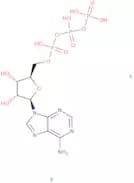
CAS:Adenosine 5'-triphosphate potassium salt is a membrane potential-sensitive fluorescent probe. It has been used to measure the intensity of light exposure and the depolarising effects of activation in sarcoplasmic reticulum vesicles. Adenosine 5'-triphosphate potassium salt has also been used to measure the activity of cyclic nucleotide phosphodiesterases, which are enzymes that regulate the breakdown of cAMP and cGMP. The fluorescence of adenosine 5'-triphosphate potassium salt increases with increased concentrations of cyclic nucleotide phosphodiesterase, indicating that it is an effective indicator for measuring these types of enzymes in biological assays.
Fórmula:C10H14K2N5O13P3Pureza:Min. 95%Peso molecular:583.36 g/molUridine 5'-O-(1-thiotriphosphate) lithium salt - 100mM aqueous solution
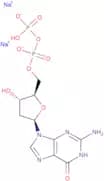
CAS:Mixture of Rp and Sp isomers.Fórmula:C9H15N2O14P3SPureza:Min. 95%Peso molecular:500.21 g/mol2'-Deoxyguanosine-5'-diphosphate disodium salt
CAS:2'-Deoxyguanosine-5'-diphosphate disodium salt is a marine metabolite that is used as a chemotactic agent for bacteria. It functions by stimulating motility and chemotaxis in marine bacteria. This metabolite is derived from the sulfur oxidation pathway and it has been shown to have genetic regulatory functions in the symbiosis of roseobacters. 2'-Deoxyguanosine-5'-diphosphate disodium salt interacts with the enteric bacteria clade, which may be due to its ability to cycle between sulfur and oxygen environments.Fórmula:C10H13N5O10P2·2NaPureza:Min. 95%Forma y color:White PowderPeso molecular:471.16 g/mol5-Aza-2'-deoxycytidine 5'-triphosphate sodium salt
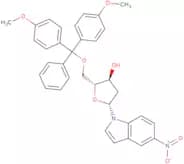
5-Aza-2'-deoxycytidine 5'-triphosphate sodium salt is an antiviral drug, which is a synthetic nucleoside analogue of cytidine. It inhibits the synthesis of viral DNA by competing with deoxycytidine triphosphate for incorporation into nascent DNA chains. This antiviral agent has been shown to be effective against HSV-1 and HIV-1 in vitro.Pureza:Min. 95%2-Deoxy-1-(5'-O-DMT-b-D-ribofuranosyl)-5-nitroindole
CAS:2-Deoxy-1-(5'-O-DMT-b-D-ribofuranosyl)-5-nitroindole is a nucleoside with anticancer activity. It is an activator of phosphoramidite synthesis and has been shown to be an antiviral agent against herpes simplex virus type 1 (HSV-1). 2-Deoxy-1-(5'-O-DMT-b-D-ribofuranosyl)-5-nitroindole is a nucleoside that can be used for the synthesis of DNA or RNA. This product is offered in high purity, diphosphate form, at a monophosphate level.Fórmula:C34H32N2O7Pureza:Min. 95%Peso molecular:580.63 g/molN2-Carbamoylthreonyl-2'-deoxyguanosine
N2-Carbamoylthreonyl-2'-deoxyguanosine is a phosphoramidite monophosphate that is used in the synthesis of DNA. It has antiviral and anticancer properties. N2-Carbamoylthreonyl-2'-deoxyguanosine is synthesized by modifying the nucleoside thymidine, which contains a 2'-deoxyribose sugar and an amino sugar, with carbamate linkages at the 2' position. This modification stabilizes the sugar moiety, preventing it from undergoing hydrolysis to form ribose and deoxyribose. The stability of the modified nucleoside allows for increased solubility in aqueous solution and increased resistance to degradation by nucleases. N2-Carbamoylthreonyl-2'-deoxyguanosine also has high purity and quality as well as novel modifications not found in other DNA building blocksPureza:Min. 95%N4-Acetyl-2'-O-tert-butyldimethylsilyl-5'-O-DMT-cytidine
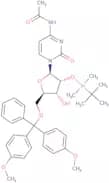
CAS:N4-Acetyl-2'-O-tert-butyldimethylsilyl-5'-O-DMT-cytidine is a novel modified nucleoside that is an activator of ribonucleosides. It has antiviral and anticancer activities, in addition to its potential as a DNA polymerase inhibitor. N4-Acetyl-2'-O-tert-butyldimethylsilyl-5'-O-DMT-cytidine is chemically synthesized with high purity and can be used for the synthesis of phosphoramidites for DNA synthesis. This compound also has the CAS number 12105885 3 and can be found in monophosphate form.Fórmula:C38H47N3O8SiPureza:Min. 95%Forma y color:PowderPeso molecular:701.88 g/mol2'-Deoxy-5-fluorocytidine 5'-monophosphate
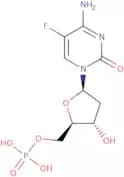
CAS:2'-Deoxy-5-fluorocytidine 5'-monophosphate is a nucleotide that is synthesized by the enzyme cytidine deaminase. It is used as a diagnostic agent in the detection of infectious diseases such as HIV, Mycobacterium tuberculosis, and cytomegalovirus (CMV). 2'-Deoxy-5-fluorocytidine 5'-monophosphate inhibits DNA synthesis by blocking the incorporation of deoxycytidylate into DNA. The compound is also an inhibitor of collagen synthesis in tissues and cells. Hydrogen bonds between this compound and its target enzymes are thought to be important for its inhibitory effects.
Fórmula:C9H13FN3O7PPureza:Min. 95%Peso molecular:325.19 g/mol4'-C-Azido-3'-deoxy-3'-fluorocytidine
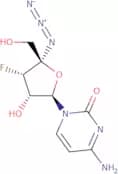
CAS:4'-C-Azido-3'-deoxy-3'-fluorocytidine is an antiviral, anticancer, and nucleoside phosphoramidite. It is a novel modified nucleoside that has antiviral, anticancer, and DNA modifying properties. 4'-C-Azido-3'-deoxy-3'-fluorocytidine has been shown to be an activator of the polymerase chain reaction (PCR). This product has high purity with no detectable impurities. The CAS number for this compound is 1145869-46-0. This product is available in bulk quantities.
Fórmula:C9H11FN6O4Pureza:Min. 95%Peso molecular:286.22 g/mol2'-Deoxy-2'-fluoroguanosine-5'-triphosphate sodium salt - 100mM aqueous solution
2'-Deoxy-2'-fluoroguanosine-5'-triphosphate sodium salt is a novel, synthetic nucleoside. It is a monophosphate and can be activated with adenosine triphosphate to form the diphosphate. 2'-Deoxy-2'-fluoroguanosine-5'-triphosphate sodium salt is also an antiviral agent that inhibits viral RNA synthesis. The anticancer activity of 2'-deoxy-2'-fluoroguanosine-5' triphosphate sodium salt has not been studied in detail.Fórmula:C10H15FN5O13P3·NaPureza:Min. 95%Peso molecular:548.16 g/mol2',3'-Anhydrothymidine
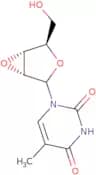
CAS:2',3'-Anhydrothymidine is a nucleoside analogue that has been shown to inhibit HIV-1 transcriptase and polymerase by binding to the enzyme's active site. It also inhibits DNA synthesis in human cells and inhibits the growth of E. coli. 2',3'-Anhydrothymidine is a prodrug that can be taken up by cells, where it is converted into an epoxide, which then binds to the enzyme's active site. This prevents the enzyme from catalyzing reactions and terminating DNA synthesis at the correct point during transcription. 2',3'-Anhydrothymidine may also have immunodeficiency-related benefits due to its ability to bind more tightly to dsDNA than natural nucleotides, causing termination of RNA synthesis at the wrong point.Fórmula:C10H12N2O5Pureza:Min. 95%Peso molecular:240.21 g/molN-(2-Amino-3,8-dimethylimidazo[4,5-f]quinoxalin-5-yl) 2'-deoxyguanosine
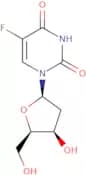
CAS:N-(2-Amino-3,8-dimethylimidazo[4,5-f]quinoxalin-5-yl) 2'-deoxyguanosine (NADG) is a monophosphate nucleoside analog that inhibits the human immunodeficiency virus (HIV). NADG inhibits HIV by binding to the viral enzyme reverse transcriptase and inhibiting its activity. NADG also has anticancer activity through inhibition of DNA synthesis and protein synthesis. This compound is a novel nucleoside analog that has not been previously described in the literature.Fórmula:C21H22N10O4Pureza:Min. 95%Peso molecular:478.46 g/mol1-(2-Deoxy-b-D-threo-pentofuranosyl)-5-fluorouracil
CAS:1-(2-Deoxy-b-D-threo-pentofuranosyl)-5-fluorouracil (1dTfu) is an anticancer drug that belongs to the group of anti-metabolites. It is used in the treatment of colon cancer, head and neck cancer, urinary bladder cancer, and prostate cancer. 1dTfu inhibits the production of tyrosinase and other growth factors, which may be due to its ability to bind to a receptor called factor receptor on the surface of cells. This binding inhibits DNA synthesis by inhibiting the enzyme DNA polymerase. 1dTfu also has been shown to inhibit collagen synthesis via an extracellular mechanism.Fórmula:C9H11FN2O5Pureza:Min. 95%Peso molecular:246.19 g/mol2'-Azido-N6-benzoyl-2'-deoxy-5'-O-DMT-adenosine
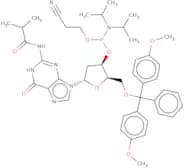
2'-Azido-N6-benzoyl-2'-deoxy-5'-O-DMT-adenosine is a novel nucleoside that can be activated with phosphoramidite and used to synthesize a variety of modified nucleosides. It has been shown to have anticancer and antiviral activities, as well as the ability to inhibit the replication of RNA viruses. 2'-Azido-N6-benzoyl-2'-deoxy-5'-O-DMT-adenosine is also useful in the synthesis of monophosphate nucleotides, which are important for DNA synthesis. This product is available in high purity and quality and is CAS No.Pureza:Min. 95%2'-Deoxy-5'-O-DMT-N2-isobutyryl-a-guanosine 3'-CE phosphoramidite
2'-Deoxy-5'-O-DMT-N2-isobutyryl-a-guanosine 3'-CE phosphoramidite is a novel, high quality nucleoside that is synthesized by the reaction of 5'-O-DMT-2'-deoxyguanosine with isobutyryl chloride. It has antiviral and anticancer properties and has been shown to be an activator of RNA polymerase. CAS number: 89879-16-1Fórmula:C44H54N7O8PPureza:Min. 95%Peso molecular:839.94 g/mol4-Amino-6-chloropyrimidine-5-carbaldehyde
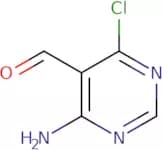
CAS:4-Amino-6-chloropyrimidine-5-carbaldehyde is a reactive molecule that is used in the synthesis of macrocyclic aldehydes. It is prepared by the oxidation of anilines with oxalyl chloride in the presence of hydrochloric acid and amines. 4-Amino-6-chloropyrimidine-5-carbaldehyde reacts with hydrazine to form diamines, which are used as building blocks for pharmaceuticals. This molecule has been shown to have anticancer properties, by inhibiting DNA replication and cell growth through its ability to inhibit protein synthesis.Fórmula:C5H4ClN3OPureza:Min. 95%Peso molecular:157.56 g/mol5-Ethynyl-1-(b-D-ribofuranosyl)-imidazo-4-carbonitrile
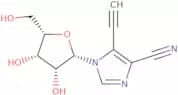
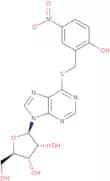
CAS:5-Ethynyl-1-(b-D-ribofuranosyl)-imidazo-4-carbonitrile is a novel, modified ribonucleoside monophosphate that has antiviral, anticancer, and antiretroviral properties. It was originally synthesized as an activator of the DNA polymerase and is capable of stimulating the synthesis of RNA from DNA templates. It has been shown to inhibit the growth of cancer cells in vitro and in vivo. 5-Ethynyl-1-(b-D-ribofuranosyl)-imidazo-4-carbonitrile is also a phosphoramidite nucleotide analog that can be incorporated into DNA during DNA synthesis.Fórmula:C11H11N3O4Pureza:Min. 95%Peso molecular:249.22 g/molS-(2-Hydroxy-5-nitrobenzoyl)-6-thioinosine
CAS:S-(2-Hydroxy-5-nitrobenzoyl)-6-thioinosine is a population of endogenous inotropic agents that are transported by the uptake system. It interacts with benzodiazepine receptor and has been shown to act as an agonist. The uptake system is responsible for the uptake of S-(2-hydroxy-5-nitrobenzoyl)-6-thioinosine, which then binds to the benzodiazepine receptor. This binding causes an increase in cAMP levels and subsequent relaxation of smooth muscle cells. S-(2-hydroxynitrobenzoyl)-6-thioinosine has been shown to be a transport inhibitor, which affects the uptake of other drugs such as benzodiazepines and antiepileptics. It also modulates responsiveness through interaction with the transport system.Fórmula:C17H17N5O7SPureza:Min. 95%Peso molecular:435.41 g/mol2-Amino-6-chloro-9-(3'-deoxy-3'-fluoro-b-D-ribofuranosyl)-9H-purine
CAS:2-Amino-6-chloro-9-(3'-deoxy-3'-fluoro-b-D-ribofuranosyl)-9H-purine is a novel, activator ribonucleoside phosphoramidite and monophosphate nucleoside. It is synthesized from 2,4,5,6,-tetraiodo-1H-[1]pyrrole and 6-chloropurine ribofuranose. The chemical name is 1-[2'-(deoxyribofuranosyl) (3', 3'', 5', 5'', 5'')-2'-(2,4,5,6 tetraiodophenyl)] -2-(3'-fluorobenzoyl) -4-(3'-triazolecarboxamide) -1H-[1]pyrrole 4,5 dione. CAS No. 1612192-05-8.Pureza:Min. 95%2'-O-tert-Butyldimethylsilyl-5'-O-DMT-N6-(2-Isopentenyl)adenosine 3'-CE phosphoramidite
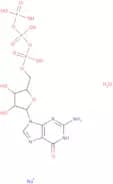
2'-O-tert-Butyldimethylsilyl-5'-O-DMT-N6-(2-Isopentenyl)adenosine 3'-CE phosphoramidite is an antiviral nucleoside, which is synthesized by the reaction of 2'-deoxyribonucleosides with the activator. This product is a novel chemical compound that has antiviral and anticancer activity. It can be used as a precursor for other nucleosides.Pureza:Min. 95%Guanosine 5'-triphosphate trisodium hydrate
CAS:Guanosine 5'-triphosphate trisodium hydrate is a novel antiviral agent that was discovered in the course of a research program to find new antiviral agents. It is an activator of guanylyl cyclase and it has been shown to have high quality and high purity. Guanosine 5'-triphosphate trisodium hydrate binds to ribonucleosides and deoxyribonucleosides, preventing their incorporation into viral DNA or RNA. This compound also has anticancer activity.Fórmula:C10H18N5NaO15P3Pureza:Min. 95%Peso molecular:564.19 g/mol1-[(5E)-5,6-Dideoxy-6-(diethoxy phosphinyl)-2-O-methyl-beta-D-ribo-hex-5-enofuranosyl]uracil
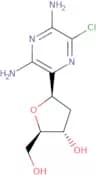
CAS:1-[(5E)-5,6-Dideoxy-6-(diethoxy phosphinyl)-2-O-methyl-beta-D-ribo-hex-5-enofuranosyl]uracil is a novel monophosphate that was synthesized by modifying a known anticancer nucleoside. It is an activator of the antiviral ribonucleotide reductase and deoxyribonucleotide reductase. 1-[(5E)-5,6-Dideoxy-6-(diethoxy phosphinyl)-2-O-methyl-beta-D-ribohexanofuranosyl]uracil has been shown to inhibit the proliferation of cancer cells in vitro and in vivo. It also inhibits tumor growth without affecting normal tissue.Pureza:Min. 95%2-Chloro-6-(2'-deoxy-b-D-ribofuranosyl)-3,5-diaminopyrazine
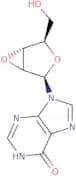
CAS:2-Chloro-6-(2'-deoxy-b-D-ribofuranosyl)-3,5-diaminopyrazine is a modified nucleoside that can be used to synthesize DNA and RNA. It is an activator that activates the phosphoramidite coupling reaction of the synthesis of DNA. 2-Chloro-6-(2'-deoxy-b-D-ribofuranosyl)-3,5-diaminopyrazine has been shown to have anticancer and antiviral activities in vitro, but no in vivo data are currently available. It also has high purity and high quality.Fórmula:C9H13ClN4O3Pureza:Min. 95%Forma y color:White to off-white solid.Peso molecular:260.68 g/mol2',3'-Anhydroinosine
CAS:2',3'-Anhydroinosine is an analog of the purine nucleoside inosine, which has been synthesized by catalytic dehalogenation of 2-fluoro-adenosine. The synthesis of this compound is based on a chemical reaction between 2-fluoro-adenosine and sodium hydroxide. This reaction produces 2',3'-anhydroinosine as a byproduct. 2',3'-Anhydroinosine inhibits the enzyme purine nucleoside phosphorylase, which prevents the conversion of inosine to hypoxanthine. This prevents purines from being used for protein synthesis, leading to cell death.Fórmula:C10H10N4O4Pureza:Min. 95%Peso molecular:250.21 g/mol2',3'-Didehydro-3'-dideoxy-thymidine-5'-monophosphate, lithium salt
2',3'-Didehydro-3'-dideoxy-thymidine-5'-monophosphate, lithium salt is a novel antiviral nucleoside analog that inhibits the synthesis of DNA. The drug is currently being studied to treat herpes simplex virus infections. It has been shown to inhibit viral replication in vitro and in vivo, and to induce reactivation of latent virus. 2',3'-Didehydro-3'-dideoxy-thymidine-5'-monophosphate, lithium salt also has anticancer activity by inhibiting DNA synthesis and inducing apoptosis via activation of the caspase cascade.
2',3'-Didehydro-3'-dideoxy-thymidine-5'-monophosphate, lithium salt is a modified nucleoside analog that is synthesized from 3’,5’-O-(1H-tetrazole)-2’,4’,6Pureza:Min. 95%3'-Azido-N6-benzoyl-2'-O-tert-butyldimethylsilyl-5'-O-DMT-adenosine
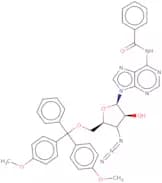
3'-Azido-N6-benzoyl-2'-O-tert-butyldimethylsilyl-5'-O-DMT-adenosine is a synthetic nucleoside that belongs to the group of modified nucleosides. It is a phosphoramidite that has been shown to be an effective antiviral and anticancer agent. 3'-Azido-N6-benzoyl-2'-O-tert-butyldimethylsilyl-5'-O-DMT-adenosine inhibits viral replication by interfering with DNA synthesis and repair, which is necessary for viral reproduction. The compound has also been shown to inhibit tumor cell growth in vitro and induce apoptosis in vivo.Fórmula:C38H34N8O6Pureza:Min. 95%Peso molecular:698.73 g/mol2'-O-tert-Butyldimethylsilyl-5'-O-DMT-N2-methylguanosine 3'-CE phosphoramidite
2'-O-tert-Butyldimethylsilyl-5'-0-DMT-N2-methylguanosine 3'-CE phosphoramidite can be used as a building block for the incorporation of N2-methylguanosine (m2G) into oligoribonucleotides by standard automated RNA solid-phase synthesis. Nucleosides that are methylated at their nucleobase account for the second largest number of naturally occurring nucleoside modifications after 2’-O methylation. They are encountered in all major RNA species, such as tRNA, rRNA, snRNA and mRNA.Fórmula:C47H64N7O8PSiPureza:Min. 95%Peso molecular:914.11 g/mol2'-Deoxy-2'-fluoro-2'-C-methyluridine 5'-triphosphate sodium salt
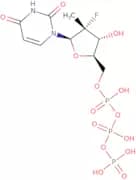
CAS:2'-Deoxy-2'-fluoro-2'-C-methyluridine 5'-triphosphate sodium salt is a novel nucleoside phosphoramidite that is used in the synthesis of DNA. It has antiviral and anticancer properties, and it inhibits viral replication and also induces apoptosis in cancer cells. 2'-Deoxy-2'-fluoro-2'-C-methyluridine 5'-triphosphate sodium salt has been shown to inhibit HIV replication with an IC50 value of 0.5 mM. It specifically targets HIV reverse transcriptase, which is responsible for the conversion of RNA into DNA during the early stages of infection. The compound also inhibits cellular proliferation and induces apoptosis in cancer cells, including prostate cancer cells.Fórmula:C10H16FN2O14P3Pureza:Min. 95%Peso molecular:500.16 g/mol2-Amino-6-mercapto-9-(2',3',5'-tri-O-acetyl-b-ribofuranosyl)purine
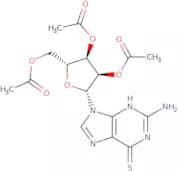
CAS:2-Amino-6-mercapto-9-(2',3',5'-tri-O-acetyl-b-ribofuranosyl)purine (2AMAP) is an Activator that belongs to the group of nucleosides. It is a novel, modified nucleoside consisting of 2'-deoxyribonucleosides and phosphoramidites. 2AMAP has been shown to inhibit the proliferation of cancer cells and HIV viruses. This drug also has antiviral properties and can be used as a chemotherapeutic agent for the treatment of diseases such as chronic hepatitis B or C, cytomegalovirus or herpes virus infection. 2AMAP is highly purified, with a purity level of >99%.Fórmula:C16H19N5O7SPureza:Min. 95%Peso molecular:425.42 g/mol2'-Deoxycytidine-5'-O-(1-thiotriphosphate) lithium salt
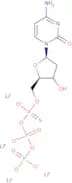
CAS:2'-Deoxycytidine-5'-O-(1-thiotriphosphate) lithium salt (dCTPTP) is a nucleotide analogue that inhibits DNA replication. It is a substrate for DNA polymerase and can be incorporated into the growing strand of DNA. This drug has been shown to inhibit the replication of retroviruses, such as murine leukemia virus and human immunodeficiency virus type 1, in tissue cultures with relatively low concentrations. It also inhibits dengue virus when present at high concentrations. 2'-Deoxycytidine-5'-O-(1-thiotriphosphate) lithium salt has been used to study the mechanism of transcription-polymerase chain reactions by inhibiting RNA synthesis in vitro and in vivo.
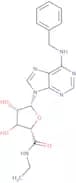
Fórmula:C9H16N3O12P3S·Li4Pureza:Min. 95%Peso molecular:506.95 g/molN6-Benzyl-5'-ethylcarboxamidoadenosine
CAS:N6-Benzyl-5'-ethylcarboxamidoadenosine is a novel nucleoside that has shown anticancer and antiviral activity. It is one of the first phosphoramidites to be synthesized in high purity, and it can be used as an activator for ribonucleoside synthesis. This compound also has been shown to have anti-inflammatory properties, which may be due to its ability to inhibit prostaglandin synthesis.
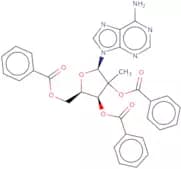
Fórmula:C19H22N6O4Pureza:Min. 95%Peso molecular:398.42 g/mol6-Amino-9-(2',3',5'-tri-O-benzoyl-2'-C-methyl-b-D-ribofuranosyl)purine
6-Amino-9-(2',3',5'-tri-O-benzoyl-2'-C-methyl-b-D-ribofuranosyl)purine is a novel nucleoside analog that has been modified to include a 2'-C methyl group at the 5' position. This modification prevents the formation of an undesired phosphodiester linkage between the nucleotide and ribonucleotide moieties, which can lead to degradation of the drug. The purine base is attached at the 3' position, which is important for its antiviral activity. 6-Amino-9-(2',3',5'-tri-O-benzoyl-2'-C-methylbDribofuranosyl)purine is active against DNA viruses and has anticancer properties.Fórmula:C32H27N5O7Pureza:Min. 95%Peso molecular:593.6 g/mol5-[N-(6-Aminohexyl)-3-E-acrylamido]-2'-deoxy-5'-O-DMT-uridine
CAS:5-[N-(6-Aminohexyl)-3-E-acrylamido]-2'-deoxy-5'-O-DMT-uridine is a novel, activator ribonucleoside derived from the modified nucleosides 5-[N-(6-aminohexyl)-3-E-acrylamido]-2'-deoxyadenosine and 2'-deoxyuridine. It has been shown to be an effective anticancer, antiviral and antiparasitic agent. 5-[N-(6-Aminohexyl)-3-E-acrylamido]-2'-deoxy-5'-O-DMT-uridine has exhibited anticancer activity against human leukemia cells in culture, inhibiting DNA synthesis by blocking the enzyme DNA polymerase. This novel compound also blocks viral replication by inhibiting the synthesis of RNA by an enzyme called RNA polymerase II.Fórmula:C39H46N4O8Pureza:Min. 95%Peso molecular:698.82 g/mol3'-Azido-2',3'-dideoxy-5'-O-DMT-5-methylcytidine N4-succinate
3'-Azido-2',3'-dideoxy-5'-O-DMT-5-methylcytidine N4-succinate is a novel modified nucleoside that is activated by diphosphate. It is an antiviral agent that inhibits the synthesis of viral DNA and RNA. 3'-Azido-2',3'-dideoxy-5'-O-DMT-5-methylcytidine N4-succinate may be used as a chemotherapeutic agent for cancer treatment. The chemical name for this compound is 5,6,7,8,-tetrahydro-[1,2,4]triazolo[4,3a][1,4]benzodiazepin-[1,2a]-one 3'N4-(N',N',N'')-trisuccinoyl ester (3'azido) 2',3'-dideoxyadenosine 5'Pureza:Min. 95%








![N-(2-Amino-3,8-dimethylimidazo[4,5-f]quinoxalin-5-yl) 2'-deoxyguanosine](/_next/image/?url=https%3A%2Fstatic.cymitquimica.com%2Fproducts%2F3D%2Fthumb-webp%2FNA16594.webp&w=3840&q=75)



![1-[(5E)-5,6-Dideoxy-6-(diethoxy phosphinyl)-2-O-methyl-beta-D-ribo-hex-5-enofuranosyl]uracil](/_next/image/?url=https%3A%2Fstatic.cymitquimica.com%2Fproducts%2F3D%2Fthumb-webp%2FPD162928.webp&w=3840&q=75)


![5-[N-(6-Aminohexyl)-3-E-acrylamido]-2'-deoxy-5'-O-DMT-uridine](/_next/image/?url=https%3A%2Fstatic.cymitquimica.com%2Fproducts%2F3D%2Fthumb-webp%2FNA08232.webp&w=3840&q=75)