Enzimas en Proteínas Recombinantes
Se han encontrado 3320 productos de "Enzimas en Proteínas Recombinantes"
LacBuster™ TSA broad range β-lactamase contact plates, 10 plates per pack, barcoded
CAS:A general purpose growth medium supplemented with LacBuster™ to effectively neutralize beta-lactam antibiotics. This product is suitable for the cultivation of a wide variety of microorganisms for environmental monitoring within the pharmaceutical industry and for high performance monitoring of your isolators and clean rooms during beta lactam manufactureDeoxyribonuclease II from porcine spleen
CAS:Deoxyribonuclease II (DNase II, deoxyribonucleate 3'-nucleotidohydrolase, acid deoxyribonuclease, acid DNase, EC 3.1.22.1) is an endonuclease that cleaves DNA, yielding 3'-phosphate-terminated polynucleotides with a free hydroxyl group on position 5'. One unit of the DNase II will increase the absorbance of 260nm light at a rate of 0.001/minute in 1 ml reaction volume at pH 4.6 and 25°C.Pureza:Min. 95%α-L-Iduronidase, recombinant, lyophilised
CAS:PAIRED PRODUCTS AVAILABLE:Pureza:Corresponds To RequirementsForma y color:PowdereconoLuciferase, buffered aqueous solution
CAS:Cymit Quimica’s econoLuciferase™ (econoLuc Cymit Quimica Cat. No. L-8090) is a recombinant luciferase from the firefly Luciola lateralis that has been expressed as a luciferase-GFP fusion protein in E. coli.The luciferase enzyme has been optimized for increased thermo-stability by genetic modification to be stable for one hour at 37°C and up to two days at room temperature.Stabilized econoLuciferase™ thus overcomes the disadvantages and limitations of wild-type Luciferase, notably its short active life, outperforming enzyme from the Photinus pyralis firefly for both performance and stability.This optimized luciferase is the perfect enzyme for ATP detection assays in hygiene control, microbial tests using caged luciferins and it is the luciferase of choice for biochemical tests measuring ATP consumption and production in diverse enzymatic reactions.The product L-8090 is available on a large scale and is intended for use in the chemical, diagnostic, pharmaceutical and related industries.
Pureza:(Spec. Activity. U/Mg) Min. 5 X 10^8α Amylase, powder
CAS:Alpha Amylase, powder, is an enzyme preparation that acts as a catalyst for the hydrolysis of starch, breaking it down into simpler sugars like maltose and glucose. This enzyme is derived from microbial or fungal sources, commonly via fermentation processes using strains of bacteria or fungi specifically optimized for enzyme production.β-Glucosidase from almonds
CAS:β-Glucosidase (β-D-glucosidase, systematic name β-D-glucoside glucohydrolase; EC 3.2.1.21) is an enzyme that catalyzes the release the terminal glucose monomers from cellulose and the other oligo- and poly saccharides with β-1,4-linked glucosyl residues. One Unit of β-Glucosidase will release 1.0 µmole of p-nitrophenol from the chromogenic substrate mimic p-nitrophenyl β-glucoside per minute under optimum conditions.Forma y color:PowderRibonuclease H from escherichia coli
CAS:Ribonuclease H from Escherichia Coli is the enzyme that breaks down RNA strand in RNA-DNA duplexes. It acts by cleaving the phosphodiester bonds of RNA and produces 3' hydroxyl and a 5' phosphate groups at the cleavage site. A common use of Ribonuclease H is to remove RNA template after reverse transcription reaction.
Peroxidase, from horseradish
CAS:Catalyst for signal development in immunoassaysForma y color:PowderPeso molecular:44,000.00 g/molAdenosine deaminase, type X, buffered aqueous glycerol solution
CAS:Adenosine deaminase catalyzes deamination of adenosine, converting it to inosine. It happens by the substituting of the amino group by a keto group. One Unit of the enzyme converts one micromole of adenosine to inosine per minute at 25°C, pH 7.4. Adenosine deaminase is also known by names of adenosine aminohydrolase, and ADA, EC 3.5.4.4.Peso molecular:1,000 g/molLacBuster™ TSA broad range β-lactamase contact plates, 10 plates per pack, barcoded
CAS:A general purpose growth medium supplemented with LacBuster™ to effectively neutralize beta-lactam antibiotics. This product is suitable for the cultivation of a wide variety of microorganisms for environmental monitoring within the pharmaceutical industry and for high performance monitoring of your isolators and clean rooms during beta lactam manufactureTrypsin Standard, freeze-dried
CAS:A trypsin product which can be used as a standard in proteomics procedures such as mass spectrometry. Trypsin (EC 3.4.21.4) is a protease that hydrolyses proteins by cleaving the peptide bond at the carboxyl side of the positively charged amino acid (Lysine or Arginine). Trypsin belongs to a family of serine proteases, as it has a serine in its active site. Trypsin can be inhibited by using trypsin inhibitor Alpha 1 Antitrypsin.Pureza:Min. 98%Cellulase, powder
CAS:Cellulase, powder is an enzymatic product derived from microbial fermentation, specifically sourced from fungi or bacteria known for their cellulolytic activity. Cellulase acts by catalyzing the hydrolysis of cellulose, breaking it down into smaller polysaccharides and glucose. This decomposition occurs through synergistic action by three main components: endoglucanases, exoglucanases, and β-glucosidases, each targeting specific bonds in the cellulose structure, resulting in its complete breakdown.Creatinine deiminase
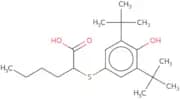
CAS:Creatinine deiminase (EC 3.5.4.21) in an enzyme that catalyzes the following reaction: Creatinine + H2O → N-Methylhydantoin + NH3 One unit of creatinine deiminase will hydrolyze 1.0 µmole of creatinine to N-methylhydantoin and ammonia per minute at pH 7.5 and 37°C.Fórmula:C20H32O3SHexokinase
CAS:Hexokinase (EC 2.7.1.1) in an enzyme that catalyses the following reaction: Glucose + ATP → Glucose-6-phosphate + ADP One unit of hexokinase will phosphorylate 1.0 µmole of glucose per min at pH 7.6 and 25 °C in the presence of ATP. The product is a lyophilized powder, ≥30 units/mg protein.Pureza:(%) Min. 90%Forma y color:PowderPhosphoenolpyruvate carboxylase
CAS:Phosphoenolpyruvate carboxylase is an enzyme, often found naturally in the cytosol of plant cells, which is derived primarily from various plant species. It plays a crucial role in the photosynthetic process, particularly in C4 and CAM plants. By catalyzing the irreversible carboxylation of phosphoenolpyruvate (PEP) to oxaloacetate, this enzyme facilitates the fixation of carbon dioxide, a vital step in the conversion of carbon dioxide into organic compounds during photosynthesis.Pureza:Min. 95%PNGaseF, wildtype, liquid, recombinant, from Elizabethkingia miricola
CAS:PNGase F is an endoglycosidase that can remove all N-linked carbohydrates from proteins, which is useful if you are uncertain whether the carbohydrate is N-linked or O-linked to the protein or is a high mannose type. It is also the enzyme of choice when you need to study or use the naked protein in your application. PNGase functions as a glycoamidase and hydrolyzes the amide bond between the innermost GlcNac of mammalian asparagine-linked mannose oligosaccharides, whether they are high, complex or hybrid. Specifically, the glycan is removed from the asparagine residue which through the deamination reactions becomes aspartic acid.This enzyme is available as a large-scale bulk supply of liquid enzyme solution. See our PNGase F available as vials for research applications with pre-defined quantities (>250 kU/vial) of liquid enzyme solution.Also available is our endoH enzymes (EEH01.3 - research quantities and EEH01.7 - large scale bulk supply).DNA polymerase
CAS:DNA polymerase is an essential enzymatic protein, derived from various organisms including bacteria, archaea, and eukaryotes, which plays a pivotal role in the replication and repair of DNA. This enzyme functions by adding nucleotides to the growing DNA strand in a template-dependent manner, ensuring the accurate duplication of the genetic material. It operates through a polymerization mechanism, where nucleotides are selected and incorporated complementary to the template strand, facilitating the elongation of the new DNA strand in the 5' to 3' direction.Xylanase, powder
CAS:Xylanase is an enzymatic product, which is typically derived from microbial sources such as fungi or bacteria. Its primary function involves catalyzing the hydrolysis of xylan, a major hemicellulose component found in plant cell walls. Through breaking down xylan into xylose and other oligosaccharides, xylanase significantly modifies plant material structure.Heat Labile Uracil-DNA Glycosylase, 500 units
Heat Labile Uracil-DNA Glycosylase, 500 units, is an enzyme designed for molecular biology applications, primarily derived from a recombinant bacterial source. This enzyme effectively removes uracil from DNA molecules at temperatures that preserve the integrity of the DNA. With its heat-labile properties, the enzyme can be inactivated at moderately elevated temperatures, making it ideal for processes that require precise control over enzyme activity.CS2 hydrolase from Acidianus sp., aqueous solution with glycerol
CS2 hydrolase (Carbon disulfide hydrolase; E.C. 3.13.1.5) is an enzyme that catalyzes the following reaction: CS2 + 2 H2O → CO2 + 2 H2S thus converting carbon disulfide into hydrogen sulfide and carbon dioxide.Fórmula:C1101H1721N305O320S6Peso molecular:43,345.4 g/mol