Otros
Se han encontrado 6305 productos de "Otros"
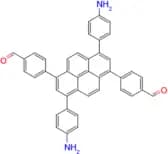
4,4'-(3,8-Bis(4-aminophenyl)pyrene-1,6-diyl)dibenzaldehyde
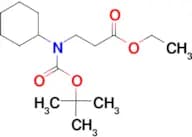
CAS:Pureza:98%Peso molecular:592.6979980468753-(tert-Butoxycarbonyl-cyclohexyl-amino)-propionic acid ethyl ester
Pureza:95.0%Peso molecular:299.41101074218754-Nitrophenyl-α-D-maltopyranoside
CAS:Chromogenic α-maltosidase substrate yielding a yellow solution upon cleavage.Fórmula:C18H25NO13Pureza:Min. 98.0 Area-%Peso molecular:463.40 g/molAldol® 458 β-D-galactopyranoside, Biosynth Patent: EP 2427431 and US 8940909
CAS:Aldol® 458 beta-D-galactopyranoside is a chromogenic and fluorogenic enzyme substrate used for detection of ?-galactosidase activity. The colorless enzyme substrate is cleaved by lactose utilizing bacteria grown in liquid or solid media, yielding yellow coloration and green fluorescence. Aldol® 458 beta-D-galactopyranoside can also be used in ?-galactosidase gene reporter assays or immunoassay applications (ELISA). Aldol® 458 beta-D-galactopyranoside can be used under aerobic and anaerobic conditions.Fórmula:C22H23NO8Pureza:Min. 95.0 Area-%Peso molecular:429.42 g/mol6-Chloro-3-indoxyl-beta-D-galactopyranoside
CAS:6-Chloro-3-indoxyl-beta-D-galactopyranoside is a chromogenic substrate for beta-galactosidase that yields a salmon or rose-coloured precipitate and hence is also known as Salmon-Gal. It can be used in conjunction with isopropyl-beta-D-thiogalactopyranoside (IPTG) as an alternative to the chromogenic substrate 5-bromo-4-chloro-3-indolyl beta-D-galactopyranoside (X-Gal) for detection of beta-galactosidase activity in bacterial colonies in colorimetric assays. Where beta-galactosidase expressed from a reporter gene in molecular biology experiments, recombinant colonies on growth plates are salmon-coloured while non-recombinants appear as white. Use of nitroblue tetrazolium salt (NBT) with Salmon-Gal may provide faster results, yielding a clear, purple precipitate, than for Salmon-Gal alone. In conjunction with 5-bromo-4-chloro-3-indolyl-beta-D-glucoside (X-Glc), Salmon-Gal is useful for simultaneous detection of GUS and Lac activities in the same medium.Fórmula:C14H16ClNO6Pureza:Min. 98.0 Area-%Peso molecular:329.74 g/mol4-Nitrophenyl 2-acetamido-2-deoxy-3-O-(b-D-galactopyranosyl)-a-D-galactopyranoside
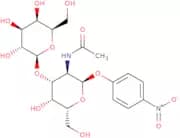
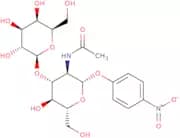
CAS:4-Nitrophenyl 2-acetamido-2-deoxy-3-O-(b-D-galactopyranosyl)-a-D-galactopyranoside is a superior chromogenic pNP enzyme substrate designed to deliver enhanced enzyme detection and outstanding assay performance. This cutting-edge substrate boasts excellent specificity, sensitivity, and stability, making it a powerful tool in the measurement of enzyme activity, substrate profiles, and inhibitor characterization. This premium substrate is perfect for researchers and professionals seeking reliable and efficient results for their enzyme-based investigations.Fórmula:C20H28N2O13Pureza:Min. 98 Area-%Forma y color:White PowderPeso molecular:504.44 g/mol5-Bromo-3-indoxyl caprylate
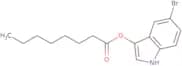
CAS:Also known as Lapis-caprylate; targeting esterase with C8 activity; Blue colorFórmula:C16H20BrNO2Pureza:Min. 98 Area-%Forma y color:PowderPeso molecular:338.24 g/molNaphthol AS-BI N-acetyl-b-D-galactosaminide
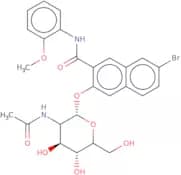
CAS:Modified naphtol AS substrate used in histochemical and cytochemical stainingFórmula:C26H27BrN2O8Pureza:Min. 95%Forma y color:PowderPeso molecular:575.41 g/mol5-Bromo-3-indolyl-a-D-galactopyranoside
5-Bromo-3-indolyl-a-D-galactopyranoside (5BIG) is a bioluminescent substrate that is used in various applications, including environmental testing, diagnostics, and the detection of bacterial activity. 5BIG is a ligand for luciferase enzymes and is used as a chromogenic substrate. It also has the ability to be conjugated with other molecules for use in enzyme substrates or fluorescence assays. 5BIG has been shown to be an effective fluorogenic substrate for enzymes such as alkaline phosphatase and beta-glucuronidase.Pureza:Min. 95%Aldol® 458 phosphate, disodium salt, Biosynth Patent: EP 2427431 and US 8940909
CAS:Aldol® 458 phosphate is a chromogenic and fluorogenic enzyme substrate used for detection of phosphatase activity. The colorless enzyme substrate is cleaved by phosphatases secreted by bacteria grown in liquid media, yielding yellow color and green fluorescence. Aldol® 458 phosphate can also be used in assays involving phosphatase-coupled antibodies in immunoassay applications (ELISA). Aldol® 458 phosphate can be used under aerobic and anaerobic conditions.Fórmula:C16H12NNa2O6PPureza:Min. 95%Forma y color:PowderPeso molecular:391.22 g/mol5-Bromo-4-chloro-3-indoxyl-beta-D-glucuronic acid, sodium salt trihydrate
CAS:Chromogenic substrate for beta-glucuronidase (GUS) yielding blue precipitate upon cleavage. Used for identification of beta-glucuronidase. X-beta-D-glucuronide has been reported as chromogenic substrate in a number of chromogenic E. coli/ coliform culture media. About 95% of common E. coli possess beta-D-glucuronidase activity. Such chromogenic culture media are used for detection and enumeration of E. coli in food samples such as meat, dairy products and shellfish and have clinical applications in the assessment of urinary infections. It has gained international acceptance as highly accurate test for the presence of E. coli in drinking water samples. It is also used for the detection of the expression of GUS (E. coli beta-glucuronidase) gene fusion marker constructs in plants. The sodium salt has advantages over the cyclohexylammonium salt as being non-electrostatic and possessing a naturally-occurring cation.Fórmula:C14H18BrClNNaO10Pureza:Min. 99.0 Area-%Peso molecular:498.65 g/mol2,4-Dinitrophenyl 2-deoxy-2-fluoro-b-D-glucopyranoside
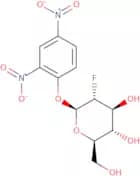
CAS:2,4-Dinitrophenyl 2-deoxy-2-fluoro-β-D-glucopyranoside, sometimes referred as 2F-DNPG, is an enzyme substrate for measuring beta-glucosidase activity. It is a mechanism-based inactivator of glycosidases, including beta-glucocerebrosidase (Gcase), a lysosomal enzyme encoded by the GBA1 gene responsible for breaking down glucosylceramide into ceramide and glucose. The use of 2,4-dinitrophenyl 2-deoxy-2-fluoro-β-D-glucopyranoside as an enzyme substrate permits the study of the catalytic mechanism and reaction intermediate of these enzymes.Fórmula:C12H13FN2O9Pureza:Min. 98 Area-%Forma y color:PowderPeso molecular:348.24 g/molAldol® 495 inositol-phosphate, ammonium salt, Biosynth Patent: EP 2427431 and US 8940909
CAS:Aldol® 495 inositol-phosphate is a chromogenic and fluorogenic enzyme substrate used for detection of phosphatidylinositol specific phospholipase C activity (PI-PLC, EC 4.6.1.13). The colorless enzyme substrate is cleaved by PI-PLC or PI-PLC-positive microorganisms in liquid or solid media, yielding orange color. In addition, green fluorescence is generated when a suitable matrix is present, e.g. PE-Pellets or cellulose acetate filter. Aldol® 495 inositol-phosphate is suitable for use in liquid and solid media, under aerobic as well as anaerobic conditions.Fórmula:C26H29ClN3O10PPureza:Min. 95.0 Area-%Peso molecular:609.95 g/molN,N,N',N'-Tetramethyl-p-phenylenediamine dihydrochloride
CAS:Reducing co-substrate for heme peroxidases; test reagent in microbiologyFórmula:C10H16N2·2HClPureza:Min. 95%Forma y color:White PowderPeso molecular:237.17 g/mol6-Chloro-3-indoxyl-N-acetyl-β-D-galactosaminide
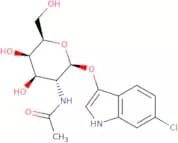
CAS:Chromogenic substrate for N-Acetyl-β-D-galactosaminidase yielding a salmon-colored precipitate.Fórmula:C16H19ClN2O6Pureza:Min. 98.0 Area-%Peso molecular:370.79 g/molRef: 3D-C-4762
-Unit-ggA consultar1gA consultar50mgA consultar100mgA consultar250mgA consultar500mgA consultar4-Nitrophenyl-alpha-D-maltohexaoside
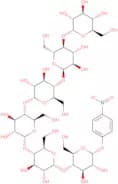
CAS:Chromogenic substrate for α-amylase yielding a yellow solution upon cleavage.Fórmula:C42H65NO33Pureza:Min. 97.0 Area-%Peso molecular:1,111.97 g/mol6-Chloro-3-indoxyl caprylate
CAS:6-Chloro-3-indoxyl caprylate is a high quality, enzyme substrate, chromogenic substrate, bioluminescence, chemiluminescence ligand, staining and diagnostics reagent. It has CAS No. 159954-35-5 and is used in food testing, culture media and environmental testing. 6-Chloro-3-indoxyl caprylate is also a fluorogenic substrate that is used for high purity applications such as conjugation with other molecules.
Fórmula:C16H20ClNO2Peso molecular:293.80 g/molAldol® 470 L-alanine amide, acetate salt, Biosynth Patent: EP 2427431 and US 8940909
CAS:Producto controladoAldol® 470 L-alanine amide is a chromogenic and fluorogenic enzyme substrate used for detection of L-alanine aminopeptidase activity. The colorless enzyme substrate is cleaved by L-alanine aminopeptidase, yielding orange-yellow coloration. In addition, green fluorescence is generated when Aldol® 355 fluorescence enhancer or a suitable matrix is present. Aldol® 470 L-alanine amide can also be used in enzymatic assays or within live bacterial cultures. Aldol® 470 L-alanine amide is suitable for use in liquid and solid media, under aerobic as well as anaerobic conditions.Fórmula:C28H29N3O6Pureza:Min. 95.0 Area-%Peso molecular:503.55 g/molNaphthol AS-BI β-D-galactopyranoside
CAS:Substrate for beta-galactosidaseFórmula:C24H24BrNO8Pureza:Min. 95%Forma y color:PowderPeso molecular:534.35 g/mol5-Bromo-4-chloro-3-indolyl-D-thymidine-3'-phosphate cyclohexylammonium salt
CAS:5-Bromo-4-chloro-3-indolyl-D-thymidine-3'-phosphate cyclohexylammonium salt is a chromogenic substrate used to detect the specific enzymatic activity of alkaline phosphatase. After cleavage, 5-bromo-4-chloro-indoxyl is released, resulting in a blue to blue-green color change in bacterial colonies or media. 5-Bromo-4-chloro-3-indolyl-D-thymidine-3'-phosphate cyclohexylammonium salt is used in immunohistochemistry (IHC) and Western blot detection, immunoassays used to detect proteins.Fórmula:C18H17BrClN3O8P·C6H14NPureza:Min. 95%Forma y color:White PowderPeso molecular:649.86 g/mola-Naphthyl phosphate disodium salt hydrate
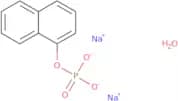
CAS:a-Naphthyl phosphate disodium salt hydrate is a highly water-soluble chromogenic substrate used to determine phosphatase activity in research and analytical applications, particularly for staining and differentiating acid and alkaline phosphatases.Pureza:Min. 95%Forma y color:White PowderPeso molecular:268.11 g/mol4-Nitrophenyl sulfate potassium salt
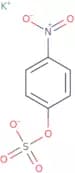
CAS:4-Nitrophenyl sulfate potassium salt is a chromogenic substrate for arylsulfatase. Upon hydrolysis, para-nitrophenol is released yielding a yellowish colour. 4-Nitrophenyl sulfate potassium salt is used in different applications such as the Metachromatic leukodystrophy diagnosis, sulfatase activity assaysFórmula:C6H4KNO6SPureza:Min. 95%Forma y color:PowderPeso molecular:257.26 g/mol4-Nitrophenyl 2-acetamido-3-O-[2-O-a-L-fucopyranosyl-b-D-galactopyranosyl)-2-deoxy-b-D-galactopyranoside
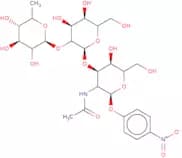
CAS:4-Nitrophenyl 2-acetamido-3-O-[2-O-a-L-fucopyranosyl-b-D-galactopyranosyl)-2-deoxyb-D-galactopyranoside is a water soluble, fluorescent probe that can be used for detecting the presence of β-(1→4) -linked galactosaminoglycans. The dye is a substrate for enzymes such as α--mannosidase, β--glucuronidase and β--galactosidase. The dye is also an excellent ligand for lectins such as concanavalin A and wheat germ agglutinin. This product is a diagnostic reagent that has been shown to have high purity and quality. It has CAS No. 93496-53-8 and can be used in food testing, bioluminescence, environmental testing, or high purity applications.
Fórmula:C26H38N2O17Pureza:Min. 95%Peso molecular:650.58 g/mol5-Bromo-4-chloro-3-indoxyl-3-acetate
CAS:5-Bromo-4-chloro-3-indolyl acetate (5BCIA) is an enzyme substrate that has been shown to inhibit the activity of a number of enzymes, such as proteases and phosphatases. It has also been shown to inhibit the growth of a number of human pathogens, including Staphylococcus aureus, Escherichia coli, Salmonella enterica, Pseudomonas aeruginosa, and Mycobacterium tuberculosis. 5BCIA inhibits bacterial growth by binding to the active site of the enzyme phosphatase and preventing it from hydrolyzing a phosphate group from ATP. This process is necessary for energy metabolism in all living cells. 5BCIA has been shown to be effective against methicillin resistant Staphylococcus aureus (MRSA).
Fórmula:C10H7BrClNO2Pureza:Min. 98 Area-%Peso molecular:288.53 g/mol4-Nitrophenyl 2-acetamido-2-deoxy-3-O-(b-D-galactopyranosyl)-b-D-glucopyranoside
CAS:Chromogenic substrate for fucosyltransferasesFórmula:C20H28N2O13Pureza:Min. 98 Area-%Forma y color:White PowderPeso molecular:504.44 g/mol2-Chloro-4-nitrophenyl α-D-mannopyranoside
CAS:2-Chloro-4-nitrophenyl alpha-D-mannopyranoside is a substrate used to measure the alpha-mannosidase activity. This enzyme plays a crucial role in the lysosomal degradation of asparagine-linked carbohydrate cores of glycoproteinsis. The use of 2-Chloro-4-nitrophenyl alpha-D-mannopyranoside in diagnostic assays is important as a deficiency in alpha-mannosidase leads to the accumulation of mannose-rich oligosaccharides in lysosomes, causing a range of health problems collectively known as alpha-mannosidosis.
Fórmula:C12H14ClNO8Pureza:Min. 98 Area-%Forma y color:White PowderPeso molecular:335.69 g/mol2-Nitrophenyl α-D-glucopyranoside
CAS:2-Nitrophenyl a-D-glucopyranoside is a chromogenic substrate commonly used to assay the activity of glucosidases. Upon cleavage of the glycosidic bond by glucosidases, the released 2-nitrophenyl group yields a yellow color detectable by spectrophotometry. This substrate has high sensitivity and is widely used in a variety of applications, including drug discovery and enzyme kinetics studies.
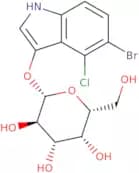
Fórmula:C12H15NO8Pureza:Min. 95%Forma y color:White to off-white solid.Peso molecular:301.25 g/mol5-Bromo-4-chloro-3-indoxyl-β-D-galactopyranoside
CAS:X-Gal is a chromogenic substrate for β-galactosidase, yielding a blue precipitate. X-Gal is an indicator for coliforms in culture media, as well as for the detection of coliforms (E. coli) in municipal water supplies and food products. X-Gal can be used in conjunction with the inducer IPTG, which binds and inhibits the lac repressor thus inducing β-galactosidase expression. X-Gal is the substrate of choice for blue-white selection of recombinant bacterial colonies with the lac+ genotype. Upon hydrolysis, X-Gal yields a localized, insoluble, blue precipitate, making it exceptionally useful in blotting, immunocytochemical, and ELISA assays. 5-Bromo-4-chloro-3-indoxyl-beta-D-galactopyranoside (X-beta-D-galactoside, X-Gal) is a chromogenic indicator for beta-galactosidase activity. The colorless product is cleaved by lactose-utilizing bacteria in liquid media or on agar plates and yields a blue-green colored precipitate. X-Gal can also be used as a detecting agent for beta-galactosidase activity in reporter gene assays or for identification of positive transformants on agar plates when using the α-complementation approach. Color formation is due to dimerization and oxidation of 5-bromo-4-chloro-3-hydroxyindole which results from enzymatic cleavage of X-Gal. The reaction proceeds only in the presence of oxygen, i.e. in aerobic cultures. Well detectable color bacterial colonies or liquid cultures is obtained within 16-48 h. In the presence of purified beta-galactosidase, color develops within minutes to a few hours.Fórmula:C14H15BrClNO6Pureza:Min. 99.0 Area-%Peso molecular:408.64 g/mol2-Nitrophenyl b-D-xylopyranoside
CAS:Chromogenic substrates targeting beta-xylosidasePureza:Min. 95%Forma y color:PowderPeso molecular:271.22 g/mol6-Bromo-2-naphthyl-alpha-D-galactopyranoside
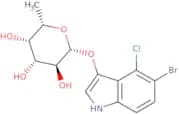
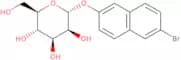
CAS:6-Bromo-2-naphthyl-alpha-D-galactopyranoside is a bioluminescent substrate for the enzyme luciferase that has been shown to be useful in detection of phenazines, antibiotics and other compounds in environmental testing. 6-Bromo-2-naphthyl-alpha-D-galactopyranoside can also be used for measurements of total microbial counts and for the measurement of the activity of enzymes such as beta galactosidase. It is also a ligand for the peroxidase enzyme, which makes it useful in staining techniques. 6BARG can be used as a fluorogenic substrate or as an indicator in chromogenic substrates. It is an important reagent for chemiluminescence and can also be used to measure the concentration of various substances.Fórmula:C16H17BrO6Pureza:Min. 98 Area-%Peso molecular:385.22 g/mol5-Bromo-4-chloro-3-indoxyl-β-L-fucopyranoside
CAS:This product is a chromogenic substrate that is used in the detection of alkaline phosphatase and other enzymes. It is also used in food testing, staining, and diagnostics. This product has high purity with a CAS number of 125328-84-9.Fórmula:C14H15BrClNO5Pureza:Min. 99 Area-%Peso molecular:392.63 g/molRef: 3D-B-7138
-Unit-ggA consultar10mgA consultar25mgA consultar50mgA consultar100mgA consultar250mgA consultar5-Bromo-4-chloro-3-indolyl b-D-fucopyranoside
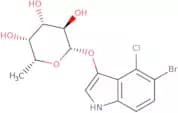
CAS:5-Bromo-4-chloro-3-indolyl b-D-fucopyranoside is a chromogenic substrate used is for the enzyme beta-fucosidase.
Fórmula:C14H15BrClNO5Pureza:Min. 98 Area-%Forma y color:PowderPeso molecular:392.63 g/molAldol® 518 beta-D-galactopyranoside, Biosynth Patent: EP 2427431 and US 8940909
CAS:Aldol® 518 beta-D-galactopyranoside is a chromogenic and fluorogenic enzyme substrate used for detection of beta-galactosidase activity. The colorless enzyme substrate is cleaved by lactose-utilizing bacteria in liquid or solid media, yielding intense red color as well as red fluorescence when a fluorescence enhancer or a suitable matrix is present. Aldol® 518 beta-D-galactopyranoside can also be used in beta-gal reporter gene assays or for identification of beta-gal positive transformants on agar plates. Aldol® 518 beta-D-galactopyranoside can be used under aerobic and anaerobic conditions.
Fórmula:C29H29ClN2O7Pureza:Min. 95 Area-%Peso molecular:553.01 g/mol5-Bromo-4-chloro-3-indoxyl thymidine-3'-phosphate, cyclohexylammonium salt
CAS:5-Bromo-4-chloro-3-indoxyl thymidine (BCIT) is a chromogenic substrate that reacts with the enzyme β-galactosidase, which cleaves the BCIT to form a bromochloroindoxyl (BCI) and an indoxyl phosphate. The BCI is then detected by chemiluminescence or fluorescence. This product is used in food testing, diagnostics, environmental testing, and staining. It has been shown to be a good substrate for β-galactosidase from different sources such as calf thymus, bacteria, fungi, and plants.Fórmula:C24H31BrClN4O8PPureza:Min. 98 Area-%Peso molecular:649.87 g/molRef: 3D-B-7680
-Unit-mgmgA consultar1gA consultar50mgA consultar100mgA consultar250mgA consultar500mgA consultar2-Nitrophenyl-N-acetyl-beta-D-glucosaminide
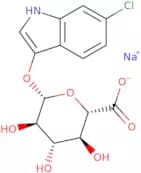
CAS:Chromogenic β-Glucosaminidase substrate yielding a yellow absorbent solution upon cleavage.Fórmula:C14H18N2O8Pureza:Min. 99 Area-%Peso molecular:342.31 g/mol6-Chloro-3-indolyl b-D-glucuronide sodium salt
CAS:6-Chloro-3-indolyl b-D-glucuronide sodium salt is a chromogenic substrate for beta-glucuronidase, a reporter gene used to monitor gene expression by detecting the enzyme's activity. It yields a salmon colored precipitate upon cleavage.
Pureza:Min. 95%Forma y color:PowderPeso molecular:365.7 g/mol2-Chloro-4-nitrophenyl 4-O-b-D-galactopyranosylmaltoside
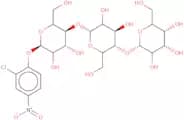
CAS:2-Chloro-4-nitrophenyl 4-O-b-D-galactopyranosylmaltoside, also known as Gal-G2-CNP, is a high quality, water soluble, chromogenic substrate that is used as an enzyme substrate and can be used in bioluminescence and chemiluminescence assays. This product is designed for use in diagnostics, culture media, food testing, environmental testing, and other research applications. 2-Chloro-4-nitrophenyl 4-O-b-D-galactopyranosylmaltoside has been tested in chromogenic assays with alpha-amylases.Fórmula:C24H34ClNO18Pureza:(Hplc) Min. 90%Forma y color:PowderPeso molecular:659.98 g/molAldol® 455 alpha-D-glucopyranoside - Biosynth Patent: EP 2427431 and US 8940909
Aldol® 455 alpha-D-glucopyranoside is a high quality, environmentally tested, staining, and ligand for bioluminescent assays. It has been shown to be a chromogenic substrate for diagnostics and a fluorogenic substrate for enzymes such as alpha-glucosidase, producing a yellow/green-orange color. Aldol® 455 alpha-D-glucopyranoside is also used in culture media and food testing.
Fórmula:C27H24ClNO7Pureza:Min. 95 Area-%Forma y color:PowderPeso molecular:509.93 g/mol4-Nitrophenyl 2-acetamido-3-O-(2-acetamido-2-deoxy-b-D-glucopyranosyl)-2-deoxy-a-D-galactopyranoside
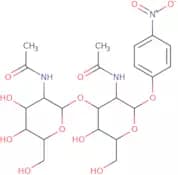
CAS:4-Nitrophenyl 2-acetamido-3-O-(2-acetamido-2-deoxy-beta-D-glucopyranosyl)-2-deoxy-alpha-D-galactopyranoside is a chromogenic substrate for alpha-galactosidase. Upon hydrolysis, para-nitrophenol is released yielding a yellowish colour. 4-Nitrophenyl 2-acetamido-3-O-(2-acetamido-2-deoxy-beta-D-glucopyranosyl)-2-deoxy-alpha-D-galactopyranoside is used in different applications such as the Fabry disease diagnosis, glycolipid metabolism studiesPureza:Min. 98 Area-%Forma y color:White PowderPeso molecular:545.49 g/mol6-Bromo-2-naphthyl-2-acetamido-2-deoxy-β-D-glucopyranoside
CAS:6-Bromo-2-naphthyl 2-acetamido-2-deoxy-beta-D-glucopyranoside is a chromogenic substrate used for the detection of chitinase activity. Upon hydrolysis by chitinase, it releases a yellow-brown color, which is easily detected by spectrophotometry. This substrate has been used to study chitinases in various organisms, including bacteria, fungi, and insects. It can also be used to quantitate chitinase activity in various biological samples.Fórmula:C18H20BrNO6Peso molecular:426.26 g/mol6-Bromo-2-naphthyl α-D-mannopyranoside
CAS:Chromogenic substrate to visualize the activity of alpha-D-mannopyranoside; red color producedFórmula:C16H17BrO6Pureza:Min. 95%Forma y color:PowderPeso molecular:385.21 g/mol5-Bromo-6-chloro-3-indoxyl-3-acetate
CAS:Chromogenic substrate for carboxylesterase yielding a magenta precipitate upon cleavage. Mainly used in histochemistry.Fórmula:C10H7BrClNO2Pureza:Min. 98.0 Area-%Peso molecular:288.53 g/molRef: 3D-B-6304
-Unit-ggA consultar1gA consultar5gA consultar10gA consultar500mgA consultar2500mgA consultarbeta-Epoxyabiraterone acetate
CAS:Beta-Epoxyabiraterone acetate is a synthetic and natural metabolite of abiraterone that is used as an API impurity in the synthesis of abiraterone acetate. The drug product is a niche compound with CAS No. 52464-96-6. The Metabolite is an impurity found in the synthesis of beta-epoxyabiraterone acetate. Drug development research and development, analytical methods, and pharmacopoeia are all involved in the production of this compound.Fórmula:C26H33NO3Pureza:Min. 90 Area-%Forma y color:White Off-White PowderPeso molecular:407.55 g/molAldol® 470 β-D-galactopyranoside, Biosynth Patent: EP 2427431 and US 8940909
CAS:Aldol® 470 beta-D-galactopyranoside is a chromogenic and fluorogenic enzyme substrate used for detection of ?-galactosidase activity. The colorless enzyme substrate is cleaved by lactose-utilizing bacteria grown in liquid or solid media, yielding yellow coloration and green fluorescence. Aldol® 470 beta-D-galactopyranoside can also be used in ?-galactosidase gene reporter assays or immunoassay applications (ELISA). Aldol® 470 beta-D-galactopyranoside can be used under aerobic and anaerobic conditions.
Fórmula:C29H29NO9Pureza:Min. 95.0 Area-%Peso molecular:535.54 g/molAldol® 518 choline phosphate, Biosynth Patent: EP 2427431 and US 8940909
Aldol® 518 choline phosphate is a fluorogenic substrate that is used in the detection of enzyme activity. It has been shown to be an effective substrate for enzymes such as beta-galactosidase and phosphatases, and can be used in the detection of bacterial growth. Aldol® 518 choline phosphate is also a chromogenic substrate for the detection of alkaline phosphatase. It has been shown to have high purity and bioluminescence properties, making it useful for detecting bacteria in culture media or environmental testing. The conjugate of Aldol® 518 choline phosphate with various ligands can be used to detect specific proteins or antibodies.Fórmula:C28H31ClN3O5PPureza:Min. 95 Area-%Peso molecular:556 g/mol3-Indoxyl choline phosphate
CAS:Please enquire for more information about 3-Indoxyl choline phosphate including the price, delivery time and more detailed product information at the technical inquiry form on this pageFórmula:C13H19N2O4PPureza:Min. 99 Area-%Peso molecular:298.28 g/molRef: 3D-I-5696
-Unit-ggA consultar1gA consultar5gA consultar10gA consultar500mgA consultar2500mgA consultar