Otros
Se han encontrado 6274 productos de "Otros"
Ordenar por
Pureza (%)
0
100
|
0
|
50
|
90
|
95
|
100
6-Chloro-3-indoxyl-β-D-cellobioside
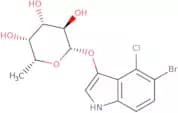
CAS:<p>Chromogenic substrate for β-D-Cellobiosidase yielding a salmon-colored precipitate.</p>Fórmula:C20H26ClNO11Pureza:Min. 99.0 Area-%Peso molecular:491.88 g/mol5-Bromo-4-chloro-3-indoxyl-β-D-fucopyranoside
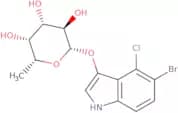
CAS:<p>Chromogenic substrate for β-D-fucosidase yielding a blue precipitate.</p>Fórmula:C14H15BrClNO5Pureza:Min. 99.0 Area-%Peso molecular:392.64 g/mol5-Bromo-4-chloro-3-indoxyl-β-D-glucuronic acid, cyclohexylammonium salt monohydrate
CAS:<p>Chromogenic substrate for β-glucuronidase (GUS) yieldinga blue precipitate. It is used for detection of GUS+ bacterial colonies and has been reported as chromogenic substrate in a number of chromogenic E. coli / coliform culture media. About 95% of common E. coli possess β-D-glucuronidase activity. Such chromogenic culture media are used for detection and enumeration of E. coli in food samples such as meat, dairy products, shellfish and have clinical applications in the assessment of urinary infections. It has gained international acceptance as highly accurate test for the presence of E. coli in drinking water samples. It is also used for the detection of the expression of GUS (E. coli β-glucuronidase) gene fusion marker constructs in plants.</p>Fórmula:C20H28BrClN2O8Pureza:Min. 99.0 Area-%Peso molecular:539.81 g/mol5-Bromo-6-chloro-3-indolyl a-D-galactopyranoside
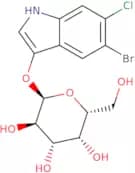
CAS:<p>5-Bromo-6-chloro-3-indolyl a-D-galactopyranoside is a chromogenic substrate that yields a magenta-colored product after cleavage. The chromophore 5-bromo-6-chloro-indoxyl is released, generating the observable color. It is used in glycolipid metabolism studies.</p>Fórmula:C14H15BrClNO6Forma y color:White to off-white solid.Peso molecular:408.63 g/mol1-Naphthyl β-D-mannopyranoside
CAS:<p>1-Naphthyl β-D-mannopyranoside is a chromogenic (also fluorogenic) substrate. After cleavage, 1-naphthol is released and is used to quantify beta-mannosidase activity.</p>Fórmula:C16H18O6Pureza:Min. 95%Forma y color:PowderPeso molecular:306.31 g/mol(5α)-17-(3-Pyridinyl)androst-16-en-3-one
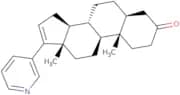
CAS:Producto controlado<p>(5α)-17-(3-Pyridinyl)androst-16-en-3-one is a natural metabolite of testosterone that is produced in the liver. It has been identified as an impurity in API, which can be found in drugs used for the treatment of high blood pressure and prostate cancer. (5α)-17-(3-Pyridinyl)androst-16-en-3-one is not active as a drug itself, but it can be used as a standard to study the metabolism of testosterone and other steroids.</p>Fórmula:C24H31NOPureza:Min. 98 Area-%Forma y color:White PowderPeso molecular:349.51 g/mol5-Bromo-4-chloro-3-indoxyl thymidine-3'-phosphate, cyclohexylammonium salt
CAS:<p>5-Bromo-4-chloro-3-indoxyl thymidine (BCIT) is a chromogenic substrate that reacts with the enzyme β-galactosidase, which cleaves the BCIT to form a bromochloroindoxyl (BCI) and an indoxyl phosphate. The BCI is then detected by chemiluminescence or fluorescence. This product is used in food testing, diagnostics, environmental testing, and staining. It has been shown to be a good substrate for β-galactosidase from different sources such as calf thymus, bacteria, fungi, and plants.</p>Fórmula:C24H31BrClN4O8PPureza:Min. 98 Area-%Peso molecular:649.87 g/molRef: 3D-B-7680
1gA consultar50mgA consultar100mgA consultar250mgA consultar500mgA consultar-Unit-mgmgA consultar6-Chloro-3-indolyl 2-acetamido-2-deoxy-b-D-galactopyranoside
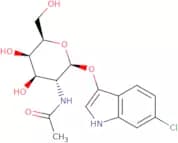
CAS:<p>6-Chloro-3-indolyl 2-acetamido-2-deoxy-b-D-galactopyranoside is a chromogenic substrate for N-acetyl-beta-galactosaminidase. It produces a salmon-pink color after enzymatic cleavage.</p>Pureza:Min. 95%Forma y color:White PowderPeso molecular:370.78 g/molN-Acetylmemantine
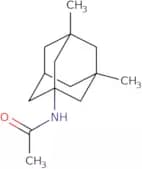
CAS:<p>N-Acetylmemantine is a drug that inhibits the activity of acetylcholinesterase in the brain. It has been shown to inhibit cancer cell growth and induce apoptosis, as well as inhibit the reaction of hydrolysis of acetonitrile with hydrochloric acid in an organic solvent. N-Acetylmemantine is synthesized by heating ethylene in the presence of hydrochloric acid. The synthesis yields a white solid that consists mainly of N-acetylmethamphetamine. This drug interacts with cellular membranes, which may be due to its ability to react with cholesterol or phospholipids. The interaction leads to changes in membrane permeability, which can result in apoptosis.</p>Fórmula:C14H23NOPureza:Min. 95%Forma y color:White PowderPeso molecular:221.34 g/mol3-Indolyl 2-acetamido-2-deoxy-b-D-galactopyranoside
<p>3-Indolyl 2-acetamido-2-deoxy-b-D-galactopyranoside is a fluorogenic substrate that reacts with the enzyme β-galactosidase to produce a blue product. This product can be used to diagnose the presence of β-galactosidase in culture media, as well as in food and environmental testing. 3IAG is also a chromogenic substrate that can be used for detection of β-galactosidase activity.</p>Pureza:Min. 95%Peso molecular:336.34 g/molAldol® 470 β-D-galactopyranoside, Biosynth Patent: EP 2427431 and US 8940909
CAS:<p>Aldol® 470 beta-D-galactopyranoside is a chromogenic and fluorogenic enzyme substrate used for detection of ?-galactosidase activity. The colorless enzyme substrate is cleaved by lactose-utilizing bacteria grown in liquid or solid media, yielding yellow coloration and green fluorescence. Aldol® 470 beta-D-galactopyranoside can also be used in ?-galactosidase gene reporter assays or immunoassay applications (ELISA). Aldol® 470 beta-D-galactopyranoside can be used under aerobic and anaerobic conditions.</p>Fórmula:C29H29NO9Pureza:Min. 95.0 Area-%Peso molecular:535.54 g/molAldol® 495 nonanoate solution, 0.75 M in DMSO, Biosynth Patent: EP 2427431 and US 8940909
CAS:Producto controlado<p>Aldol® 495 nonanoate is a chromogenic and fluorogenic enzyme substrate used for detection of lipase activity. The colorless enzyme substrate is cleaved by C9 esterases, yielding development of an orange coloration. In addition, green fluorescence is generated when Aldol® 355 fluorescence enhancer or a suitable matrix is present. Aldol® 495 nonanoate can be used in enzyme assays and live bacterial cultures. Aldol® 495 nonanoate is suitable for use in liquid and solid media, under aerobic as well as anaerobic conditions.</p>Fórmula:C29H31ClN2O3Pureza:Min. 95%Peso molecular:491.02 g/mol2-Chloro-4-nitrophenyl β-D-maltotrioside
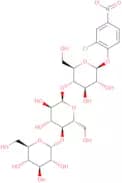
CAS:<p>2-Chloro-4-nitrophenyl beta-D-maltotrioside, often abbreviated as CNP-G3, is a chromogenic substrate to detect and mesaure alpha-amylase activity. Evaluation and monitoring of alpha-amylase activity is important to help diagnose certain diseases such as pancreatitis.</p>Fórmula:C24H34ClNO18Pureza:Min. 95%Forma y color:PowderPeso molecular:659.98 g/molAldol® 455 α-D-glucopyranoside, Biosynth Patent: EP 2427431 and US 8940909
<p>Aldol® 455 alpha-D-glucopyranoside is a synthetic fluorescent sugar that has been used in the diagnosis of bacterial infections. It has been used as a substrate for the enzyme beta-galactosidase and as a conjugate with anti-bacterial antibodies, which can be used to detect bacteria in urine and blood samples. Aldol® 455 alpha-D-glucopyranoside is also commonly used in the detection of bacteria in food and environmental samples. The product has a high purity level and quality.</p>Fórmula:C27H24ClNO7Pureza:Min. 95.0 Area-%Peso molecular:509.93 g/mol2-Chloro-4-nitrophenyl β-D-cellotrioside
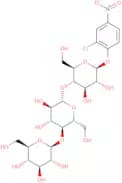
CAS:<p>2-Chloro-4-nitrophenyl β-D-cellotrioside is a chromogenic substrate use in cellulase activity assays. This enzyme, which is responsible to break down cellulose, hydrolyzes 2-chloro-4-nitrophenyl beta-D-cellotrioside and releases 2-chloro-4-nitrophenol than can be quantified spectrophotometrically. The use of 2-chloro-4-nitrophenyl beta-D-cellotrioside as substrate for enzymatic assays allows detecting bacterial cellulose in urine tract infections in the biofilm state.</p>Fórmula:C24H35ClNO18Pureza:Min. 95%Forma y color:PowderPeso molecular:660.98 g/molN,N,N',N'-Tetramethyl-p-phenylenediamine dihydrochloride
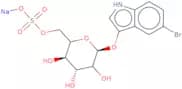
CAS:<p>Reducing co-substrate for heme peroxidases; test reagent in microbiology</p>Fórmula:C10H16N2·2HClPureza:Min. 95%Forma y color:White PowderPeso molecular:237.17 g/mol5-Bromo-3-indolyl-β-D-galactopyranoside-6-sulfate sodium salt
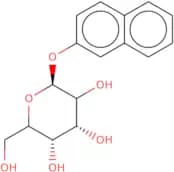
CAS:<p>5-Bromo-3-indolyl-beta-D-galactopyranoside-6-sulfate sodium salt is a lapis substrate, a chromogenic substrate that yields a deep blue color after cleavage. It is used in sulfatase activity assays and for the diagnosis of Mucopolysaccharidosis IVA (Morquio A).</p>Fórmula:C14H15BrNNaO9SPureza:Min. 95%Forma y color:PowderPeso molecular:476.23 g/mol2-Naphthyl b-D-mannopyranoside
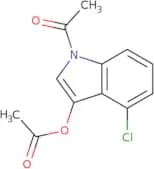
CAS:<p>2-Naphthyl b-D-mannopyranoside is a chromogenic substrate specifically designed for the detection and quantification of β-mannosidase enzyme activity. Upon hydrolysis by β-mannosidase, this substrate releases a colored product, 2-naphthol, which can be easily monitored spectrophotometrically. The use of 2-Naphthyl b-D-mannopyranoside allows for the rapid and sensitive measurement of β-mannosidase activity in various applications, such as enzyme assays, screening for β-mannosidase-producing microorganisms, and studying the kinetics and inhibition of β-mannosidase enzymes.</p>Pureza:Min. 95%Peso molecular:306.31 g/mol4-Chloro-3-Indoxyl-1,3-diacetate
CAS:<p>4-Chloro-3-indoxyl-1,3-diacetate is a fluorogenic or chromogenic substrate used in food testing. It is also an enzyme substrate that can be used to detect the presence of bioluminescence. 4-Chloro-3-indoxyl-1,3-diacetate has been shown to have high purity and high quality for use in diagnostic kits. 4-Chloro-3-indoxyl-1,3-diacetate is a ligand that is conjugated with other molecules to form complexes for use in fluorescence and chemiluminescence experiments.</p>Pureza:Min. 95%Peso molecular:251.67 g/mol5-Bromo-4-chloro-3-indolyl b-D-fucopyranoside
CAS:<p>5-Bromo-4-chloro-3-indolyl b-D-fucopyranoside is a chromogenic substrate used is for the enzyme beta-fucosidase.</p>Fórmula:C14H15BrClNO5Pureza:Min. 98 Area-%Forma y color:PowderPeso molecular:392.63 g/mol5-Bromo-6-chloro-3-indolyl 2-acetamido-2-deoxy-b-D-glucopyranoside
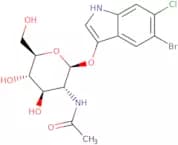
CAS:<p>5-Bromo-6-chloro-3-indolyl 2-acetamido-2-deoxy-b-D-glucopyranoside is a chromogenic substrate that yields a magenta-colored product after cleavage. The chromophore 5-bromo-6-chloro-indoxyl is released, generating the observable color. It is used in mucopolysaccharidosis screening.</p>Fórmula:C16H18BrClN2O6Pureza:Min. 97 Area-%Forma y color:PowderPeso molecular:449.68 g/mol2-Naphthyl b-D-glucopyranoside monohydrate
CAS:<p>2-Naphthyl-lpha-D-glucopyranoside is a substrate for α-glucosidase. 2-Naphthol is released upon hydrolyzation. By simultaneous coupling with a suitable staining reagent, such as hexazonium p-rosaniline, the corresponding reddish-brown azo-dye is formed. Naphthols can also be detected by fluorescence analysis.</p>Pureza:Min. 95%Forma y color:PowderPeso molecular:324.33 g/mol5-Bromo-4-chloro-1-methyl-3-indolyl-β-D-glucopyranoside
CAS:<p>5-Bromo-4-chloro-1-methyl-3-indolyl-β-D-glucopyranoside is a fluorescent substrate used for the detection of β-glucuronidase. It can be used in several enzyme substrates, such as 5,5'-dithiobis(2-nitrobenzoic acid), 5,5'-dithiobis(3,4,5,-trimethoxybenzoic acid), and 4-(p-[N-(7-(2,7'-dimethyl -2H -chromenyl)-2H -indazolium)]phenylazo)benzoic acid. This product is used for diagnostics and culture media as well as food testing. The product has an extremely high purity and a CAS number.</p>Fórmula:C15H17BrClNO6Pureza:Min. 99.0 Area-%Peso molecular:422.66 g/molNaphthol AS-BI β-L-fucopyranoside
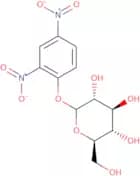
CAS:<p>Substrate for the detection of beta-D-fucosidase</p>Fórmula:C24H24BrNO7Pureza:Min. 95%Peso molecular:518.35 g/mol2,4-Dinitrophenyl β-D-glucopyranoside
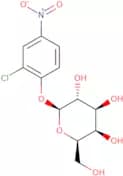
CAS:<p>2,4-Dinitrophenyl-beta-D-glucopyranoside is a chromogenic substrate used to assay enzymes, such as glucosidases. These enzymes catalyze the hydrolysis of glycosidic bonds in sugars.</p>Fórmula:C12H14N2O10Pureza:Min. 95%Forma y color:PowderPeso molecular:346.25 g/mol2-Chloro-4-nitrophenyl b-D-galactopyranoside
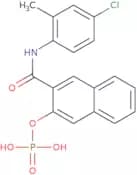
CAS:<p>2-Chloro-4-nitrophenyl-beta-D-galactopyranoside is a chromogenic substrate used to test enzyme activities. It is commonly used in molecular biology research for the detection and measurement of beta-galactosidase activity.</p>Fórmula:C12H14ClNO8Pureza:Min. 95%Forma y color:White PowderPeso molecular:335.69 g/molNaphthol AS-TR phosphate
CAS:<p>Modified naphtol AS substrate used in histochemical and cytochemical staining</p>Fórmula:C18H15ClNO5PPureza:Min. 95%Forma y color:Off-White PowderPeso molecular:391.74 g/mol2-Nitrophenyl b-D-glucopyranoside
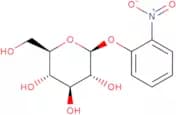
CAS:<p>Chromogenic substrate for beta-glucosidase</p>Fórmula:C12H15NO8Pureza:Min. 99 Area-%Forma y color:Off-White Yellow PowderPeso molecular:301.25 g/mol2-Nitrophenyl α-D-glucopyranoside
CAS:<p>2-Nitrophenyl a-D-glucopyranoside is a chromogenic substrate commonly used to assay the activity of glucosidases. Upon cleavage of the glycosidic bond by glucosidases, the released 2-nitrophenyl group yields a yellow color detectable by spectrophotometry. This substrate has high sensitivity and is widely used in a variety of applications, including drug discovery and enzyme kinetics studies.</p>Fórmula:C12H15NO8Pureza:Min. 95%Forma y color:White to off-white solid.Peso molecular:301.25 g/mol4-Nitrophenyl-α-D-mannopyranoside
CAS:<p>Chromogenic α-mannosidase substrate yielding a absorbent solution upon cleavage. Also used for studies of the crystal structure of the complexes of concanavalin A and binding studies with concanavalin A.</p>Fórmula:C12H15NO8Pureza:Min. 99 Area-%Peso molecular:301.26 g/mol4-Nitrophenyl-α-D-maltohexaoside
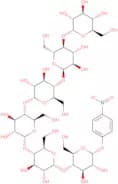
CAS:<p>Chromogenic substrate for α-amylase yielding a yellow solution upon cleavage.</p>Fórmula:C42H65NO33Pureza:Min. 97.0 Area-%Peso molecular:1,111.97 g/molAldol® 518 β-D-glucopyranoside, Biosynth Patent: EP 2427431 and US 8940909
CAS:<p>Aldol® 518 beta-D-glucopyranoside is a chromogenic and fluorogenic enzyme substrate used for detection of beta-glucosidase activity. The colorless enzyme substrate is cleaved by beta-glucosidase-producing bacteria in liquid or solid media, yielding intense red color and red fluorescence. Aldol® 518 beta-D-glucopyranoside can be used under aerobic and anaerobic conditions.</p>Fórmula:C29H29ClN2O7Pureza:Min. 95.0 Area-%Peso molecular:553 g/molNaphthol AS-BI-β-D-glucuronic acid
CAS:<p>Naphthol AS-BI-beta-D-glucuronic acid is a β-glucuronidase substrate. The substrate is used in combination with stabilized diazonium salts such as Fast Red Violet LB salt (5-chloro-4-benzamido-2-methylbenzenediazonium chloride). Free Naphthol AS and Fast Red Violet undergo a chemical reaction to yield intensely colored azo-dyes.</p>Fórmula:C24H22BrNO9Pureza:Min. 98 Area-%Peso molecular:548.35 g/molβ-Epoxyabiraterone acetate
CAS:<p>Beta-Epoxyabiraterone acetate is a synthetic and natural metabolite of abiraterone that is used as an API impurity in the synthesis of abiraterone acetate. The drug product is a niche compound with CAS No. 52464-96-6. The Metabolite is an impurity found in the synthesis of beta-epoxyabiraterone acetate. Drug development research and development, analytical methods, and pharmacopoeia are all involved in the production of this compound.</p>Fórmula:C26H33NO3Pureza:Min. 90 Area-%Forma y color:White Off-White PowderPeso molecular:407.55 g/mol2-Nitrophenyl-β-D-cellobioside
CAS:<p>Chromogenic substrate for β-D-Cellobiosidase yielding a yellow solution upon cleavage.</p>Fórmula:C18H25NO13Pureza:Min. 98.0 Area-%Peso molecular:463.4 g/mol5-Bromo-3-indoxyl nonanoate
CAS:<p>Chromogenic substrate for esterase with C9 activity yielding a lapis colored precipitate upon cleavage.</p>Fórmula:C17H22BrNO2Pureza:Min. 99 Area-%Peso molecular:352.28 g/mol3-Nitrophenyl b-D-galactopyranoside
CAS:<p>Chromogenic substrate targeting beta-galactosidase</p>Fórmula:C12H15NO8Forma y color:PowderPeso molecular:301.25 g/mol6-Chloro-3-indoxyl-α-D-galactopyranoside
CAS:<p>Chromogenic substrate for α-galactosidase yielding a salmon-colored precipitate.</p>Fórmula:C14H16ClNO6Peso molecular:329.74 g/mol5-Bromo-4-chloro-3-indolyl β-D-lactopyranoside
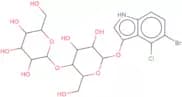
CAS:<p>5-Bromo-4-chloro-3-indolyl b-D-lactopyranoside is a chromogenic substrate used to detect the specific enzymatic activity of beta-galactosidase. After cleavage, 5-bromo-4-chloro-indoxyl is released, resulting in a blue to blue-green color change in bacterial colonies or media. 5-Bromo-4-chloro-3-indolyl b-D-lactopyranoside is used in lactose intolerance screening.</p>Fórmula:C20H25BrClNO11Pureza:Min. 95%Forma y color:PowderPeso molecular:570.77 g/mol5-Bromo-4-chloro-3-indoxyl phosphate p-toluidine, micronized
CAS:<p>A substrate for alkaline phosphatase yielding a blue insoluble product upon cleavage. Colour can be further enhanced when used together with Nitroblue tetrazolium. The substrate system is versatile and has functions in a variety of applications, including Northern, Southern, and Western blotting, in situ hybridization, ELISAs, microarray and immunohistochemistry. The micronized structure enhances solubility.</p>Fórmula:C8H6BrClNO4P•C7H9NPureza:Min. 95%Forma y color:PowderPeso molecular:433.63 g/mol4-Nitrophenyl-α-L-arabinofuranoside
CAS:<p>Chromogenic substrate for α-L-arabinofuranosidase yielding a yellow solution upon cleavage.</p>Fórmula:C11H13NO7Pureza:Min. 99.0 Area-%Peso molecular:271.22 g/molNaphthol AS-OL
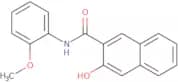
CAS:<p>Naphthol AS-OL is a widely used chromogenic enzyme substrate that forms a colored product upon reaction with specific enzymes. It is commonly employed in histochemical and cytochemical staining techniques to visualize enzyme activity in cells and tissues. Naphthol AS-OL is particularly useful for detecting the presence of enzymes such as alkaline phosphatase, acid phosphatase, and esterases. The resulting colored product can be easily observed under a microscope, allowing researchers to study the distribution and localization of these enzymes in various biological samples.</p>Fórmula:C18H15NO3Pureza:Min. 95%Forma y color:PowderPeso molecular:293.32 g/mol5-Bromo-4-chloro-3-indolyl-D-thymidine-3'-phosphate cyclohexylammonium salt
CAS:<p>5-Bromo-4-chloro-3-indolyl-D-thymidine-3'-phosphate cyclohexylammonium salt is a chromogenic substrate used to detect the specific enzymatic activity of alkaline phosphatase. After cleavage, 5-bromo-4-chloro-indoxyl is released, resulting in a blue to blue-green color change in bacterial colonies or media. 5-Bromo-4-chloro-3-indolyl-D-thymidine-3'-phosphate cyclohexylammonium salt is used in immunohistochemistry (IHC) and Western blot detection, immunoassays used to detect proteins.</p>Fórmula:C18H17BrClN3O8P·C6H14NPureza:Min. 95%Forma y color:White PowderPeso molecular:649.86 g/mol2-Nitrophenyl-β-D-galactopyranoside
CAS:<p>Chromogenic β-galactosidase substrate yielding a yellow solution upon cleavage. Can be used for the detection of coliforms due to their beta-galactosidase activity.</p>Fórmula:C12H15NO8Pureza:Min. 99.0 Area-%Peso molecular:301.26 g/mol4-Nitrophenyl 2-acetamido-2-deoxy-a-D-glucopyranoside
CAS:<p>4-Nitrophenyl 2-acetamido-2-deoxy-a-D-glucopyranoside is a chromogenic pNP substrate specifically designed for the analysis of N-acetylglucosaminidase activity. Upon enzyme action, the substrate releases 4-nitrophenol, a yellow compound that can be detected by spectrophotometric methods, providing a reliable and sensitive means of quantifying enzyme activity. This versatile substrate is widely used in biochemical studies, disease diagnostics, and the enzyme production industry.</p>Fórmula:C14H18N2O8Forma y color:White Off-White PowderPeso molecular:342.3 g/mol4-Nitrophenyl 2-acetamido-2-deoxy-b-D-glucopyranoside-6-sulfate sodium salt
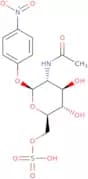
CAS:<p>4-Nitrophenyl 2-acetamido-2-deoxy-beta-D-glucopyranoside-6-sulfate sodium salt is a chromogenic substrate for N-acetylglucosamine-6-sulfatase. Upon hydrolysis, para-nitrophenol is released yielding a yellowish colour. 4-Nitrophenyl 2-acetamido-2-deoxy-beta-D-glucopyranoside-6-sulfate sodium salt is used in different applications such as the Mucopolysaccharidosis IIID (Sanfilippo D) diagnosis</p>Fórmula:C14H17N2O11S·NaPureza:Min. 95 Area-%Forma y color:PowderPeso molecular:444.35 g/mol5-Bromo-3-indoxyl choline phosphate
<p>Please enquire for more information about 5-Bromo-3-indoxyl choline phosphate including the price, delivery time and more detailed product information at the technical inquiry form on this page</p>Fórmula:C13H18BrN2O4PPeso molecular:377.18 g/mol4-Nitrophenyl 2-acetamido-4-O-(2-acetamido-2-deoxy-b-D-glucopyranosyl)-2-deoxy-a-D-galactopyranoside
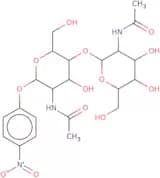
<p>4-Nitrophenyl 2-acetamido-4-O-(2-acetamido-2-deoxy-b-D-glucopyranosyl)-2-deoxy-a-D-galactopyranoside is an enzyme substrate that is used in the detection of phenylalanine, tyrosine, and tryptophan. It is also used for environmental testing, bioluminescence, culture media, chemiluminescence, fluorogenic substrate, food testing, diagnostics and other applications.</p>Pureza:Min. 95%Forma y color:Off-White PowderPeso molecular:545.49 g/mol4-Nitrophenyl 2-O-(β-D-glucopyranosyl)-β-D-glucopyranoside
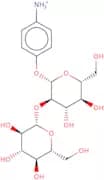
CAS:<p>4-Nitrophenyl 2-O-(beta-D-glucopyranosyl)-beta-D-glucopyranoside is a chromogenic substrate for beta-glucosidase. Upon hydrolysis, para-nitrophenol is released yielding a yellowish colour. 4-Nitrophenyl 2-O-(beta-D-glucopyranosyl)-beta-D-glucopyranoside is used in different applications such as the Cellulose degradation studies, biofuel research</p>Fórmula:C18H25NO13Pureza:Min. 95%Forma y color:White solid.Peso molecular:463.39 g/mol6-Bromo-2-naphthyl β-D-galactopyranoside
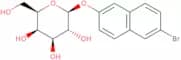
CAS:<p>6-Bromo-2-naphthyl β-D-galactopyranoside is a chromogenic substrate commonly used for the detection of the enzymatic activity of β-galactosidase. It can produce a yellow precipitate upon hydrolysis by β-galactosidase, indicating the presence of the enzyme. It is often used in molecular biology applications to detect gene expression or to monitor cloning efficiency.</p>Fórmula:C16H17BrO6Pureza:Min. 98 Area-%Forma y color:PowderPeso molecular:385.21 g/mol