Otros
Se han encontrado 6275 productos de "Otros"
Ordenar por
Pureza (%)
0
100
|
0
|
50
|
90
|
95
|
100
5-Bromo-6-chloro-3-indoxyl-β-D-galactopyranoside
CAS:<p>5-Bromo-6-chloro-3-indoxyl-beta-D-galactopyranoside is a chromogenic substrate for beta-D-galactosidase, yielding a magenta precipitate and contained in a chromogenic culture media. It is an indolyl carbohydrate that is the alpha-D-mannoside of indoxyl, in which the indole moiety is substituted at positions 4 and 5 by chlorine and bromine, respectively.</p>Fórmula:C14H15BrClNO6Pureza:Min. 99.0 Area-%Peso molecular:408.64 g/mol2-Chloro-4-nitrophenyl 4-O-b-D-galactopyranosylmaltoside
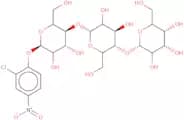
CAS:<p>2-Chloro-4-nitrophenyl 4-O-b-D-galactopyranosylmaltoside, also known as Gal-G2-CNP, is a high quality, water soluble, chromogenic substrate that is used as an enzyme substrate and can be used in bioluminescence and chemiluminescence assays. This product is designed for use in diagnostics, culture media, food testing, environmental testing, and other research applications. 2-Chloro-4-nitrophenyl 4-O-b-D-galactopyranosylmaltoside has been tested in chromogenic assays with alpha-amylases.</p>Fórmula:C24H34ClNO18Pureza:(Hplc) Min. 90%Forma y color:PowderPeso molecular:659.98 g/mol5-Bromo-6-chloro-3-indoxyl phosphate, disodium salt trihydrate
CAS:<p>Water soluble substrate for visualizing alkaline phosphatase activity. Produces a magenta colored insoluble end product that is detected visually, when used together with nitroblue tetrazolium. The substrate system is versatile and functions in a variety of applications, including Northern, Southern, and Western blotting, in situ hybridization, ELISAs and immunohistochemistry.</p>Fórmula:C8H10BrClNNa2O7PPureza:Min. 99.0 Area-%Peso molecular:424.49 g/molRef: 3D-B-7453
2gA consultar5gA consultar10gA consultar25gA consultar50gA consultar-Unit-ggA consultar5-Nitro-3-indolyl-b-D-galactopyranoside
<p>5-Nitro-3-indolyl-b-D-galactopyranoside is a substrate for a number of enzymes, including beta-galactosidase, beta-glucuronidase, and beta-mannosidase. It is used as an enzyme substrate in diagnostics to measure the activity of these enzymes. 5N3IG was also used to study the effects of conjugation on enzyme activity. 5N3IG is available in high purity and high quality at CAS No.</p>Pureza:Min. 95%Naphthol AS-BI β-D-glucopyranoside
CAS:<p>Substrate detecting beta-glucosidase activity</p>Forma y color:PowderPeso molecular:534.35 g/molAldol® 535 myo-inositol-1-phosphate, ammonium salt, Biosynth Patent: EP 2427431 and US 8940909
CAS:<p>Aldol® 535 myo-inositol-1-phosphate, ammonium salt is a chromogenic substrate for the enzyme, phosphoglucomutase. This product is used for the detection of phosphoglucomutase by its ability to react with this enzyme and produce a blue or green color. Aldol® 535 myo-inositol-1-phosphate, ammonium salt is also used as a ligand in fluorescence resonance energy transfer (FRET) experiments. It has an EC number of CAS No. 2484872-80-0 and a molecular weight of 345.05 g/mol.</p>Fórmula:C29H32BrClN3O10PPureza:Min. 95.0 Area-%Peso molecular:728.91 g/mol4-Nitrophenyl 6-O-(a-D-mannopyranosyl)-a-D-mannopyranoside
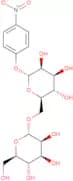
CAS:<p>4-Nitrophenyl 6-O-(alpha-D-mannopyranosyl)-alpha-D-mannopyranoside is a chromogenic substrate for alpha-mannosidase. Upon hydrolysis, para-nitrophenol is released yielding a yellowish colour. 4-Nitrophenyl 6-O-(alpha-D-mannopyranosyl)-alpha-D-mannopyranoside is used in different applications such as the Lysosomal storage disorder diagnosis (e.g., alpha-mannosidosis)</p>Pureza:Min. 95%Forma y color:PowderPeso molecular:463.39 g/mol5-Bromo-4-chloro-3-indoxyl myo-inositol-1-phosphate, ammonium salt
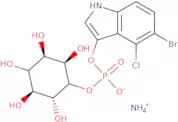
CAS:<p>This product is designed for the sensitive color detection andidentification of various bacteria, such as pathogenic strains of Listeria, Clostridium, Bacillus and Staphylococcus. 5-Bromo-4-chloro-3-indoxyl myo-inositol-1-phosphate (X-phos-inositol; X-IP) is a chromogenic indicator for phosphatidyl-inositol specific phospholipase C(PI-PLC, EC 4.6.1.13). The colorless product is cleaved by PI-PLC positive microorganisms in liquid media or on solid culture media and yields a blue-green color precipitate.</p>Fórmula:C14H19BrClN2O9PPureza:Min. 90.0 Area-%Peso molecular:505.64 g/molp-Nitrophenylphosphorylcholine
CAS:<p>p-Nitrophenylphosphorylcholine is a substrate molecule for enzymes that catalyze phospholipid biosynthesis. It is the most common substrate used to study the enzyme activity of phosphatidylcholine synthase and phospholipase A2 in human serum. The reaction mechanism is not well understood, but it appears to involve autocatalysis and an initial nucleophilic attack by p-nitrophenolate on the carbonyl carbon atom of the choline moiety. p-Nitrophenylphosphorylcholine has been shown to exhibit receptor activity on cells, which may be due to its ability to bind with basic proteins. This compound can also inhibit meiosis in Drosophila melanogaster and increase levels of natriuretic peptides in rats, as well as cause cell lysis and polymerase chain reactions in mammalian cells.</p>Fórmula:C11H17N2O6PPeso molecular:304.24 g/molAldol® 470 acetate, Biosynth Patent: EP 2427431 and US 8940909
CAS:Producto controlado<p>Aldol® 470 acetate is a Fluorogenic substrate that is used in enzymatic reactions to produce a fluorescent product. Aldol® 470 acetate can be used as a ligand or a chromogenic substrate. This product is also used in diagnostic tests, such as conjugates and chemiluminescence, to detect the presence of certain enzymes or microorganisms. It can be used in culture media to measure the amount of certain enzymes, such as phosphatases or proteases, and has been shown to have high purity and quality. This product has CAS No. 1318785-37-3, 1318785-38-4, 1318785-39-5, 1318785-40-6 and 1318785-41-7.</p>Fórmula:C25H21NO5Pureza:Min. 95%Forma y color:PowderPeso molecular:415.44 g/molAldol® 470 β-D-galactopyranoside, Biosynth Patent: EP 2427431 and US 8940909
CAS:<p>Aldol® 470 beta-D-galactopyranoside is a chromogenic and fluorogenic enzyme substrate used for detection of beta-galactosidase activity. The colorless enzyme substrate is cleaved by lactose-utilizing bacteria grown in liquid or solid media, yielding yellow coloration and green fluorescence. Aldol® 470 beta-D-galactopyranoside can also be used in beta-galactosidase gene reporter assays or immunoassay applications (ELISA). Aldol® 470 beta-D-galactopyranoside can be used under aerobic and anaerobic conditions.</p>Fórmula:C29H29NO9Pureza:Min. 95 Area-%Forma y color:PowderPeso molecular:535.54 g/mol2-Naphthyl-α-L-fucopyranoside
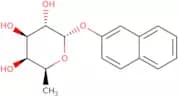
CAS:<p>Chromogenic substrate for α-L-Fucosidase. 2-naphthol is released upon hydrolyzation. By simultaneous coupling with a suitable staining reagent, such as hexazonium p-rosaniline, the corresponding azo-dye is formed. Naphthols can also be detected by fluorescence analysis.</p>Fórmula:C16H18O5Pureza:Min. 98 Area-%Peso molecular:290.32 g/molN-α-CBZ-L-citrulline-p-nitroanilide
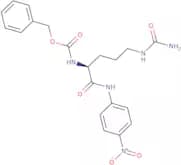
CAS:<p>Nalpha-CBZ-L-Citrulline-p-nitroanilide is a synthetic chromogenic enzyme substrate used in protease enzymatic stutides. After hydrolysis, p-nitroaniline is released, which produces a yellow color detectable spectrophotometrically at 405 nm.</p>Fórmula:C20H23N5O6Pureza:Min. 95%Peso molecular:429.43 g/mol1-Naphthyl β-D-glucuronide
CAS:<p>1-Naphthyl beta-D-glucuronide (NPG) is a chromogenic enzyme substrate used to detect the presence of β-glucuronidase activity. Upon hydrolysis by the enzyme, it produces a yellow product that can be detected by spectrophotometry or visually. It is commonly used in clinical assays to detect the presence of the enzyme in urine samples, as elevated levels can indicate liver or urinary tract diseases. It is also utilized in environmental testing, as some bacteria strains can produce the enzyme as a by-product, making NPG a useful tool for detecting these strains in contaminated water or food sources.</p>Fórmula:C16H16O7Pureza:Min. 95%Forma y color:White PowderPeso molecular:320.29 g/mol1-Naphthyl a-D-galactopyranoside
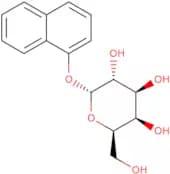
CAS:<p>1-Naphthyl a-D-galactopyranoside is a chromogenic substrate use to detect alpha-galactosidase activity.</p>Fórmula:C16H18O6Pureza:Min. 95%Forma y color:PowderPeso molecular:306.31 g/mol2-Naphthyl a-D-glucopyranoside
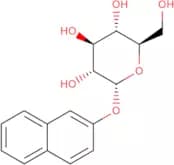
CAS:<p>2-Naphthyl-lpha-D-glucopyranoside is a substrate for α-glucosidase. 2-Naphthol is released upon hydrolyzation. By simultaneous coupling with a suitable staining reagent, such as hexazonium p-rosaniline, the corresponding reddish-brown azo-dye is formed. Naphthols can also be detected by fluorescence analysis.</p>Fórmula:C16H18O6Pureza:Min. 98 Area-%Forma y color:PowderPeso molecular:306.31 g/molRef: 3D-EN06601
1gA consultar2gA consultar5gA consultar10gA consultar500mgA consultar-Unit-mgmgA consultar2-Chloro-4-nitrophenyl-α-L-fucopyranoside
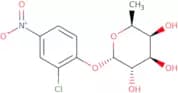
CAS:<p>Alternative chromogenic substrate for alpha-D-galactosidase</p>Fórmula:C12H14ClNO7Pureza:Min. 98 Area-%Forma y color:White PowderPeso molecular:319.69 g/molAldol® 495 nonanoate, Biosynth Patent: EP 2427431 and US 8940909
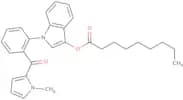
CAS:Producto controlado<p>Aldol 495 nonanoate is a bioluminescent substrate that can be used to measure the activity of Aldolase, which is an enzyme that catalyzes the conversion of glyceraldehyde-3-phosphate and dihydroxyacetone phosphate to D-glyceraldehyde. This substrate is used in various diagnostic assays, including food testing and staining. Aldol 495 nonanoate was developed by Cymit Quimica Pharmaceuticals and has been patented by EP 2427431 and US 8940909.</p>Fórmula:C29H31ClN2O3Pureza:Min. 95.0 Area-%Peso molecular:491.02 g/mol4-Nitrophenyl-α-L-arabinofuranoside
CAS:<p>Chromogenic substrate for α-L-arabinofuranosidase yielding a yellow solution upon cleavage.</p>Fórmula:C11H13NO7Pureza:Min. 99.0 Area-%Peso molecular:271.22 g/mol4-Nitrophenyl 3-O-(β-D-glucopyranosyl)-α-D-glucopyranoside
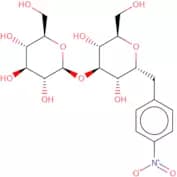
<p>4-Nitrophenyl 3-O-(beta-D-glucopyranosyl)-alpha-D-glucopyranoside is a chromogenic substrate for alpha-glucosidase. Upon hydrolysis, para-nitrophenol is released yielding a yellowish colour. 4-Nitrophenyl 3-O-(beta-D-glucopyranosyl)-alpha-D-glucopyranoside is used in different applications such as the Gaucher disease screening, carbohydrate metabolism studies</p>Fórmula:C18H25NO13Pureza:Min. 95%Peso molecular:463.39 g/mol3-Indoxyl caprylate
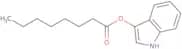
CAS:<p>3-Indoxyl caprylate is an enzyme substrate used in a variety of diagnostic applications, including the detection of various bacterial and viral infections. It is used as a substrate for beta-galactosidase, which can be detected by bioluminescence or chromogenic substrates. 3-Indoxyl caprylate also serves as a ligand for receptor binding and has been shown to bind to CD4 receptors on human T cells. 3-Indoxyl caprylate is also used as an enzyme substrate in the detection of DNA polymerases, RNA polymerases, and ATPases. This product is available with a high purity that ranges from 98% to 99%. 3-Indoxyl caprylate is soluble in water, alcohols, acetone, acetic acid, and chloroform.</p>Fórmula:C16H21NO2Peso molecular:259.35 g/molRef: 3D-I-5690
1gA consultar5gA consultar10gA consultar500mgA consultar2500mgA consultar-Unit-ggA consultar3-Nitrophenyl b-D-galactopyranoside
CAS:<p>Chromogenic substrate targeting beta-galactosidase</p>Fórmula:C12H15NO8Forma y color:PowderPeso molecular:301.25 g/molAldol® 458 nonanoate solution, 0.75 M in DMSO, Biosynth Patent: EP 2427431 and US 8940909
CAS:Producto controlado<p>Aldol 458 nonanoate solution is a high quality, enzyme substrate that can be used for a number of applications. It has been shown to be an excellent chromogenic substrate, bioluminescence, ligand and chemiluminescence. Aldol 458 nonanoate solution has also been used for the detection of staining and diagnostics. The compound is a conjugate with an excellent binding affinity to proteins. This product can be used in food testing, culture media, fluorogenic substrate and environmental testing. CAS No. 2484873-15-4</p>Fórmula:C25H29NO4Pureza:Of Solute (Hplc) 98.0 To 100.0 Area-%Peso molecular:407.51 g/mol3-Nitrophenyl β-D-glucopyranoside
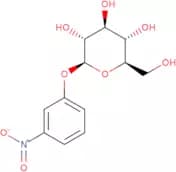
CAS:<p>3-Nitrophenyl beta-D-glucopyranoside is a chromogenic enzyme substrate commonly used to assay for beta-glucosidase activity. Upon hydrolysis by the enzyme, it produces a yellow product that can be easily detected by spectrophotometry. This substrate is often used in the field of carbohydrate chemistry and biochemistry to study enzyme kinetics and inhibition in both in vitro and in vivo systems.</p>Fórmula:C12H15NO8Pureza:Min. 95%Forma y color:White Yellow PowderPeso molecular:301.25 g/molAldol® 518 β-D-glucopyranoside, Biosynth Patent: EP 2427431 and US 8940909
CAS:<p>Aldol® 518 beta-D-glucopyranoside is a chromogenic and fluorogenic enzyme substrate used for detection of beta-glucosidase activity. The colorless enzyme substrate is cleaved by beta-glucosidase-producing bacteria in liquid or solid media, yielding intense red color and red fluorescence. Aldol® 518 beta-D-glucopyranoside can be used under aerobic and anaerobic conditions.</p>Fórmula:C29H29ClN2O7Pureza:Min. 95.0 Area-%Peso molecular:553 g/molAldol® 584 β-D-glucuronic acid, triethylammonium salt, Biosynth Patent: EP 2427431 and US 8940909
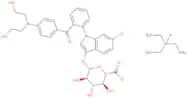
CAS:<p>Aldol 584 is a chromogenic substrate that is used in enzymatic assays to detect the presence of an enzyme. It is a triethylammonium salt with beta-D-glucuronic acid. Aldol 584 is used in diagnostic procedures and can be used as a substrate for fluorogenic substrates and chemiluminescent substrates. This product has been shown to be effective in detecting the presence of bile in feces, erythrocyte hemolysis, and the presence of proteinases in human urine. It can also be used as a food testing agent or to measure bacterial activity in culture media.</p>Fórmula:C37H46ClN3O10Pureza:Min. 95%Forma y color:PowderPeso molecular:728.2 g/mol4-Nitrophenyl-α-D-mannopyranoside
CAS:<p>Chromogenic α-mannosidase substrate yielding a absorbent solution upon cleavage. Also used for studies of the crystal structure of the complexes of concanavalin A and binding studies with concanavalin A.</p>Fórmula:C12H15NO8Pureza:Min. 99 Area-%Peso molecular:301.26 g/mol5-Bromo-4-chloro-3-indolyl palmitate
CAS:<p>5-Bromo-4-chloro-3-indolyl palmitate is a chromogenic substrate used to detect the specific enzymatic activity of lipase. After cleavage, 5-bromo-4-chloro-indoxyl is released, resulting in a blue to blue-green color change in bacterial colonies or media. 5-Bromo-4-chloro-3-indolyl palmitate is used in lipase activity assays or cystic fibrosis diagnostics.</p>Pureza:Min. 95%Forma y color:PowderPeso molecular:484.9 g/mol6-Chloro-3-indoxyl phosphate, p-toluidine salt
CAS:<p>A substrate for visualising alkaline phosphatase activity. Produces a red colored insoluble end product that is detected visually, when used together with nitroblue tetrazolium. The substrate system is versatile and functions in a variety of applications, including Northern, Southern, and Western blotting, in situ hybridization, ELISAs and immunohistochemistry. DMF soluble.</p>Fórmula:C15H16ClN2O4PPureza:Min. 98.0 Area-%Peso molecular:354.73 g/mol2-Chloro-4-nitrophenyl α-D-mannopyranoside
CAS:<p>2-Chloro-4-nitrophenyl alpha-D-mannopyranoside is a substrate used to measure the alpha-mannosidase activity. This enzyme plays a crucial role in the lysosomal degradation of asparagine-linked carbohydrate cores of glycoproteinsis. The use of 2-Chloro-4-nitrophenyl alpha-D-mannopyranoside in diagnostic assays is important as a deficiency in alpha-mannosidase leads to the accumulation of mannose-rich oligosaccharides in lysosomes, causing a range of health problems collectively known as alpha-mannosidosis.</p>Fórmula:C12H14ClNO8Pureza:Min. 98 Area-%Forma y color:White PowderPeso molecular:335.69 g/mol3,4-Cyclohexenoesculetin β-D-galactopyranoside
CAS:<p>Chromogenic substrate for beta-galactosidase</p>Fórmula:C19H22O9Pureza:Min. 95 Area-%Peso molecular:394.37 g/molBCM® Histamine-producing bacteria Broth
<p>Growth medium for the detection of histamine-producing bacteria in food and water samples. The medium contains an indicator that turns orange/red (absorbance at 555 nm) due to metabolites released by histidine decarboxylase. The BCM® Histamine-producing bacteria Broth contains tryptone (FT09555) and yeast extract, together with the chromogenic agent. High-level histamine-producing bacteria yield orange to red coloration in less than 2 days and even after 24 hours, while cultures of other bacteria remain yellow.</p>Pureza:Min. 95%Aldol® 518 β-D-galactopyranoside, Biosynth Patent: EP 2427431 and US 8940909
CAS:<p>Aldol® 518 beta-D-galactopyranoside is a chromogenic and fluorogenic enzyme substrate used for detection of beta-galactosidase activity. The colorless enzyme substrate is cleaved by lactose-utilizing bacteria in liquid or solid media, yielding intense red color as well as red fluorescence when a fluorescence enhancer or a suitable matrix is present. Aldol® 518 beta-D-galactopyranoside can also be used in beta-gal reporter gene assays or for identification of beta-gal positive transformants on agar plates. Aldol® 518 beta-D-galactopyranoside can be used under aerobic and anaerobic conditions.</p>Fórmula:C29H29ClN2O7Pureza:Min. 95 Area-%Peso molecular:553.01 g/mol2-Naphthyl b-D-mannopyranoside
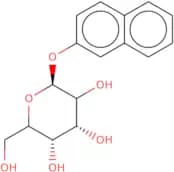
CAS:<p>2-Naphthyl b-D-mannopyranoside is a chromogenic substrate specifically designed for the detection and quantification of β-mannosidase enzyme activity. Upon hydrolysis by β-mannosidase, this substrate releases a colored product, 2-naphthol, which can be easily monitored spectrophotometrically. The use of 2-Naphthyl b-D-mannopyranoside allows for the rapid and sensitive measurement of β-mannosidase activity in various applications, such as enzyme assays, screening for β-mannosidase-producing microorganisms, and studying the kinetics and inhibition of β-mannosidase enzymes.</p>Pureza:Min. 95%Peso molecular:306.31 g/mol5-Bromo-6-chloro-3-indoxyl choline phosphate
CAS:<p>Please enquire for more information about 5-Bromo-6-chloro-3-indoxyl choline phosphate including the price, delivery time and more detailed product information at the technical inquiry form on this page</p>Fórmula:C13H17BrClN2O4PPureza:Min. 99 Area-%Peso molecular:411.63 g/molN-Acetyl-5-bromo-3-indoxyl-2,3,4-tri-O-acetyl-β-D-glucuronic acid methyl ester
<p>N-Acetyl-5-bromo-3-indoxyl-2,3,4-tri-O-acetyl-beta-D-glucuronic acid methyl ester is a chromogenic substrate that can be used for the detection of bile acids and bilirubin in food testing. It is a conjugate of an acetylated 2,3,4 triacetyl glucuronic acid methyl ester with 5 bromo 3 indoxyl. This product has high purity and high quality.</p>Fórmula:C23H24BrNO11Pureza:Min. 98.0 Area-%Peso molecular:570.34 g/molRef: 3D-A-0702
5gA consultar10gA consultar25gA consultar50gA consultar2500mgA consultar-Unit-ggA consultar5-Bromo-4-chloro-3-indoxyl butyrate
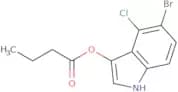
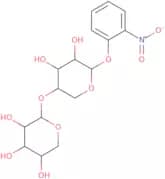
CAS:<p>5-Bromo-4-chloro-3-indoxyl butyrate is a colorimetric substrate used to detect and quantify esterase activity. Upon hydrolysis by esterases, it yields a blue-green dye, allowing the detection and quantification of enzyme activity. It is commonly used in assays for the screening of esterase-producing microorganisms and in research aimed at understanding the role of esterases in various cellular processes.</p>Fórmula:C12H11BrClNO2Pureza:Min. 95%Forma y color:PowderPeso molecular:316.58 g/mol2-Nitrophenyl b-D-xylobioside
CAS:<p>2-Nitrophenyl b-D-xylobioside is a chromogenic substrate for the enzyme xylanase.</p>Pureza:Min. 95%Forma y color:PowderPeso molecular:403.34 g/mol4-Nitrophenyl-β-D-mannopyranoside
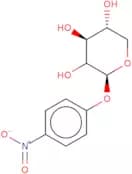
CAS:<p>Chromogenic β-mannosidase substrate yielding a yellow solution upon cleavage.</p>Fórmula:C12H15NO8Pureza:Min. 98.0 Area-%Peso molecular:301.26 g/mol4-Nitrophenyl b-D-arabinopyranoside
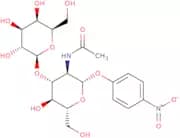
CAS:<p>Chromogenic substrate targeting beta-L-arabinofuranosidase</p>Pureza:Min. 95%Peso molecular:271.22 g/mol4-Nitrophenyl 2-acetamido-2-deoxy-3-O-(b-D-galactopyranosyl)-b-D-glucopyranoside
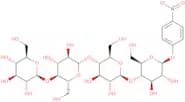
CAS:<p>Chromogenic substrate for fucosyltransferases</p>Fórmula:C20H28N2O13Pureza:Min. 98 Area-%Forma y color:White PowderPeso molecular:504.44 g/mol4-Nitrophenyl b-D-cellotetraoside
CAS:<p>4-Nitrophenyl b-D-cellotetraoside is a chromogenic substrate utilized for the detection and quantification of cellulase enzyme activity. Cellulase enzymes hydrolyze the beta-1,4-glycosidic bonds of cellulose, a major component of plant cell walls. Upon cleavage by cellulase, it releases 4-nitrophenol, a compound that exhibits a yellow color and absorbs strongly at 405 nm, allowing for easy spectrophotometric measurements of cellulase activity levels in various sample types, including bacterial and fungal cultures, environmental samples, and industrial applications.</p>Fórmula:C30H45NO23Pureza:Min. 95%Forma y color:PowderPeso molecular:787.67 g/mol5-Bromo-4-chloro-3-indolyl a-L-rhamnoside
<p>5-Bromo-4-chloro-3-indolyl a-L-rhamnoside is a chromogenic substrate used to detect the specific enzymatic activity of alpha-L-rhamnosidase. After cleavage, 5-bromo-4-chloro-indoxyl is released, resulting in a blue to blue-green color change in bacterial colonies or media. 5-Bromo-4-chloro-3-indolyl a-L-rhamnoside is used in bacterial rhamnose metabolism studies (e.g. E. coli).</p>Fórmula:C14H15BrClNO5Pureza:Min. 95%Forma y color:SolidPeso molecular:392.63 g/mol4-Nitrophenyl phosphate, bis(cyclohexylammonium) salt
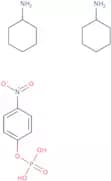
CAS:<p>Chromogenic substrate yielding a soluble yellow chromophor for the colorimetric assay of phosphatases.</p>Fórmula:C18H32N3O6PPureza:97.0 To 103.0%Peso molecular:417.45 g/molChlorophenol red-b-D-galactopyranoside sodium salt
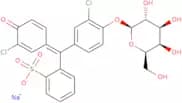
CAS:<p>Chlorophenol red-b-D-galactopyranoside sodium salt is the salt from of CPRG (chlorophenol red-b-D-galactopyranoside), that has a higher solubility. It is a chromogenic substrate for beta-galactosidases that, after enzymatic cleavage, releases chlorophenol red, a dark red compound quantified by absorbance at 570 nm.</p>Fórmula:C25H21Cl2O10SNaPureza:Min. 96 Area-%Forma y color:PowderPeso molecular:607.4 g/molNaphthol AS-BI N-acetyl-b-D-galactosaminide
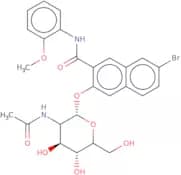
CAS:<p>Modified naphtol AS substrate used in histochemical and cytochemical staining</p>Fórmula:C26H27BrN2O8Pureza:Min. 95%Forma y color:PowderPeso molecular:575.41 g/mol2,4-Dicyano-3-(3,4-dihydroxy-5-nitrophenyl)-N1,N1,N5,N5-tetraethylpentanediamide
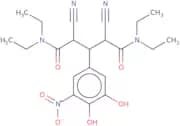
<p>2,4-Dicyano-3-(3,4-dihydroxy-5-nitrophenyl)-N1,N1,N5,N5-tetraethylpentanediamide is a white crystalline solid that is used as an analytical reference standard in HPLC. It is used for the determination of purity and impurities in pharmaceuticals and drug products. This compound can be custom synthesized or obtained from natural sources. It can be found in the USP Drug Impurity Standards and the European Pharmacopoeia.</p>Fórmula:C21H27N5O6Pureza:Min. 95%Peso molecular:445.47 g/mol4-Nitrophenyl b-D-thioglucopyranoside
CAS:<p>4-Nitrophenyl b-D-thioglucopyranoside is a highly sensitive chromogenic substrate designed for the colorimetric detection and quantification of thioglucosidase enzymes. Upon enzymatic cleavage, it releases a highly absorbing 4-nitrophenyl moiety, generating a yellow color that can be readily measured spectrophotometrically. This substrate is widely utilized in the study of enzyme kinetics, substrate specificity, and inhibitor screening for thioglucosidases involved in various metabolic pathways and biological processes.</p>Fórmula:C12H15NO7SPureza:Min. 95%Forma y color:White PowderPeso molecular:317.32 g/mol2-Nitrophenyl-1-thio-β-D-galactopyranoside
CAS:<p>2-Nitrophenyl-1-thio-beta-D-galactopyranoside is a nitroaryl compound that can be synthesized from beta-D-galactopyranosides and nitric acid. It has a molecular conformation that is stabilized by hydrogen bonds, which allows it to form supramolecular assemblies with other molecules. The nitro group in this molecule is responsible for the formation of the nitro group in 1,2,4,5,-tetranitrobenzene.</p>Fórmula:C12H15NO7SPeso molecular:317.32 g/molRef: 3D-N-5100
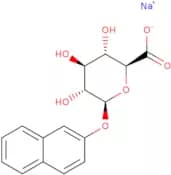
1gA consultar5gA consultar10gA consultar500mgA consultar2500mgA consultar-Unit-ggA consultar2-Naphthyl-β-D-Glucuronide Sodium Salt
CAS:<p>2-Naphthyl-beta-D-glucuronide sodium salt is an enzyme substrate to detect beta-glucuronidase. The enzyme cleaves the glycosidic bond in 2-naphthyl-beta-D-glucuronide to release 2-naphtol and glucuronic acid. Beta-glucuronidase activity assays are important in many fields such as cancer research, as the enzyme is expressed in some tumors and its activity can be targeted for cancer therapy. The enzyme has also an important role in drug metabolism as it recognizes and binds to drug glucuronide conjugate (as 2-naphthyl-beta-D-glucuronide) facilitating its hydrolysis to release the active part. 2-Naphthyl-beta-D-glucuronide sodium salt has a higher solubility as it is in its salt form.</p>Fórmula:C16H15NaO7Pureza:Min. 95%Forma y color:PowderPeso molecular:342.28 g/mol