


Otros
Se han encontrado 6278 productos de "Otros"
Ordenar por
Pureza (%)
0
100
|
0
|
50
|
90
|
95
|
100
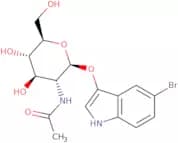
5-Bromo-3-indolyl 2-acetamido-2-deoxy-b-D-glucopyranoside
CAS:<p>5-Bromo-3-indolyl 2-acetamido-2-deoxy-b-D-glucopyranoside is a lapis substrate, a chromogenic substrate that yields a deep blue color after cleavage. It is used in lysosomal storage disorder screening such as for Sanfilippo syndrome.</p>Fórmula:C16H19BrN2O6Pureza:Min. 98 Area-%Forma y color:White Off-White PowderPeso molecular:415.24 g/mol6-Chloro-3-indoxyl-3-acetate
CAS:<p>Chromogenic substrate for carboxylesterase yielding a salmon colored precipitate upon cleavage. Mainly used in histochemistry.</p>Fórmula:C10H8ClNO2Peso molecular:209.63 g/molAldol® 455 α-D-glucopyranoside, Biosynth Patent: EP 2427431 and US 8940909
<p>Aldol® 455 alpha-D-glucopyranoside is a synthetic fluorescent sugar that has been used in the diagnosis of bacterial infections. It has been used as a substrate for the enzyme beta-galactosidase and as a conjugate with anti-bacterial antibodies, which can be used to detect bacteria in urine and blood samples. Aldol® 455 alpha-D-glucopyranoside is also commonly used in the detection of bacteria in food and environmental samples. The product has a high purity level and quality.</p>Fórmula:C27H24ClNO7Pureza:Min. 95.0 Area-%Peso molecular:509.93 g/mol2-Chloro-4-nitrophenyl 4-O-b-D-galactopyranosylmaltoside
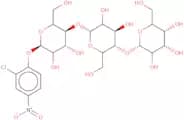
CAS:<p>2-Chloro-4-nitrophenyl 4-O-b-D-galactopyranosylmaltoside, also known as Gal-G2-CNP, is a high quality, water soluble, chromogenic substrate that is used as an enzyme substrate and can be used in bioluminescence and chemiluminescence assays. This product is designed for use in diagnostics, culture media, food testing, environmental testing, and other research applications. 2-Chloro-4-nitrophenyl 4-O-b-D-galactopyranosylmaltoside has been tested in chromogenic assays with alpha-amylases.</p>Fórmula:C24H34ClNO18Pureza:(Hplc) Min. 90%Forma y color:PowderPeso molecular:659.98 g/mol5-Bromo-4-chloro-3-indolyl b-D-fucopyranoside
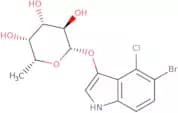
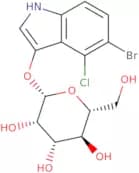
CAS:<p>5-Bromo-4-chloro-3-indolyl b-D-fucopyranoside is a chromogenic substrate used is for the enzyme beta-fucosidase.</p>Fórmula:C14H15BrClNO5Pureza:Min. 98 Area-%Forma y color:PowderPeso molecular:392.63 g/mol4-Nitrophenyl O-(N-acetyl-a-neuraminosyl)-(2,3)-O-b-D-galactopyranosyl-(1,3)-2-acetamido-2-deoxy-a-D-galactopyran oxide
CAS:<p>4-Nitrophenyl O-(N-acetyl-a-neuraminosyl)-(2,3)-O-b-D-galactopyranosyl-(1,3)-2-acetamido-2-deoxy-a-D-galactopyran oxide is a fluorogenic substrate that is used in the detection of glycosidases. It has been shown to be an excellent ligand for the enzyme beta galactosidase, which cleaves the glycan substrate 4NPOBGPA into 4NP and O-(N acetyl) neuraminic acid. 4NPOBGPA can be used as a chromogenic substrate for detecting beta galactosidase activity and can also be conjugated to other fluorescent molecules. This product is high purity and high quality.</p>Pureza:Min. 95%Peso molecular:795.7 g/mol6-Chloro-3-indoxyl palmitate
CAS:<p>6-Chloro-3-indoxyl palmitate is a high quality, pure chemical reagent that can be used as a substrate for enzyme activity. It is a chromogenic substrate that is used in the detection of esterase activity. 6-Chloro-3-indoxyl palmitate is also used as a fluorogenic substrate in the presence of horseradish peroxidase and hydrogen peroxide to produce chemiluminescence. 6-Chloro-3-indoxyl palmitate has been shown to be an effective bioluminescent substrate for luciferase enzymes, such as firefly luciferase and Renilla luciferase.</p>Fórmula:C24H36ClNO2Pureza:Min. 98 Area-%Peso molecular:406.01 g/mol4-Nitrophenyl-α-D-glucopyranoside
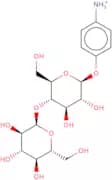
CAS:<p>Chromogenic substrate for α-D-glucosidase yielding a yellow solution upon cleavage. Also used for the detection of glucansucrases and for yeast α-D-glucosidase and for studies of the crystal structure of the complexes of concanavalin A.</p>Fórmula:C12H15NO8Pureza:Min. 98.0 Area-%Peso molecular:301.26 g/mol4-Nitrophenyl-β-D-maltopyranoside
CAS:<p>Chromogenic beta-maltosidase substrate</p>Fórmula:C18H25NO13Pureza:Min. 95%Forma y color:White PowderPeso molecular:463.39 g/mol4-Nitrophenyl-β-D-cellobioside
CAS:<p>Chromogenic substrate for β-D-Cellobiosidase yielding a yellow solution upon cleavage.</p>Fórmula:C18H25NO13Pureza:Min. 98 Area-%Peso molecular:463.39 g/mol6-Chloro-3-indoxyl choline phosphate
CAS:<p>6-Chloro-3-indoxyl choline phosphate is a chromogenic substrate for phosphatidylcholine-specific phospholipase C (PC-PLC) for the detection of mibrobial metabolites. The use of this specific substrate permits monitoring the activity of PC-PLC. This an important enzyme for the regulation of steady-state levels of phosphatidylcholine (PC) and diacylglycerol (DAG). Abnormally high levels of PC-PLC activity in various tissues have been linked to many disease progressions.</p>Fórmula:C13H18ClN2O4PPureza:Min. 99 Area-%Forma y color:PowderPeso molecular:332.72 g/mol4-Nitrophenyl β-D-galactofuranoside
CAS:<p>Chromogenic substrate for beta-galactofuranosidase</p>Fórmula:C12H15NO8Pureza:Min. 98 Area-%Forma y color:White PowderPeso molecular:301.25 g/mol5-Bromo-4-chloro-3-indoxyl phosphate, dilithium salt hydrate
<p>5-Bromo-4-chloro-3-indoxyl phosphate, dilithium salt hydrate is a chromogenic substrate used to detect the specific enzymatic activity of alkaline phosphatase. After cleavage, 5-bromo-4-chloro-indoxyl is released, resulting in a blue to blue-green color change in bacterial colonies or media. 5-Bromo-4-chloro-3-indoxyl phosphate, dilithium salt hydrate is used in ELISA and molecular biology assays such as lacZ reporter systems.</p>Fórmula:C8H4BrClLi2NO4P(anhydrousbasis)Pureza:Min. 98 Area-%Forma y color:PowderPeso molecular:338.34 g/mol4-Nitrophenyl phosphate disodium hexahydrate
CAS:<p>4-Nitrophenyl phosphate disodium salt hexahydrate is a substrate of the hydrolase alkaline phosphatase. The products of the enzymatic reaction are 4-nitrophenol and phosphate.</p>Fórmula:C6H16NNa2O12PForma y color:PowderPeso molecular:371.15 g/mol5-Bromo-4-chloro-3-indolyl b-D-mannopyranoside
CAS:<p>5-Bromo-4-Chloro-3-Indolyl b-D-Mannopyranoside, also known as X-Man, is an enzyme substrate commonly used for detecting mannosidase enzymes. Upon hydrolysis by the enzyme, it produces a blue-green colored compound that can be detected visually or measured spectrophotometrically. This substrate is useful in characterizing the activity of mannosidases involved in glycoprotein processing and quality control.</p>Fórmula:C14H15BrClNO6Forma y color:White Off-White PowderPeso molecular:408.63 g/mol4-Nitrophenyl myristate
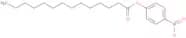
CAS:<p>4-Nitrophenyl myristate (NphOMy) is a chromogenic enzyme substrate used as a diagnosis tool for detection of β-lactamase hydrolysis activities. In the presence of certain drugs, 4-nitrophenyl myristate HSA-Tyr411-catalyzed hydrolysis seems to be inhibited.</p>Fórmula:C20H31NO4Pureza:Min. 95 Area-%Forma y color:White PowderPeso molecular:349.46 g/mol4-(Hydroxymethyl)phenyl-α-D-galactopyranoside tetraacetate
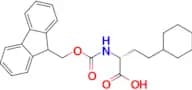
CAS:<p>4-(Hydroxymethyl)phenyl-alpha-D-galactopyranoside tetraacetate is a substrate for enzymes that catalyze the hydroxylation of carbohydrates. It can be used as a substrate for peroxidase and beta-glucosidase, which are important in the production of natural products such as resveratrol, catechins, and lignin. 4-(Hydroxymethyl)phenyl-alpha-D-galactopyranoside tetraacetate is also a chromogenic substrate for chemiluminescence reactions. The product is available as a powder and can be used in diagnostic kits to detect the presence of enzymes or other substances in food or environmental samples.</p>Fórmula:C21H26O11Peso molecular:454.43 g/mol(R)-2-((((9H-Fluoren-9-yl)methoxy)carbonyl)amino)-4-cyclohexylbutanoic acid
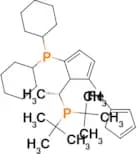
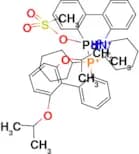
CAS:Pureza:98%Forma y color:SolidPeso molecular:407.5100098(R)-1-[(Sp)-2-(Diphenylphosphino)ferrocenyl]ethyl dicyclohexylphosphine
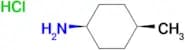
CAS:Pureza:95%Forma y color:SolidPeso molecular:594.23cis-4-Methyl-cyclohexylamine hydrochloride
CAS:Fórmula:C7H16ClNPureza:97%Forma y color:SolidPeso molecular:149.661,6-Dibromopyrene
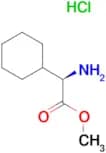
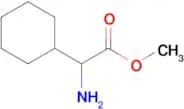
CAS:Fórmula:C16H8Br2Pureza:98%Forma y color:Solid, Off-white powderPeso molecular:360.048(R)-Methyl 2-amino-2-cyclohexylacetate hydrochloride
CAS:Fórmula:C9H18ClNO2Pureza:98%Forma y color:SolidPeso molecular:207.7(1-Amino-cyclohexyl)-acetic acid methyl esterhydrochloride
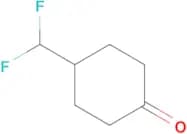
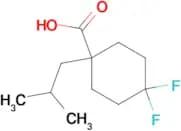
CAS:Fórmula:C9H18ClNO2Pureza:95%Forma y color:SolidPeso molecular:207.74,4-Difluoro-1-(2-methylpropyl)cyclohexane-1-carboxylic acid
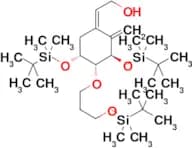
CAS:Fórmula:C11H18F2O2Pureza:95%Peso molecular:220.26(Z)-2-((3R,4R,5R)-3,5-BIS((TERT-BUTYLDIMETHYLSILYL)OXY)-4-(3-((TERT-BUTYLDIMETHYLSILYL)OXY)PROPOXY)-2-METHYLENECYCLOHEXYLIDENE)ETHAN-1-OL
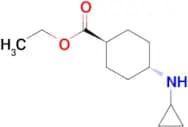
CAS:Pureza:95%Peso molecular:587.0759888trans-Ethyl (1R,4R)-4-(cyclopropylamino)cyclohexane-1-carboxylate
CAS:Pureza:95%Peso molecular:211.3057-(2-Cyclohexylethyl)-6-(hydroxymethyl)-7H-pyrrolo[2,3-d]pyrimidine-2-carbonitrile
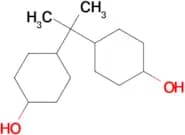
CAS:Pureza:98%Peso molecular:284.36300664,4′-(Propane-2,2-diyl)dicyclohexanol
CAS:Fórmula:C15H28O2Pureza:95%Forma y color:SolidPeso molecular:240.387L-Phenylalanine cyclohexylamide
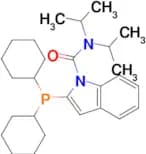
CAS:Fórmula:C15H22N2OPureza:98%Forma y color:SolidPeso molecular:246.3542-(Dicyclohexylphosphino)-N,N-bis(1-methylethyl)-1H-indole-1-carboxamide
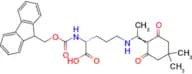
CAS:Pureza:97%Peso molecular:440.612(R)-2-((((9H-Fluoren-9-yl)methoxy)carbonyl)amino)-5-((1-(4,4-dimethyl-2,6-dioxocyclohexylidene)ethyl)amino)pentanoic acid
CAS:Pureza:98%Peso molecular:518.60998541-Cyclohexyl-2,2,2-trifluoro-ethanone
CAS:Fórmula:C8H11F3OPureza:90%Forma y color:LiquidPeso molecular:180.17Z-Chg-OH
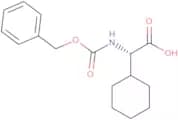
CAS:<p>M06093 - Z-Chg-OH</p>Fórmula:C16H21NO4Pureza:95%Forma y color:White to off-white solidPeso molecular:291.347N-[3,5-Bis(trifluoromethyl)phenyl]-N’-[(1S,2S)-2-(dimethylamino)cyclohexyl]urea
CAS:Pureza:97%Forma y color:SolidPeso molecular:397.3649902









![(R)-1-[(Sp)-2-(Diphenylphosphino)ferrocenyl]ethyl dicyclohexylphosphine](/_next/image/?url=https%3A%2Fstatic.cymitquimica.com%2Fproducts%2F10%2Fthumb-webp%2FF996227.webp&w=3840&q=75)


![7-(2-Cyclohexylethyl)-6-(hydroxymethyl)-7H-pyrrolo[2,3-d]pyrimidine-2-carbonitrile](/_next/image/?url=https%3A%2Fstatic.cymitquimica.com%2Fproducts%2F10%2Fthumb-webp%2FF624182.webp&w=3840&q=75)





![N-[3,5-Bis(trifluoromethyl)phenyl]-N’-[(1S,2S)-2-(dimethylamino)cyclohexyl]urea](/_next/image/?url=https%3A%2Fstatic.cymitquimica.com%2Fproducts%2F10%2Fthumb-webp%2FF616083.webp&w=3840&q=75)