Aminoácidos y derivados
Los aminoácidos son compuestos con una estructura basada en un grupo amino (-NH₂) y un grupo carboxilo (-COOH), unidos a un átomo de carbono central. Esta estructura los hace esenciales para la síntesis de proteínas y otras biomoléculas. Sus derivados pueden tener propiedades reguladoras sobre procesos metabólicos y sistemas biológicos, con aplicaciones en nutrición, salud y medicina regenerativa.
En CymitQuimica disponemos de una amplia gama de aminoácidos y sus derivados, ideales para investigación y formulación de productos bioactivos.
Se han encontrado 12268 productos de "Aminoácidos y derivados"
Ordenar por
Pureza (%)
0
100
|
0
|
50
|
90
|
95
|
100
N-Nitroso-N-phenyl-glycine Anilide
CAS:Producto controladoFórmula:C14H13N3O2Forma y color:NeatPeso molecular:255.272Glycine-d2
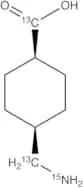
CAS:Producto controlado<p>Applications Glycine-d2, is the labeled analogue of Glycine (G615990), a non-essential amino acid for human development. Glycine is an inhibitory neurotransmitter in spinal cord, allosteric regulator of NMDA receptors.<br>References Scott, D., et al.: J. Neurosci., 21, 3063 (2001); Laube, B., et al.: Neuropharmacology, 47, 994 (2004); Papadakis, M., et al.: J. Biol. Chem., 279, 14703 (2004), Chen, P., et al.: Mol. Pharmacol., 67, 1470 (2005), Wolosker, H., et al.: Mol. Neurobiol., 36, 152 (2007);<br></p>Fórmula:C22H2H3NO2Forma y color:NeatPeso molecular:77.08cis-Tranexamic Acid-13C2,15N
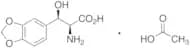
CAS:Producto controlado<p>Applications Labelled cis-Tranexamic Acid (T714500). Antifibrinolytic agent; blocks lysine binding sites of plasminogen. Hemostatic.<br>References Andersson, et al.: Scand. J. Haematol. 2, 230 (1965), Melander, B., et al.: Acta Pharmacol. Toxicol., 22, 340 (1965), Bonnar, J., et al.: Br. Med. J., 313, 579 (1996), Dunn, C.J., et al.: Drugs, 57, 1005 (1999),<br></p>Fórmula:C613C2H1515NO2Forma y color:NeatPeso molecular:160.19DL-threo-β-(3,4-Methylenedioxyphenyl)serine Acetate Salt
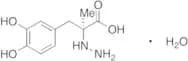
CAS:Producto controladoFórmula:C12H15NO7Forma y color:NeatPeso molecular:285.25(S)-(-)-Carbidopa
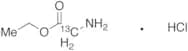
CAS:Producto controlado<p>Stability Unstable in Solution<br>Applications (S)-(-)-Carbidopa is a peripheral decarboxylase inhibitor that is commonly used in combination with L-DOPA (D533751) for treatment of Parkinsonism. S(-)-Carbidopa ( has also been shown to prolong the elimination half-life of L-DOPA from blood plasma and skeletal muscle.<br>References Henry, G.M. et al.: Psychosom. Med., 38, 95 (1976); Leguire, L.E. et al.: Invest. Ophthalmol. Vis. Sci. 34, 3090 (1993); Deleu, D. et al.: Naun. Schmied. Arch. Pharmacol. 348: 576 (1993);<br></p>Fórmula:C10H14N2O4Forma y color:NeatPeso molecular:226.23Glycine-2-13C Ethyl Ester Hydrochloride
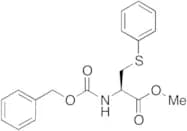
CAS:Producto controladoFórmula:CC3H9NO2·HClForma y color:NeatPeso molecular:140.57N-Carbobenzoxy-S-phenyl-L-cysteine Methyl Ester
CAS:Producto controlado<p>Applications N-Carbobenzoxy-S-phenyl-L-cysteine methyl ester is used in the preparation of γ-amino β-ketoesters by cross-Claisen condensation of α-amino acid derivatives with alkyl acetates.<br>References Honda, Y., et al.: Tetrahedron, Lett., 44, 3163 (2003);<br></p>Fórmula:C18H19NO4SForma y color:NeatPeso molecular:345.41N-(3S)-1-Azabicyclo[2.2.2]oct-3-yl-5,6-dihydro-1-Naphthalenecarboxamide
CAS:Producto controlado<p>Applications N-(3S)-1-Azabicyclo[2.2.2]oct-3-yl-5,6-dihydro-1-Naphthalenecarboxamide is an impurity of Palonosetron (P165800), a serotonin 5-HT3 receptor antagonist used in the prevention and treatment of chemotherapy-induced nausea and vomiting (CINV). Antiemetic.<br>References Clark, R.D., et al.: J. Med. Chem., 36, 2645 (1993), Wong, E.H.F., et al.: Br. J. Pharmacol., 114, 851 (1995), Grunberg, S.M., et al.: Expert. Opin. Pharmacother., 4, 2297 (2003), Eisenberg, P., et al.: Ann. Oncol., 15, 330 (2004), Siddiqui, M.A.A., et al.: Drugs, 64, 1125 (2004),<br></p>Fórmula:C18H22N2OForma y color:NeatPeso molecular:282.38Carbidopa Monohydrate
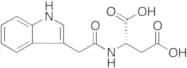
CAS:Producto controlado<p>Applications Carbidopa Monohydrate (cas# 38821-49-7) is a useful research chemical.<br></p>Fórmula:C10H14N2O4·H2OForma y color:White To Off-WhitePeso molecular:244.24Indole-3-acetyl-L-aspartic Acid
CAS:<p>Stability Hygroscopic<br>Applications Indole-3-acetyl-L-aspartic Acid is an indole-3-acetyl-amino acid conjugate involved in regulatory mechanisms for the control of auxin activity during physiological and pathophysiological responses.<br>References Ostrowski, M., et al.: J Plant Physiol, 191, 63-72 (2016)<br></p>Fórmula:C14H14N2O5Forma y color:NeatPeso molecular:290.27Betaine-15N
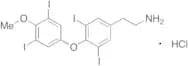
CAS:Producto controlado<p>Applications Betaine-15N is an isotopically labelled analog of Betaine (B325005), which is an endogenous zwitterioin present in many biological systems and referred to as Glycine Betaine. It can be used as an organic osmolyte, a methyl donor and it can also be used for the treatment of homocystinuria, an inherited disorder of the metabolism of amino acid methionine.<br>References Ashraf, M. & Foolad, M.: Environ. Exp. Bot., 59, 206 (2006);Yancey, P.: J. Exp. Biol., 208, 2819 (2005);Rees, W., et. al.: Biochem., 32, 137 (1993)<br></p>Fórmula:C5H1115NO2Forma y color:NeatPeso molecular:118.14O-Methyl-3,3',5,5'-tetraiodothyronamine Hydrochloride
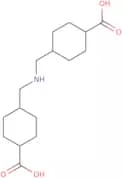
Producto controlado<p>Applications O-Methyl-3,3',5,5'-tetraiodothyronamine is a derivative of p-Tyramine (T898500); an adrenergic.<br>References Brandacher, G., et al.: Curr. Drug Metab., 8, 289 (2007); Oresic, M., et al.: J. Exp. Med., 205, 2975 (2008)<br></p>Fórmula:C15H13I4NO2•(HCl)Forma y color:NeatPeso molecular:746.893646trans-trans-4,4'-Iminodimethylenedi(cyclohexanecarboxylic acid)
CAS:<p>Trans-trans-4,4'-Iminodimethylenedi(cyclohexanecarboxylic acid) is a hydrophobic particle that is soluble in water. It has an average particle diameter of 20 nm and a viscosity of 10 cps. Trans-trans-4,4'-Iminodimethylenedi(cyclohexanecarboxylic acid) is used in skin care products as a thickener and viscosity enhancer. It provides a silky feel to the skin and improves the skin's elasticity. This product also helps to protect the skin from UV radiation by forming a barrier on the surface of the skin. The natural polymer can be produced from glycerin or amide to produce different properties for different applications. Trans-trans-4,4'-Iminodimethylenedi(cyclohexanecarboxylic acid) is an amphoteric molecule that can react with both acidic</p>Fórmula:C16H27NO4Pureza:Min. 95%Peso molecular:297.39 g/molUNC0224
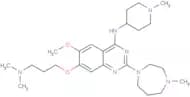
CAS:<p>UNC0224 is a selective inhibitor of G9a with a Ki of 2.6 nM and IC50 of 15 nM. UNC0224 also potently inhibits GLP with assay-dependent IC50 values of 20-58 nM.</p>Fórmula:C26H43N7O2Pureza:99.80%Forma y color:SolidPeso molecular:485.67Carbidopa impurity F
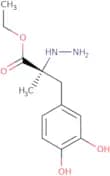
CAS:Producto controlado<p>Carbidopa is an impurity of the drug L-DOPA, which is used as a treatment for Parkinson's disease. Carbidopa is a prodrug that is converted to L-DOPA by decarboxylase, an enzyme in the body. The conversion process can be inhibited by the presence of carbidopa impurity F (CIF), which binds to carboxamides and forms a stable complex with them. This prevents CIF from binding to decarboxylase and blocking its ability to convert carbidopa into L-DOPA. CIF has been shown to have anti-parkinsonian effects by reducing the severity of symptoms associated with Parkinson's disease such as muscular rigidity and tremors.</p>Fórmula:C12H18N2O4Pureza:Min. 95%Forma y color:PowderPeso molecular:254.28 g/molCarbidopa Impurity 2
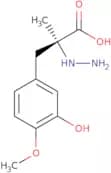
CAS:Producto controlado<p>Carbidopa Impurity 2 is an impurity of carbidopa, a drug product that is used to treat Parkinson's disease. Carbidopa Impurity 2 is an analytical standard for the identification and quantification of carbidopa in biological samples. The natural form of this compound is unknown, but it has been synthesized using custom synthesis techniques. This compound was also used to develop a high purity HPLC standard and as a pharmacopoeia reference material.</p>Fórmula:C11H16N2O4Pureza:Min. 95%Peso molecular:240.26 g/moltrans-4-(Aminomethyl)cyclohexanecarboxylic acid
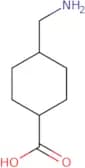
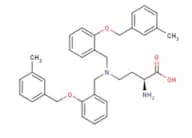
CAS:<p>Trans-4-(aminomethyl)cyclohexanecarboxylic acid (AMCA) is a histamine antagonist that is used to treat bowel disease. It may also be useful for the treatment of other inflammatory diseases and as an anticoagulant. AMCA has been shown to be safe and effective for the prevention of postoperative bleeding in patients who are undergoing major surgery. This drug is a potent inhibitor of platelet aggregation, but does not affect the function of erythrocytes or leukocytes. AMCA inhibits platelet aggregation by blocking the binding of adenosine diphosphate (ADP) to its receptor on platelets, thus inhibiting ADP-mediated activation of phospholipase A2 and arachidonic acid release from membranes. An increase in blood levels of AMCA may lead to cardiac toxicity and bleeding events.</p>Fórmula:C8H15NO2Pureza:Min. 95%Peso molecular:157.21 g/molV-9302
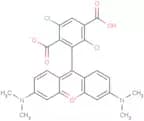
CAS:<p>V-9302 (V9302) is a competitive antagonist of transmembrane glutamine flux that selectively and potently targets the amino acid transporter ASCT2 (IC50: 9.6 uM</p>Fórmula:C34H38N2O4Pureza:98% - 99.54%Forma y color:SolidPeso molecular:538.681,4-Dichloro 6-carboxytetramethylrhodamine
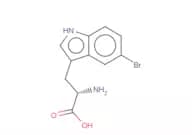
CAS:<p>1,4-Dichloro 6-carboxytetramethylrhodamine is a rhodamine-class fluorescent dye with excitation/emission wavelengths of 541/568 nm.</p>Fórmula:C25H20Cl2N2O5Pureza:99.99%Forma y color:SolidPeso molecular:499.34L-5-BromoTryptophan
CAS:<p>L-5-BromoTryptophan (5-BrW) is an analog of the tryptophan (Trp) effector and inhibits the gelation of hemoglobin S.</p>Fórmula:C11H11BrN2O2Pureza:99.86%Forma y color:SolidPeso molecular:283.12



![N-(3S)-1-Azabicyclo[2.2.2]oct-3-yl-5,6-dihydro-1-Naphthalenecarboxamide](/_next/image/?url=https%3A%2Fstatic.cymitquimica.com%2Fproducts%2FTR%2Fthumb-webp%2FA795305.webp&w=3840&q=75)