Carbohidratos y glucoconjugados
Los carbohidratos son compuestos orgánicos formados por carbono, hidrógeno y oxígeno, y su estructura básica está constituida por monosacáridos. Estos se pueden unir para formar disacáridos, oligosacáridos o polisacáridos, dependiendo de la cantidad de unidades monoméricas. Los carbohidratos tienen un papel fundamental en el almacenamiento de energía, la estructura celular y la comunicación celular. Sus derivados se utilizan en productos farmacéuticos, como edulcorantes y excipientes.
En CymitQuimica disponemos de una amplia variedad de carbohidratos y sus derivados para investigación y aplicaciones industriales.
Se han encontrado 5013 productos de "Carbohidratos y glucoconjugados"
Ordenar por
Pureza (%)
0
100
|
0
|
50
|
90
|
95
|
100
Chitobiose octaacetate
CAS:<p>Octacetylated chitobiose derivative</p>Fórmula:C28H40N2O17Pureza:Min. 95%Forma y color:White PowderPeso molecular:676.62 g/molIsomaltotriose
CAS:<p>Produced from high maltose syrup by treatment with transglucosidase</p>Fórmula:C18H32O16Pureza:Min. 97 Area-%Forma y color:White Off-White PowderPeso molecular:504.44 g/molMethyl 2-O-(a-D-mannopyranosyl)-b-D-mannopyranoside
<p>Methyl 2-O-(a-D-mannopyranosyl)-b-D-mannopyranoside is a glycosylation product of mannose and glucose. It is an intermediate in the synthesis of the complex carbohydrate, methylated mannan. This compound is also an intermediate in the synthesis of saccharides with a fluorinated sugar moiety. Methyl 2-O-(a-D-mannopyranosyl)-b-D-mannopyranoside can be custom synthesized to meet your needs.</p>Fórmula:C13H24O11Pureza:Min. 95%Peso molecular:356.32 g/molMycothione
<p>Please enquire for more information about Mycothione including the price, delivery time and more detailed product information at the technical inquiry form on this page</p>Fórmula:C34H58N4O24S2Pureza:Min. 95%Peso molecular:970.97 g/mol4-Aminobutyl 3-O-(a-D-mannopyranosyl)-a-D-mannopyranoside
<p>4-Aminobutyl 3-O-(a-D-mannopyranosyl)-a-D-mannopyranoside is a fluorescent, water soluble, and hydrophilic glycoside. This compound is synthesized through the condensation of 4-aminobutyric acid with 3-(2,3,4,6-tetraacetyl glucosamine) to form an aminobutyl ester. The aminobutyl ester is then reacted with a D-mannose derived from 2,3,4,6-tetraacetyl glucosamine. This product is used in glycoprotein analysis and can be modified for various purposes.</p>Pureza:Min. 95%k-Carrahexaitol trisulfate trisodium salt
<p>k-carrageenan derived hexasaccharide alcohol trisulfate+(3-6 anhydrogalactose)</p>Fórmula:C36H55O37S3Na3Pureza:Min. 95%Peso molecular:1,244.97 g/mol4-Methoxyphenyl 4-O-(3,6-di-O-benzyl-2-deoxy-2-phthalimido-b-D-glucopyranosyl)-3-O-benzyl-2-deoxy-6-O-(4-methoxybenzyl)-2-phthalimid o-b-D-glucopyranoside
<p>4-Methoxyphenyl 4-O-(3,6-di-O-benzyl-2-deoxy-2-phthalimido-b-D-glucopyranosyl)-3-O-benzyl-2-deoxy -6-(4methoxybenzyl)-2 phthalimid (4) is a carbohydrate compound with the molecular formula C27H32N2O9. It is a white to off white powder that has a molecular weight of 565.5 and an empirical formula of C27H32N2O9.</p>Fórmula:C64H60N2O15Pureza:Min. 95%Peso molecular:1,097.17 g/mol2,3,6,2',3',4',6'-Hepta-O-acetyl-b-lactosyl azide
CAS:<p>2,3,6,2',3',4',6'-Hepta-O-acetyl-b-lactosyl azide is a custom synthesis of a carbohydrate that has been modified by the addition of acetyl groups to one end and the attachment of an azide group to the other. The synthesis of this compound has been completed in high purity and is available for purchase. This compound is a complex carbohydrate that is a sugar that can be modified by fluorination. It is also an oligosaccharide or polysaccharide with saccharide units.</p>Fórmula:C26H35N3O17Pureza:Min. 95%Forma y color:PowderPeso molecular:661.57 g/mol6-Deoxy-6-fluoro-D-lactosylamine
<p>6-Deoxy-6-fluoro-D-lactosylamine (6DFDLA) is a Custom synthesis, Modification, Fluorination, Methylation, Monosaccharide, Synthetic, Click modification, Oligosaccharide, saccharide. It is a polysaccharide that contains a glycosyl linkage between two or more monosaccharides. The carbons of 6DFDLA are derived from glucose and galactose. 6DFDLA is a carbohydrate that can be classified as either simple or complex carbohydrates.</p>Pureza:Min. 95%[UL-¹³C₁₂]Sucrose
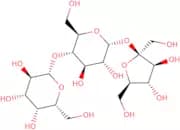
CAS:<p>Sucrose is a sugar that is used as a food additive. It is the disaccharide of glucose and fructose, which are two monosaccharides. Sucrose can be synthesized by the glycosylation of glucose and fructose in an α-1,2 linkage. Sucrose can also be synthesized by the fluorination of sucrose followed by methylation with methylamine. The synthesis of sucrose starts with the reaction of acrylonitrile with formaldehyde to produce acrylonitrile trimer, which is then reacted with methanol to produce methyl 3-hydroxybutyrate. This product undergoes a series of reactions to form sucrose.</p>Fórmula:C12H22O11Pureza:Min. 98 Area-%Forma y color:PowderPeso molecular:354.21 g/mola1-3[a1-6]a1-6[a1-3]Mannopentaose
CAS:<p>Found in glycoproteins including ovalbumin and human immunoglobulin M</p>Fórmula:C30H52O26Pureza:Min. 95 Area-%Forma y color:White PowderPeso molecular:828.72 g/molN,N',N'',N''',N''''-Pentaacetyl chitopentaose
CAS:<p>Chitopentaose is a pentaacetyl derivative of the sugar chitohexaose. It is an oligosaccharide that has been shown to inhibit the activity of glycosidases and lectins, which may be due to its high affinity to these enzymes. Chitopentaose has also been found to bind to insulin receptors in the human tumor cell line A-20, leading to a reduction in tumor growth. The molecule also inhibits the transcriptional regulation of genes encoding for penicillin-binding protein, mouse tumor necrosis factor, and α1-acid glycoprotein.</p>Fórmula:C40H67N5O26Pureza:Min. 95 Area-%Forma y color:PowderPeso molecular:1,033.98 g/mol1,4-b-Galactotetraose
CAS:<p>1,4-b-Galactotetraose is a galactose containing tetrasaccharide</p>Fórmula:C24H42O21Pureza:Min. 95%Forma y color:PowderPeso molecular:666.58 g/molNeoagarodecaose
CAS:<p>Agarose is a polysaccharide found in red algae, typically Gelidium and Gracilaria. It is a strictly alternating polysaccharide of α-1,3 linked D-galactose and β-1,4 linked L-3,6 anhydrogalactose with occasional sulfation at position 6 of the anhydrogalactose residue. Agaro-oligosaccharides result from cleavage at galactose residues and neoagaro-oligosaccharides from cleavage at 3,6-anhydro residues. Neoagarodecaose is reported to have potential for novel cosmeceuticals.</p>Fórmula:C60H92O46Pureza:Min. 95%Forma y color:PowderPeso molecular:1,549.34 g/mol1,4-b-D-Mannohexaose
CAS:<p>Isolated from ivory-nut mannan hydrolysates</p>Fórmula:C36H62O31Pureza:Min. 90 Area-%Forma y color:White PowderPeso molecular:990.86 g/mol3'-(N-Glycolyl-a-neuraminosyl)lactose
CAS:<p>3'-(N-Glycolyl-a-neuraminosyl)lactose is a carbohydrate that is synthesized from lactose, which is a disaccharide composed of glucose and galactose. It is synthesized by the modification of the terminal hydroxyl group on the galactose moiety with glycolyl chloride. 3'-(N-Glycolyl-a-neuraminosyl)lactose has been shown to inhibit the growth of bacteria and fungi. It also has the potential to be used as an anti-cancer drug candidate due to its ability to inhibit protein synthesis in cells. This carbohydrate can also be modified by methylation, glycosylation, or click chemistry.</p>Fórmula:C23H39NO20Pureza:Min. 95%Peso molecular:649.55 g/mol3-(a-D-Rhamnopyranosyl)-D-glucose
<p>3-(a-D-Rhamnopyranosyl)-D-glucose is a glycosylation product that is synthesized by the methylation of glucose. It is a complex carbohydrate with a high purity, CAS number and custom synthesis. 3-(a-D-Rhamnopyranosyl)-D-glucose has been modified by fluorination and click chemistry to produce a versatile reagent for glycosylation reactions.</p>Pureza:Min. 95%Monosialyllacto-N-hexaose III
<p>Monosialyllacto-N-hexaose III is an oligosaccharide. It is a complex carbohydrate that is custom synthesized and purified. Monosialyllacto-N-hexaose III has CAS number: 51486-71-4. It contains six monosaccharides, namely glucose, galactose, mannose, N-acetylglucosamine, and sialic acid (sialic acid). The sugar molecule has a methyl group on the terminal carbon atom at position 3′. Monosialyllacto-N-hexaose III can be fluorinated to form monofluoroacetyl monosialyllacto-N-hexaose III. Monofluoroacetyl monosialyllacto-N-hexaose III can be glycosylated with a hexasaccharide to form hexaglycosylated monofluoroacet</p>Pureza:Min. 95%Blood group A type 4 linear trisaccharide-NGL
<p>Useful oligosaccharide-lipid conjugate for raising antibodies.</p>Pureza:Min. 95%1,1,1-Kestopentaose
CAS:<p>Non-reducing sucrose analog containing glucose and fructose; prebiotic fibre</p>Fórmula:C30H52O26Pureza:Min. 95 Area-%Forma y color:White PowderPeso molecular:828.72 g/molGangliotetraose
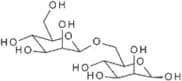
CAS:<p>Gangliotetraose (Galβ1,3GalNAcβ1,4Galβ1,4Glc) is the core tetrasaccharide found in many gangliosides, such as, GM1 (Ledeen, 2009). Gangliosides containing gangliotetraose are abundant in mammalian brains, where they can cover 10%â20% of the total ganglioside mixture. They are found in epithelial membranes and are key elements for bacterial toxicity and viral infection, for example, it is the intestinal receptor for cholera toxin, the B-subunits of heat-labile toxin, rotavirus, and simian virus 40. They can function as neurotrophic and neuroprotective compounds, and have been used therapeutically for diabetic and peripheral neuropathies. They bind amyloid-β proteins and are involved in Alzheimerâs pathogenesis (Chiricozzi, 2020).</p>Fórmula:C26H45NO21Pureza:Min. 95%Forma y color:PowderPeso molecular:707.64 g/mol6-O-(b-D-Mannopyranosyl)-D-mannose
CAS:<p>Isolated from the products of the acid reversion of D-mannose</p>Fórmula:C12H22O11Pureza:Min. 98 Area-%Forma y color:PowderPeso molecular:342.3 g/mol2-Acetamido-2-deoxy-4-O-(β-D-mannopyranosyl)-D-glucopyranose
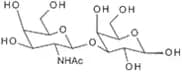
CAS:<p>2-Acetamido-2-deoxy-4-O-(b-D-mannopyranosyl)-D-glucopyranose (MDP) is a complex carbohydrate that has been modified by methylation, glycosylation, and carbocation. MDP is a saccharide that can be used in the synthesis of polysaccharides or as an intermediate for other chemical syntheses. It is also possible to modify MDP with fluorination, which may be useful in the synthesis of new types of pharmaceuticals.</p>Fórmula:C14H25NO11Pureza:Min. 95 Area-%Forma y color:PowderPeso molecular:383.35 g/molGD1a-Ganglioside sodium
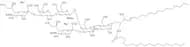
CAS:<p>GD1a (shown as sodium salt) is one of the major gangliosides in neuronal and glial membranes. It has a core tetrasaccharide structure (Galβ1,3GalNAcβ1,4Galβ1,4Glc) with sialic acids linked α2,3/α2,8 to the inner galactose residue, α2,3 to the outer galactose residue and ceramide linked β to position 1 on the reducing terminal glucose residue (Ledeen, 2009). It interacts with myelin-associated glycoprotein (MAG) and is essential for long-term axon-myelin stability. It plays a role in viral infection as it is a receptor for viral glycoproteins in rotavirus and paramyxovirus 1. The hexasaccharide GD1a moiety was also found on a glycoprotein that acts as a receptor for adenovirus type 37. GD1a ganglioside also interacts with botulinum neurotoxin and is crucial for its entry into cells (Kolter, 2012).</p>Fórmula:C84H148N4O39·xNaPureza:Min. 95%Forma y color:White PowderPeso molecular:1,838.08 g/molLactose 6'-sulfate
CAS:<p>Lactose 6'-sulfate is a custom synthesis of a complex carbohydrate and an oligosaccharide. It is modified by methylation and glycosylation, which can be altered to create other saccharides such as galactose. Lactose 6'-sulfate has been fluorinated in the alpha position and contains a sulfate group that is attached with a click chemistry reaction. Lactose 6'-sulfate has CAS number 1015758-24-3 and is high purity.</p>Fórmula:C12H22O14SPureza:Min. 95%Forma y color:PowderPeso molecular:422.36 g/mol2-Methyl-(4-O-β-D-glucopyranosyl)-1,2-dideoxy-α-D-glucopyrano)-[2,1-d]-2-oxazoline
CAS:<p>2-Methyl-(4-O-b-D-glucopyranosyl)-1,2-dideoxy-a-D-glucopyrano)-[2,1-d]-2-oxazoline is a custom synthesis of a carbohydrate. It can be modified by fluorination, methylation, and monosaccharide modification. It has been synthesized from a saccharide with a molecular weight of 803. This molecule has the CAS number 91433-96-7.</p>Fórmula:C14H23NO10Pureza:Min. 95%Forma y color:PowderPeso molecular:365.33 g/mol3-O-(2-Acetamido-2-deoxy-b-D-galactopyranosyl)-D-galactopyranose
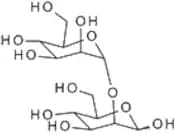
CAS:<p>3-O-(2-Acetamido-2-deoxy-b-D-galactopyranosyl)-D-galactopyranose is a sugar molecule with biological properties such as lectin, terminal sugar, and carbohydrate. It is a specific sugar for the blood group B. This sugar is also used in assays for pneumococcus, which is a bacterium that can cause pneumonia. 3-O-(2-Acetamido-2-deoxy-b-D-galactopyranosyl)-D-galactopyranose is oxidized by enzymes called oxidases to form 3,4,6 -triacetamido galactose (3TAG) and 3,4,6 -triacetamido glucose (3TG). The disaccharide residues are then hydrolyzed into monosaccharides by glycoconjugates and polyvalent glycosidases.</p>Fórmula:C14H25NO11Pureza:Min. 95%Forma y color:White PowderPeso molecular:383.33 g/mol2-O-(a-D-Mannopyranosyl)-D-mannopyranose
CAS:<p>Synthesized by the action of zinc chloride on tetra-O-acetylmannose and 1-chloro-3,4,6- tri-0-acetylmannose. Isolated from partial acetolysates of baker's yeast mannan and Saccharomyces rouxii mannan.</p>Fórmula:C12H22O11Pureza:Min. 95 Area-%Forma y color:White PowderPeso molecular:342.3 g/molGD1b-Ganglioside sodium
CAS:<p>GD1b (shown as sodium salt) is one of the major gangliosides in neuronal and glial membranes. It has a core tetrasaccharide structure (Galβ1,3GalNAcβ1,4Galβ1,4Glc) with itâs two sialic acids linked α2,3/α2,8 to the inner galactose residue and ceramide linked β to position 1 on the reducing terminal glucose residue (Ledeen, 2009). GD1b acts as a receptor for BK virus as well as for heat-labile LTII-a toxin, produced by enteropathogenicâ¯E. coli. GD1b ganglioside also interacts with tetanus neurotoxin (TeNT) and is crucial for its entry into cells (Kolter, 2012).</p>Pureza:Min. 95%Forma y color:PowderGlcA[3S]b(1-3)Galb(1-4)GlcNAcb(1-2)Mana-Ethylazide
<p>GlcA[3S]b(1-3)Galb(1-4)GlcNAcb(1-2)Mana-Ethylazide is an oligosaccharide used in glycosylation and esterification reactions. It is a complex carbohydrate that consists of a methylated mannosamine backbone, with alpha-D-glucose and alpha-D-galactose units attached to the mannosamine. GlcA[3S]b(1-3)Galb(1-4)GlcNAcb(1-2)Mana-Ethylazide has a fluorinated ethyl group at the 3 position of the mannosamine, which can be modified with other reactive groups. The CAS number for this compound is 84726-43-7.</p>Fórmula:C28H44N4Na20O25SPureza:Min. 95%Peso molecular:1,328.52 g/molGalacto-N-biose
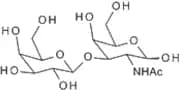
CAS:<p>2-Acetamido-2-deoxy-3-O-(b-D-galactopyranosyl)-D-galactopyranose (also known as galacto-N-biose, GNB and T antigen) is a β 1-3’ linked disaccharide which is found in the gastrointestinal tract as a core component of mucin. GNB has been shown to have potential to protect against glutamate excitotoxicity, a process in which nerve cells can be damaged or destroyed. GNB, along with lactose-N-biose, are found in human milk but are not metabolised by gut enzymes and are instead broken down to a digestible form by bifidobacteria found in the intestinal systems of infants in a symbiotic process.</p>Fórmula:C14H25NO11Pureza:Min. 95%Forma y color:White Off-White PowderPeso molecular:383.35 g/molMethyl protodioscin
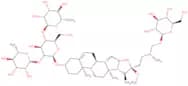
CAS:<p>Methyl protodioscin is a natural compound that has been shown to have a promising therapeutic effect on autoimmune diseases. Methyl protodioscin is derived from soybean extract and it is known to inhibit the translocation of bacteria across the gut wall, which could be due to its ability to regulate mucin gene expression. In vitro assays show that methyl protodioscin has an effect on mitochondrial membrane potential, which may be related to its anti-inflammatory properties. The effects of methyl protodioscin on mitochondrial functions were studied in C. glabrata, and it was shown that this compound can be used as a therapeutic agent for balloon injury.<br>Methyl protodioscin also inhibits the growth of Candida albicans and other fungi in vivo, suggesting that this compound might have antifungal activity.</p>Fórmula:C52H86O22Pureza:Min. 95%Peso molecular:1,063.23 g/mol2-Acetamido-6-O-(2-acetamido-2-deoxy-a-D-galactopyranosyl)-2-deoxy-D-galactopyranose
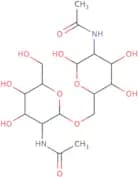
CAS:<p>2-Acetamido-6-O-(2-acetamido-2-deoxy-a-D-galactopyranosyl)-2-deoxy-D-galactopyranose is an n-acetylated disaccharide (naturally occurring) that is a glycosidic bond between the two sugars, n-acetyl D galactosamine and 2,3,4,6 tetraacetamido 2 deoxy D galactose. This compound has an acetamide residue in place of a hydroxyl group on the second carbon atom of the sugar. The linkage between these two sugars is a glycosidic bond. In its natural form, this molecule can be found in mammalian cells and bacterial cell walls.</p>Fórmula:C16H28N2O11Pureza:Min. 95%Peso molecular:424.4 g/mol2'',3'',4''-Tri-O-benzylfucosyllactose
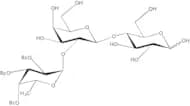
<p>Please enquire for more information about 2'',3'',4''-Tri-O-benzylfucosyllactose including the price, delivery time and more detailed product information at the technical inquiry form on this page</p>Fórmula:C39H50O15Pureza:Min. 95%Forma y color:White To Off-White SolidPeso molecular:758.81 g/molBlood group A pentasaccharide type II
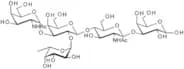
CAS:<p>A antigen pentasaccharide Type I I, possible use in antiviral development</p>Fórmula:C34H58N2O25Pureza:Min. 90 Area-%Forma y color:PowderPeso molecular:894.82 g/molCarboxymethyl cellulose sodium - Viscosity 400-800cps
CAS:<p>Food additive; soil suspension polymer in detergents; thickening agent</p>Fórmula:C28H30Na8O27Pureza:Min. 95%Forma y color:White To Light Brown SolidPeso molecular:982.444-O-β-D-Galactosylsucrose
CAS:<p>Similar to Raffinose but with the galactose residue attached 1,4 to the glucose</p>Fórmula:C18H32O16Pureza:Min. 95 Area-%Forma y color:White PowderPeso molecular:504.44 g/mol2-Azidoethyl 2-O-(2-acetamido-2-deoxy-b-D-glucopyranosyl)-a-D-mannopyranoside
<p>2-Azidoethyl 2-O-(2-acetamido-2-deoxy-b-D-glucopyranosyl)-a-D-mannopyranoside is a carbohydrate that is a modification of the saccharide oligosaccharide. It has been synthesized by custom synthesis and has high purity, methylation, glycosylation and click modification.</p>Fórmula:C16H28N4O11Pureza:Min. 95%Peso molecular:452.41 g/molDisialyl-TF
CAS:<p>Disialyl-TF is a monoclonal antibody that binds to the CD33 antigen on the surface of all types of cancer cells, including breast cancer cells. Disialyl-TF has been shown to reduce the growth and spread of prostate cancer cells in mice, reducing tumor size and weight. Disialyl-TF is also active against infectious diseases such as HIV, which may be due to its ability to inhibit the expression of glycan receptors. The mechanism by which it works is not yet known. Disialyl-TF has been shown to bind with high affinity to erythrocytes bearing A or B blood group antigens, making it an excellent diagnostic tool for detecting these antigens in patients with acute myeloid leukemia or other cancers.</p>Fórmula:C36H59N3O27Pureza:Min. 95%Peso molecular:965.86 g/molGD1a-Oligosaccharide
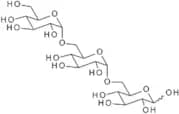
CAS:<p>GD1a oligosaccharide is the carbohydrate moiety from the disialylated glycosphingolipid GD1a of the a-series (shown in the sodium form), a major ganglioside found in neuronal and glial membranes. GD1a oligosaccharide has a core tetrasaccharide structure (Galβ1,3GalNAcβ1,4Galβ1,4Glc) with sialic acids linked α2,3/α2,8 to the inner galactose residue, α2,3 to the outer galactose residue (Ledeen, 2009). GD1a ganglioside interacts with myelin-associated glycoprotein (MAG) and is essential for long-term axon-myelin stability. GD1a ganglioside plays a role in viral infection as it is a receptor for viral glycoproteins in rotavirus and paramyxovirus 1. The hexasaccharide GD1a moiety was also found on a glycoprotein that acts as a receptor for adenovirus type 37. Additionally, GD1a ganglioside interacts with botulinum neurotoxin (BoNT) and is crucial for its entry into cells (Kolter, 2012).</p>Fórmula:C48H79N3O37Pureza:Min. 95%Forma y color:PowderPeso molecular:1,290.14 g/molMaltoheptaose
CAS:<p>α 1,4-glucoheptasaccharide derived from starch by hydrolysis and chromatography</p>Fórmula:C42H72O36Pureza:Min. 60%Forma y color:White PowderPeso molecular:1,153.02 g/molBlood Group H type I trisaccharide
CAS:<p>Core antigen fragment in ABO blood group system</p>Fórmula:C20H35NO15Pureza:Min. 90%Forma y color:PowderPeso molecular:529.49 g/molBenzyl 4-O-(2,6-di-O-benzyl-b-D-galactopyranosyl)-2,3,6-tri-O-benzyl-D-glucopyranoside
<p>Benzyl 4-O-(2,6-di-O-benzyl-b-D-galactopyranosyl)-2,3,6-tri-O-benzyl-D-glucopyranoside is a carbohydrate that belongs to the oligosaccharide class of saccharides. It is a synthetic compound with a CAS number (CAS No.: 128364-79-5) and a high purity. The carbohydrate has been synthesized by methylation, glycosylation, and click modification. Its chemical name is benzyl 4-[(2,6-di-[3'-O-(4,4'-dimethoxytrityl)butyldimethylsilyl]benzoyl)-a -D--galactopyranosyl]-2,3,6-[3'-O-(4',4''dimethoxytrityl)butyl]tri[3',5']</p>Fórmula:C34H88O11Pureza:Min. 98 Area-%Forma y color:PowderPeso molecular:673.06 g/mol1,4-b-D-Xylotetraose decasulfate sodium salt
<p>1,4-b-D-Xylotetraose decasulfate sodium salt is a highly purified and custom synthesized carbohydrate. It is used as a reagent in biochemical research. 1,4-b-D-Xylotetraose decasulfate sodium salt can be modified with various reagents to produce desired properties for use in various applications. Modifications can include methylation, saccharide, Polysaccharide, Click modification, or Modification. Carbohydrate modifications can include Oligosaccharide or Custom synthesis. Fluorination of 1,4-b-D-Xylotetraose decasulfate sodium salt is an available modification that produces the product with high purity and reduced viscosity. <br>1,4-b-D-Xylotetraose decasulfate sodium salt has a CAS number of 52878-68-9 and is available for custom synthesis at</p>Pureza:Min. 95%2-O-(2-Acetamido-2-deoxy-β-D-glucopyranosyl)-D-mannopyranose
CAS:<p>2-O-(2-Acetamido-2-deoxy-b-D-glucopyranosyl)-D-mannopyranose is a disaccharide that contains two acetamides. It has a glycosidic bond and is classified as a glycoside. This compound has the same sequence of residues as D-mannose, but one less carbon atom. The acetamides form an ester linkage to the 2’ and 3’ hydroxyl groups on the sugar moiety.</p>Fórmula:C14H25NO11Pureza:Min. 95%Forma y color:PowderPeso molecular:383.35 g/molGlycyl-sialyllacto-N-tetraose b
<p>Glycyl-sialyllacto-N-tetraose b is a custom synthesis of an oligosaccharide consisting of four monosaccharides. The monosaccharides are glycyl, sialyllactose and two tetrasaccharides with the configuration of (1,4)-alpha-D-mannopyranosyl-(1,2)-alpha-D-mannopyranosyl-(1,6)-beta-D-glucopyranosyl-(1,4)-alpha-D-mannopyranosyl. Glycyl-sialyllacto-N-tetraose b is a high purity product that can be modified to contain fluorine atoms. This product has been shown to have methylation activity in Methylation reactions.</p>Fórmula:C39H66N4O29Pureza:Min. 95%Peso molecular:1,054.95 g/mol2,3,1',3',4',6'-Hexa-O-acetyl-6-O-methacryloyl-sucrose
<p>2,3,1',3',4',6'-Hexa-O-acetyl-6-O-methacryloyl-sucrose is a saccharide that has been modified using methylation and click chemistry. It is also known as hexaacetylsucrose. This product is used in the production of glycoproteins and polysaccharides. 2,3,1',3',4',6'-Hexa-O-acetyl-6-O-methacryloyl-sucrose is a synthetic compound that can be custom synthesized to order. It has high purity and can be ordered in a variety of purities.</p>Pureza:Min. 95%Dermatan sulphate sodium salt,average MW 92000
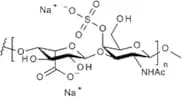
CAS:<p>Dermatan sulphate is a glycosaminoglycan found in skin, blood vessels, heart valves, tendons, aorta, spleen and brain and is usually isolated from pig skin or beef lung tissue. The disaccharide repeat unit is composed of L-iduronic acid and N-acetyl-galactosamine-4-sulphate linked β-(1,3) and β-(1,4). There are also small amounts of D-glucuronic acid.</p>Forma y color:Powder4-Methoxyphenyl 3-O-(2,3,4,6-Tetra-O-acetyl-b-D-galactopyranosyl)-2-azido-4,6-O-benzylidene-2-deoxy-b-D-galactopyranoside
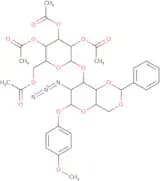
<p>4-Methoxyphenyl 3-O-(2,3,4,6-Tetra-O-acetyl-b-D-galactopyranosyl)-2-azido-4,6-O-benzylidene-2-deoxy-b -D -galactopyranoside is a sugar that can be methylated or modified with other saccharides. It has CAS No. 91485 and can be synthesized by Click chemistry. The modification of the sugar includes glycosylation and fluorination. This compound is a complex carbohydrate that is used in synthetic chemistry.</p>Pureza:Min. 95%Thiocellotetraose
<p>Thiocellotetraose is a glycosylation product of cellulose. It is a complex carbohydrate that is similar to other saccharides. Thiocellotetraose can be obtained by methylation, click modification, and fluorination. The monosaccharide units in thiocellotetraose are glucose and mannose. This product can be custom synthesized to meet your specific requirements for purity and CAS number.</p>Fórmula:C24H42O18S3Pureza:Min. 95%Peso molecular:714.78 g/mol




![[UL-¹³C₁₂]Sucrose](/_next/image/?url=https%3A%2Fstatic.cymitquimica.com%2Fproducts%2F3D%2Fthumb-webp%2FOS29120.webp&w=3840&q=75)
![a1-3[a1-6]a1-6[a1-3]Mannopentaose](/_next/image/?url=https%3A%2Fstatic.cymitquimica.com%2Fproducts%2F3D%2Fthumb-webp%2FOM05332.webp&w=3840&q=75)





![2-Methyl-(4-O-β-D-glucopyranosyl)-1,2-dideoxy-α-D-glucopyrano)-[2,1-d]-2-oxazoline](/_next/image/?url=https%3A%2Fstatic.cymitquimica.com%2Fproducts%2F3D%2Fthumb-webp%2FOM10959.webp&w=3840&q=75)

![GlcA[3S]b(1-3)Galb(1-4)GlcNAcb(1-2)Mana-Ethylazide](/_next/image/?url=https%3A%2Fstatic.cymitquimica.com%2Fproducts%2F3D%2Fthumb-webp%2FOG44930.webp&w=3840&q=75)