Cetonas y Derivados
Las cetonas son compuestos orgánicos que contienen un grupo carbonilo (C=O) unido a dos átomos de carbono, formando una estructura en la que el grupo carbonilo está flanqueado por grupos alquilo o arilo. En farmacología, las cetonas se utilizan en la formulación de APIs debido a su capacidad para mejorar la solubilidad y estabilidad de los principios activos. Algunas cetonas tienen propiedades antiinflamatorias, analgésicas y antimicrobianas. Los derivados de cetonas incluyen compuestos en los que el grupo carbonilo está modificado, como los enoles, que tienen aplicaciones en la síntesis de fármacos y como intermediarios químicos en la fabricación de otros compuestos bioactivos. Los derivados de cetonas se utilizan en el diseño de nuevos medicamentos, incluidos aquellos para tratar enfermedades neurodegenerativas, trastornos metabólicos y ciertos tipos de cáncer, gracias a sus efectos específicos sobre enzimas y procesos celulares.
Se han encontrado 2394 productos de "Cetonas y Derivados"
Ordenar por
Pureza (%)
0
100
|
0
|
50
|
90
|
95
|
100
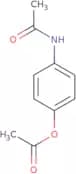
Acetaminophen acetate
CAS:<p>Acetaminophen acetate is a cholinergic amine that binds to the active site of the enzyme acetylcholine esterase, preventing it from breaking down acetylcholine. Acetaminophen is used as a pain reliever and antipyretic agent. It is also used for its anti-inflammatory effects in the treatment of rheumatoid arthritis and other inflammatory conditions. Acetaminophen has been shown to have anticancer properties, which may be due to its ability to bind to cancer cells, inhibit their growth, and induce apoptosis. Acetaminophen acetate is also an acylation reaction product that can be isolated by liquid chromatography in phase with fluorescence properties.</p>Fórmula:C10H11NO3Pureza:Min. 95%Forma y color:White PowderPeso molecular:193.2 g/molAll-trans-retinol-d5
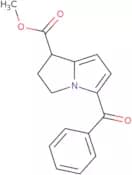
CAS:Producto controlado<p>All-trans-retinol-d5 is a supplement that is used to protect the brain from oxidative damage and to help maintain healthy skin. It is an antioxidant that prevents free radicals from damaging cells and helps maintain the structural integrity of cell membranes. All-trans-retinol-d5 can be found in high concentrations in animal tissues, such as liver, lung, kidney, heart, brain, and eye. It can also be found in human urine. The presence of all-trans-retinol-d5 in urine has been correlated with neuroprotective effects. Retinol levels have been shown to be higher in children who are less obese than those who are obese or overweight. All-trans retinol has been shown to inhibit cancer cell proliferation and induce apoptosis by inhibiting protein synthesis at the level of transcription.</p>Fórmula:C20H25D5OPureza:(%) Min. 80%Forma y color:Clear Viscous LiquidPeso molecular:291.48 g/molMethyl 5-benzoyl-2,3-dihydro-1H-pyrrolizine-1-carboxylate, racemic
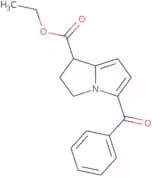
CAS:<p>Methyl 5-benzoyl-2,3-dihydro-1H-pyrrolizine-1-carboxylate is a particle that is used to treat cardiac arrhythmias. It has been shown to be effective as an antipyretic agent and may also have analgesic properties. Methyl 5-benzoyl-2,3-dihydro-1H-pyrrolizine-1-carboxylate is a white powder that melts at temperatures of about 300°C. This drug can be administered by inhalation in the form of a vaporized liquid. The particle size of this drug is typically less than 10 microns in diameter. Methyl 5-benzoyl-2,3-dihydro-1H pyrrolizine 1 carboxylate can be administered through the respiratory tract as an aerosol or nebulizer. The molecular weight of this</p>Fórmula:C16H15NO3Pureza:Min. 98 Area-%Forma y color:PowderPeso molecular:269.3 g/molEthyl-(5-benzoyl-2,3-dihydro-1H-pyrrolizine-1-carboxylate, racemic
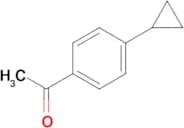
CAS:<p>Ethyl (5-benzoyl-2,3-dihydro-1H-pyrrolizine-1-carboxylate, racemic) is a molecule that can be used in the treatment of cardiac diseases. It is a cardiotonic agent that has been shown to shorten the duration of ventricular fibrillation and restore contractility. This drug also decreases the frequency and severity of angina pectoris and enhances coronary artery blood flow. The most effective dose for this drug is 1.5 mg per kg body weight. It is administered orally or intravenously and should not be used with fatty esters because it may cause hypotension. Ethyl (5-benzoyl-2,3-dihydro-1H-pyrrolizine-1-carboxylate, racemic) has been shown to have an effect on metal coordination profiles as well as an activated form of the molecule.</p>Fórmula:C17H17O3NPureza:Min. 98 Area-%Forma y color:Off-White PowderPeso molecular:283.32 g/mol1-(4-Cyclopropylphenyl)ethanone
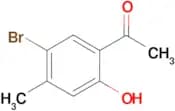
CAS:Fórmula:C11H12OPureza:97%Forma y color:LiquidPeso molecular:160.2165′-Bromo-2′-hydroxy-4′-methylacetophenone
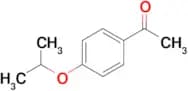
CAS:Fórmula:C9H9BrO2Pureza:98%Forma y color:SolidPeso molecular:229.0731-(4-Isopropoxyphenyl)ethanone
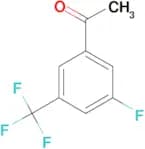
CAS:Fórmula:C11H14O2Pureza:98%Forma y color:Liquid, No data available.Peso molecular:178.2313′-Fluoro-5′-(trifluoromethyl)acetophenone
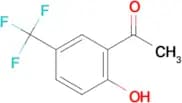
CAS:Fórmula:C9H6F4OPureza:98%Forma y color:LiquidPeso molecular:206.141-(2-Hydroxy-5-(trifluoromethyl)phenyl)ethanone
CAS:Fórmula:C9H7F3O2Pureza:97%Forma y color:LiquidPeso molecular:204.148