Derivados de Benzimidazol e Imidazol
El benzimidazol es un compuesto que consta de un anillo bencénico fusionado a un anillo imidazol, una estructura de cinco miembros que contiene dos átomos de nitrógeno. Los derivados de benzimidazol, como el albendazol, son conocidos por su actividad antiparasitaria y antifúngica, utilizados en el tratamiento de infecciones parasitarias y en algunas enfermedades parasitarias en animales y humanos. El imidazol, por su parte, es una estructura de cinco miembros con dos átomos de nitrógeno, que se encuentra en diversos compuestos biológicamente activos. Los derivados de imidazol, como el metronidazol, tienen propiedades antimicrobianas y antiparasitarias. Estos compuestos también se usan en la industria farmacéutica para tratar infecciones bacterianas, enfermedades parasitarias y algunas infecciones fúngicas, además de tener aplicaciones en la química orgánica como catalizadores.
En CymitQuimica ofrecemos benzimidazoles e imidazoles de alta pureza para investigación en química medicinal, farmacología y biotecnología.
Se han encontrado 10354 productos de "Derivados de Benzimidazol e Imidazol"
Ordenar por
Pureza (%)
0
100
|
0
|
50
|
90
|
95
|
100
Desdifluoromethoxy hydroxy pantoprazole
CAS:<p>Desdifluoromethoxy hydroxy pantoprazole is a synthetic compound that is used as an impurity standard for the drug product Pantoprazole. It has a purity of ≥98% and is stable under ambient conditions. Desdifluoromethoxy hydroxy pantoprazole is not active on its own, but it is a metabolite of pantoprazole. It can be used to study the metabolism of pantoprazole.</p>Fórmula:C15H15N3O4SPureza:Min. 95%Peso molecular:333.36 g/mol1-Phenyl-1,2,3,4-tetrahydro-isoquinoline
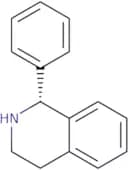
CAS:<p>1-Phenyl-1,2,3,4-tetrahydro-isoquinoline is a synthetic compound which has been used as a lead compound for the development of drugs with dopamine β-hydroxylase inhibitory activity. In vitro studies have shown that 1-phenyl-1,2,3,4-tetrahydro-isoquinoline inhibits human serum dopamine β-hydroxylase and can be used to study the possible role of this enzyme in Parkinson's disease. This drug is racemized in the body and has been found to be effective against Parkinson's disease in rats. It is also an enantiomer that has industrial applications for the production of polyurethane foam insulation coatings.</p>Fórmula:C15H15NPureza:Min. 95%Forma y color:PowderPeso molecular:209.29 g/molScopine-2,2-dithienyl glycolate
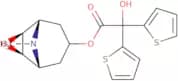
CAS:<p>Scopine-2,2-dithienyl glycolate is a catalyst that belongs to the class of dithienyl glycolates. Scopine-2,2-dithienyl glycolate is used in the pharmaceutical industry as an average catalyst for reactions and can be used to recover dimethylbenzene. The method of detection for scopine-2,2-dithienyl glycolate is based on its ability to absorb light at a wavelength of 360 nm. The reaction solution must be monitored carefully during the synthetic process because it has been shown that it can react with water or air and form hydrogen sulfide gas. If this happens, the reaction solution will become cloudy or turbid. This product is a white crystalline solid that appears as tiny needles and has a melting point of 173 degrees Celsius (340 degrees Fahrenheit).</p>Fórmula:C18H19NO4S2Pureza:Min. 95%Peso molecular:377.48 g/molN-Desalkyl itraconazole
CAS:<p>N-Desalkyl itraconazole is a triazole antifungal drug that belongs to the group of medicines. It is used in the treatment of systemic mycoses, including blastomycosis and histoplasmosis. N-Desalkyl itraconazole has been shown to inhibit the growth of fungi by interfering with their cell membranes and inhibiting their production of ergosterol. Calibration studies have shown that this drug binds to human liver microsomes and plasma proteins, as well as transporters such as P-glycoprotein. These interactions may influence its pharmacokinetics, which can be determined using a bioanalytical method.</p>Fórmula:C31H30Cl2N8O4Pureza:Min. 95%Peso molecular:649.53 g/mol1-[[3-Methyl-4-(2,2,2-trifluoroethoxy)-2-pyridinyl]methyl]-2-[[[3-methyl-4-(2,2,2-trifluoroethoxy)-2-pyridinyl]methyl]sulfinyl]-1H-b enzimidazole
CAS:<p>1-[[3-Methyl-4-(2,2,2-trifluoroethoxy)-2-pyridinyl]methyl]-2-[[[3-methyl-4-(2,2,2-trifluoroethoxy)-2-pyridinyl]methyl]sulfinyl]-1H-b enzimidazole is an impurity of a drug product. It is a metabolite that has been shown to be present in human plasma and urine. This compound is synthetically produced and is not found in nature. It has been shown to have niche applications in both analytical chemistry and pharmacopoeia.</p>Fórmula:C25H22F6N4O3SPureza:Min. 95%Peso molecular:572.52 g/molDehydrodeoxy donepezil
CAS:<p>Dehydrodeoxy donepezil is an analytical standard that is used in the manufacture of pharmaceuticals. It is a synthetic drug impurity, and its CAS number is 120013-45-8. Dehydrodeoxy donepezil can be found in the API impurity grade of various drugs, including those that are manufactured by Custom synthesis and natural synthesis. The pharmacopoeia states that dehydrodeoxy donepezil has a purity level of 98% or greater. This product can also be found as a metabolite in humans, with its half-life being approximately 40 minutes.</p>Fórmula:C24H29NO2Pureza:Min. 95%Peso molecular:363.49 g/mol2-(3-(1-Benzylpiperidin-4-yl)-2-oxopropyl)-4,5-dimethoxybenzoic acid
CAS:<p>2-(3-(1-Benzylpiperidin-4-yl)-2-oxopropyl)-4,5-dimethoxybenzoic acid is a synthetic compound that is being researched as a potential drug product. It is an impurity standard for HPLC and has been used in the past to develop drugs. The chemical structure of this compound closely resembles that of the natural metabolite 4,5-dimethoxybenzoic acid, which is found in plants such as thyme. 2-(3-(1-Benzylpiperidin-4-yl)-2-oxopropyl)-4,5-dimethoxybenzoic acid has shown to inhibit human cytochrome P450 enzymes, which may lead to serious side effects when taken orally.</p>Fórmula:C24H29NO5Pureza:Min. 95%Peso molecular:411.49 g/molPregabalin impurity PD 0312236 and Pregabalin impurity PD 0312237 (mixture of tautomeric isomers)
CAS:<p>Lactose conjugate degradation product of pregabalin</p>Fórmula:C20H35NO11Pureza:Min. 95%Peso molecular:465.49 g/molAlbendazole impurity F
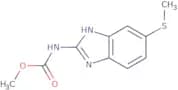
CAS:<p>Albendazole is an anti-helminthic drug that is structurally classified as a benzimidazole. It has been shown to be effective against a variety of helminths, including roundworms, pinworms, hookworms, and tapeworms. Albendazole impurity F is an analytical standard for the determination of albendazole in pharmaceutical products by HPLC. It also serves as a reference substance to establish the purity of drug products containing albendazole and its metabolites. Albendazole impurity F is not considered to be a metabolite of albendazole because it has been shown to be stable under acidic conditions and can be synthesized from other starting materials.</p>Fórmula:C10H11N3O2SPureza:Min. 95%Peso molecular:237.28 g/molEthyl (S)-1-phenyl-1,2,3,4-tetrahydro-2-isoquinolinecarboxylate
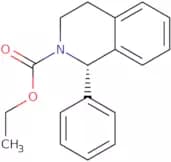
CAS:<p>Ethyl (S)-1-phenyl-1,2,3,4-tetrahydro-2-isoquinolinecarboxylate is an analytical standard used to identify impurities in drug products. It is a metabolite of the drug product and has been shown to be safe for human consumption. The compound is a synthetic chemical that is not found naturally in the environment. CAS No. 180468-42-2</p>Fórmula:C18H19NO2Pureza:Min. 95%Peso molecular:281.35 g/mol1-Deoxy-4-O-β-D-galactopyranosyl-1-[(4R)-4-(2-methylpropyl)-2-oxo-1-pyrrolidinyl]-β-D-fructopyranose/furanose
CAS:<p>Lactose conjugate degradation product of pregabalin</p>Fórmula:C20H35NO11Pureza:Min. 95%Forma y color:PowderPeso molecular:465.49 g/mol(R,R)-Solifenacin succinate
CAS:<p>(R,R)-Solifenacin succinate is a pharmaceutical agent that acts as an antimuscarinic drug. It has been shown to be effective in wastewater treatment, where it was found to reduce the amount of solifenacin and optimised organic chemicals in the water. This drug has also been shown to have antagonist properties against the muscarinic receptor M3.</p>Fórmula:C23H26N2O2•C4H6O4Pureza:Min. 95%Forma y color:PowderPeso molecular:480.55 g/molOxybutynin EP impurity B
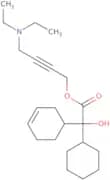
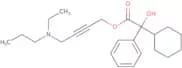
CAS:<p>Oxybutynin EP impurity B is a metabolite of oxybutynin and is a natural product. It is used as an analytical reference substance, to develop new drugs, and in pharmacopoeia in order to measure the purity of oxybutynin. The compound is synthesized by chemical synthesis and can be used as a standard for HPLC analysis.</p>Pureza:Min. 95%Donepezil benzyl bromide (donepezil impurity)
CAS:<p>Donepezil benzyl bromide is a by-product of donepezil hydrochloride, which is an industrially important drug used to treat Alzheimer's disease. It has been shown to be more efficient than its hydrochloride form. Donepezil benzyl bromide is a crystalline substance that is insoluble in water and soluble in organic solvents such as acetone or ethanol. The compound can be purified through recrystallization from an appropriate solvent.</p>Fórmula:C31H36BrNO3Pureza:Min. 95%Peso molecular:550.53 g/mol7-Hydroxyhyoscyamine
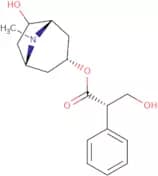
CAS:<p>7-Hydroxyhyoscyamine is an antibacterial agent that is used in the treatment of bacterial infections. It has been shown to inhibit the growth of a number of bacteria including Staphylococcus aureus, Streptococcus pyogenes, and Escherichia coli. 7-Hydroxyhyoscyamine has been shown to be more potent than 6-hydroxyhyoscyamine (6-OH Hya) for inhibiting protein synthesis in the bacteria. The compound does not have any psychoactive effects, unlike atropine sulfate, which is also an alkaloid found in plants from the Solanaceae family. 7-Hydroxyhyoscyamine can be synthesized by reacting atropine with nitrous acid or hydrochloric acid. This synthetic process leads to n-oxides as impurities, which can be removed by using a reversed phase high performance liquid chromatography (RP HPLC). Validation of this</p>Fórmula:C17H23NO4Pureza:Min. 95%Forma y color:PowderPeso molecular:305.4 g/molN,N-Dimethylaminoethyl-a-(1-Hydroxycyclopentyl)phenylacetate hydrochloride
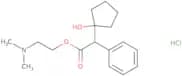
CAS:Producto controlado<p>N,N-Dimethylaminoethyl-a-(1-Hydroxycyclopentyl)phenylacetate hydrochloride (DMAEA) is a drug that is used as an ophthalmic. It has been shown to be safe and effective in patients with chronic open angle glaucoma, and it may also have some efficacy for the treatment of other conditions such as uveitis and retinal detachment. DMAEA is thought to work by binding to the DNA in the eye’s optic nerve cells and blocking the production of leukotrienes. This drug has also been shown to have anti-inflammatory properties.</p>Fórmula:C17H26ClNO3Pureza:Min. 95%Forma y color:PowderPeso molecular:327.85 g/molOxybutynin EP impurity A
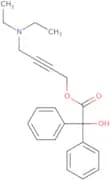
CAS:<p>Oxybutynin EP impurity A is a metabolite of oxybutynin, an antispasmodic drug. It has been shown to have immunomodulatory effects in a rat model of adjuvant arthritis. Oxybutynin EP impurity A is the major metabolite of oxybutynin and has been shown to be pharmacologically active in humans.</p>Pureza:Min. 95%Solifenacin Impurity D
CAS:<p>Solifenacin Impurity D is a synthetic impurity of solifenacin. Solifenacin is an anti-cholinergic drug used to treat overactive bladder and urinary incontinence. The purity of this product is 99%. It is soluble in methanol, ethanol, chloroform, and acetone. Solifenacin Impurity D can be used as a reference material for analytical purposes or as an impurity standard in the development of new drugs.</p>Fórmula:C31H28N2OPureza:Min. 96 Area-%Forma y color:White PowderPeso molecular:444.57 g/molOxybutynin EP Impurity E
CAS:<p>Oxybutynin EP Impurity E is a research and development impurity standard that is used in the synthesis of Oxybutynin. It can be synthesized by reacting 2-chloro-4-nitroaniline with potassium tert-butoxide, followed by acetylation with acetic anhydride. The purity and structure of this compound have been verified by gas chromatography, mass spectrometry, and melting point analysis. This impurity standard has a CAS number of 1215677-72-7.<br>Oxybutynin EP Impurity E is used as a drug product for the treatment of overactive bladder, urinary incontinence, and painful bladder syndrome/interstitial cystitis. It also helps to reduce pain due to spinal cord injury or multiple sclerosis. <br>The pharmacopoeia name for this compound is 4-(2-Chloroethyl)-1H-imidazoleacetic acid. It has been found to be</p>Fórmula:C23H33NO3Pureza:Min. 95%Peso molecular:371.51 g/mol(R)-1-Phenyl-1,2,3,4-tetrahydroisoquinoline
CAS:<p>(R)-1-Phenyl-1,2,3,4-tetrahydroisoquinoline is a chiral molecule with four stereocenters. It is synthesized by the reaction of sulfamic acid and cyclohexene in the presence of p-toluenesulfonic acid. The product formed is then dehydrogenated to produce (R)-1-phenyl-1,2,3,4-tetrahydroisoquinoline. This compound is soluble in organic solvents such as benzene and ethane and can be used as an acceptor for chiral stationary phases.</p>Fórmula:C15H15NPureza:Min. 95%Forma y color:PowderPeso molecular:209.29 g/mol



![1-[[3-Methyl-4-(2,2,2-trifluoroethoxy)-2-pyridinyl]methyl]-2-[[[3-methyl-4-(2,2,2-trifluoroethoxy)…](/_next/image/?url=https%3A%2Fstatic.cymitquimica.com%2Fproducts%2F3D%2Fthumb-webp%2FIM25689.webp&w=3840&q=75)



![1-Deoxy-4-O-β-D-galactopyranosyl-1-[(4R)-4-(2-methylpropyl)-2-oxo-1-pyrrolidinyl]-β-D-fructopyrano…](/_next/image/?url=https%3A%2Fstatic.cymitquimica.com%2Fproducts%2F3D%2Fthumb-webp%2FID63811.webp&w=3840&q=75)