Derivados de Purinas y Pirimidinas
Las purinas tienen una estructura bicíclica, formada por un anillo de seis miembros fusionado con un anillo de cinco, ambos con átomos de nitrógeno en posiciones clave. Los derivados de purinas, como la adenina y la guanina, son fundamentales en la formación del ADN y ARN. Estos compuestos tienen aplicaciones terapéuticas en tratamientos contra el cáncer y enfermedades virales, al inhibir la replicación celular. Las pirimidinas, por otro lado, tienen una estructura monocíclica de seis miembros con dos átomos de nitrógeno. Sus derivados, como la citosina, timina y uracilo, también son componentes esenciales del ADN y ARN y se utilizan en la quimioterapia y tratamientos antivirales.
En CymitQuimica disponemos de derivados de purinas y pirimidinas para investigación en biología molecular, genómica y desarrollo de terapias innovadoras.
Se han encontrado 8898 productos de "Derivados de Purinas y Pirimidinas"
Ordenar por
Pureza (%)
0
100
|
0
|
50
|
90
|
95
|
100
2-Hydrazino Adenosine
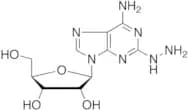
CAS:Producto controlado<p>Stability Moisture Sensitive<br>Applications A useful synthetic intermediate for making potent and selective coronary vasodilators.<br>References Niiya, K., et al.: J. Med. Chem., 35, 4557 (1992)<br></p>Fórmula:C10H15N7O4Forma y color:NeatPeso molecular:297.271,2,3,9-Tetrahydro-3-(1H-imidazol-1-ylmethyl)-9-methyl-4H-carbazol-4-one (Ondansetron Impurity G)
CAS:Producto controlado<p>Applications 1,2,3,9-Tetrahydro-3-(1H-imidazol-1-ylmethyl)-9-methyl-4H-carbazol-4-one is an metabolite of Ondansetron (O655000), is a selective 5-hydroxytryptamine3 (5-HT3) receptor antagonist that has been introduced to clinical practice as an antiemetic for cancer treatment-induced and anesthesia-related nausea and vomiting.<br>References Kris, M.G., et al.: J. Clin. Oncol., 6, 659 (1988), Faris, P..L., et al.: Lances, 355, 792 (2000), Ye, J.H., et al.: CNS Drug Reviews., 7, 199 (2001);<br></p>Fórmula:C17H17N3OForma y color:White To Off-WhitePeso molecular:279.34Ormetoprim
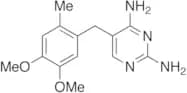
CAS:Producto controlado<p>Stability Hygroscopic<br>Applications It is a potent and selective inhibitor of bacterial dihydrofolate reductase, the enzyme responsible for the NADPH-dependent reduction of 7,8-dihydrofolate to 5,6,7,8-tetrahydrofolate. Antibacterial.This compound is a contaminant of emerging concern (CECs).<br>References Manius, G.J., et al.: Anal. Profiles Drug Subs., 7, 445 (1978), Roth, B., et al.: J. Med. Chem., 23, 379 (1980), Brogden, R.N., et al.: Drugs, 23, 405 (1982),<br></p>Fórmula:C14H18N4O2Forma y color:Off-WhitePeso molecular:274.32Purine
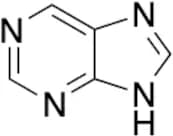
CAS:Producto controlado<p>Applications Purine (cas# 120-73-0) is a useful research chemical.<br></p>Fórmula:C5H4N4Forma y color:NeatPeso molecular:120.11Ref: 10-F538203
1gA consultar2gA consultar5gA consultar100mgA consultar250mgA consultar500mgA consultarRef: 10-F527886
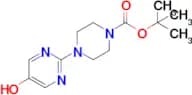
1gA consultar5gA consultar10gA consultar25gA consultar100mgA consultar250mgA consultarTert-butyl 4-(5-hydroxypyrimidin-2-yl)piperazine-1-carboxylate
CAS:Pureza:98%Peso molecular:280.3280029296875Ref: 10-F768179
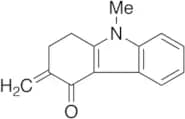
1gA consultar2gA consultar5gA consultar100mgA consultar250mgA consultar500mgA consultar1,2,3,9-Tetrahydro-9-methyl-3-methylene-4H-carbazol-4-one
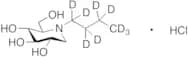
CAS:Producto controlado<p>Impurity Ondansetron EP Impurity D; Ondansetron USP Related Compound D<br>Applications 1,2,3,9-Tetrahydro-9-methyl-3-methylene-4H-carbazol-4-one (Ondansetron EP Impurity D; Ondansetron USP Related Compound D) is an impurity of Ondansetron (O655000).<br> Not a dangerous good if item is equal to or less than 1g/ml and there is less than 100g/ml in the package<br>References Feng, R. et al.: Zhong. Yaox. Zaz., 46, 1436 (2011); Zizkovsky, V. et al.: J. Pharm. Biomed. Anal., 44, 1048 (2007)<br></p>Fórmula:C14H13NOForma y color:WhitePeso molecular:211.26N-Butyldeoxynojirimycin Hydrochloride-d9
CAS:Producto controlado<p>Applications N-Butyldeoxynojirimycin Hydrochloride-d9 is labelled N-Butyldeoxynojirimycin Hydrochloride (B691000) which is an inhibitor of a-glucosidase 1 as well as being an inhibitor of HIV cytopathicity.<br>References Hettkamp, H., et al.: Eur. J. Biochem., 142, 85 (1984), Szumilo, T., et al.: Arch. Biochem. Biophys., 247, 261 (1986), Fleet, G.W.J., et al.: FEBS Letters, 237, Number 1,2, 128 (1988), Kolter, T., et al.: Angew. Chem. Int. Ed. Engl., 36, 1955 (1997),<br></p>Fórmula:C10H13D9ClNO4Forma y color:NeatPeso molecular:264.79Xanthine
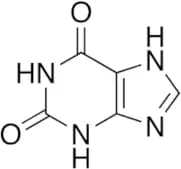
CAS:<p>Applications Found in animal organs, yeast, patatoes, coffee beans, tea. This drug can be used to relax and widen certain breathing passages of the lungs. It is also found that a large number of derivatives have adenoside receptor antagonist properties.<br>References Mueller, C. et. al: Handbook Exp. Pharmacol. 200,151(2011)<br></p>Fórmula:C5H4N4O2Forma y color:White SolidPeso molecular:152.11(S)-Tenofovir
CAS:Producto controlado<p>Applications (S)-Tenofovir is an S-enatiomeric derivative of Tenofovir (T018500). (S)-Tenofovir displays virucidal activity against herpes, visna virus and retrovirus. The S enantiomer of Tenofovir (T018500) is less effective against HIV than their (R)-enantiomeric counterparts.<br>References Balzarini, J. et al: Biochem. Biophys. Res. Comm., 219, 337 (1996); Balzarini, J. et al.: Antimicrob. Agents. Ch., 37, 332 (1993); Thormar, H. et al.: Antimicorb. Agents. Ch., 37, 2540 (1993)<br></p>Fórmula:C9H14N5O4PForma y color:NeatPeso molecular:287.21Ethyl 2-(3-Cyano-4-isobutoxyphenyl)-4-methyl-5-thiazolecarboxylate
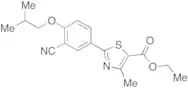
CAS:<p>Applications Ethyl 2-(3-Cyano-4-isobutoxyphenyl)-4-methyl-5-thiazolecarboxylate is an impurity of Febuxostat (F229000), a xanthine oxidase/xanthine dehydrogenase inhibitor. Used for treatment of hyperuricemia and chronic gout. 40-120 mg/day febuxostat was proven effective in lowering serum urate levels when administered to manage hyperuricemia in patients with gout.<br>References Vallu, V., et. al.: Anal. Chem. Indian J., 14, 339 (2014); Osada, Y., et al.: Eur. J. Pharmacol., 241, 183 (1993); Okamoto, K., et al.: J. Biol. Chem., 278, 1848 (2003); Mayer, M.D., et al.: Am. J. Therap., 12, 22 (2005); Tomlinson, B., et al.: Curr. Opin. Invest. Drugs, 6, 1168 (2005)<br></p>Fórmula:C18H20N2O3SForma y color:NeatPeso molecular:344.43N-Benzoyl-5′-O-[bis(4-methoxyphenyl)phenylmethyl]-2′-O-methyladenosine
CAS:Pureza:95%Peso molecular:687.753(S)-N-(1-Amino-5-guanidino-1-oxopentan-2-yl)benzamide hydrochloride
CAS:Fórmula:C13H20ClN5O2Pureza:95.0%Forma y color:SolidPeso molecular:313.79Paraquat-d8 Dichloride
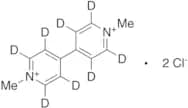
CAS:Producto controlado<p>Stability Hygroscopic<br>Applications Labelled Paraquat Dichloride, a commonly used heribicide. Paraquat Dichloride is a fast-acting and non-selective viologen derivative that kills green plant tissue on contact. Studies suggest that there might be a possible link between Paraquat Dichloride and the development of Parkinson’s disease.<br> Not a dangerous good if item is equal to or less than 1g/ml and there is less than 100g/ml in the package<br>References Heylings, J.R. et al.: Toxicology, 241, 1 (2007); Wibawa, W. et al.: Int. J. Agric. Biol., 11, 145 (2009); Franco, R. et al.: Chem.-Biol. Inter., 188, 289 (2010);<br></p>Fórmula:C122H8H6N2·2ClForma y color:ColourlessPeso molecular:265.21






![N-Benzoyl-5′-O-[bis(4-methoxyphenyl)phenylmethyl]-2′-O-methyladenosine](/_next/image/?url=https%3A%2Fstatic.cymitquimica.com%2Fproducts%2F10%2Fthumb-webp%2FF988403.webp&w=3840&q=75)