Derivados de Quinazolina y Quinolina
Las quinazolinas y quinolinas son compuestos heterocíclicos nitrogenados con estructuras aromáticas que desempeñan un papel clave en la síntesis de fármacos con actividad anticancerígena, antimicrobiana y antiinflamatoria. Sus derivados presentan modificaciones estructurales que optimizan su biodisponibilidad y selectividad, lo que permite el desarrollo de nuevos principios activos para diversas aplicaciones terapéuticas. Estos compuestos se utilizan en la fabricación de APIs destinados al tratamiento de cáncer, infecciones, enfermedades neurodegenerativas y cardiovasculares. Además, los derivados de quinazolina y quinolina son esenciales en la investigación de inhibidores enzimáticos y en el diseño de moléculas bioactivas innovadoras. En CymitQuimica disponemos de derivados de quinazolina y quinolina de alta pureza para aplicaciones en síntesis química, desarrollo farmacéutico y biotecnología.
Se han encontrado 65573 productos de "Derivados de Quinazolina y Quinolina"
Ordenar por
Pureza (%)
0
100
|
0
|
50
|
90
|
95
|
100
Ref: 4Z-P-233006
Producto descatalogadoRef: 4Z-T-3330
Producto descatalogadoRef: 4Z-P-0262
Producto descatalogadoRef: 4Z-P-233005
Producto descatalogado(R)-9-Hydroxy-6,7,8,9-tetrahydro-5H-cyclohepta[b]pyridin-5-one HCl
CAS:Fórmula:C10H11NO2·HClPeso molecular:177.20 36.46Ref: 4Z-P-142075
Producto descatalogadoRef: 4Z-P-0215
Producto descatalogadoRef: 4Z-PF-0003
Producto descatalogadoRef: 4Z-B-192094
Producto descatalogadoRef: 4Z-E-4886
Producto descatalogadoRef: 4Z-C-0344
Producto descatalogadoRef: 4Z-C-825
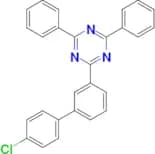
Producto descatalogado2-(4'-Chlorobiphenyl-3-yl)-4,6-diphenyl-1,3,5-triazine
CAS:Pureza:98%Peso molecular:419.9100036621094N-(2-Hydroxyethyl) Chlorambucil
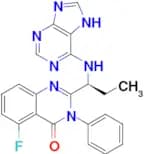
CAS:Producto controlado<p>Applications N-(2-Hydroxyethyl) Chlorambucil is a degradation product of Chlorambucil (C325050); an alkylating agent used as a chemotherapy drug in the treatment of chronic lymphocytic leukemia. Chlorambucil is also used to treat non-Hodgkin's lymphoma (NHL) and Hodgkin's disease.<br>References Cogia, A., et al.: Leuk. Lymph., 53, 1961 (2012); Tonino, S.H., et al.: Leuk. Lymph., 53, 1785 (2012); Smolej, L., et al.: Curr. Pharma. Design., 18, 3399 (2012); Ehrsson, H., et al.: J. Pharm. Sci., 69, 1091 (1980)<br></p>Fórmula:C14H20ClNO3Forma y color:NeatPeso molecular:285.767(S)-2-(1-((9H-Purin-6-yl)amino)propyl)-5-fluoro-3-phenylquinazolin-4(3H)-one
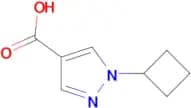
CAS:Pureza:95.0%Forma y color:SolidPeso molecular:415.43200683593751-Cyclobutyl-1H-pyrazole-4-carboxylic acid
CAS:Forma y color:Solid, White solidPeso molecular:166.179992675781252-(Tetrahydro-pyran-4-yloxy)-5-(4,4,5,5-tetramethy-[1,3,2]dioxaborolan-2-yl)-pyridine
CAS:Pureza:95.0%Forma y color:SolidPeso molecular:305.17999267578125Ref: 10-F075776
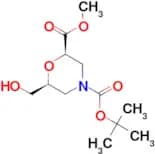
Producto descatalogado(2R,6S)-4-tert-butyl 2-methyl 6-(hydroxymethyl)morpholine-2,4-dicarboxylate
CAS:Pureza:98%Peso molecular:275.3013-[6-Chloro-4-(trifluoromethyl)pyridin-2-yl]benzoic acid
CAS:Pureza:95.0%Forma y color:SolidPeso molecular:301.6499938964844Ref: 10-F221577
Producto descatalogadoRef: 10-F300776
Producto descatalogado4-{[2-methyl-6-(trifluoromethyl)pyridin-3-yl]amino}-4-oxobut-2-enoic acid
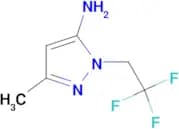
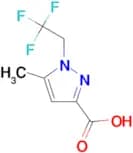
CAS:Peso molecular:274.19900512695315-Methyl-1-(2,2,2-trifluoroethyl)-1H-pyrazole-3-carboxylic acid
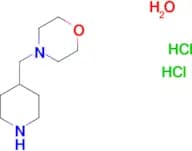
CAS:Pureza:95.0%Peso molecular:208.139999389648444-(4-piperidinylmethyl)morpholine dihydrochloride hydrate
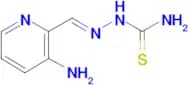
CAS:Pureza:95.0%Forma y color:SolidPeso molecular:275.20999145507812-((3-Aminopyridin-2-yl)methylene)hydrazinecarbothioamide
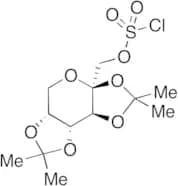
CAS:Pureza:95.0%Peso molecular:195.240005493164062,3:4,5-bis-O-(1-Methylethylidene)-1-chlorosulfate β-D-Fructopyranose
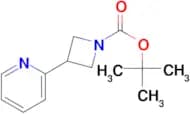
CAS:Producto controlado<p>Applications 2,3:4,5-bis-O-(1-Methylethylidene)-1-chlorosulfate β-D-Fructopyranose is an intermediate for Topiramate-d12 (T540252) and an impurity of Topiramate(T540250). Topiramate is used as an anticonvulsant.<br>References Maryanoff, B.E., et al.: J. Med. Chem., 30, 880 (1987); Bialer, M.: Clin. Pharmacokinet., 24(6), 441-52 (1993)<br></p>Fórmula:C12H19ClO8SForma y color:NeatPeso molecular:358.793-Pyridin-2-yl-azetidine-1-carboxylic acid tert-butyl ester
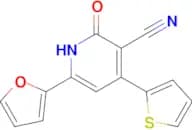
CAS:Pureza:95.0%Peso molecular:234.29899597167976-(Furan-2-yl)-2-oxo-4-(thiophen-2-yl)-1,2-dihydropyridine-3-carbonitrile
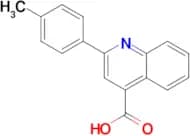
CAS:Pureza:95.0%Peso molecular:268.29000854492192-p-Tolylquinoline-4-carboxylic acid
CAS:Pureza:95.0%Forma y color:SolidPeso molecular:263.2959899902344Ref: 10-F014373
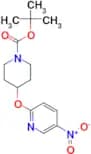
Producto descatalogadotert-Butyl 4-(5-nitropyridin-2-yloxy)piperidine-1-carboxylate
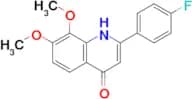
CAS:Pureza:95.0%Peso molecular:323.34899902343752-(4-fluorophenyl)-7,8-dimethoxy-1,4-dihydroquinolin-4-one
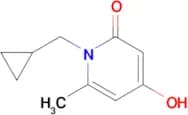
CAS:Pureza:98%Peso molecular:299.30099487304691-CYCLOPROPYLMETHYL-4-HYDROXY-6-METHYL-1H-PYRIDIN-2-ONE
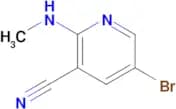
CAS:Pureza:95.0%Peso molecular:179.2189941406255-Bromo-2-(methylamino)nicotinonitrile
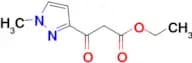
CAS:Pureza:95.0%Forma y color:SolidPeso molecular:212.05000305175783-(1-Methyl-1 H -pyrazol-3-yl)-3-oxo-propionic acid ethyl ester
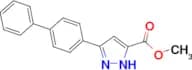
CAS:Forma y color:Solid, solidPeso molecular:196.205993652343755-Biphenyl-4-yl-1H-pyrazole-3-carboxylic acid methyl ester
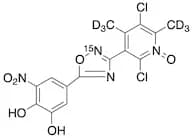
Pureza:95.0%Peso molecular:278.3110046386719Opicapone-d6,15N
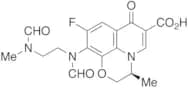
CAS:Producto controladoFórmula:C15H4D6Cl2N3NO6Forma y color:NeatPeso molecular:420.2N,N’-Desethylene-N,N’-diformyl Levofloxacin
CAS:Producto controlado<p>Impurity Levofloxacin Desethylene Diformyl Impurity<br>Applications Levofloxacin (L360000) impurity. A photodegradation product of Levofloxacin (L360000) in aqueous solution.<br>References Yoshida, Y., et al.: Arzneim.-Forsch., 43, 601 (1993),<br></p>Fórmula:C18H18FN3O6Forma y color:NeatPeso molecular:391.35Regorafenib (1-(4-Chloro-3-(trifluoromethyl)phenyl)urea)dimer
CAS:Producto controladoFórmula:C35H23Cl2F7N6O5Forma y color:NeatPeso molecular:811.489Deuterated analog of N-Nitrosobupropion
Producto controladoFórmula:C13H8D9ClN2O2Forma y color:NeatPeso molecular:277.8(S)-Phenylephrine hydrochloride
CAS:<p>(S)-Phenylephrine hydrochloride is a chiral sulfate salt of phenylephrine that is used as a bronchodilator. It has been shown to inhibit cell growth in the presence of sulfate and has been studied for its effects on the respiratory cycle. The compound was also investigated for possible use in treating liver cancer and showed promising results. Chromatograms of hepg2 cells, human liver cells, and liquid chromatography lysates revealed the presence of salbutamol, which is a metabolite of (S)-phenylephrine hydrochloride.</p>Fórmula:C9H14ClNO2Pureza:Min. 95%Peso molecular:203.67 g/mol


![(R)-9-Hydroxy-6,7,8,9-tetrahydro-5H-cyclohepta[b]pyridin-5-one HCl](/_next/image/?url=https%3A%2Fstatic.cymitquimica.com%2Fproducts%2F4Z%2Fthumb-webp%2FP-142075.webp&w=3840&q=75)





![2-(Tetrahydro-pyran-4-yloxy)-5-(4,4,5,5-tetramethy-[1,3,2]dioxaborolan-2-yl)-pyridine](/_next/image/?url=https%3A%2Fstatic.cymitquimica.com%2Fproducts%2F10%2Fthumb-webp%2FF075776.webp&w=3840&q=75)
![3-[6-Chloro-4-(trifluoromethyl)pyridin-2-yl]benzoic acid](/_next/image/?url=https%3A%2Fstatic.cymitquimica.com%2Fproducts%2F10%2Fthumb-webp%2FF317175.webp&w=3840&q=75)

![4-{[2-methyl-6-(trifluoromethyl)pyridin-3-yl]amino}-4-oxobut-2-enoic acid](/_next/image/?url=https%3A%2Fstatic.cymitquimica.com%2Fproducts%2F10%2Fthumb-webp%2FF518653.webp&w=3840&q=75)
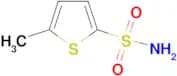
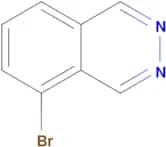
![3-[5-(1,3-oxazol-5-yl)-2-furyl]thiophene-2-carboxylic acid](/_next/image/?url=https%3A%2Fstatic.cymitquimica.com%2Fproducts%2F10%2Fthumb-webp%2FF518070.webp&w=3840&q=75)
![2-[4-(Trifluoromethoxy)phenoxy]isonicotinonitrile](/_next/image/?url=https%3A%2Fstatic.cymitquimica.com%2Fproducts%2F10%2Fthumb-webp%2FF403465.webp&w=3840&q=75)