


Flavonoides y Polifenoles
Los flavonoides son compuestos fenólicos que contienen una estructura de 15 átomos de carbono, formada por dos anillos aromáticos unidos por un puente de tres átomos de carbono. Los polifenoles son una clase más amplia de compuestos orgánicos que contienen múltiples grupos fenólicos. Ambos grupos tienen potentes propiedades antioxidantes, lo que les permite proteger las células del daño causado por los radicales libres. Los flavonoides se encuentran comúnmente en frutas, verduras y té, y están asociados con la mejora de la salud cardiovascular y la prevención de enfermedades crónicas. Los polifenoles también tienen aplicaciones en la prevención del cáncer y en la promoción de la salud cerebral.
En CymitQuimica ofrecemos flavonoides y polifenoles de alta calidad para investigación en química, farmacología y biomedicina.
Se han encontrado 17085 productos de "Flavonoides y Polifenoles"
Ordenar por
Pureza (%)
0
100
|
0
|
50
|
90
|
95
|
100
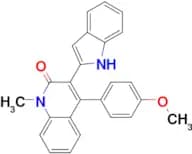
3-(1H-2-INDOLYL)-4-(4-METHOXYPHENYL)-1-METHYL-1H-2-QUINOLINONE
CAS:Pureza:97.0%Peso molecular:380.44699096679694-(3,4-dimethoxyphenyl)-3H,4H,5H,6H,7H-imidazo[4,5-c]pyridine-6-carboxylic acid
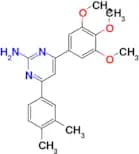
CAS:Pureza:95.0%Peso molecular:303.31799316406254-(3,4-dimethylphenyl)-6-(3,4,5-trimethoxyphenyl)pyrimidin-2-amine
CAS:Pureza:95.0%Peso molecular:365.43301391601564-Hydroxy-3-(trifluoromethyl)benzoic acid
CAS:Fórmula:C8H5F3O3Pureza:98%Forma y color:Solid, White to yellow powderPeso molecular:206.12Ref: 10-F014390
1g247,00€5g624,00€10gA consultar2.5g375,00€50mg67,00€100mg97,00€250mg128,00€500mg194,00€Ref: 10-F641648
1gA consultar2gA consultar5gA consultar100mgA consultar250mgA consultar500mgA consultarN-[bis(4-methoxyphenyl)methyl]-6-oxo-2-(pyridazin-3-yl)-1,6-dihydropyrimidine-5-carboxamide
CAS:Pureza:95%Peso molecular:443.4630126953125Hesperetin 3’-O-β-D-Glucuronide
CAS:<p>Applications Hesperetin 3тАЩ-O-b-D-Glucuronide is one of the most abundant metabolite of Hesperetin (H289500) in vivo.<br>References van Zanden, J., et al.: Biochem. Pharmacol., 74, 345 (2007), Yanez, J., et al.: Biopharm. Drug Dispos., 29, 63 (2008), Brand, W., et al.: Drug Metab. Dispos., 38, 617 (2010),<br></p>Fórmula:C22H22O12Forma y color:NeatPeso molecular:478.4Luteolin
CAS:<p>Applications Hydroxylated flavone derivative with strong anti-oxidant and radical scavenging properties. Suggested to play a role in cancer prevention.<br>References Shimoi, L., et al.: Carcinogenesis, 15, 2669 (1994), Bors, W., et al.: Meth. Enzymol., 234, 420 (1994)Merck Index 12th ed. 5641<br></p>Fórmula:C15H10O6Forma y color:NeatPeso molecular:286.24[3-methoxy-4-(2-morpholin-4-yl-2-oxoethoxy)phenyl]amine hydrobromide
CAS:Fórmula:C13H19BrN2O4Forma y color:Beige powderPeso molecular:347.2092-(tert-Butyl)-6-(5-chloro-2H-benzo[d][1,2,3]triazol-2-yl)-4-methylphenol
CAS:Pureza:95.0%Forma y color:Solid, Light yellow powderPeso molecular:315.79998779296875(+)-[6]-Gingerol
CAS:Producto controlado<p>Applications (+)-[6]-Gingerol is a bioactive compound found in ginger (Zingiber officinale) with antioxidant activity, which functions as an anti-inflammatory and antitumor agent. (+)-[6]-Gingerol down regulates proinflammatory cytokine release by macrophages. (+)-[6]-Gingerol has been shown to inhibit COX-2 expression by blocking the activation of p38 MAP kinase and NF-κB in phorbol ester-stimulated mouse skin.<br> Not a dangerous good if item is equal to or less than 1g/ml and there is less than 100g/ml in the package<br>References Aeschbach, R. et al.: Food Chem. Toxicol., 32, 31 (1994); Tripathi, S. et al.: J. Surg. Res., 130, 318 (2006); Kim, S.O., et al.: Oncogene 24, 2558 (2005);<br></p>Fórmula:C17H26O4Forma y color:Dark Yellow SolidPeso molecular:294.391-(2-methoxyphenyl)-5-phenyl-4,5-dihydro-1H-pyrazole-3-carboxylic acid
CAS:Pureza:95.0%Peso molecular:296.325988769531251,1-Dimethylethyl N-[[[(2,4-dimethoxyphenyl)methyl]amino]thioxomethyl]carbamate
CAS:Pureza:98%Peso molecular:326.4100036621094Ref: 10-F602352
1gA consultar2gA consultar5gA consultar100mgA consultar250mgA consultar500mgA consultar

![4-(3,4-dimethoxyphenyl)-3H,4H,5H,6H,7H-imidazo[4,5-c]pyridine-6-carboxylic acid](/_next/image/?url=https%3A%2Fstatic.cymitquimica.com%2Fproducts%2F10%2Fthumb-webp%2FF522486.webp&w=3840&q=75)


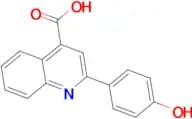


![N-[bis(4-methoxyphenyl)methyl]-6-oxo-2-(pyridazin-3-yl)-1,6-dihydropyrimidine-5-carboxamide](/_next/image/?url=https%3A%2Fstatic.cymitquimica.com%2Fproducts%2F10%2Fthumb-webp%2FF811127.webp&w=3840&q=75)


![3-[4,5-bis(4-phenylphenyl)-1h-imidazol-2-yl]phenol](/_next/image/?url=https%3A%2Fstatic.cymitquimica.com%2Fproducts%2F10%2Fthumb-webp%2FF643395.webp&w=3840&q=75)
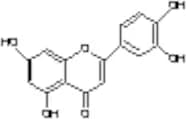
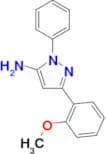
![[3-methoxy-4-(2-morpholin-4-yl-2-oxoethoxy)phenyl]amine hydrobromide](/_next/image/?url=https%3A%2Fstatic.cymitquimica.com%2Fproducts%2F10%2Fthumb-webp%2FF368082.webp&w=3840&q=75)
![2-(tert-Butyl)-6-(5-chloro-2H-benzo[d][1,2,3]triazol-2-yl)-4-methylphenol](/_next/image/?url=https%3A%2Fstatic.cymitquimica.com%2Fproducts%2F10%2Fthumb-webp%2FF238748.webp&w=3840&q=75)
![(+)-[6]-Gingerol](/_next/image/?url=https%3A%2Fstatic.cymitquimica.com%2Fproducts%2FTR%2Fthumb-webp%2FG387205.webp&w=3840&q=75)
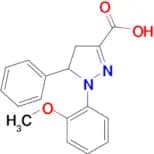
![1,1-Dimethylethyl N-[[[(2,4-dimethoxyphenyl)methyl]amino]thioxomethyl]carbamate](/_next/image/?url=https%3A%2Fstatic.cymitquimica.com%2Fproducts%2F10%2Fthumb-webp%2FF602352.webp&w=3840&q=75)