Flavonoides y Polifenoles
Los flavonoides son compuestos fenólicos que contienen una estructura de 15 átomos de carbono, formada por dos anillos aromáticos unidos por un puente de tres átomos de carbono. Los polifenoles son una clase más amplia de compuestos orgánicos que contienen múltiples grupos fenólicos. Ambos grupos tienen potentes propiedades antioxidantes, lo que les permite proteger las células del daño causado por los radicales libres. Los flavonoides se encuentran comúnmente en frutas, verduras y té, y están asociados con la mejora de la salud cardiovascular y la prevención de enfermedades crónicas. Los polifenoles también tienen aplicaciones en la prevención del cáncer y en la promoción de la salud cerebral.
En CymitQuimica ofrecemos flavonoides y polifenoles de alta calidad para investigación en química, farmacología y biomedicina.
Se han encontrado 17012 productos de "Flavonoides y Polifenoles"
Ordenar por
Pureza (%)
0
100
|
0
|
50
|
90
|
95
|
100
4-AMINO-2-(3-METHOXYPHENYL)-6,7-DIHYDRO-5H-CYCLOPENTA[D]PYRIMIDINE
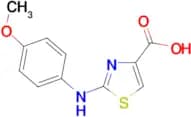
CAS:Pureza:95.0%Peso molecular:241.294006347656252-(4-Methoxy-phenylamino)-thiazole-4-carboxylic acid
CAS:Fórmula:C11H10N2O3SPureza:95.0%Forma y color:SolidPeso molecular:250.27Curcumin β-D-Glucuronide Sodium Salt
CAS:Producto controlado<p>Applications Curcumin β-D-Glucuronide Sodium Salt is the salt based analogue of Curcumin β-D-Glucuronide (C838510) which is a metabolite of Curcumin (C838500) in hepatic tissue and portal blood.<br>References Sharma, O., et al.: Biochem. Pharmacol., 25, 1811 (1976), Colletti, L., et al.: J. Clin. Invest., 85, 1936 (1990), Sharma, R., et al.: Clin. Cancer Res., 7, 1894 (2001),<br></p>Fórmula:C27H28O12•x(Na)Forma y color:Dark Yellow To Dark OrangePeso molecular:544.502299Urolithin M7
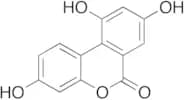
CAS:Producto controlado<p>Stability Hygroscopic<br>Applications Urolithin M7 is an intestinal microbial metabolite of ellagitannins.<br>References Garcia-Villalba, R., et al.: J. Agr. Food Chem., 61, 8797 (2013);<br></p>Fórmula:C13H8O5Forma y color:NeatPeso molecular:244.2Xanthophyll (~80%)
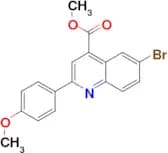
CAS:<p>Stability Light Sensitive, Temperature Sensitive<br>Applications Xanthophyll is one of the most widespread carotenoid alcohols in nature. Originally isolated from egg yolk, also isolated by chromatography from nettles, algae, and petals of many yellow flowers.<br>References van het Hof, K., et al.: J. Nutr., 130, 503 (2000), Cooper, D., et al.: J. Nutr., 134, 221S (2004), Faulks, R., et al.: Biochim. Biophys. Acta, 1740, 95 (2005), Rao, A., et al.: Pharmacol. Res., 55, 207 (2007), Tuberoso, C., et al.: Food Chem., 103, 149 (2007),<br></p>Fórmula:C40H56O2Pureza:~80%Forma y color:Dark Red PowderPeso molecular:568.87Methyl 6-bromo-2-(4-methoxyphenyl)quinoline-4-carboxylate
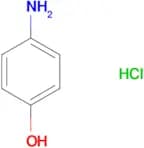
CAS:Pureza:95.0%Peso molecular:372.21798706054694-Aminophenol hydrochloride
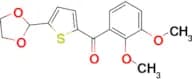
CAS:Fórmula:C6H8ClNOPureza:98.0%Forma y color:Beige powderPeso molecular:145.592-(2,3-Dimethoxybenzoyl)-5-(1,3-dioxolan-2-yl)thiophene
CAS:Pureza:97.0%Peso molecular:320.3599853515625Scopoletin 7-O-Glucoside
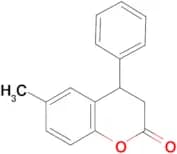
CAS:Producto controlado<p>Applications Scopoletin 7-O-glucoside is a derivative of Scopoletin (S200500), a common constituent found in a variety of plants that has potential to regulate hyperthyroidism in rats. Scopoletin 7-O-glucoside is a compound that is obtained from the methanolic extract of the fresh underground parts of the flower Scopolia japonica.<br>References Okamura, S., et al.: Chem. Pharm. Bull., 40, 2981 (1992); Panda, S. & Kar, A.: Phytother. Res., 20, 1103 (2006)<br></p>Fórmula:C16H18O9Forma y color:NeatPeso molecular:354.3096-Methyl-4-phenyl-chroman-2-one
CAS:Pureza:97.0%Forma y color:Solid, White to almost white powderPeso molecular:238.28599548339844Ref: 10-F036589
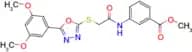
1gA consultar5gA consultar10gA consultar25g94,00€100g257,00€500gA consultar250mgA consultarMethyl 3-(2-((5-(3,5-dimethoxyphenyl)-1,3,4-oxadiazol-2-yl)thio)acetamido)benzoate
CAS:Pureza:97%Peso molecular:429.45001220703125Glycitein
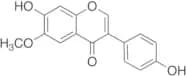
CAS:<p>Applications The compund shows an anti-cancer activity, plasma cholesterol reduction, reduction in postmenopausal bone loss.<br>References Whalley, J.L., et al.: Bioorg. Med. Chem. Lett., 8, 1569 (1998), Song, T., et al.: J. Agric. Food Chem., 47, 1607 (1999),<br></p>Fórmula:C16H12O5Forma y color:Light BrownPeso molecular:284.26


![4-AMINO-2-(3-METHOXYPHENYL)-6,7-DIHYDRO-5H-CYCLOPENTA[D]PYRIMIDINE](/_next/image/?url=https%3A%2Fstatic.cymitquimica.com%2Fproducts%2F10%2Fthumb-webp%2FF301970.webp&w=3840&q=75)



![4-(3-Bromopyrazolo[1,5-a]pyrimidin-6-yl)phenol](/_next/image/?url=https%3A%2Fstatic.cymitquimica.com%2Fproducts%2F10%2Fthumb-webp%2FF224471.webp&w=3840&q=75)

![5-Amino-2-(6-methylbenzo[d]oxazol-2-yl)phenol](/_next/image/?url=https%3A%2Fstatic.cymitquimica.com%2Fproducts%2F10%2Fthumb-webp%2FF546215.webp&w=3840&q=75)