Radicales libres y agentes oxidantes/reductores
Los radicales libres son moléculas con electrones desapareados que pueden dañar estructuras celulares, afectando la estabilidad de los ingredientes activos farmacéuticos (API). Estos radicales son importantes en la formulación de APIs, ya que su presencia puede influir en la estabilidad y eficacia del fármaco. Los agentes oxidantes son sustancias que facilitan la pérdida de electrones, lo que puede ser útil en la fabricación de ciertos APIs, pero también pueden generar reacciones indeseadas si no se controlan adecuadamente. Los agentes reductores, por otro lado, pueden estabilizar algunos compuestos activos al evitar la oxidación. El control de radicales libres y la manipulación de agentes oxidantes y reductores son esenciales en el desarrollo de APIs con una vida útil prolongada y una actividad terapéutica eficiente.
Se han encontrado 213 productos de "Radicales libres y agentes oxidantes/reductores "
Ordenar por
Pureza (%)
0
100
|
0
|
50
|
90
|
95
|
100
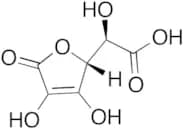
L-threo-Hex-2-enaric acid 1,4-Lactone
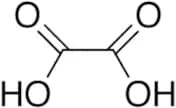
CAS:Fórmula:C6H6O7Forma y color:Off-WhitePeso molecular:190.11Oxalic Acid
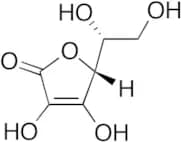
CAS:<p>Applications An impurity of oxaliplatin which is a coordination complex that is used in cancer chemotherapy.A reducing agent and its conjugate base, known as oxalate (C2O42−), is a useful chelating agent for metal cations.<br>References Wheate, N., et al.: Dalton Trans., 39, 8113 (2010),<br></p>Fórmula:C2H2O4Forma y color:White To Off-WhitePeso molecular:90.03D(-)-Isoascorbic Acid (Erythorbic Acid)
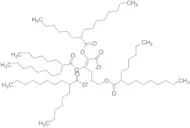
CAS:<p>Stability Moisture Sensitive<br>Applications Erythorbic Acid is used as a food additive as an antimicrobial and antioxidative agent.<br>References Sakagami, H. et al.: Anticanc. Res., 17, 221 (1997); Brahma, B. et al. J. Neurochem., 74, 1263 (2000);<br></p>Fórmula:C6H8O6Forma y color:WhitePeso molecular:176.12Ascorbyl Tetraisopalmitate
CAS:Producto controladoFórmula:C70H128O10Forma y color:NeatPeso molecular:1129.76L-threo-Hex-2-enaric acid 1,4-Lactone 6-Methyl Ester
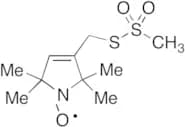
CAS:Fórmula:C7H8O7Forma y color:NeatPeso molecular:204.13(1-Oxyl-2,2,5,5-tetramethyl-δ-3-pyrroline-3-methyl) Methanethiosulfonate
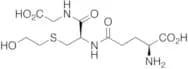
CAS:<p>Stability Light Sensitive<br>Applications A highly reactive thiol-specific spin-label. A specific conformational probe of thiol site structure by virtue of its minimal rotational freedom and distance from the covalent disulfide linkage to the macromolecule under study.<br>References Huang, H., et al.: Biochem., 47, 12380 (2008), Antoniou, C., et al.: Anal. Biochem., 376, 160 (2008), Padmavathi, P., et al.: J. Mol. Biol., 378, 204 (2008),<br></p>Fórmula:C10H18NO3S2Forma y color:NeatPeso molecular:264.38S-(2-Hydroxyethyl)glutathione
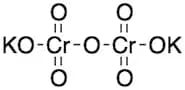
CAS:Producto controlado<p>Stability Very Hygroscopic<br>Applications A glutathione derivative as inhibitor of glutathione S-transferase.<br>References Dirr, H., et al.: Eur. J. Biochem., 196, 693 (1991), Oakley, A., et al.: J. Mol. Biol., 274, 84 (1997), Alcaro, S., et al.: Bioorg. Med. Chem., 13, 3371 (2005),<br></p>Fórmula:C12H21N3O7SForma y color:NeatPeso molecular:351.38Potassium Dichromate
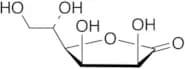
CAS:Producto controlado<p>Applications Potassium Dichromate is toxic if ingested, however has been used in tracing methods. Also, is used in treating patients suffering from COPD and related tracheal secretions.<br> Not a dangerous good if item is equal to or less than 1g/ml and there is less than 100g/ml in the package<br>References Frass, M. et al.: Chest., 127, 936 (2005); Mascorro, J. et al.: Stain. Technol., 50, 391 (1975);<br></p>Fórmula:Cr2O7·2KForma y color:NeatPeso molecular:294.18L-Gulono-1,4-lactone
CAS:Producto controlado<p>Applications L-Gulono-1,4-lactone is a precursor in the biosynthesis of ascorbic acid, one of the many forms of Vitamin C.<br>References Wolucka, B. et al.: J. Biol. Chem., 278, 47483 (2003); Heller, R. et al.: J. Biol Chem., 274, 8254 (1999);<br></p>Fórmula:C6H10O6Forma y color:White To Off-WhitePeso molecular:178.142-Phospho-L-ascorbic Acid Trisodium Salt
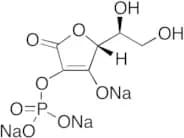
CAS:Producto controlado<p>Applications 2-Phospho-L-ascorbic Acid Trisodium Salt is a long-lasting vitamin C derivative used in studies of gene repression. Maximizes the benefical properties of vitamins C for personal care and a main active ingredient in medicated cosmetics for whitening. Also, it is substrate in the chromoamperometric method to detect tungsten in water.<br>References Fuchihata, M.: Frag. J., 43, 64-68 (2015); Alvarado-Gamez, A. L., et al.: Sens., 15, 2232-2243 (2015);<br></p>Fórmula:C6H6Na3O9PForma y color:NeatPeso molecular:322.05L-Dehydro Ascorbic Acid (>90%)
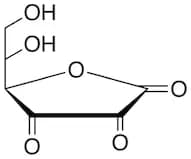
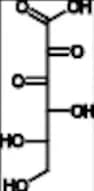
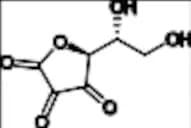
CAS:Producto controlado<p>Applications The reversibly oxidized form of ascorbic acid.<br>References Moubasher, et al.: J. Biol. Chem., 176, 633 (1948), Sy, K., et al.: J. Food Prot., 68, 1176 (2005), Llorach, R., et al.: Food Chem., 2008, 108, 1028 (2008),<br></p>Fórmula:C6H6O6Forma y color:NeatPeso molecular:174.11Ref: 4Z-A-129011
Producto descatalogadoRef: 4Z-M-203002
Producto descatalogadoRef: 4Z-A-129023
Producto descatalogadoRef: 4Z-E-5349
Producto descatalogadoRef: 4Z-E-5347
Producto descatalogadoRef: 4Z-E-5354
Producto descatalogadoRef: 4Z-E-5352
Producto descatalogadoRef: 4Z-E-5348
Producto descatalogadoRef: 4Z-E-5350
Producto descatalogado