Ésteres y derivados
Los ésteres son compuestos orgánicos formados por la reacción de un ácido (generalmente un ácido carboxílico) con un alcohol, liberando agua en el proceso. Su estructura química incluye un grupo funcional -COO-, donde un átomo de carbono está unido a un grupo oxígeno y un grupo alquilo o arilo. Los ésteres tienen una amplia variedad de aplicaciones en la industria, como solventes, fragancias, sabores y productos farmacéuticos. En el ámbito farmacológico, algunos ésteres se utilizan como prófarmacéuticos, ya que su estructura permite una liberación controlada o una mayor biodisponibilidad de los principios activos.
En CymitQuimica ofrecemos ésteres y sus derivados para investigación en química orgánica, formulación de fármacos y aplicaciones industriales.
Se han encontrado 42023 productos de "Ésteres y derivados"
Ordenar por
Pureza (%)
0
100
|
0
|
50
|
90
|
95
|
100
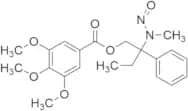
Trimebutine EP Impurity E-Nitroso
Producto controladoFórmula:C21H26N2O6Forma y color:NeatPeso molecular:402.441Diglycidyl Ether
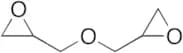
CAS:<p>Applications Diglycidyl Ether is used in studies for the preparation of saccharide-containing, temperature-responsive protein drug carriers.<br> Not a dangerous good if item is equal to or less than 1g/ml and there is less than 100g/ml in the package<br>References Zhu, L., et al.: Faming Zhuanli Shenqing. 2013:442487 (2013)<br></p>Fórmula:C6H10O3Forma y color:ColourlessPeso molecular:130.14Trimebutine-d9 Maleate Salt
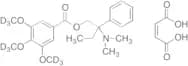
CAS:Producto controlado<p>Applications Trimebutine-d9 Maleate Salt, is the labeled analogue of Trimebutine Maleate Salt (T795605), acting as an opioid receptor agonist. Antispasmodic.<br>References Delvaux, M., et al.: J. Int. Med. Res., 25, 225 (1997), Lavit, M., et al.: Arzneim.-Forsch., 50, 640 (2000),<br></p>Fórmula:C22H20D9NO5·C4H4O4Forma y color:NeatPeso molecular:512.61,4-Bis(2,3,4-trimethoxybenzyl)piperazine
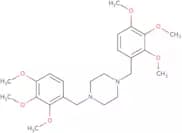
CAS:Producto controlado<p>1,4-Bis(2,3,4-trimethoxybenzyl)piperazine (1,4BTMP) is a piperazine derivative that has been shown to have inotropic properties. 1,4BTMP appears to increase the force of contraction of the heart muscle by increasing intracellular calcium levels. This drug may also be useful in the treatment of ventricular fibrillation and other arrhythmias. It has been shown that 1,4BTMP protects against lipid peroxidation induced by hydrogen chloride and hydrochloric acid in isolated rat hearts. In addition, this compound has been shown to inhibit creatine kinase activity and reduce lipid peroxide formation.</p>Fórmula:C24H34O6Pureza:Min. 95%Peso molecular:418.52 g/molGuaifenesin EP Impurity B
CAS:<p>Guaifenesin (GP) is a phenylpropanoid that is used as an expectorant and cough suppressant. Guaifenesin EP Impurity B is a by-product of the synthesis of guaifenesin, which can be removed by preparative chromatography. It has been shown to catalyze reactions with acidic substrates and has the ability to form magnesium complexes. The reaction mechanism for guaifenesin EP Impurity B is not well understood, but it has been shown that hydrotalcite and magnesium oxide can remove GP from solution. This impurity also reacts with zirconium to form zirconium oxide, which can be removed by techniques such as mesoporous silica gel chromatography.</p>Fórmula:C10H14O4Pureza:Min. 95%Peso molecular:198.22 g/mol4-[(2,3,4-Trimethoxyphenyl)methyl]-1-piperazinecarboxylic acid ethyl ester
CAS:<p>4-[(2,3,4-Trimethoxyphenyl)methyl]-1-piperazinecarboxylic acid ethyl ester is an impurity standard for HPLC. It is a white or off-white solid that is soluble in organic solvents. The compound has been shown to be a metabolite of the drug product, and can also be found as an impurity in the API. 4-[(2,3,4-Trimethoxyphenyl)methyl]-1-piperazinecarboxylic acid ethyl ester can be synthesized from 2,3,4-trimethoxybenzoic acid and 1-(2-chloroethyl)piperazine.</p>Fórmula:C17H26N2O5Pureza:Min. 95%Peso molecular:338.4 g/molFenofibrate impurity G
CAS:<p>Fenofibrate impurity G is a drug product that is synthesized from natural sources and is not chemically modified. It has the CAS number 217636-48-1. Fenofibrate impurity G is an analytical standard in the field of drug development and pharmacopoeia. It can be used as a metabolite or impurity standard in research and development, HPLC standard, or as a niche product for pharmaceutical companies. Fenofibrate impurity G can be synthesized to create new chemical entities.</p>Fórmula:C24H27ClO6Pureza:Min. 95%Peso molecular:446.92 g/mol(4-Chlorophenyl)[4-(1-methylethoxy)phenyl]methanone
CAS:<p>(4-Chlorophenyl)[4-(1-methylethoxy)phenyl]methanone is a drug product that is Custom synthesized to meet the requirements of pharmacopoeia, analytical, and drug development. It has been studied for its metabolism and toxicity profile in animals. This compound is a metabolite of chlorpheniramine, which is used as an antihistamine. Metabolites of this compound have also been identified in humans. The CAS Registry Number for this compound is 154356-96-4.</p>Fórmula:C16H15ClO2Pureza:Min. 95%Peso molecular:274.74 g/molN-(3-Trifluoromethylphenyl)-phenylamine
CAS:<p>N-(3-Trifluoromethylphenyl)-phenylamine is a research and development drug product that is used as an analytical impurity standard. It has a CAS number of 101-23-5 and is classified under the trade name 3TFPPA. The chemical formula for N-(3-Trifluoromethylphenyl)-phenylamine is C12H8F3NO. This compound can be synthesized from phenylamine, 3-trifluoromethylaniline, and hydrochloric acid. The molecular weight of this compound is 197.19 g/mol, which falls within the range of 195 to 200 g/mol. N-(3-Trifluoromethylphenyl)-phenylamine can be found in the following pharmacopoeia: USP (United States Pharmacopeia), EP (European Pharmacopoeia), JP (Japanese Pharmacopeia), BP</p>Fórmula:C13H10F3NPureza:Min. 95%Peso molecular:237.22 g/mol3-[4-(4-Chlorobenzoyl)phenoxy]-2-butanone
CAS:<p>3-[4-(4-Chlorobenzoyl)phenoxy]-2-butanone is an impurity in the drug product, N-{3-[4-(4-chlorobenzoyl)phenoxy]-2-butenyl}acetamide. It can be used as an analytical reference standard for determining the presence of impurities in pharmaceutical products. 3-[4-(4-Chlorobenzoyl)phenoxy]-2-butanone is not a natural component of the API and is typically synthesized with high purity. This compound has been shown to be metabolized by human liver microsomes and rat lung microsomes. The metabolic pathways are unknown but may include oxidation, hydrolysis, or conjugation reactions.</p>Fórmula:C17H15ClO3Pureza:Min. 95%Peso molecular:302.75 g/molButamirate
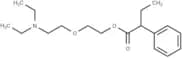
CAS:<p>Butamirate is a cough suppressant, it works by acting centrally through the receptors in the brainstem.</p>Fórmula:C18H29NO3Pureza:98%Forma y color:SolidPeso molecular:307.43Esterastin
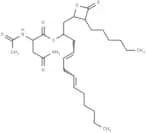
CAS:<p>Esterastin is an Inhibitor of esterases.</p>Fórmula:C28H46N2O6Forma y color:SolidPeso molecular:506.67Triethylene glycol flufenamate
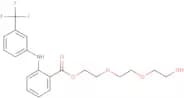
CAS:<p>Etofenamate impurity</p>Fórmula:C20H22F3NO5Pureza:Min. 95%Forma y color:Clear LiquidPeso molecular:413.39 g/molRef: 4Z-E-075031
Producto descatalogadoRef: 4Z-B-150034
Producto descatalogadoRef: 4Z-M-207001
Producto descatalogadoRef: 4Z-M-154006
Producto descatalogadoRef: 4Z-E-134077
Producto descatalogadoRef: 4Z-I-1926
Producto descatalogado


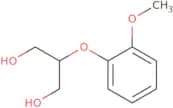
![4-[(2,3,4-Trimethoxyphenyl)methyl]-1-piperazinecarboxylic acid ethyl ester](/_next/image/?url=https%3A%2Fstatic.cymitquimica.com%2Fproducts%2F3D%2Fthumb-webp%2FIT145543.webp&w=3840&q=75)
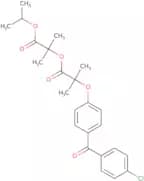
![(4-Chlorophenyl)[4-(1-methylethoxy)phenyl]methanone](/_next/image/?url=https%3A%2Fstatic.cymitquimica.com%2Fproducts%2F3D%2Fthumb-webp%2FIC20310.webp&w=3840&q=75)
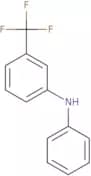
![3-[4-(4-Chlorobenzoyl)phenoxy]-2-butanone](/_next/image/?url=https%3A%2Fstatic.cymitquimica.com%2Fproducts%2F3D%2Fthumb-webp%2FIC20198.webp&w=3840&q=75)