Fuente botánica
La categoría de Fuente Botánica abarca una amplia gama de compuestos y extractos derivados de plantas utilizados en la investigación y desarrollo de productos. Estas fuentes botánicas incluyen diversas hierbas, árboles y arbustos que proporcionan compuestos bioactivos para su uso en productos farmacéuticos, cosméticos y suplementos nutricionales. En CymitQuimica, ofrecemos una selección completa de fuentes botánicas para apoyar la investigación en química de productos naturales, farmacología y medicina tradicional.
Se han encontrado 1461 productos de "Fuente botánica"
Ordenar por
Pureza (%)
0
100
|
0
|
50
|
90
|
95
|
100
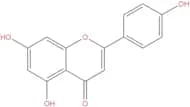
Apigenin
CAS:Apigenin, a naturally occurring plant flavone (4', 5, 7,-trihydroxyflavone) abundantly present in common fruits and vegetables including parsley, onions, oranges, tea, chamomile, wheat sprouts and some seasonings, has been shown to possess remarkable anti-inflammatory, antioxidant and anti-carcinogenic properties.Fórmula:C15H10O5Pureza:95%~99%Forma y color:Yellow powderPeso molecular:270.2414-Benzoylaconine
CAS:Benzoylaconine and aconitine can induce reproductive toxicity in BeWo Cell, the amino acid metabolism was the main metabolic pathway and responsible for the placental and fetal toxicity of them.Fórmula:C32H45NO10Pureza:95%~99%Forma y color:PowderPeso molecular:603.709Aloe emodin
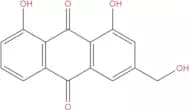
CAS:Aloeemodin is able to interact with DNA under certain in vitro conditions, however, in vivo it is negative did not indicate a genotoxic potential, thus, it may be assumed that a genotoxic risk for man might be unlikely.Fórmula:C15H10O5Pureza:95%~99%Forma y color:PowderPeso molecular:270.24Puerarin
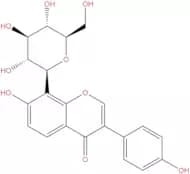
CAS:Puerarin is the most abundant of flavonoid derivatives in the root of Pueraria lobata (Willd) Ohwi, has antioxidant activity and can impair CYP-catalysed drug metabolism.Fórmula:C21H20O9Pureza:95%~99%Forma y color:PowderPeso molecular:416.382Ziyuglycoside I
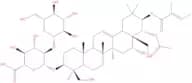
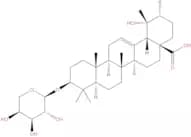
CAS:Ziyuglycoside I, isolated from S. officinalis root extract, has anti-wrinkle activity, could be used as an active ingredient for cosmetics.Fórmula:C41H66O13Pureza:95%~99%Forma y color:White powderPeso molecular:766.966Cafestol
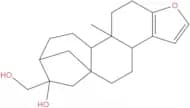
CAS:Cafestol has anticarcinogenic, peripheral antinociceptive and anti-inflammatory activities, it inhibits Cyclic-Strain-induced interleukin-8, intercellular adhesion molecule-1, and monocyte chemoattractant protein-1 production in vascular endothelial cells. Cafestol is a novel extracellular signal-regulated kinase inhibitor with AP-1-targeted inhibition of prostaglandin E2 production in lipopolysaccharide-activated macrophages. Cafestol acts as an agonist ligand for both FXR and PXR, and this may contribute to its impact on cholesterol homeostasis. Cafestol has protective effects against the CCl(4)-induced hepatotoxicity, which possibly involve mechanisms related to its ability to block the CYP2E1-mediated CCl(4) bioactivation and free radical scavenging effects. Cafestol has antidiabetic activity, it increases glucose-stimulated insulin secretion in vitro and increases glucose uptake in human skeletal muscle cells. Cafestol also has a weak inhibitory effect on osteoclastogenesis and promotes osteoblast differentiation.Fórmula:C20H28O3Pureza:95%~99%Peso molecular:316.441Ziyuglycoside II
CAS:Ziyuglycoside II has a wide range of clinical applications including hemostasis, antibiosis, anti-inflammation and anti-oxidation. Ziyuglycoside II has inhibitory effect on the growth of MDA-MB-435 cells, it induces cell cycle arrest and apoptosis through activation of ROS/JNK pathway in human breast cancer cells.Ziyuglycoside II methyl ester possess improved anti-diabetic properties, and has hepato-renal protective activities in type 2 diabetes.Fórmula:C35H56O8Pureza:95%~99%Peso molecular:604.825Amentoflavone
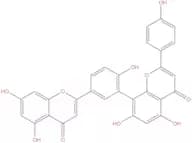
CAS:Amentoflavone, a biflavonoid with antiinflammatory activity, inhibits NF-κB/DNA binding activity potently along with inhibition of degradation of IκBα and NF-κB translocation into nucleus in TNFα-activated A549 cells.Fórmula:C30H18O10Pureza:95%~99%Forma y color:Yellow powderPeso molecular:538.464