Fuente botánica
La categoría de Fuente Botánica abarca una amplia gama de compuestos y extractos derivados de plantas utilizados en la investigación y desarrollo de productos. Estas fuentes botánicas incluyen diversas hierbas, árboles y arbustos que proporcionan compuestos bioactivos para su uso en productos farmacéuticos, cosméticos y suplementos nutricionales. En CymitQuimica, ofrecemos una selección completa de fuentes botánicas para apoyar la investigación en química de productos naturales, farmacología y medicina tradicional.
Se han encontrado 1459 productos de "Fuente botánica"
Ordenar por
Pureza (%)
0
100
|
0
|
50
|
90
|
95
|
100
Peonidin-3-O-rutinoside chloride
CAS:<p>Peonidin-3-O-rutinoside chloride is an anthocyanin compound, which is a type of flavonoid pigment. This compound is naturally sourced from various plant species, prominently found in berries and flowers, contributing to their rich red and purple hues. The mode of action of Peonidin-3-O-rutinoside chloride involves its potent antioxidant capabilities, scavenging free radicals and reducing oxidative stress in biological systems. Additionally, it can modulate cell signaling pathways, influencing gene expression and enzyme activities related to inflammation and cancer progression.</p>Fórmula:C28H33O15ClPureza:Min. 95%Forma y color:PowderPeso molecular:645.01 g/molIsoacteoside
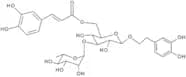
CAS:<p>Isoacteoside is a phenylethanoid isolated from Monochasma savatieri Franch. ex Maxim., which is an anti-inflammatory herb widely used in traditional Chinese medicine. Isoacteoside is also reported as a potential therapeutic for Alzheimers disease. The memory-improving mechanism of isoacteoside involves reducing amyloid β peptide deposition and amyloid β cytotoxicity by inhibiting amyloid β oligomerization through the catechol moiety. This promotes amyloid β degradation and reversing cortical cholinergic dysfunction, which includes the inhibition of AChE activity (Young-Ji, 2017).</p>Fórmula:C29H36O15Pureza:Min. 93 Area-%Forma y color:PowderPeso molecular:624.59 g/molIsoliquiritin apioside
CAS:<p>Isoliquiritin apioside is a flavonoid glycoside, which is a compound derived from licorice root (Glycyrrhiza species). It exhibits a range of biological activities by influencing various cellular and molecular pathways, often involving antioxidant and anti-inflammatory mechanisms. These effects are primarily mediated through its interaction with cellular signaling cascades, potentially modulating gene expression and enzyme activity.</p>Fórmula:C26H30O13Pureza:Min. 95%Forma y color:PowderPeso molecular:550.51 g/molRebaudioside E
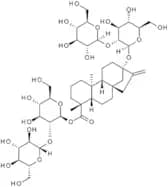
CAS:<p>Rebaudioside E is a high-intensity sweetener, which is a glycoside derived from the Stevia rebaudiana plant. This particular compound is among the numerous steviol glycosides present in stevia leaves, extracted through water or alcohol-based extraction and subsequent purification processes. Its mode of action involves binding to the sweet taste receptors on the tongue, similar to other intense sweeteners, yet it provides sweetness without caloric input.</p>Fórmula:C44H70O23Pureza:Min. 95%Forma y color:PowderPeso molecular:967.01 g/molNeamine hydrochloride
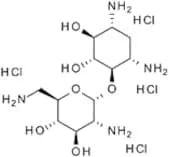
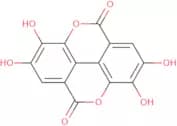
CAS:<p>Neamine hydrochloride is a semisynthetic aminoglycoside antibiotic, which is derived from neomycin. It exerts its antibacterial effects by interacting with bacterial ribosomal RNA, leading to the inhibition of protein synthesis. This interference results in the disruption of vital cellular processes within susceptible bacteria, ultimately causing cell death.</p>Fórmula:C12H26N4O6•(HCl)4Pureza:Min. 80%Forma y color:PowderPeso molecular:468.2 g/molEllagic acid
CAS:<p>Derived from berries and grapes; antioxidant; antiproliferative</p>Fórmula:C14H6O8Pureza:(Hplc) Min. 95.0%Forma y color:PowderPeso molecular:302.19 g/mol(R)-Ginsenoside Rg2
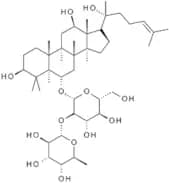
<p>(R)-Ginsenoside Rg2 is a naturally occurring bioactive compound derived from the roots of the Panax ginseng plant. It is classified as a saponin, known for its significant pharmacological potential. The source of (R)-Ginsenoside Rg2 lies in the ginsenosides, specific triterpenoid saponins found in ginseng, which have been extensively studied for their health-promoting properties.</p>Pureza:Min. 95%Pectolinarin
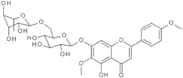
CAS:<p>Pectolinarin is a flavonoid compound that can be classified as a natural bioactive molecule, which is derived primarily from specific plant sources, particularly within the Asteraceae family. This compound exhibits a range of biochemical activities through its mode of action as an antioxidant and anti-inflammatory agent. It effectively scavenges free radicals and inhibits inflammatory pathways, thereby reducing oxidative stress and inflammatory responses at the cellular level.</p>Fórmula:C29H34O15Pureza:Min. 95%Forma y color:PowderPeso molecular:622.57 g/molGinsenoside Rh1
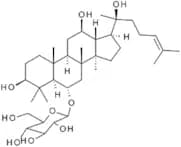
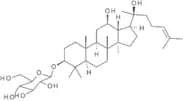
CAS:<p>Ginsenoside Rh1 is a bioactive compound, which is a type of ginsenoside. It is derived from the root of Panax ginseng, a plant that has been used in traditional medicine for centuries. Ginsenoside Rh1 modulates various cellular pathways, including those involved in anti-inflammatory and antioxidative responses. This is achieved through its interaction with cellular receptors and enzymes, influencing signaling pathways that regulate cell function and stress responses.</p>Fórmula:C36H62O9Pureza:Min. 96 Area-%Forma y color:White PowderPeso molecular:638.89 g/molGypenoside XVII
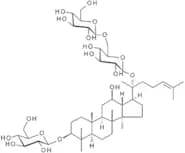
CAS:<p>Gypenoside XVII is a bioactive compound, which is a saponin derived from the plant Gynostemma pentaphyllum, commonly known as Jiaogulan. This compound is part of a broader category of plant-derived triterpenoid saponins that exhibit diverse biological activities. Gypenoside XVII functions primarily through its modulation of signaling pathways, including antioxidant, anti-inflammatory, and metabolic regulatory mechanisms. It affects key molecular targets and pathways, such as AMPK activation and nitric oxide production, offering potential therapeutic benefits.</p>Fórmula:C48H82O18Pureza:Min. 95%Forma y color:PowderPeso molecular:947.15 g/molQuercetin 3-O-(4''-O-acetyl)-a -L-rhamnopyranoside
<p>Quercetin 3-O-(4''-O-acetyl)-α-L-rhamnopyranoside is a specialized flavonoid glycoside, which is a derivative of the flavonoid quercetin. It is primarily sourced from various plant species known for their high flavonoid content. The compound is characterized by its unique glycosylation pattern, where an acetyl group is esterified to the 4'' position of the rhamnose moiety.</p>Pureza:Min. 95%(20R)-Ginsenoside Rg3
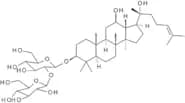
CAS:<p>(20R)-Ginsenoside Rg3 is a triterpenoid saponin, which is a bioactive compound isolated from the root of Panax ginseng. This product is an integral part of traditional medicine and is now being extensively studied in modern pharmacological research. As a ginsenoside, Rg3 exerts its effects primarily by modulating cellular pathways, inhibiting angiogenesis, and inducing apoptosis in cancer cells.</p>Fórmula:C42H72O13Pureza:Min. 95%Forma y color:PowderPeso molecular:785.01 g/molEpimedin A
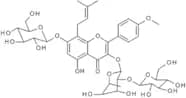
CAS:<p>Epimedin A is a naturally occurring flavonoid glycoside, which is a type of compound found in certain plants, specifically within the Berberidaceae family. The primary source of this compound is the plant genus Epimedium, commonly known as Horny Goat Weed. Epimedin A acts by influencing various biological pathways, primarily modulating nitric oxide levels and influencing the signaling pathways associated with cellular proliferation and differentiation.</p>Fórmula:C39H50O20Pureza:Min. 95%Forma y color:Yellow SolidPeso molecular:838.8 g/molMomordicoside B
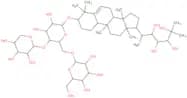
CAS:<p>Momordicoside B is a bioactive triterpenoid saponin, which is a compound sourced from the fruit of Momordica charantia, commonly known as bitter melon. This fruit is widely studied for its role in traditional medicine and its diverse pharmacological activities. The mode of action of Momordicoside B involves the modulation of glucose metabolism pathways. It is known to influence the activity of enzymes involved in glucose utilization and insulin sensitization, providing biochemical pathways that mimic insulin activity.</p>Fórmula:C47H80O19Pureza:Min. 95%Peso molecular:949.13 g/molPelargonidin-3-O-sophoroside
<p>Pelargonidin-3-O-sophoroside is a specialized flavonoid glycoside, which is derived from certain plant sources. It is primarily isolated from various fruits and flowers where it contributes to pigmentation, specifically imparting hues such as red and pink. The compound functions through its role as a pigment by absorbing specific wavelengths of light, which can protect the plant tissues from excess UV radiation and attract pollinators.</p>Pureza:Min. 95%Empagliflozin 6-O-b-D-glucuronide
<p>Empagliflozin 6-O-β-D-glucuronide is a metabolite of the drug empagliflozin, which is a type of product known as a sodium-glucose co-transporter 2 (SGLT2) inhibitor. This compound is derived from the in vivo metabolism of empagliflozin, originally sourced from synthetic pathways designed to enhance the management of type 2 diabetes mellitus. Its mode of action involves the facilitation of glucose excretion through the kidneys by inhibiting renal reabsorption of glucose, thus lowering blood glucose levels.</p>Fórmula:C29H35ClO13Pureza:Min. 95%Peso molecular:627.03 g/molRebaudioside G
CAS:<p>Rebaudioside G is a steviol glycoside, which is a natural sweetening compound derived from the leaves of the plant Stevia rebaudiana. This compound is one of several glycosides responsible for the sweet taste of stevia, which is native to South America and has been used for centuries for its sweetness.</p>Fórmula:C38H60O18Pureza:Min. 95 Area-%Forma y color:White PowderPeso molecular:804.87 g/mol20(s)-Ginsenoside Rh2
CAS:<p>20(s)-Ginsenoside Rh2 is a bioactive compound classified as a saponin, which is derived from the root of the Panax ginseng plant. This compound exhibits a wide range of pharmacological activities attributed to its ability to modulate cellular pathways. It exerts its mode of action primarily through the regulation of apoptosis, modulation of immune responses, and inhibition of tumor growth. Mechanistically, it interacts with cellular receptors and signaling molecules, influencing pathways such as NF-κB and MAPK, which are crucial in cell proliferation and apoptosis.</p>Fórmula:C36H62O8Pureza:Min. 98 Area-%Forma y color:PowderPeso molecular:622.89 g/mol20(Z)-Ginsenoside F4
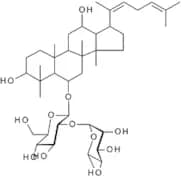
CAS:<p>20(Z)-Ginsenoside F4 is a bioactive compound, which is derived from the traditional medicinal plant, Panax ginseng. This compound is isolated through advanced extraction techniques aimed at preserving its structural integrity. The mode of action of 20(Z)-Ginsenoside F4 involves interacting with cellular pathways, modulating specific signaling cascades, and exhibiting potential anti-inflammatory and anticancer properties.</p>Fórmula:C42H70O12Pureza:Min. 95%Peso molecular:767 g/mola-Glucosylrutin
CAS:<p>a-Glucosylrutin is a flavonoid glycoside derivative, which is synthesized from rutin, a natural flavonoid extracted from plants such as buckwheat and citrus fruits, using an enzymatic glucosylation process. The incorporation of glucose enhances its stability and solubility compared to its parent compound, rutin.</p>Fórmula:C33H40O21Pureza:70%MinForma y color:PowderPeso molecular:772.66 g/mol