Metales
Los metales son elementos conocidos por sus propiedades características, como alta conductividad eléctrica y térmica, maleabilidad, ductilidad y brillo, lo que los hace esenciales en una amplia gama de aplicaciones industriales y de investigación. Estos elementos, incluyendo hierro, cobre, aluminio y oro, juegan roles críticos en sectores como la construcción, la electrónica, el transporte y la manufactura. En CymitQuimica, ofrecemos una diversa selección de metales de alta pureza diseñados para cumplir con los estrictos requisitos de las aplicaciones tanto de investigación como industriales. Nuestro catálogo incluye metales puros, aleaciones metálicas y compuestos metálicos, todos rigurosamente probados en cuanto a calidad y rendimiento. Al proporcionar metales de alta calidad, apoyamos a los investigadores y profesionales de la industria en la consecución de resultados precisos y eficientes en sus proyectos, facilitando avances en tecnología, ciencia de materiales e ingeniería.
Subcategorías de "Metales"
Se han encontrado 4493 productos de "Metales"
Ordenar por
Pureza (%)
0
100
|
0
|
50
|
90
|
95
|
100
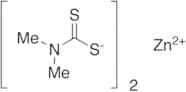
Zinc Dimethyldithiocarbamate
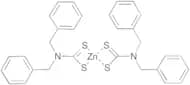
CAS:Producto controlado<p>Applications Zinc Dimethyldithiocarbamate is a member of a class of dithiocarbamates, and has been used in agriculture as a fungicide (1) and in the rubber industry as a vulcanization accelerator. It is a neurotoxin which is associated with parkinson’s disease (2). Drinking water contaminant candidate list 3 (CCL 3) compound as per United States Environmental Protection Agency (EPA), environmental, and food contaminants.<br> Not a dangerous good if item is equal to or less than 1g/ml and there is less than 100g/ml in the package<br>References 1. Ema, M. et al.: Bull Environ Contam Toxicol. 1994 Dec;53(6):930-6.2. Lulla, A. et al.: Environ Health Perspect. 2016 Nov;124(11):1766-1775.<br></p>Fórmula:C6H12N2S4ZnForma y color:NeatPeso molecular:305.84Dibenzyldithiocarbamic Acid Zinc Salt
CAS:Producto controlado<p>Applications Dibenzyldithiocarbamic acid zinc salt is a useful analytical tool, used in the detection of copper in plant and biological tissues. It has also been used in the preparation of dithiocarbamate ligand for the stabilization of gold nanoparticles.<br>References Brown, N. A.; et al.: Veterinary Science, 3, 345 (1962); Andrus, S.: Analyst, 80, 514 (1955); Vickers, M. S.; J. Mater. Chem., 16, 209 (2006).<br></p>Fórmula:C30H28N2S4ZnForma y color:White To Off-WhitePeso molecular:610.226Heparan Sulfate (Technical Grade)
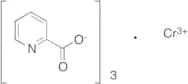
CAS:Producto controlado<p>Applications Heparan Sulfate is a linear polysaccharide in which the backbone is composed of repeating sulfated disaccharide units. Heparan Sulfate is found in the extracellular matrix and on the surfaces of animal cells. It has numerous important biological activities associated with its interaction with diverse proteins. Heparan is used as an anticoagulant drug.<br>References Capila, I., Linhardt, R.: Angew. Chem. Int. Ed., 41, 390 (2002); Rabenstein, D.: Nat. Prod. Rep., 19, 312 (2002);<br></p>Fórmula:C6H10N2O2SForma y color:NeatPeso molecular:NAChromium Picolinate
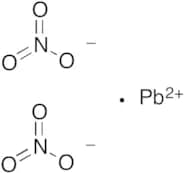
CAS:Producto controlado<p>Applications Chromium Picolinate is used as a supplement in the treatment in diabetes, with a claimed ability to improve glucose metabolism.<br>References Balk, E. et al.: Diabetes Care., 30, 2154 (2007); Sahin, K. et al.: Brit. J. Nutr. 110, 197 (2013);<br></p>Fórmula:C18H12CrN3O6Forma y color:NeatPeso molecular:418.30Lead(II) Nitrate
CAS:<p>Applications Lead(II) Nitrate, is toxic, an oxidising agent, and is categorized as probably carcinogenic to humans . It is shown to inhibit bacterial oxidation of ferrous iron in sulfate-rich systems. Other Lead(II) Nitrate applications include use as a heat stabilizer in nylon and polyesters, as a coating for photothermographic paper, and in rodenticides.<br> Not a dangerous good if item is equal to or less than 1g/ml and there is less than 100g/ml in the package<br>References Hongmei, w., et al.: J Hazard. Mat., 244, 718 (2013); Greenwoos, N. N., et al.: 388 (1997); Pauley, J. L., et al.: J. Amer. Chem. Soci., 76 (16), 4220 (1954);<br></p>Fórmula:NO3·PbForma y color:NeatPeso molecular:331.21Copper citrate
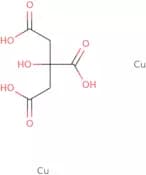
CAS:Copper citrate is a copper salt used as an antimicrobial agent in the food industry. It is often used in combination with citric acid and sodium citrate to eliminate the need for synthetic preservatives, which can be harmful to humans. Copper citrate has been shown to inhibit the growth of bacteria, fungi, and algae by reacting with their cell walls and disrupting their metabolism. The mechanism of action of copper citrate is not well understood; however, it may involve reaction with the enzyme malonic acid reductase, which causes malonic acid to accumulate inside the cell and eventually cause cell death. Copper citrate has also been shown to have genotoxic effects on human cells in culture.Fórmula:C6H8O7•xCuPureza:Min. 95%Peso molecular:192.12 g/molIron(II) trifluoromethanesulfonate
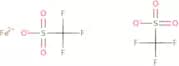
CAS:Iron(II) trifluoromethanesulfonate is a catalyst that can be used as an efficient method for organic synthesis. It has been shown to be effective in the reaction mechanism of hydrogenation, epoxidation, and carbonylation reactions. The catalyst is also useful in pharmaceutical preparations such as the synthesis of β-lactam antibiotics and synthetic process reactions such as conversion of nitrobenzene to nitroethane, chlorobenzene to dichlorobenzenes, and ethylbenzene to styrene. Iron(II) trifluoromethanesulfonate reacts with sulfoxides or sulfones to form a mixture of oximes, thioximes, or oxazetidines. The x-ray absorption spectra show that iron(II) trifluoromethanesulfonate binds nitrogen atoms through hydrogen bonding interactions. The nmr spectra also confirm this structure. Iron(II)Fórmula:C2F6FeO6S2Pureza:Min. 95%Forma y color:PowderPeso molecular:353.99 g/molCopper tripeptide-1.xHOAc
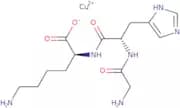
CAS:Copper peptide (GHK-Cu), also known as liver cell growth factor, is the naturally occurring tripeptide glycyl-L-histidyl-L-lysine in a complex with copper (II), for which it has a strong affinity. GHK-Cu is found in human plasma, where it is thought to promote a range of beneficial effects, including wound healing, antioxidant and anti-inflammatory. In skin fibroblasts GHK-Cu promotes collagen production, glycosaminoglycan synthesis and blood vessels growth. GHK-Cu has found a use in the cosmetics industry, where its collagen production stimulating effect is used in anti-aging/reparative skin creams. GHK-Cu also exhibits therapeutic effect on hair loss.Fórmula:C14H22CuN6O4·xC2H4O2Pureza:Min. 95%Forma y color:PowderPeso molecular:401.91 g/molNickel on silica/alumina - extent of labeling: ~65 wt. % loading, powder
Producto controladoPlease enquire for more information about Nickel on silica/alumina - extent of labeling: ~65 wt. % loading, powder including the price, delivery time and more detailed product information at the technical inquiry form on this pagePureza:Min. 95%Copper peptide(GHK-Cu) TFA salt
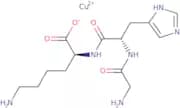
CAS:Copper peptide (GHK-Cu), also known as liver cell growth factor, is the naturally occurring tripeptide glycyl-L-histidyl-L-lysine in a complex with copper (II), for which it has a strong affinity. GHK-Cu is found in human plasma, where it is thought to promote a range of beneficial effects, including wound healing, antioxidant and anti-inflammatory. In skin fibroblasts GHK-Cu promotes collagen production, glycosaminoglycan synthesis and blood vessels growth. GHK-Cu has found a use in the cosmetics industry, where its collagen production stimulating effect is used in anti-aging/reparative skin creams. GHK-Cu also exhibits therapeutic effect on hair loss.Fórmula:C14H22N6O4Cu•C2HF3O2Pureza:Min. 95 Area-%Forma y color:PowderPeso molecular:515.93 g/molCopper cyanide
CAS:Producto controlado<p>Copper cyanide is a compound that contains copper and cyanide ions. It can be used as a model system to study the reaction mechanism of the enzyme amino transferase. When copper cyanide is heated with hydrochloric acid, nitrogen gas, and water vapor, it produces ammonia, hydrogen cyanide and copper chloride. Copper cyanide has also been shown to inhibit the activity of other enzymes such as carbonic anhydrase, phosphofructokinase, and α-chymotrypsin. The reaction mechanism for this inhibition is still unclear.</p>Fórmula:CuCNPureza:Min. 95%Forma y color:PowderPeso molecular:89.56 g/molCopper pyrithione
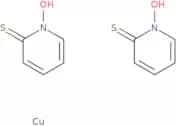
CAS:<p>Copper pyrithione is a biocide that has been shown to be effective against a wide range of microorganisms, including Gram-positive and Gram-negative bacteria. Copper pyrithione also has the ability to inhibit protein synthesis. Copper pyrithione is used in analytical methods for determining copper content in water samples and other materials. Copper pyrithione is not acutely toxic under laboratory conditions, but chronic toxicity studies are required to determine its long-term effects on health.</p>Fórmula:C5H4NOSCuPureza:Min. 95%Forma y color:Green PowderPeso molecular:189.7 g/molCopper(II) 5,9,14,18,23,27,32,36-octabutoxy-2,3-naphthalocyanine
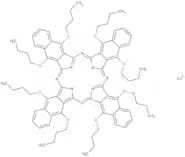
CAS:Copper(II) 5,9,14,18,23,27,32,36-octabutoxy-2,3-naphthalocyanine is a copper compound with a molecular formula of Cu(OCOCN)8. It has been shown to be a n-type semiconductor and can be used for applications in photovoltaic cells. Copper(II) 5,9,14,18,23,27,32,36-octabutoxy-2,3-naphthalocyanine has been shown to have high quantum efficiency and absorption in the near ultraviolet region. The density of this compound is 2.6 g/cm3 at room temperature.Fórmula:C80H88CuN8O8Pureza:Min. 95%Forma y color:PowderPeso molecular:1,353.15 g/molKarstedt catalyst, Platinum content:20%
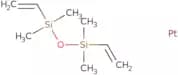
CAS:The Karstedtâs catalyst is a platinum (0) complex containing vinyl-soloxane ligands which is widely used in hydrosilylation reactions. It is distributed as a highly dilute solution owing to its tendency to form platinum black without excess vinyl-soloxane ligands. The reaction is atom efficient with a broad scope and widespread application, providing access to a plethora of synthetic pathways. We offer the Karstedt catalyst with 10% platinum content and 2% platinum content.Fórmula:C8H18OPtSi2Pureza:Min. 95%Forma y color:Clear LiquidPeso molecular:381.48 g/molRubidium sulfate
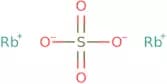
CAS:Rubidium sulfate is a chemical compound that is composed of rubidium and sulfate ions. Rubidium sulfate is a white crystalline solid that can be obtained by reacting sodium carbonate with rubidium hydroxide in an aqueous solution. It has the formula RbSO4. This salt has a basic structure, which means it can form hydrogen bonds with other molecules. Rubidium sulfate is soluble in water and organic solvents, but insoluble in acids. Rubidium sulfate reacts with oxidizing agents such as potassium permanganate to produce oxygen gas and rubidium oxide. Rubidium sulfate also has optical properties, which means it will change color depending on the wavelength of light shone upon it. The most common optical property of rubidium sulfate is its absorption of infrared light.Fórmula:O4Rb2SPureza:Min. 95%Forma y color:PowderPeso molecular:267 g/molPlatinum(II) nitrate
CAS:<p>Platinum(II) nitrate is a chemical compound that is the reaction product of platinum and nitric acid. It has a high resistance to oxidation, which makes it an excellent catalyst for water vapor and hydrochloric acid. Platinum(II) nitrate also has anti-cancer properties, which are due to its ability to inhibit human serum albumin production by preventing the formation of hydrogen bonds between the protein molecule and other substances. This compound is also used in wastewater treatment as a catalyst. It functions as a catalyst by reacting with water vapor, forming hydroxide ions, which then react with acids in wastewater to form hydrogen gas and salt. The resulting product is clean water after the platinum(II) ion has been removed from reaction. This compound can be used as a fluorescent resonance energy transfer (FRET) probe for studying protein-protein interactions in cells.</p>Fórmula:(HNO3)2•PtPureza:Min. 95%Forma y color:Orange PowderPeso molecular:319.08 g/molZinc 2,9,16,23-tetra-tert-butyl-29H,31H-phthalocyanine
CAS:<p>Zinc 2,9,16,23-tetra-tert-butyl-29H,31H-phthalocyanine is a molecule that has an ionization potential of 1.8 eV and a photovoltaic absorption spectrum with a peak at 528 nm. It has been used as a photoelectron emitter in photoelectron spectroscopy and as the emissive layer in solar cells. Zinc 2,9,16,23-tetra-tert-butyl-29H,31H-phthalocyanine is stable to water and air but can react with methyl esters or butyric acid. This molecule has been shown to be effective for use in solar cells due to its high optical absorption coefficient (0.1 cm2/g) and low band gap energy (1.5 eV).</p>Fórmula:C48H48N8ZnPureza:Min. 95%Forma y color:PowderPeso molecular:802.33 g/molIron(II) acetylacetonate
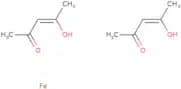
CAS:<p>Iron acetylacetonate (Fe(acac)) is a compound that contains iron and acetylacetone. It is used as a catalyst in organic reactions, such as the synthesis of β-unsaturated ketones. The growth rate of Fe(acac) particles can be studied by following the reaction with chalcone in ethanol concentrations. The experimental method for this study is based on the observation of particle size distribution using microscopy. This compound has been found to be stable in non-polar solvents, but not in polar solvents such as water.</p>Fórmula:C10H14FeO4Pureza:Min. 95%Forma y color:PowderPeso molecular:254.06 g/molCopper(l) bromide
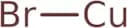
CAS:<p>Copper bromide is a chemical compound that contains copper and bromine. It is a salt that has been used to treat bowel disease, and has also been shown to have anti-inflammatory properties. Copper bromide can be synthesized by the reaction of copper chloride with sodium bromide in water. The electrochemical impedance spectroscopy showed that the redox potential of the copper atoms in this compound is 0.07 volts, which makes it an ideal candidate for use as a biological electrode. Copper bromide is soluble in water and reacts with nitrogen atoms, giving it detection sensitivity to nitric oxide. The thermal expansion coefficient of this compound is 5.5 × 10⁻⁶/°C, which means it will contract when heated or expand when cooled.</p>Fórmula:BrCuPureza:Min. 95%Forma y color:Blue PowderPeso molecular:143.45 g/molCopper oxychloride
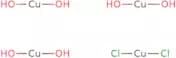
CAS:<p>Copper oxychloride is a crystalline compound that is used as an agrochemical. It inhibits the growth of plants by inhibiting the synthesis of plant hormones, such as auxins and gibberellins. Copper oxychloride also has an inhibitory effect on enzymes in the shikimate pathway, which are necessary for the biosynthesis of aromatic amino acids. This compound may be used as a control agent to prevent unwanted plant growth or to control weeds. The effective dose varies depending on whether it is applied to soil or foliage and ranges from 0.5-2 kg/ha.</p>Fórmula:Cu(OH)2·CuCl2Pureza:Min. 95%Forma y color:PowderPeso molecular:427.13 g/mol