


Monosacáridos
Subcategorías de "Monosacáridos"
- Allosas(11 productos)
- Arabinosas(21 productos)
- Eritrosas(11 productos)
- Fructosas(9 productos)
- Fucosas(36 productos)
- Galactosamina(41 productos)
- Galactosa(261 productos)
- Glucosas(365 productos)
- Ácidos glucurónicos(52 productos)
- Glico-sustratos para enzimas(78 productos)
- Gulosas(6 productos)
- Idosas(4 productos)
- Inositoles(15 productos)
- Lyxosas(4 productos)
- Manosas(65 productos)
- O-glicanos(48 productos)
- Psicosas(3 productos)
- Ramnosas(10 productos)
- Ribosas(61 productos)
- Ácidos siálicos(100 productos)
- Sorbosas(4 productos)
- Azúcares(173 productos)
- Tagatosis(4 productos)
- Taloses(8 productos)
- Xilosas(20 productos)
Se han encontrado 6088 productos de "Monosacáridos"
2, 3:5,6-Bis-O-(1-ethylpropylidene)-D-glycero-L-talo-heptonic acid γ-lactone
2,3:5,6-Bis-O-(1-ethylpropylidene)-D-glycero-L-taloheptonic acid gamma-lactone (TAL) is a glycosylated saccharide that is synthesized by the click reaction of a terminal alkyne group with an azide group. TAL has been shown to have anti-inflammatory effects on mice. This compound also exhibits potent inhibition of bacterial growth and can be used as an alternative to penicillin.Pureza:Min. 95%5-Azido- 5- deoxy- 1, 2- O-isopropylidene -β- D- talofuranose,
5-Azido- 5-deoxy- 1,2-O-isopropylidene -beta- D-talofuranose is a methylated sugar that can be synthesized by the click modification of an azido sugar. This compound has been shown to be an excellent substrate for Oligosaccharide synthesis and Polysaccharide synthesis. The compound is soluble in water and ethanol, but not in ether. It is a white powder that is insoluble in chloroform, acetone, and benzene. This compound has a CAS no., which is 115541-53-1. It has been used as a reagent for Fluorination and complex carbohydrate modification.Pureza:Min. 95%2- C- (Hydroxymethyl) - 2, 3- O-isopropylidene)-D- ribose
2-C-(Hydroxymethyl)-2,3-O-isopropylidene)-D-ribose is a sugar that is an important component of glycosylation. It can be used as a monosaccharide or as part of a larger sugar molecule such as an oligosaccharide or polysaccharide. 2-C-(Hydroxymethyl)-2,3-O-isopropylidene)-D-ribose can be modified by either methylation, fluorination, click modification, saccharide modification, or custom synthesis. This product has high purity and can be custom synthesized to meet your specifications.Pureza:Min. 95%Methyl 2,3,4-tri-O-acetyl-6-O-tert-butyldimethylsilyl-a-D-glucopyranoside
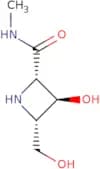
CAS:Methyl 2,3,4-tri-O-acetyl-6-O-tert-butyldimethylsilyl-a-D-glucopyranoside is a glycosylation reagent and a synthetic monosaccharide that is custom synthesized and available in high purity. It is a saccharide with a molecular weight of 244.24 g/mol and chemical formula C12H21NO8Si. This product is often used as an intermediate for modified oligosaccharides and polysaccharides. Methyl 2,3,4-tri-O-acetyl-6-O-tert-butyldimethylsilyl -a D glucopyranoside can be used for the synthesis of complex carbohydrate, methylation, click modification, fluorination saccharide, modification or other reactions. This product has CAS No. 637341162 and can be found inFórmula:C19H34O9SiPureza:Min. 95%Peso molecular:434.56 g/mol(2S, 3S, 4S) -3- Hydroxy- 4- (hydroxymethyl) - N- methyl- 2- azetidinecarboxamide
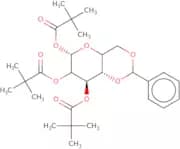
CAS:(2S, 3S, 4S) -3- Hydroxy- 4- (hydroxymethyl) - N- methyl- 2- azetidinecarboxamide is a custom synthesis that has been fluorinated and methylated. It is soluble in water and is used as a saccharide. The compound has been modified by the click modification of the azetidinecarboxamide with an oligosaccharide. It is also used as a sugar for glycosylation or polysaccharide formation. Click modification can be done on oligosaccharides to form complex carbohydrates.Fórmula:C6H12N2O3Pureza:Min. 95%Peso molecular:160.17 g/mol4,6-O-Benzylidene-1,2,3-tri-O-pivaloyl-b-D-galactopyranose
4,6-O-Benzylidene-1,2,3-tri-O-pivaloyl-b-D-galactopyranose is a custom synthesized glycosylation product. It is an oligosaccharide sugar with a molecular weight of 586. The structure has been modified by fluorination and methylation. 4,6-O-Benzylidene-1,2,3-tri-O-pivaloyl -b -D -galactopyranose can be used in the synthesis of saccharides and polysaccharides as well as in click chemistry modification.Fórmula:C28H40O9Pureza:Min. 95%Peso molecular:520.63 g/molN-(Phenyl-2-methyl-1-propenyl)imino-2,3,4,6-tetra-O-pivaloyl-D-glucopyranoside
N-(Phenyl-2-methyl-1-propenyl)imino-2,3,4,6-tetra-O-pivaloyl-D-glucopyranoside is an Oligosaccharide that contains a sugar. It has been custom synthesized for the purpose of fluorination and methylation reactions. The purity of this product is high and it has been assigned the CAS number: 3642.Fórmula:C36H53NO9Pureza:Min. 95%Peso molecular:643.81 g/mol(1R) -1- [(2S, 3R) - 3- Hydroxy- 1- ((4-methoxyphenyl)methyl) - 2- azetidinyl] -1, 2- ethanediol
(1R) -1- [(2S, 3R) - 3- Hydroxy- 1- ((4-methoxyphenyl)methyl) - 2- azetidinyl] -1, 2- ethanediol is a sugar compound that can be methylated and modified to make other compounds. The compound's CAS number is 440636-00-0. This product is a carbohydrate that can be used as a modification for saccharides and polysaccharides. It can also be used as a glycosylation agent or an Oligosaccharide. This product is available in high purity and custom synthesis with the desired modifications.Pureza:Min. 95%(2E, 4S) -4-((4R)-2-O-tert-Butyldimethylsilyl-L-erythrono-1.4-lacton-4-yl)-2- butenoic acid methyl ester (or tert.butyl ester)
(2E, 4S) -4-((4R)-2-O-tert-Butyldimethylsilyl-L-erythrono-1.4-lacton-4-yl)-2- butenoic acid methyl ester (or tert.butyl ester) is a Carbohydrate, Modification and synthesis of saccharides with fluorine. It has CAS No., Monosaccharide and Synthetic. This product is Custom synthesis, High purity and Methylation.Pureza:Min. 95%Methyl 2,3,4-tri-O-acetyl-6-O-triisopropylsilyl-a-D-mannopyranoside
CAS:Methyl 2,3,4-tri-O-acetyl-6-O-triisopropylsilyl-a-D-mannopyranoside is a custom synthesis of a monosaccharide with a fluorinated methyl group. The compound has been synthesized by the Click modification of an oligosaccharide and polysaccharide. This product is available in high purity, and can be modified to suit your needs. For more information, please contact us today!
Fórmula:C22H40O9SiPureza:Min. 95%Peso molecular:476.64 g/molN- [(2R, 3R, 3aS, 9aR) - 2, 3, 3a, 9a- Tetrahydro- 3- hydroxy- 2- (hydroxymethyl) - 3a- methyl- 6H- furo[2', 3':4, 5] oxazolo[3, 2- a] pyrimidin- 6- ylidene] -benzamide
N- [(2R, 3R, 3aS, 9aR) - 2, 3, 3a, 9a- Tetrahydro- 3- hydroxy- 2- (hydroxymethyl) - 3a- methyl- 6H- furo[2', 3':4, 5] oxazolo[3, 2- a] pyrimidin-- 6- ylidene] -benzamide is a modified carbohydrate. It is methylated at the C2' position and contains saccharide chains with polysaccharides. The molecular weight of this compound is 458.97 g/mol. This compound can be used for custom synthesis and modification.Pureza:Min. 95%2-Azido- 2- deoxy- 2, 4- di- C- methyl- 3, 4- O- isopropylidene - L- ribonic acid d- lactone
2-Azido-2-deoxy-2,4-di-C-methyl-3,4-O-isopropylidene -L-ribonic acid d -lactone is a synthetic carbohydrate. It is a monosaccharide that has been modified by the addition of fluorine atoms to the 2 and 4 positions of the ribose ring. The chemical name for this compound is 2-[(4S)-2,2'-azido]-2,4-[1S,3R,4R]dimethyl - 3,4-[1S,3R]oxirane - O-[(1Z)-1-(ethoxycarbonyl)propylidene]- L -ribonic acid d -lactone. This compound can be used in glycosylation reactions with saccharides and other carbohydrates that are not more than two carbons long. It can also be methylated at the 2 position on the ribPureza:Min. 95%2-Acetamido-1,2-dideoxy-galactonojirimycin
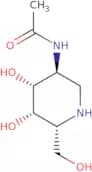
CAS:2-Acetamido-1,2-dideoxy-galactonojirimycin is a microbial infection drug that belongs to the class of chemical species. It has been shown to be a potent inhibitor of sodium carbonate (NaCO) and can be used as a control in analytical studies. This drug also inhibits vasoactive intestinal peptide, which may lead to the development of cancer. 2-Acetamido-1,2-dideoxy-galactonojirimycin is an acyl chain with galacturonic acid and can be used as diagnostic agents for human serum and hepatic steatosis. It has been shown to have anti-inflammatory properties that are useful for the treatment of autoimmune diseases.Fórmula:C8H16N2O4Pureza:Min. 95%Forma y color:PowderPeso molecular:204.22 g/mol1,2-O-Di-O-acetyl-5-O-benzoyl-3-deoxy-3C-methyl-D-ribofuranose
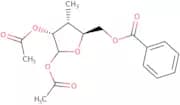
CAS:1,2-O-Di-O-acetyl-5-O-benzoyl-3-deoxy-3C-methyl-D-ribofuranose is a fluorinated monosaccharide that can be used as a building block for the synthesis of complex carbohydrates. It is a custom synthesis and is available in high purity.Fórmula:C17H20O7Pureza:Min. 95%Peso molecular:336.34 g/mol3-Azido-3-deoxy-1,2-O-isopropylidene-a-D-xylofuranose
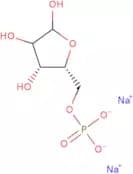
3-Azido-3-deoxy-1,2-O-isopropylidene-a-D-xylofuranose is a synthetic sugar that can be used for glycosylation, methylation and modification. This product has CAS number 68438-65-6 and molecular weight of 229.33. The product has a purity of greater than 99%. It is a white powder that can be dissolved in water or ethanol. 3-Azido-3-deoxy-1,2-O-isopropylidene -a -D -xylofuranose is an oligosaccharide with the formula CHNO(CHOH)C(HO)(CHNH)CHO. 3AODXF is a monosaccharide with the formula CHNO(CHOH)C(HO)(CHNH)COOH. Monosaccharides are carbohydrates that contain only one sugar unit (monoPureza:Min. 95%a-D-Glucose-1-phosphate disodium salt hydrate
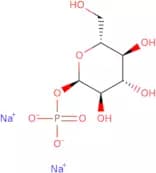
CAS:a-D-Glucose-1-phosphate disodium salt hydrate (aGPD) is a bacterial strain that has been shown to produce fatty acids from glucose. The production of fatty acids has been shown to be dependent on transfer reactions involving tagatose, which is an intermediate product of the process optimization of aGPD. The final product of these reactions is lactic acid, which is formed in an acidic environment. This bacterial strain has also been used as a model system for studying kidney bean phosphatase and photosynthetic activity in monoclonal antibody production.Fórmula:C6H11O9P·2Na·xH2OPureza:Min. 97%Forma y color:White PowderPeso molecular:304.1 g/mol2,3-O-Isopropylidene-L-lyxonic acid-1,4-lactone
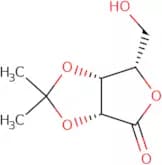
CAS:2,3-O-Isopropylidene-L-lyxonic acid-1,4-lactone is an enantiopure compound that is a member of the glycoside family. It has been shown to inhibit the activity of glycosidases, which are enzymes that hydrolyze glycosides. 2,3-O-Isopropylidene-L-lyxonic acid-1,4-lactone has an ambiguous stereochemistry due to its carbon chains and catalytic groups. The conformational analysis of this compound reveals that it can be classified as a chiral molecule because it lacks a plane of symmetry. Crystallographic analysis has shown that 2,3-O-Isopropylidene-L-lyxonic acid-1,4-lactone adopts a dimeric form and crystallizes in an asymmetric unit cell with space group P2(1)22(1).Fórmula:C8H12O5Pureza:Min. 97 Area-%Forma y color:White PowderPeso molecular:188.18 g/mol2-C-( tert.Butyldimethylsilyloxy)methyl-2,3:5,6-di-O-isopropylidene-L-gulono-1.4-lactone
2-C-(tert-Butyldimethylsilyloxy)methyl-2,3:5,6-di-O-isopropylidene-L-gulono-1.4-lactone is a synthetic monosaccharide that is a modification of L-Gulono Oligosaccharide, which is a polysaccharide. 2C-(tert-Butyldimethylsilyloxy)methyl -2,3:5,6-di--O--isopropylidene--L--gulono 1.4 lactone is also known as 2C-(tert butyldimethylsilyloxy) methyl -2,3:5,6--di--O--isopropylidene--L--gulono 1.4 lactone and is used in the manufacture of saccharides and carbohydrates. It can be found in thePureza:Min. 95%tert-Butyl 2-acetamido-3,4,6-tri-O-acetyl-2-deoxy-b-D-glucopyranoside
CAS:Tert-butyl 2-acetamido-3,4,6-tri-O-acetyl-2-deoxy-b-D-glucopyranoside is a modification of the natural carbohydrate tertiary butyl 2,3,4,6 tetraacetyl beta D glucopyranoside. It is synthesized by the addition of acetamide to the 3 and 4 position on the glucose molecule. This product can be used as a reagent for glycosylation reactions. Tert-butyl 2 acetamido 3,4,6 tri O acetyl 2 deoxy b D glucopyranoside is an oligosaccharide with a molecular weight of 522.5 Da. The monomeric units are alpha glucose and beta glucose linked by glycosidic bonds. This product is also methylated at the 6 position on the glucose molecule and then fluorinated to create a hydrocarbon chain with one hydroxylFórmula:C18H29NO9Pureza:Min. 95%Peso molecular:403.42 g/mol7-Deoxy-1,2:3,4:5,6-tri-O-isopropylidene-D-glycero-L-ido-heptitol
The 7-Deoxy-1,2:3,4:5,6-tri-O-isopropylidene-D-glycero-L-ido-heptitol is a synthetic oligosaccharide that can be custom synthesized for research purposes. It is composed of the sugar monomers 6,7-dideoxyglucose and 1,2:3,4:5,6-tetraisopropyldecaonol. The 7DG and 1,2:3,4:5,6TIDCA are linked together via an alpha(1→4) glycosidic linkage. This product has been fluorinated to increase its stability in aqueous solutions. br>br> The 7DG and 1,2:3,4:5,6TIDCA monomers are connected by an alpha(1→4) glycosidic linkage. The structuralPureza:Min. 95%Neocarradecaose-41,3,5,7,9-penta-O-sulfate sodium salt
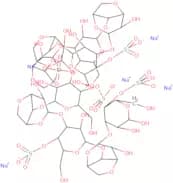
CAS:Neocarradecaose-41,3,5,7,9-penta-O-sulfate sodium salt is a synthetic oligosaccharide that is used as an active ingredient in anti-tuberculosis drugs. It has been shown to have strong inhibitory activity against Mycobacterium tuberculosis. Neocarradecaose-41,3,5,7,9-penta-O-sulfate sodium salt is also a good substrate for glycosylation reactions and can be modified by methylation or click chemistry. This compound is water soluble and suitable for dissolving in organic solvents. The purity of the compound is over 98%.Fórmula:C60H87Na5O61S5Pureza:Min. 95 Area-%Forma y color:Yellow PowderPeso molecular:2,059.58 g/mol2- Acetamido- 2, 4- dideoxy-D- xylo- hexose
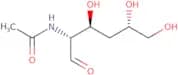
CAS:2-Acetamido-2,4-dideoxy-D-xylo-hexose is a synthetic monosaccharide that is modified with fluorine, methylation and acetamidodeoxysugar. The product is used as an intermediate in the synthesis of oligosaccharides and polysaccharides. It can also be used to modify saccharides with modifications such as click chemistry, fluorination and saccharide modification. 2-Acetamido-2,4-dideoxy-D-xylo-hexose (2A6DH) has CAS number 40555-55-3.Fórmula:C8H15NO5Pureza:Min. 95%Peso molecular:205.21 g/mol(2R,3S,4R)-4-C-((2R,3S)-N-Benzyl-3-tert.butylsilyloxy-2-azetidinyl)-3-O-tert.butyldimethylsilyl-2,3,4-trihydroxybutanoic acid
(2R,3S,4R)-4-C-((2R,3S)-N-Benzyl-3-tert.butylsilyloxy-2-azetidinyl)-3-O-tert.butyldimethylsilyl-2,3,4-trihydroxybutanoic acid is a methylated and fluorinated oligosaccharide with a high purity. It is a complex carbohydrate that can be modified to include saccharides and monosaccharides. This product is synthesized using Click chemistry and has been shown to have antiallergic activities.Pureza:Min. 95%Benzyl 6-O-benzyl 2-deoxy-3-O-((R)-1'-ethoxycarbonylethyl)-2-(2,2,2-trichloroethoxycarbonylamino)-a-D-glucopyranoside
Benzyl 6-O-benzyl 2-deoxy-3-O-(R)-1'-ethoxycarbonylethyl)-2-(2,2,2-trichloroethoxycarbonylamino)-a-D-glucopyranoside is a methylated saccharide. It is a modified sugar that is synthesized by reacting benzyl alcohol with deoxyribose and chloroacetic acid in the presence of sodium cyanoborohydride. The product is an important building block for oligosaccharides and glycosides. This compound is not found in nature, but can be used to study the structure and properties of natural carbohydrates. Benzyl 6-O-benzyl 2-deoxy-3-O-(R)-1'-ethoxycarbonylethyl)-2-(2,2,2-trichloroethoxycarbonylamino)-a-D-glucopyrPureza:Min. 95%2-C-Hydroxymethyl-2,3-O-isopropylidene-3-C-methyl-L-erythrofuranose
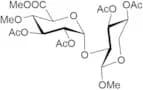
2-C-Hydroxymethyl-2,3-O-isopropylidene-3-C-methyl-L-erythrofuranose is a carbohydrate that can be used as a synthetic intermediate in the production of other carbohydrates. It has been modified with fluorination, methylation, glycosylation, and click modification. This product is custom synthesized to order for high purity and quality.Pureza:Min. 95%Methyl 3,4-di-O-acetyl-2-O-(methyl 2,3-di-O-acetyl-4-O-methyl-α-D-glucopyranosyluronate)-β-D-xylopyranoside
CAS:A protected disaccharideFórmula:C22H32O15Pureza:Min. 95%Forma y color:PowderPeso molecular:536.48 g/molMethyl 2,4-di-O-methyl-α-D-galactopyranoside
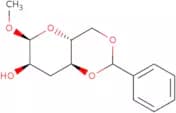
CAS:Methyl 2,4-di-O-methyl-α-D-galactopyranoside is a synthetic saccharide that has been modified with methyl groups at the C2 and C4 positions.Fórmula:C9H18O6Pureza:Min. 95%Forma y color:PowderPeso molecular:222.24 g/mol1,2:4,6-Di-O-isopropylidene-L-sorbofuranose
CAS:1,2:4,6-Di-O-isopropylidene-L-sorbofuranose is a synthetic carbohydrate with a fluorinated methyl group at the C6 position. It is a monosaccharide that can be used to produce oligosaccharides and saccharides through glycosylation and methylation. The product is available in high purity and custom synthesis. This product has been modified by the click chemistry reaction.Fórmula:C12H20O6Pureza:Min. 95%Peso molecular:260.28 g/mol2-C-Hydroxymethyl- 2, 3:5, 6- di-O-isopropylidene-D- mannose
2-C-Hydroxymethyl- 2, 3:5, 6- di-O-isopropylidene-D-mannose is a synthetic monosaccharide. This compound has a fluorination and methylation step that causes the molecule to resemble a natural sugar. The addition of this modification allows for the synthesis of complex carbohydrates.Pureza:Min. 95%Methyl 2,3-di-O-benzoyl-4,6-O-benzylidene-a-D-galactopyranoside
CAS:Methyl 2,3-di-O-benzoyl-4,6-O-benzylidene-a-D-galactopyranoside is a custom synthesis by our company. It is an oligosaccharide that is modified with methyl groups and fluorine atoms. This product has a CAS number of 6953-72-6 and can be synthesized in high purity. It is also a monosaccharide sugar that can be obtained through the modification of other carbohydrates.Fórmula:C28H26O8Pureza:Min. 95%Peso molecular:490.51 g/mol2-Azido-2-deoxy-3,4-O-isopropylidene-6-O-toluenesulfonyl-L-idonic acid methyl ester
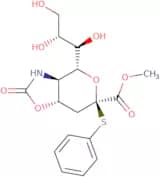
2-Azido-2-deoxy-3,4-O-isopropylidene-6-O-toluenesulfonyl-L-idonic acid methyl ester is a synthetic sugar that has the CAS number of 2147690. It is a modified saccharide that can be used for glycosylation and click chemistry. This product is also available in custom synthesis, high purity, and fluorination.Pureza:Min. 95%Methyl 5-N,4-O-Carbonyl-3,5-dideoxy-2-S-phenyl-2-thio-D-glycero-b-D-galacto-2-nonulopyranosylonate
CAS:Methyl 5-N,4-O-Carbonyl-3,5-dideoxy-2-S-phenyl-2-thio-D-glycero-b-D-galacto-2-nonulopyranosylonate is a glycosylation agent. It can be used to synthesize complex carbohydrates with a variety of saccharides including glucose, mannose, and galactose. This product is also known as Methyl 3,5 Dideoxy -5-(N-(4'-O-(carbonyl)benzoyl)-3',4'-dimethoxybenzoyl)-2,3'-diene glycero - 2', 3' - dideoxyribofuranosyl(1 '→ 4')pentaacetate or CAS No. 934591–79–4.Fórmula:C17H21NO8SPureza:Min. 95%Forma y color:White PowderPeso molecular:399.42 g/mol2-Amino-2-deoxy-6,7-O-isopropylidene-D-glycero-D-ido-heptono-1.4-lactone
2-Amino-2-deoxy-6,7-O-isopropylidene-D-glycero-D-ido-heptono-1.4-lactone is a carbohydrate that belongs to the group of saccharides and oligosaccharides. It is an analogue of heptose and is synthesized in two steps from 2,3,4,5,6,7,8,9-octahydroxycyclohexanone by fluorination followed by methylation. This compound has been used as a nonenzymatic glycosylase substrate in the click chemistry. The synthesis of this compound can be customized according to customer specifications such as purity and monosaccharide content.Pureza:Min. 95%Phenyl 3-O-benzyl-b-D-thioglucopyranoside
CAS:Phenyl 3-O-benzyl-b-D-thioglucopyranoside is a synthetic, fluorinated monosaccharide that has been used as a glycosylation and polysaccharide for various applications. It can be used as a reagent in Click chemistry due to its ability to undergo facile and selective methylation. Phenyl 3-O-benzyl-b-D-thioglucopyranoside is also used in the synthesis of complex carbohydrates and sugar modification.Pureza:Min. 95%Methyl 2,3,4-tri-O-methyl-β-D-galactopyranoside
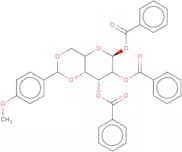
CAS:A methyl protected galactosideFórmula:C10H20O6Pureza:Min. 95%Forma y color:PowderPeso molecular:236.26 g/mol1,2,3-Tri-O-benzoyl-4,6-O-(4-methoxybenzylidene)-b-D-glucopyranose
1,2,3-Tri-O-benzoyl-4,6-O-(4-methoxybenzylidene)-b-D-glucopyranose is a carbohydrate that has been modified with fluorine atoms. It is a complex carbohydrate that has been synthesized from D-glucose and 4′-(4″′-(4″″-(4″”-(4″”′(2″))ethoxy)phenylamino)phenyl)acetoacetanilide. This product can be used as a custom synthesis or in high purity applications. It is highly pure and has been methylated and glycosylated. This product also contains click modification.Fórmula:C35H30O10Pureza:Min. 95%Peso molecular:610.61 g/mol2-Azido-2-deoxy-3,5:6,7-di-O-isopropylidene-D-glycero-D-ido-heptono-1.4-lactone
2-Azido-2-deoxy-3,5:6,7-di-O-isopropylidene-D-glycero-D-idoheptono -1.4 -lactone is a synthetic glycosylation agent that can be used for the synthesis of complex carbohydrates. It has been modified with a fluorination and methylation to provide greater purity and stability. 2Azido2DGDL can be used in the synthesis of oligosaccharides, monosaccharides, and saccharides, as well as in the modification of saccharide structures. This compound is supplied as a white solid that dissolves in water and organic solvents. The CAS number is 79743-72-8.Pureza:Min. 95%2- C- (Hydroxymethyl) - 2, 3:5, 6- di- O- isopropylidene-D- mannose
2-C- (Hydroxymethyl) -2, 3:5, 6-di-O-isopropylidene-D-mannose is an Oligosaccharide. It is a water soluble polysaccharide that is found in the cell walls of certain bacteria. The synthesis of this compound can be achieved through Click modification and fluorination. This product has a CAS number and can be custom synthesized to meet your needs.Pureza:Min. 95%D-Arabinose-5-phosphate disodium salt
CAS:D-Arabinose-5-phosphate disodium salt is an inorganic compound that is a substrate for the enzyme, sedoheptulose-7-phosphate (S7P) reductase. D-Arabinose-5-phosphate disodium salt is converted to sedoheptulose 7 phosphate by this enzyme, which participates in the pentose phosphate pathway. This reaction takes place at pH 5.6 and 30°C, with Mn2+ ions as cofactors and a constant of 0.001 M. The time it takes for the reaction to reach equilibrium is about 10 minutes, and the kinetic constant for this reaction is 0.0004 s−1 M−1. D-Arabinose-5-phosphate disodium salt can be prepared through a number of different techniques including ion exchange chromatography or extraction from corn starch using phosphoric acid and hydrochloric acid. It also requires various metal
Fórmula:C5H9Na2O8PPureza:Min. 95 Area-%Forma y color:PowderPeso molecular:274.07 g/mol1-Deoxy-2,3:4,5-Bis-O-(1-methylethylidene)- D-glycero-D-gulo-heptitol
CAS:1-Deoxy-2,3:4,5-Bis-O-(1-methylethylidene)-D-glycero-D-guloheptitol is a fluorinated monosaccharide that is synthesized to have a specific glycosylation pattern. This product is used in the synthesis of complex carbohydrates, glycosylations and polysaccharides. 1-Deoxy-2,3:4,5-Bis-O-(1-methylethylidene)-D-glycero--D--guloheptitol has high purity and can be custom synthesized to order.Pureza:Min. 95%Ethyl 2,3-di-O-benzoyl-4,6-O-benzylidene-b-D-thiogalactopyranoside - non-animal origin
CAS:Ethyl 2,3-di-O-benzoyl-4,6-O-benzylidene-b-D-thiogalactopyranoside - non animal origin is a custom synthesis that is modified to include fluorination and methylation. This product is also an oligosaccharide or saccharide with a complex carbohydrate. The CAS No. for this product is 56119-30-3.Pureza:Min. 95%(2S, 3S, 4R) -2- ((Diphenylmethyloxy)methyl) -3,4,-O-isopropylidene- 3, 4- pyrrolidinediol
(2S, 3S, 4R) -2- ((Diphenylmethyloxy)methyl) -3,4,-O-isopropylidene- 3, 4- pyrrolidinediol is a custom synthesis at high purity. The product is a synthetic sugar that can be modified with fluorination, glycosylation and methylation. This product has CAS No. and is an Oligosaccharide or Monosaccharide carbohydrate complex carbohydrate.Pureza:Min. 95%4- C- Methyl- 2, 3- O-isopropylidene -4-O-tert-butyldimethylsilyl-D- lyxono-1,5- lactone
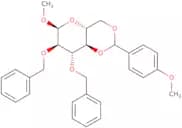
4- C- Methyl- 2, 3- O-isopropylidene -4-O-tert-butyldimethylsilyl-D- lyxono-1,5- lactone is a Fluorinated Monosaccharide. It is a Synthetic Monosaccharide. It is an Oligosaccharide. It is a complex carbohydrate. It has been Custom synthesized. It has been Glycosylated and Polysaccharided. It has been Click modified and Methylated. This compound's CAS number is A8BX04A9R1Z6. This compound's sugar type is Carbohydrate. This compound has been Modified for High purity purposes.Pureza:Min. 95%Methyl 2,3-di-O-benzyl-4,6-O-(4-methoxybenzylidene)-a-D-glucopyranoside
CAS:Methyl 2,3-di-O-benzyl-4,6-O-(4-methoxybenzylidene)-a-D-glucopyranoside is a monosaccharide that is used as a building block for the synthesis of complex carbohydrates. It has been modified with fluorination, methylation and glycosylation. Methyl 2,3-di-O-benzyl-4,6-O-(4-methoxybenzylidene)-a-D-glucopyranoside can be synthesized using custom synthesis or high purity. This product has CAS No. 94902 60 0 and is available in high purity.Fórmula:C29H32O7Pureza:Min. 95%Peso molecular:492.57 g/mol5-O-Benzoyl-1,2,-O-isopropylidene-3-deoxy-3-ethylidene-a-D-xylofuranoside
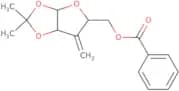
CAS:5-O-Benzoyl-1,2,-O-isopropylidene-3-deoxy-3-ethylidene-a-D-xylofuranoside is a custom synthesis that is a modification of the natural product 5-O-(4'-methylbenzoyl)-1,2,-O-(isopropylidene)-3,5'-di--deoxyxylofuranoside. The fluorination and methylation reactions were carried out to produce the desired product. 5--O--Benzoyl--1,2,-O--isopropylidene--3,5'-di--deoxyxylofuranoside is a monosaccharide that is part of an oligosaccharide or polysaccharide. This compound has been synthesized by Click modification and glycosylation with sugar.Pureza:Min. 95%[2R- (2a, 3a, 4b, 5a) ] -3,4,5-Trihydroxy-2- piperidinecarboxylic acid methyl ester
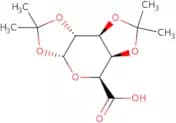
CAS:2R-(2a, 3a, 4b, 5a) -3,4,5-Trihydroxy-2-piperidinecarboxylic acid methyl ester is a custom synthesis that is available only in high purity. It has the CAS No. 116366-70-2 and can be used as an artificial sweetener. The chemical structure contains a sugar that is modified by fluorination and methylation. This product is also glycosylated and saccharide substituted with click chemistry. 2R-(2a, 3a, 4b, 5a) -3,4,5-Trihydroxy-2-piperidinecarboxylic acid methyl ester can be used as both a monosaccharide or polysaccharide in complex carbohydrates.Fórmula:C7H13NO5Pureza:Min. 95%Peso molecular:191.18 g/mol1,2:3,4-Di-O-isopropylidene-a-D-galacturonide
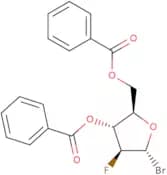
CAS:1,2:3,4-Di-O-isopropylidene-a-D-galacturonide is an intermediate in the synthesis of D-galactosamine. It is a white crystalline solid with a melting point of 217°C. The compound has been shown to have biological properties including antiviral and immuno-stimulatory activities. This chemical is synthesized by the stepwise addition of chlorides to the hydroxyls of 1,2:3,4-di-O-isopropylideneacetone.Fórmula:C12H18O7Pureza:Min. 95%Forma y color:PowderPeso molecular:274.27 g/mol3,5-Di-O-benzoyl-2-deoxy-2-fluoro-α-D-arabinofuranosyl bromide
CAS:Intermediate in the synthesis of clofarabineFórmula:C19H16BrFO5Pureza:Min. 95%Forma y color:PowderPeso molecular:423.24 g/mol2-Amino-2-deoxy-3,4-O-isopropylidene-L-idonic acid methyl ester
2-Amino-2-deoxy-3,4-O-isopropylidene-L-idonic acid methyl ester is a glycosylation agent that has been used in the synthesis of complex carbohydrates. It has also been used as a monosaccharide to produce Oligosaccharides and polysaccharides. The compound is fluorinated and saccharified with acetic anhydride and sulfuric acid to produce 2-Amino-2,3,4,5,6,-pentafluorohexylidene-(D) -L -idonic acid methyl ester. This product is custom synthesized by our company.Pureza:Min. 95%(2R, 3S, 4R, 5S) -3,4-O-Isopropylidene-2- methyl-3, 4, 5- piperidinetriol
(2R, 3S, 4R, 5S) -3,4-O-Isopropylidene-2- methyl-3, 4, 5- piperidinetriol is a fluorinated carbohydrate that is synthesized through a click reaction. It has been shown to have potent anti-inflammatory properties and inhibit tumor cell proliferation. This compound may be used in the treatment of cancer or inflammatory diseases. (2R, 3S, 4R, 5S) -3,4-O-Isopropylidene-2-methyl-3,4,5-piperidinetriol is also a complex carbohydrate containing oxygenated functional groups on C1 and C6. It has been shown to bind to the enzyme 2',3'-cyclic nucleotide 3'-phosphodiesterase (CNP), which affects the production of inflammatory mediators such as prostaglandins and leukotrienes.Pureza:Min. 95%1-O-Acetyl-2,3:5,6-di-O-isopropylidene-D-mannofuranose
The 1-O-acetyl-2,3:5,6-di-O-isopropylidene-D-mannofuranose is a custom synthesis. It is fluorinated at the 6 position and methylated at the 3 position. This modification is done to give it an acetyl group on the 1 carbon and a hydroxyl group on the 2 carbon. The compound has been synthesized by modifying the natural sugar mannose with an acetyl group and a hydroxyl group. The compound has not been modified in any other way as of yet, but it would be possible to add more modifications such as glycosylation or polysaccharide formation.Pureza:Min. 95%(1S) -1- [(2S, 3R) - 3-Hydroxy- 1- (phenylmethyl) - 2- azetidinyl] -1, 2- Ethanediol
(1S) -1- [(2S, 3R) - 3-Hydroxy- 1- (phenylmethyl) - 2- azetidinyl] -1, 2- Ethanediol is a custom synthesis that is a glycosylated, fluorinated and methylated sugar. It is an oligosaccharide with four monosaccharides and one disaccharide repeating unit. This molecule has been modified with Click chemistry and the use of polysaccharides. The CAS number for this compound is 1009076-81-2 and it can be purchased in high purity.Pureza:Min. 95%2-Azido-((R)-3,5-O-benzylidene)-2,6-dideoxy-1,4-di-O-tert.butyldimethylsilyl- L-manno-hexitol
2-Azido-((R)-3,5-O-benzylidene)-2,6-dideoxy-1,4-di-O-tert.butyldimethylsilyl--L--mannopentose is a carbohydrate that is used in the synthesis of oligosaccharides and polysaccharides. It can be custom synthesized with high purity and desired modifications to suit your needs. This product has been fluorinated and glycosylated for increased stability and solubility in organic solvents. This product's CAS number is 617072-75-0.Pureza:Min. 95%Ethyl 2,3-di-O-benzyl-4,6-O-benzylidene-b-D-thiogalactopyranoside
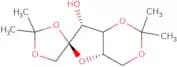
Ethyl 2,3-di-O-benzyl-4,6-O-benzylidene-b-D-thiogalactopyranoside (BBDTG) is an oligosaccharide that is a sugar with a complex carbohydrate. It has been modified using the Click reaction and a custom synthesis to add fluorine atoms. This product is high purity and can be used in various applications, such as glycosylation or methylation.Pureza:Min. 95%(5R, 8R, 9S) -8- [(4R) - 2, 2- Dimethyl- 1, 3- dioxolan- 4- yl] - 9- hydroxy- 2, 2- dimethyl- 1, 3, 7- trioxaspiro[4.4] nonan- 6- on e
(5R, 8R, 9S) -8- [(4R) - 2, 2- Dimethyl- 1, 3- dioxolan- 4- yl] - 9- hydroxy- 2, 2- dimethyl- 1, 3, 7- trioxaspiro[4.4] nonan- 6- on e is a synthetic glycosylin containing a complex carbohydrate. It has been modified with methylation and Click chemistry to provide a fluorinated saccharide which can be used for the synthesis of oligosaccharides. This product is custom made and can be synthesized with high purity.Pureza:Min. 95%N-[2-(2'-Hydroxyphenylacetonitrile)]-2,3,4,6-tetra-O-pivaloyl-D-glucopyranoside
CAS:N-[2-(2'-Hydroxyphenylacetonitrile)]-2,3,4,6-tetra-O-pivaloyl-D-glucopyranoside is a custom synthesis that is a complex carbohydrate. It has CAS No. 55580-06-8. This is an Oligosaccharide that has been modified with saccharides and methylated with glycosylation. Carbohydrate modification includes click modification of sugar and fluorination of synthetic sugars. High purity of this product ensures it will not inhibit reactions in downstream applications as well as be free from contaminants such as endotoxins or heavy metals.Fórmula:C34H50N4O10Pureza:Min. 95%Peso molecular:674.78 g/molMethyl 2,3-di-O-benzyl-4,6-O-(4-methoxybenzylidene)-a-D-mannopyranoside
CAS:Methyl 2,3-di-O-benzyl-4,6-O-(4-methoxybenzylidene)-a-D-mannopyranoside is a custom synthesis of a complex carbohydrate. It has been modified to include an Oligosaccharide and Polysaccharide, which are saccharides. This product can be used for the synthesis of glycosylation and carbonylation reactions. Methyl 2,3-di-O-benzyl-4,6-O-(4-methoxybenzylidene)-a-D-mannopyranoside is high purity with a fluorination process that ensures the highest quality.Fórmula:C29H32O7Pureza:Min. 95%Peso molecular:492.57 g/mol(2R,3R,4R,5R)-2-(3-hydroxy-4-methoxyphenyl)-5-(hydroxymethyl)pyrrolidine-3,4-diol
CAS:(2R,3R,4R,5R)-2-(3-hydroxy-4-methoxyphenyl)-5-(hydroxymethyl)pyrrolidine-3,4-diol is an imino-sugar
Fórmula:C12H17NO5Pureza:Min. 95%Peso molecular:255.27 g/mol3,4,6-Tri-O-acetyl-2-deoxy-2-fluoro-b-D-glucopyranosyl azide
3,4,6-Tri-O-acetyl-2-deoxy-2-fluoro-b-D-glucopyranosyl azide is a fluorinated sugar that is used in the synthesis of glycosides and polysaccharides. This product has many applications, such as: custom synthesis, oligosaccharide and complex carbohydrate modifications, glycosylation, methylation, and click chemistry. 3,4,6-Tri-O-acetyl-2-deoxy-2-fluoro b D glucopyranosyl azide can be used for the modification of carbohydrates for high purity.Pureza:Min. 95%(1S) -1- [(2R, 3S) -N-(4-Methoxyphenyl)methyl-3-hydroxy- 1- azetidinyl] -1, 2- ethanediol
Our company has the capability to synthesize custom complex carbohydrates. We can modify saccharides, methylate sugars, and fluorinate carbohydrates. We have a high-purity product that is synthesized in our lab. Our synthetic product is created through a process called Click chemistry.Pureza:Min. 95%2,3:4,5-Di-O-isopropylidene-b-D-fructopyranose
CAS:2,3:4,5-Di-O-isopropylidene-b-D-fructopyranose (IDFP) is a natural compound that has been shown to have pharmacological properties. It is an inhibitor of the enzyme alpha-glucosidase and may be used as a treatment for diabetes mellitus type II. IDFP binds to the active site of the enzyme α-glucosidase, preventing access of the substrate glucose. This causes a decrease in blood glucose levels and has also been shown to reduce cholesterol levels in mice. IDFP is synthesized by reacting ethylene diamine with 2,3:4,5-di-O-isopropylidene b -D -fructofuranose. This reaction produces a heterocycle that undergoes asymmetric synthesis using sodium hydroxide solution and hydrogen fluoride as catalysts.
Fórmula:C12H20O6Pureza:Min. 95%Forma y color:White Off-White PowderPeso molecular:260.28 g/mol2-Azido-2-deoxy-3,5-O-isopropylidene-D-lyxono-1,4-lactone
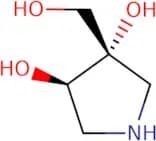
2-Azido-2-deoxy-3,5-O-isopropylidene-D-lyxono-1,4-lactone is a modification of glycosides. It is a high purity oligosaccharide with CAS number. This monosaccharide can be methylated and glycosylated to form polysaccharides. The chemical synthesis of this product is complex and requires custom synthesis.Pureza:Min. 95%(3S, 4R) -3- (Hydroxymethyl) - 3, 4- pyrrolidinediol
CAS:(3S, 4R) -3- (Hydroxymethyl) - 3, 4- pyrrolidinediol is a synthetic sugar molecule that is used in the synthesis of polysaccharides and oligosaccharides. It can be modified with fluorination, methylation, or glycosylation. This product has a purity of 99% or higher.Fórmula:C5H11NO3Pureza:Min. 95%Peso molecular:133.15 g/mol2-Azido-2-deoxy-3,5-O-benzylidene-L-lyxono-1,4-lactone
2-Azido-2-deoxy-3,5-O-benzylidene-L-lyxono-1,4-lactone is a simple carbohydrate that is modified by fluorination. It is synthesized from the saccharide D-(+)-ribose and has the CAS No. 57400-91-5. This molecule can be methylated and glycosylated to produce a variety of structures with different properties. 2A2DLAL can also be modified by click chemistry, which is a reaction that produces covalent bonds between two molecules in a single step without using any catalysts or solvents.
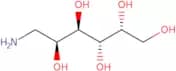
Pureza:Min. 95%1-Amino-1-deoxy-D-galactitol hydrochloride
CAS:1-Amino-1-deoxy-D-galactitol hydrochloride is a natural polymer that is found in many organisms, including bacteria and fungi. It can be obtained by enzymatic conversion of galactose, which is an epimer of glucose. 1-Amino-1-deoxy-D-galactitol hydrochloride has been shown to have viscosity properties that are similar to those of natural polymers. This compound also has the ability to form hydrogen bonds with other molecules. 1-Amino-1-deoxy-D-galactitol hydrochloride is produced by chemoenzymatic reactions and can be used as a substitute for natural polymers in certain applications (e.g., food industry).
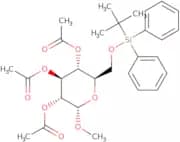
Fórmula:C6H15NO5·HClPureza:Min. 95%Forma y color:PowderPeso molecular:217.65 g/molMethyl 2,3,4-tri-O-acetyl-6-O-tert-butyldiphenylsilyl-a-D-glucopyranoside
CAS:Methyl 2,3,4-tri-O-acetyl-6-O-tert-butyldiphenylsilyl-a-D-glucopyranoside is a custom synthesis of a carbohydrate with the CAS No. 790685-09-5. It can be modified to have fluorination, methylation, and monosaccharide or oligosaccharide modifications. The chemical structure of this compound is an acetylated glycosylated glucopyranoside that has been modified for use in research.Fórmula:C29H38O9SiPureza:Min. 95%Peso molecular:558.71 g/mol4-Anhydro-2-O-(2,4-dimethoxybenzoyl)-3,5-O-(1,1,3,3- tetraisopropyldisiloxane-1,3-diyl)-4-thio-D-ribitol
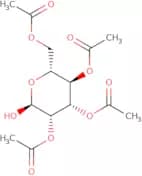
CAS:4-Anhydro-2-O-(2,4-dimethoxybenzoyl)-3,5-O-(1,1,3,3- tetraisopropyldisiloxane-1,3-diyl)-4-thio-D-ribitol is a fluorinated monosaccharide. It is a synthetic oligosaccharide that contains an asymmetric carbon atom. This product can be used in glycosylation reactions and click chemistry. 4A2OBDMTOS is a high purity sugar that has been modified with methyl groups.Pureza:Min. 95%2,3,4,6-Tetra-O-acetyl-α-D-mannopyranose
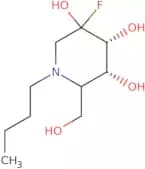
CAS:2,3,4,6-Tetra-O-acetyl-a-D-mannopyranose is a phosphorylated glycolipid that inhibits the activity of transferases and endoplasmic reticulum enzymes. This compound has been shown to inhibit the activity of mannosyltransferase and glycosyltransferase in the endoplasmic reticulum. This inhibition may be due to steric hindrance by the acetyl group. The diastereoselectivity of this compound is also notable. It is one of a few compounds that have shown to be chiral phosphoramidites, which are used in the synthesis of DNA.Fórmula:C14H20O10Pureza:Min. 95%Forma y color:PowderPeso molecular:348.3 g/molN-Butyl-1-deoxy-2-fluoronojirimycin
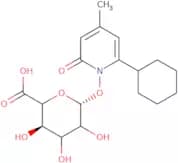
CAS:N-Butyl-1-deoxy-2-fluoronojirimycin is a high purity, custom synthesis, sugar modified, fluorination and glycosylation compound. It is a synthetic compound that has been shown to have potential as a cancer therapeutic agent. It is also used as a reagent in the synthesis of glycosides and oligosaccharides. N-Butyl-1-deoxy-2-fluoronojirimycin's CAS number is 2200278-70-0.Fórmula:C10H20FNO4Pureza:Min. 95%Forma y color:PowderPeso molecular:237.27 g/molCiclopirox D-glucuronide sodium salt
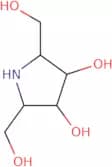
CAS:Ciclopirox D-glucuronide sodium salt is a synthetic chemical that belongs to the group of glycosylated and fluorinated ciclopirox. It has been modified to improve its activity and stability. Ciclopirox D-glucuronide sodium salt is a high purity product with a custom synthesis and modification process. This chemical is useful for the synthesis of carbohydrate-based drugs, polysaccharides, saccharides, and complex carbohydrates.Fórmula:C18H24NO8·NaPureza:Min. 95 Area-%Forma y color:PowderPeso molecular:405.37 g/mol(2S, 3S, 4S, 5R) -3,4-Dihydroxy-2, 5- pyrrolidinedimethano l
CAS:Disrupting agents are compounds that inhibit the function of a protein. These agents are able to bind to proteins and disrupt their normal function, leading to cell death. Picolinic acid is one such agent, which binds to proteins that contain an active site with a metal ion. It has been shown to be effective in reducing tumor cells and drug efficacy. Disrupting agents have also been shown to induce apoptosis by activating caspases, which are proteases that process proteins in cells. Research on these agents has shown anticancer potential in drug research and cancer treatment.Pureza:Min. 95%3,5-Dideoxy-3,5-imino-1,2-O-isopropylidene-N-butyl-6-O-tert.butyldimethylsilyl-b-L-galactofuranose
3,5-Dideoxy-3,5-imino-1,2-O-isopropylidene-N-butyl-6-O-tert.butyldimethylsilyl-b-L-galactofuranose is a synthetic sugar that can be used as an intermediate for the synthesis of glycosides. This compound has been fluorinated with trifluoromethanesulfonic acid to increase its stability and resistance to hydrolysis. The carbonyl group of the 3,5 position has been converted into an isopropylidene group by reacting with tert.butyldimethylsilyl chloride (TBSCl) in order to increase the reactivity of this functional group. This sugar can be modified at any position on its carbohydrate chain in order to produce desired products. It can also be methylated or acetylated at any position on the carbohydrate chain using reagents such asPureza:Min. 95%Methyl 4,6-O-benzylidene-3-deoxy-α-D-glucopyranoside
CAS:Methyl 4,6-O-benzylidene-3-deoxy-a-D-glucopyranoside is a synthetically modified high purity carbohydrate. It is an oligosaccharide that can be custom synthesized to meet your requirements. This product can be used as a complex carbohydrate in the food industry.Fórmula:C14H18O5Pureza:Min. 95%Forma y color:PowderPeso molecular:266.29 g/mol(3r,4s)-3,4-Bis-benzyloxymethyl-oxetane-2-one 2-hydrate
A custom synthesis of (3r,4s)-3,4-Bis-benzyloxymethyl-oxetane-2-one 2-hydrate is a modification of a complex carbohydrate. This compound is synthesized from an oligosaccharide and has the molecular formula C14H15O2. The molecular weight for this compound is 256.24 g/mol. This compound is soluble in water and has a melting point of 80°C. It can be used as a sugar or a polysaccharide in glycosylation reactions. This compound also has fluorination and saccharide functionalities that can be used in methylation reactions to produce methylated sugars or monosaccharides.Pureza:Min. 95%(3R,5R)-5-(Dimethoxymethyl)tetrahydrofuran-3-ol
CAS:(3R,5R)-5-(Dimethoxymethyl)tetrahydrofuran-3-ol is a methylated sugar that can be used as a building block for the synthesis of saccharides and polysaccharides. It has been used in Click chemistry to modify oligosaccharides and glycosylations. This chemical is soluble in water and has high purity. It is also available from CAS No. 127682-76-2. It has been fluorinated to form 2,6-difluoro-3,4,5,6-tetrafluorotetrahydrofuran (CAS No. 317321-67-8).Fórmula:C7H14O4Pureza:Min. 95%Peso molecular:162.18 g/molMethyl(methyl 3,4-di-O-methyl-α-D-glucopyranoside)uronate
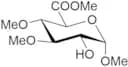
CAS:A methyl ether protected glucuronide glycosideFórmula:C10H18O7Pureza:Min. 95%Forma y color:PowderPeso molecular:250.25 g/mol(1R) -1- [(2S, 3R,4S) -4-(Acetylamino)methyl-N-methyl-3- hydroxy- 1- azetidinyl] -1, 2- ethanediol
(1R) -1- [(2S, 3R,4S) -4-(Acetylamino)methyl-N-methyl-3- hydroxy- 1- azetidinyl] -1, 2- ethanediol is a fluorinated monosaccharide that is synthetically designed to be an analog of glucose. It is a custom synthesis and can be glycosylated, polysaccharide modified, or methylated. This product has CAS number 184497-92-7 and purity of ≥98%.Pureza:Min. 95%Methyl 3-O-Benzyl-N-butyl-2,4-dideoxy-2,4-imino-a-L-ribopyranoside
Methyl 3-O-Benzyl-N-butyl-2,4-dideoxy-2,4-imino-a-L-ribopyranoside is a high purity compound that is custom synthesized to order. It has been fluorinated and modified with methyl groups. Methyl 3-O-Benzyl-N-butyl can be used in glycosylation and click chemistry reactions. This product is a complex carbohydrate that can be used in the synthesis of oligosaccharides and saccharides.
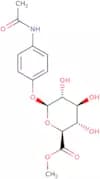
Pureza:Min. 95%4-Acetamidophenyl β-D-glucuronide methyl ester
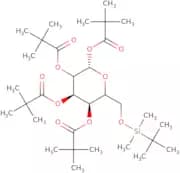
CAS:The function of 4-Acetamidophenyl b-D-glucuronide methyl ester is expressed in the interaction with recombinant human proteins. The protein interacts with cell membrane and extracellular domain. It also interacts with cancer tissue, cancer, and tumor growth. 4-Acetamidophenyl b-D-glucuronide methyl ester is a membrane protein that interacts with extracellular proteins. It is expressed in metastasis and mcf-7.Fórmula:C15H19NO8Pureza:Min. 95%Peso molecular:341.31 g/mol1,2,3,4-Tetra-O-pivaloyl-6-O-(tert-butyldimethylsilyl)-b-D-glucopyranose
1,2,3,4-Tetra-O-pivaloyl-6-O-(tert-butyldimethylsilyl)-b-D-glucopyranose is a high purity oligosaccharide that can be custom synthesized to your specifications. This modification is an Oligosaccharide and Carbohydrate which is a complex carbohydrate. It has CAS No. and Monosaccharide as well as Methylation and Glycosylation. It is also a Sugar and Fluorination with saccharides.
Fórmula:C32H58O10SiPureza:Min. 95%Peso molecular:630.9 g/mol3,4,6-Tri-O-benzyl-1,2-O-isopropylidene-a-D-glucopyranose
CAS:3,4,6-Tri-O-benzyl-1,2-O-isopropylidene-a-D-glucopyranose is a complex carbohydrate that is typically found in plants and fungi. It is also known as a methylated sugar and can be used to produce monosaccharide derivatives. This compound has been modified with fluorine which increases its stability and prevents degradation of the compound. 3,4,6-Tri-O-benzyl-1,2-O-isopropylidene-a-D-glucopyranose is typically synthesized from glycerol or glucose using a process called the Click reaction. The resulting product is an Oligosaccharide with high purity and high quality.Fórmula:C30H34O6Pureza:Min. 95%Peso molecular:490.59 g/mol2,6-Anhydro-D-glycero-D-ido-heptonamide
CAS:2,6-Anhydro-D-glycero-D-ido-heptonamide is a fluorinated carbohydrate that can be synthesized by the reaction of 2,6-anhydro-D-glycero-D-heptonic acid with N,N'-dicyclohexylcarbodiimide and ethyl bromoacetate. This compound is then modified with a methyl group at the C2 position or an acetyl group at the C3 position. The resulting product can be used in a wide variety of applications including biopharmaceuticals, diagnostic reagents, and inorganic chemicals.Pureza:Min. 95%[2R- (2a, 3a, 4b, 5b) ] -1-Benzyl- 3,4-O-isopropylidene-2-methyl- 3, 4, 5- piperidinetriol
This product is a custom synthesis. It is an oligosaccharide that has been modified with fluorine and methylation. This product is glycosylated, which means it has a complex carbohydrate attached to the sugar. It can be used as a monosaccharide or an oligosaccharide, depending on how it will be used in a reaction. This product is synthetic and can be ordered for high purity.Pureza:Min. 95%2-Azido-2-deoxy-3,4:5,6-Di-O-isopropylidene-L-idonic acid methyl ester
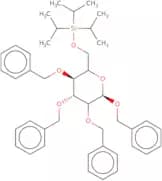
Custom synthesis, Modification, Fluorination, Methylation, Monosaccharide, Synthetic, Click modification, Oligosaccharide, saccharide, CAS No., Polysaccharide, Glycosylation, sugar, CarbohydratePureza:Min. 95%1,2,3,4-Tetra-O-benzyl-6-O-triisopropylsilyl-b-D-galactopyranose
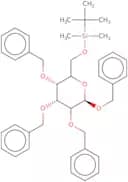
1,2,3,4-Tetra-O-benzyl-6-O-triisopropylsilyl-b-D-galactopyranose is a synthetic compound that is used as an intermediate in the synthesis of oligosaccharides and polysaccharides. It is a methylated derivative of galactose. The silyl protecting group on the benzyl side chain can be removed by hydrolysis with acid to give 1,2,3,4-tetra-O-(hydroxymethyl)galactopyranose. This product can be converted to 1-(2,3,4,-trihydroxypropoxy)-2-(1,1'-biphenyl)-6H-thiopyran using click chemistry. The hydroxymethyl group on position 4 can be fluorinated at the 4' position to give 1-(2',3',4'-trihydroxyprop
Fórmula:C43H56O6SiPureza:Min. 95%Peso molecular:697.01 g/mol1,2,3,4,6-Penta-O-acetyl-b-D-galactopyranose
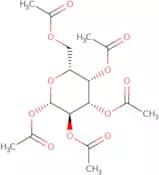
CAS:1,2,3,4,6-Penta-O-acetyl-b-D-galactopyranose, also known as beta-D-galactose pentaacetate, has high chemical stability and long shelf life. This protected form of galactose is a key building block of any chemical synthesis of galactose-containing oligosaccharides or glycoconjugates. In the presence of Lewis acids it can be used as a glycosyl donor to make simple glycosides. In order to perform more complex galactosylations it can be converted into more reactive donors, such as glycosyl halides or thioglycosides.Fórmula:C16H22O11Pureza:Min. 98 Area-%Forma y color:White Off-White PowderPeso molecular:390.34 g/mol2,3,4,6-Tetra-O-acetyl-5-thio-D-galactopyranosyl trichloroacetimidate
2,3,4,6-Tetra-O-acetyl-5-thio-D-galactopyranosyl trichloroacetimidate is a carbohydrate that is modified with acetylation at the 2' and 3' positions of the 5'-hydroxyl group of the sugar. This modification can be used for oligosaccharides, complex carbohydrates, and synthetic carbohydrates. The CAS number for this product is 4862-90-8.Fórmula:C16H20Cl3NO9SPureza:Min. 95%Forma y color:PowderPeso molecular:508.76 g/mol1,2,3,4-Tetra-O-benzyl-6-O-tert-butyldimethylsilyl-b-D-glucopyranose
Tetra-O-benzyl-6-O-tert-butyldimethylsilyl-b-D-glucopyranose is an Oligosaccharide. It is a synthetic compound that can be used for glycosylation, methylation, and other chemical modifications. Tetra-O-benzyl-6-O-tert-butyldimethylsilyl-b-D-glucopyranose is a high purity product with CAS No. 92382–10–9. This product can be custom synthesized to meet your specifications.Fórmula:C40H50O6SiPureza:Min. 95%Peso molecular:654.93 g/mol(2S, 3S, 4S) -3-Benzyloxy- 4- (hydroxymethyl) - 1- (phenylmethyl) -2- azetidinecarboxylic acid
2-Amino-3,4-dihydroxybenzoic acid is an organic compound. It is a white solid that is soluble in water and polar organic solvents. 2-Amino-3,4-dihydroxybenzoic acid is used as an anti-inflammatory agent and for the treatment of arthritis.
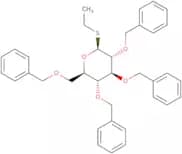
Pureza:Min. 95%Ethyl 2,3,4,6-tetra-O-benzyl-β-D-thioglucopyranoside
CAS:Ethyl 2,3,4,6-tetra-O-benzyl-b-D-thioglucopyranoside is a sugar alcohol that is selective for the formation of disaccharides. It has a constant yield and can be synthesized from phenyl glycosides or acetonitrile.Fórmula:C36H40O5SPureza:Min. 95%Forma y color:PowderPeso molecular:584.77 g/mol3,4:5,6-Di-O-Isopropylidene-D- glycero- L- gulo- heptitol
3,4:5,6-Di-O-Isopropylidene-D-glycero-L-guloheptitol is a synthetic glycosylate that is used as a molecular probe for glycosyltransferases. It can be fluorinated at the 3, 4, and 6 positions to produce 3,4:5,6-DiFluoro-D-glycero-L-guloheptitol. This product is made by reacting glycerol with glyceraldehyde in the presence of sodium borohydride in an acid medium. The resulting product is purified by crystallization.Pureza:Min. 95%1-Deoxy- 3- O- tert.butyldimethylsilyl - 4, 5- O- isopropylidene -L- fructopyranose
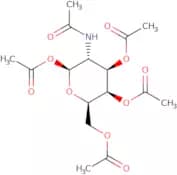
1-Deoxy- 3- O- tert.butyldimethylsilyl - 4, 5- O- isopropylidene -L- fructopyranose is a synthetic compound that has the ability to modify oligosaccharides and polysaccharides. The synthesis of this compound can be used to introduce fluorine at any position on the sugar molecule. This modification allows for the fluorination of sugars and saccharides, which in turn provides different properties such as increased resistance to enzymatic digestion and increased water solubility. 1-Deoxy- 3- O- tert.butyldimethylsilyl - 4, 5- O- isopropylidene -L- fructopyranose has been shown to have click modification capabilities. It can be used for glycosylation reactions with proteins or carbohydrates by reacting with the amino acid side chains of proteins or carbohydrates respectively in aqueous solutionPureza:Min. 95%2-Acetamido-1,3,4,6-tetra-O-acetyl-2-deoxy-b-D-galactopyranose
CAS:2-Acetamido-1,3,4,6-tetra-O-acetyl-2-deoxy-b-D-galactopyranose is fully acetylated D-galactosamine (C4 epimer of D-glucosamine). 2-Acetamido-1,3,4,6-tetra-O-acetyl-2-deoxy-b-D-galactopyranose is used in the synthesis of α- and β-linked acetamido pyranosides, which have anti-inflammatory properties as inhibitors of TLR4.Fórmula:C16H23NO10Pureza:Min. 95%Forma y color:PowderPeso molecular:389.35 g/mol(2S,3R,4R,5S)-3-O-Benzyl-3,4,5-trihydroxy-2-hydroxymethylpiperidine
(2S,3R,4R,5S)-3-O-Benzyl-3,4,5-trihydroxy-2-hydroxymethylpiperidine is a custom synthesis that is used as a building block for the preparation of sugar oligosaccharides and polysaccharides. It is also used in glycosylation reactions to form complex carbohydrates. This compound has been a valuable reagent for the introduction of fluorine atoms into carbohydrate molecules. The structure contains an oxygen atom at C1 and two hydroxyl groups at C2 and C5. The molecule has CAS number .Pureza:Min. 95%2a,3b,19a-trihydroxyurs-12-en-28-oic acid 28-b-D-glucopyranosyl ester
2a,3b,19a-trihydroxyurs-12-en-28-oic acid 28-b-D-glucopyranosyl ester is a glycosylated complex carbohydrate that can be methylated, fluorinated, or custom synthesized. It is typically used as an intermediate in the synthesis of polysaccharides, saccharides and oligosaccharides.Pureza:Min. 95%Benzoyl 2,3-O-isopropylidene-L-ribofuranoside
CAS:Benzoyl 2,3-O-isopropylidene-L-ribofuranoside is a custom synthesis that can be modified with fluorination and methylation. It is a monosaccharide that has been synthesized from L-ribose, which are sugar molecules found in the cell walls of bacteria. The chemical structure of benzoyl 2,3-O-isopropylidene-L-ribofuranoside has been shown to be similar to the sugar molecule found on glycoproteins on the surface of staphylococci. This chemical has also been shown to inhibit the production of enzymes that are necessary for the synthesis of glycosaminoglycans.Fórmula:C15H18O6Pureza:Min. 95%Peso molecular:294.3 g/mol(5R, 8S, 9R) -8- [(4R) - 2, 2- Dimethyl- 1, 3- dioxolan- 4- yl] - 9- hydroxy- 2, 2- dimethyl- 1, 3, 7- trioxaspiro[4.4] nonan- 6- on e
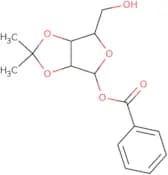
(5R, 8S, 9R) -8- [(4R) - 2, 2- Dimethyl- 1, 3- dioxolan- 4- yl] - 9- hydroxy- 2, 2- dimethyl- 1, 3, 7- trioxaspiro[4.4] nonan- 6- on e is a synthetic and fluorinated glycosylation product of an oligosaccharide with a methyl group at the C5 position. It has been shown to have excellent purity and stability in the presence of water.Pureza:Min. 95%(2S, 3S, 4S) -1-Butyl-4- (hydroxymethyl) - 3- (phenylmethoxy) - 2- azetidinecarboxylic acid, methyl ester
(2S, 3S, 4S) -1-Butyl-4- (hydroxymethyl) - 3- (phenylmethoxy) - 2- azetidinecarboxylic acid, methyl ester is a product that can be custom synthesized. It can be used for the modification of complex carbohydrates, for example oligosaccharides and polysaccharides. This product has been fluorinated to improve its stability and modify saccharide linkages. The hydroxy methyl group at C2 position in this product is capable of being modified with Click chemistry.Pureza:Min. 95%Ethyl 2,3,4-tri-O-acetyl-b-L-thiofucopyranoside
CAS:Ethyl 2,3,4-tri-O-acetyl-b-L-thiofucopyranoside is a modified form of the sugar fucose. It is used as an intermediate in the synthesis of polysaccharides. Ethyl 2,3,4-tri-O-acetyl-b-L-thiofucopyranoside is used in the synthesis of oligosaccharides and polysaccharides by methylation and click modification reactions. This compound has CAS number 127501-41-1 and can be found with a purity of >99%.Fórmula:C14H22O7SPureza:Min. 98 Area-%Forma y color:White PowderPeso molecular:334.39 g/mol5-Deoxy-1,2-O-isopropylidene-5-[(2R-phenylpyrrolidine)-1-yl]-a-D-xylofuranose
CAS:5-Deoxy-1,2-O-isopropylidene-5-[(2R-phenylpyrrolidine)-1-yl]-a-D-xylofuranose is a sugar that is used in the synthesis of oligosaccharides and monosaccharides. It is also used to modify saccharides and carbohydrates. 5DIOX can be synthesized from deoxyribose phosphate, 2-(2′,4′,6′,8'-tetraoxohexyl)benzaldehyde, and 2-(2′,4′,6′,8'-tetraoxohexyl)pyrrole. The CAS number for 5DIOX is 1014404-86-4.Fórmula:C18H25NO4Pureza:Min. 95%Peso molecular:319.4 g/mol




![(1R) -1- [(2S, 3R) - 3- Hydroxy- 1- ((4-methoxyphenyl)methyl) - 2- azetidinyl] -1, 2- ethanediol](/_next/image/?url=https%3A%2Fstatic.cymitquimica.com%2Fproducts%2F3D%2Fthumb-webp%2FMH163535.webp&w=3840&q=75)













![[2R- (2a, 3a, 4b, 5a) ] -3,4,5-Trihydroxy-2- piperidinecarboxylic acid methyl ester](/_next/image/?url=https%3A%2Fstatic.cymitquimica.com%2Fproducts%2F3D%2Fthumb-webp%2FMT163497.webp&w=3840&q=75)

![(1S) -1- [(2S, 3R) - 3-Hydroxy- 1- (phenylmethyl) - 2- azetidinyl] -1, 2- Ethanediol](/_next/image/?url=https%3A%2Fstatic.cymitquimica.com%2Fproducts%2F3D%2Fthumb-webp%2FMH163419.webp&w=3840&q=75)
![(5R, 8R, 9S) -8- [(4R) - 2, 2- Dimethyl- 1, 3- dioxolan- 4- yl] - 9- hydroxy- 2, 2- dimethyl- 1, 3…](/_next/image/?url=https%3A%2Fstatic.cymitquimica.com%2Fproducts%2F3D%2Fthumb-webp%2FMD170668.webp&w=3840&q=75)
![N-[2-(2'-Hydroxyphenylacetonitrile)]-2,3,4,6-tetra-O-pivaloyl-D-glucopyranoside](/_next/image/?url=https%3A%2Fstatic.cymitquimica.com%2Fproducts%2F3D%2Fthumb-webp%2FMH08452.webp&w=3840&q=75)
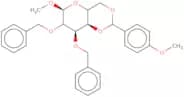


![(1S) -1- [(2R, 3S) -N-(4-Methoxyphenyl)methyl-3-hydroxy- 1- azetidinyl] -1, 2- ethanediol](/_next/image/?url=https%3A%2Fstatic.cymitquimica.com%2Fproducts%2F3D%2Fthumb-webp%2FMM163374.webp&w=3840&q=75)


![(1R) -1- [(2S, 3R,4S) -4-(Acetylamino)methyl-N-methyl-3- hydroxy- 1- azetidinyl] -1, 2- ethanediol](/_next/image/?url=https%3A%2Fstatic.cymitquimica.com%2Fproducts%2F3D%2Fthumb-webp%2FMA163404.webp&w=3840&q=75)

![[2R- (2a, 3a, 4b, 5b) ] -1-Benzyl- 3,4-O-isopropylidene-2-methyl- 3, 4, 5- piperidinetriol](/_next/image/?url=https%3A%2Fstatic.cymitquimica.com%2Fproducts%2F3D%2Fthumb-webp%2FMB163318.webp&w=3840&q=75)


![(5R, 8S, 9R) -8- [(4R) - 2, 2- Dimethyl- 1, 3- dioxolan- 4- yl] - 9- hydroxy- 2, 2- dimethyl- 1, 3…](/_next/image/?url=https%3A%2Fstatic.cymitquimica.com%2Fproducts%2F3D%2Fthumb-webp%2FMD170676.webp&w=3840&q=75)

![5-Deoxy-1,2-O-isopropylidene-5-[(2R-phenylpyrrolidine)-1-yl]-a-D-xylofuranose](/_next/image/?url=https%3A%2Fstatic.cymitquimica.com%2Fproducts%2F3D%2Fthumb-webp%2FMD07486.webp&w=3840&q=75)