Monosacáridos
Subcategorías de "Monosacáridos"
- Allosas(11 productos)
- Arabinosas(21 productos)
- Eritrosas(11 productos)
- Fructosas(9 productos)
- Fucosas(36 productos)
- Galactosamina(41 productos)
- Galactosa(261 productos)
- Glucosas(365 productos)
- Ácidos glucurónicos(51 productos)
- Glico-sustratos para enzimas(77 productos)
- Gulosas(6 productos)
- Idosas(4 productos)
- Inositoles(15 productos)
- Lyxosas(4 productos)
- Manosas(65 productos)
- O-glicanos(48 productos)
- Psicosas(3 productos)
- Ramnosas(10 productos)
- Ribosas(61 productos)
- Ácidos siálicos(100 productos)
- Sorbosas(4 productos)
- Azúcares(173 productos)
- Tagatosis(4 productos)
- Taloses(8 productos)
- Xilosas(20 productos)
Se han encontrado 6090 productos de "Monosacáridos"
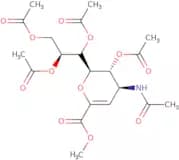
Methyl 5,7,8,9-tetra-O-acetyl-4-acylamino-2,6-anhydro-3,4-dideoxy-D-glycero-D-galacto-2-enonate
CAS:Methyl 5,7,8,9-tetra-O-acetyl-4-acylamino-2,6-anhydro-3,4-dideoxy-D-glycero-D-galacto-2-enonate is a synthetic sugar that is used as a building block for the synthesis of polysaccharides. This compound can be modified with click chemistry and fluorination to create an array of possible saccharide structures. Methylated sugar derivatives are also used in custom synthesis applications.
Fórmula:C20H27NO12Pureza:Min. 95%Peso molecular:473.43 g/mol4-Chlorophenyl 2-acetamido-3,4,6-tri-O-acetyl-2-deoxy-b-D-glucopyranoside
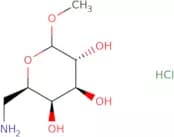
CAS:4-Chlorophenyl 2-acetamido-3,4,6-tri-O-acetyl-2-deoxy-β-D-glucopyranoside is a molecule that has been synthesized using the techniques of nucleic acid molecules. The fluorescence technique is used to measure the amount of this molecule in a sample. This molecule is used as a substrate for DNA and RNA synthesis and can be used to monitor enzyme activity in corynebacterium glutamicum. This compound can be expressed by transferring it into an expression vector and monitoring its progress with a light source at different temperatures.Fórmula:C20H24ClNO9Pureza:Min. 95%Peso molecular:457.86 g/molMethyl 6-amino-6-deoxy-a-D-glucopyranoside HCl
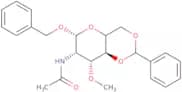
CAS:Methyl 6-amino-6-deoxy-a-D-glucopyranoside HCl is a custom synthesis that can be modified with fluorination, methylation, and click modification. This compound has CAS No. 14257-74-0 and is a monosaccharide. It has been shown to have glycosylation and sugar properties. Methyl 6-amino-6-deoxy-a-D-glucopyranoside HCl is a polysaccharide that can be synthesized or derived from a saccharide. It has been shown to have carbohydrate properties and complex carbohydrate activity.Fórmula:C7H15NO5·HClPureza:Min. 95%Peso molecular:229.66 g/molBenzyl 2-acetamido-4,6-O-benzylidene-2-deoxy-3-O-methyl-a-D-glucopyranoside
CAS:Benzyl 2-acetamido-4,6-O-benzylidene-2-deoxy-3-O-methyl-aDglucopyranoside is a synthetic oligosaccharide with a complex carbohydrate structure. It is custom synthesized by glycosylation and polysaccharide modification to produce a high purity product. Click chemistry modifications, methylations, and fluorination are used for the synthesis of benzyl 2-acetamido-4,6-Obenzylidene -2deoxy -3OmethylaDglucopyranoside. The CAS number for this product is 116696–66–3.Fórmula:C23H27NO6Pureza:Min. 95%Peso molecular:413.46 g/molEthyl 4-O-acetyl-3,6-di-O-benzyl-2-deoxy-2-phthalimido-b-D-thioglucopyranoside
CAS:Ethyl 4-O-acetyl-3,6-di-O-benzyl-2-deoxy-2-phthalimido-b-D-thioglucopyranoside is a synthetic carbohydrate with a molecular weight of 535.1 Da. It has been used for the production of saccharide derivatives that inhibit the growth of gram positive bacteria and Mycobacterium tuberculosis. This product is not available in pure form and must be custom synthesized to meet specific customer requirements. Ethyl 4-O-acetyl-3,6-di--O--benzyl--2--deoxy--2--phthalimido--b--D--thioglucopyranoside is soluble in water and acetonitrile, but insoluble in ether. The chemical formula is C17H25NO11PS with a purity of >98%.Pureza:Min. 95%trans-3'-Hydroxycotinine-O-b-D-glucuronide D3 sodium salt
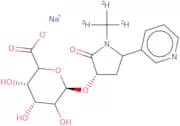
Producto controladoTrans-3'-Hydroxycotinine-O-b-D-glucuronide D3 sodium salt is a modification of the natural product trans-3'-hydroxycotinine. It is an oligosaccharide with a complex carbohydrate structure, which may be synthesized by custom synthesis or by glycosylation. This modification has a high purity and may be monosaccharide or polysaccharide. Trans-3'-hydroxycotinine-O-b-D-glucuronide D3 sodium salt may have CAS number and fluorination. It has been shown to have antihistamine activities, which are due to its ability to inhibit the release of histamine from mast cells in the lungs.Fórmula:C16H16N2O8D3·NaPureza:Min. 95%Peso molecular:393.34 g/mol3,4-Di-O-acetyl-1,6-anhydro-2-deoxy-2-iodo-b-D-glucopyranose
CAS:3,4-Di-O-acetyl-1,6-anhydro-2-deoxy-2-iodo-b-D-glucopyranose is a synthetic sugar that is used in the synthesis of polysaccharides. It can be methylated at C3 and C4 to yield 3,4,5'-triacetyl 1,6 anhydro 2 deoxy 2 iodo b D glucopyranose. This compound has been shown to have antiulcerogenic activity due to its ability to inhibit gastric acid secretion and reduce the incidence of gastric ulcers. 3,4 Di acetyl 1 6 anhydro 2 deoxy 2 iodo b D glucopyranose has also been shown to selectively inhibit the growth of cancer cells. The compound is fluorinated at C3 and C4 with a high purity which allows for modification of the molecular structure.Fórmula:C10H13IO6Pureza:Min. 95%Peso molecular:356.11 g/mol1,2-O-Isopropylidene-a-D-xylofuranuronic acid
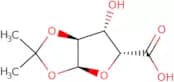
CAS:1,2-O-Isopropylidene-a-D-xylofuranuronic acid is a methylated form of the sugar xylofuranose. It is also known as 1,2-di-O-methylxylofuranuronic acid. The compound belongs to the class of oligosaccharides and polysaccharides. It has CAS number 35522-89-5 and molecular weight of 206.24 g/mol. It is soluble in water and ethanol but insoluble in ether. It can be used for chemical synthesis and modification of saccharide chains.Fórmula:C8H12O6Pureza:Min. 95%Peso molecular:204.18 g/molD-Sedoheptulose-2,3,4,5,6,7-13C6
D-sedoheptulose is a rare sugar found in certain plants and fruits, and it is not as commonly studied or utilized as other sugars like glucose or fructose. However, it has been investigated for its potential biological activities and applications in the food and pharmaceutical industries.
Pureza:Min. 95%Methyl 2-deoxy-3,5-di-O-pivaloyl-a-D-ribofuranoside
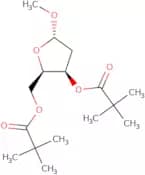
Methyl 2-deoxy-3,5-di-O-pivaloyl-alpha-D-ribofuranoside is a custom synthesis of a complex carbohydrate that can be used in glycosylation and polysaccharide synthesis. This product is a sugar with a CAS No. that has been modified with methylation, fluorination, and click chemistry. This product is synthesized by reacting the corresponding reactant monosaccharides with an acylating agent in the presence of a base to form 2,3,5-trihydroxybenzaldehyde esters. The 2,3,5-trihydroxybenzaldehyde esters are then reacted with an alcohol or phenol to form 2,4,6-trihydroxybenzalacetone derivatives which are converted into the desired product by hydrolysis.Fórmula:C16H28O6Pureza:Min. 95%Forma y color:Oil.Peso molecular:316.39 g/mol2,4:3,5-Di-O-benzylidene-L-idaric acid
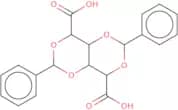
CAS:2,4:3,5-Di-O-benzylidene-L-idaric acid is a high purity natural product with a custom synthesis. It is one of the most important compounds in glycosylation and saccharide synthesis. 2,4:3,5-Di-O-benzylidene-L-idaric acid can be used to synthesize complex carbohydrates with excellent quality. This product is also an important building block for the modification of oligosaccharides and monosaccharides. The CAS number for this compound is 1219147-84-8.Fórmula:C20H18O8Pureza:Min. 95%Peso molecular:386.35 g/molN-(trans-3-Hydroxycotinine)-b-D-glucuronide methyl-D3
Producto controladoN-(trans-3-Hydroxycotinine)-b-D-glucuronide methyl-D3 is a high purity synthetic oligosaccharide that can be used in the synthesis of complex carbohydrates. It is a glycosylation product of 3-hydroxycotinine, which is a fluorinated monosaccharide, and b-D-glucuronic acid, which is an Oligosaccharide. N-(trans-3-Hydroxycotinine)-b-D-glucuronide methyl-D3 has been shown to exhibit antibacterial activity against Gram positive bacteria such as Staphylococcus aureus and Clostridium perfringens.Fórmula:C16H17D3N2O8Pureza:Min. 95%Peso molecular:371.36 g/molSulphoquinovosyl diglyceride
Sulphoquinovosyl diglyceride is a biochemical that belongs to the group of lipids. It is a component of the membrane system in chloroplasts, where it acts as an electron carrier for photosynthesis. Sulphoquinovosyl diglyceride is also biosynthesized from linolenic acid and ethanolamine. It is required for synthesis of fatty acids and may be involved in the production of symptoms associated with viral infection by inhibiting viral replication. This lipid also has been shown to inhibit phosphatidylcholine biosynthesis, which may lead to cell death when incubated at constant temperature.
Pureza:Min. 95%Dihydroresveratrol 3-O-glucoside
CAS:Dihydroresveratrol 3-O-glucoside is a synthetic, monosaccharide, oligosaccharide, complex carbohydrate with the molecular formula C6H10O5. It has CAS No. 100432-87-9 and is custom synthesized. Dihydroresveratrol 3-O-glucoside is glycosylated and polysaccharided with a high purity.Pureza:Min. 95%Methyl 4,6-O-isopropylidene-a-D-mannopyranoside
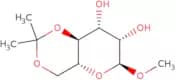
CAS:Methyl 4,6-O-isopropylidene-a-D-mannopyranoside is a modified oligosaccharide. It is a custom synthesis and has high purity. The CAS number for this product is 63167-67-9. This product can be used as a monosaccharide or polysaccharide, which is a sugar with multiple saccharides joined together. It has been fluorinated and glycosylated, which are two modifications that can be done to this product.
Fórmula:C10H18O6Pureza:Min. 95%Peso molecular:234.25 g/mol1,6-Anhydro-2,3-dideoxy-b-D-threo-hex-2-enopyranose
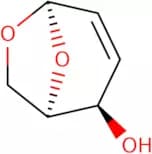
CAS:1,6-Anhydro-2,3-dideoxy-b-D-threo-hex-2-enopyranose is a carbohydrate that is synthesized from the sugar D-ribose. It can be used as a fluoroquinolone antibiotic. 1,6-Anhydro-2,3-dideoxy-b-D-threohexenopyranose has been modified with fluorine in order to increase its antibacterial activity. This modification makes the compound resistant to bacterial enzymes and allows it to bind to bacterial DNA. 1,6-Anhydro 2,3dideoxy bDthreo hexenopyranose also reacts with sugars and proteins to form glycosides and oligosaccharides that have high purity.Fórmula:C6H8O3Pureza:Min. 95%Peso molecular:128.13 g/molEthyl 2-amino-b-D-glucuronide
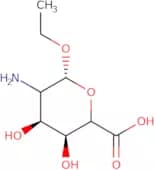
Ethyl 2-amino-b-D-glucuronide is a Carbohydrate, Modification, saccharide, Oligosaccharide, sugar. The CAS number for this compound is 6058-91-9. This product can be synthesized in the lab using Custom synthesis and High purity. Ethyl 2-amino-b-D-glucuronide is a Synthetic and Monosaccharide. This product has Click modification and Methylation. Ethyl 2-amino-b-D-glucuronide is also Glycosylated.Fórmula:C8H15NO6Pureza:Min. 95%Peso molecular:221.21 g/mol3-O-(4,7-Di-O-methyl-N-acetyl-alpha-neuraminosyl)-D-galactopyranoside - i
3-O-(4,7-Di-O-methyl-N-acetyl-alpha-neuraminosyl)-D-galactopyranoside - i is a modified carbohydrate. It is a saccharide that has been fluorinated and methylated with the click modification. This modification is an efficient method for site specific incorporation of fluorine atoms in organic molecules. The product is custom synthesized to order and can be provided at high purity. 3-O-(4,7-Di-O-methyl-N-acetyl-alpha-neuraminosyl)-D-galactopyranoside - i is used as a sugar in organic synthesis reactions.Pureza:Min. 95%6-O-Trityl-1,2,3,4-Tetra-O-acetyl-D-mannopyranose
CAS:6-O-Trityl-1,2,3,4-Tetra-O-acetyl-D-mannopyranose is a custom synthesis that is used as a methylation or Click modification. It has been shown to be an effective oligosaccharide and polysaccharide synthesis. 6-O-Trityl-1,2,3,4-Tetra-O-acetyl-D-mannopyranose has been shown to have high purity and high quality. It is a fluorinated compound with a CAS number of 1307296 - 38 - 3.Fórmula:C33H34O10Pureza:Min. 95%Peso molecular:590.62 g/mol1-13C-D-Rhamnose
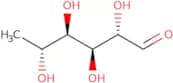
CAS:1-13C-D-Rhamnose is a monosaccharide that belongs to the group of pentoses. It is an inhibitor of bacterial growth and has been shown to inhibit the growth of P. aeruginosa strains. The mechanism of action for 1-13C-D-Rhamnose is not yet known, but it may be due to its ability to inhibit bacterial DNA polymerase, which prevents chain reactions from occurring and leads to cell death. 1-13C-D-Rhamnose has a homologous structure to GDP-D-mannose and can interact with hydrogen bonding interactions. It is found in papillae on the tongue and inhibits taste receptor cells by binding to the sweet taste receptors on the surface of these cells. The optimal pH for 1-13C-D-Rhamnose's inhibitory properties is 5.5Fórmula:C6H12O5Pureza:Min. 95%Peso molecular:164.16 g/mol