Monosacáridos
Los monosacáridos son la forma más simple de los carbohidratos y sirven como bloques fundamentales para azúcares más complejos y polisacáridos. Estas moléculas de azúcar única juegan roles críticos en el metabolismo energético, la comunicación celular y los componentes estructurales de las células. En esta sección, encontrará una amplia variedad de monosacáridos esenciales para la investigación en bioquímica, biología molecular y glicociencia. Estos compuestos son cruciales para estudiar las rutas metabólicas, los procesos de glucosilación y el desarrollo de agentes terapéuticos. En CymitQuimica, ofrecemos monosacáridos de alta calidad para apoyar sus necesidades de investigación, asegurando precisión y fiabilidad en sus investigaciones científicas.
Subcategorías de "Monosacáridos"
- Allosas(11 productos)
- Arabinosas(21 productos)
- Eritrosas(11 productos)
- Fructosas(9 productos)
- Fucosas(36 productos)
- Galactosamina(41 productos)
- Galactosa(261 productos)
- Glucosas(365 productos)
- Ácidos glucurónicos(51 productos)
- Glico-sustratos para enzimas(77 productos)
- Gulosas(6 productos)
- Idosas(4 productos)
- Inositoles(15 productos)
- Lyxosas(4 productos)
- Manosas(65 productos)
- O-glicanos(48 productos)
- Psicosas(3 productos)
- Ramnosas(10 productos)
- Ribosas(61 productos)
- Ácidos siálicos(100 productos)
- Sorbosas(4 productos)
- Azúcares(173 productos)
- Tagatosis(4 productos)
- Taloses(8 productos)
- Xilosas(20 productos)
Mostrar 17 subcategorías más
Se han encontrado 6090 productos de "Monosacáridos"
Ordenar por
Pureza (%)
0
100
|
0
|
50
|
90
|
95
|
100
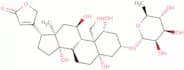
Ouabain - anhydrous
CAS:<p>Ouabain is a potent inhibitor of the Na+/K+-ATPase pump in cardiac and skeletal muscles. It has been shown to inhibit signal pathways that are involved in the regulation of cellular membrane potentials, such as the michaelis–menten kinetics. Ouabain has also been found to be effective against syncytial virus infection. Ouabain inhibits viral replication by inhibiting cellular protein synthesis and reducing cell number due to its cytotoxic effects on myocardial cells. Ouabain has also been found to inhibit neuronal death induced by α1-adrenergic receptor agonists, such as p2y receptors.</p>Fórmula:C29H44O12Pureza:Min. 95%Forma y color:PowderPeso molecular:584.65 g/mol6-O-Feruloylsucrose
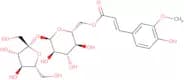
CAS:<p>6-O-Feruloylsucrose is a phenylpropanoid glycoside that has been shown to inhibit the growth of Gram-positive and Gram-negative bacteria. It is also hepatoprotective and has been shown to have antimicrobial activity against fungi, such as Candida albicans. The 6-O-feruloylsucrose inhibits microbial infections by binding to metal cations, which are essential for bacterial cell wall synthesis. This leads to a decrease in the production of microbial cell walls, inhibiting their growth. 6-O-Feruloylsucrose can be used as an additive in food products or as a preservative in cosmetics.</p>Fórmula:C22H30O14Pureza:Min. 95%Forma y color:White To Off-White SolidPeso molecular:518.47 g/mol2-Bromoethyl 2,3,4,6-tetra-O-acetyl-b-D-glucopyranoside
CAS:2-Bromoethyl 2,3,4,6-tetra-O-acetyl-b-D-glucopyranoside is a modified form of D-(+)-glucose. The modification has been accomplished through the use of a click chemistry reaction with an azide and alkyne. This product is offered for custom synthesis and can be used in glycosylation reactions.Fórmula:C16H23BrO10Pureza:Min. 95%Peso molecular:455.25 g/molBenzyl b-D-xylopyranoside
CAS:Benzyl b-D-xylopyranoside is an inorganic compound that is used as a radioactive tracer to study the movement of fluid and macromolecules in the apical membrane of the chondrocyte. It was shown to be effective in preventing the formation of tissue-damaging acute phase proteins when administered at a time point corresponding to the onset of an acute inflammatory response. Benzyl b-D-xylopyranoside has also been shown to have regulatory effects on untreated control cells, but not on untreated control cells. This drug inhibits biosynthesis of GAGs, which are molecules that provide structural support for cells and tissues. The mechanism by which benzyl b-D-xylopyranoside exerts its effect is not yet known.Fórmula:C12H16O5Pureza:Min. 95%Peso molecular:240.25 g/molPentaric acid
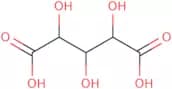
CAS:<p>Pentaric acid is a crystalline, monocarboxylic acid with a hydroxyl group. It is used as an inhibitor of corrosion in metal and as a disinfectant. Pentaric acid can be found in urine samples and has been shown to be an effective inhibitor of the enzymatic reaction that produces azobenzene, which is associated with the development of bladder cancer. This compound also inhibits the growth of bacteria. Pentaric acid is used as an additive in some detergents and soaps because it can inhibit the growth of bacteria on surfaces. <br>Pentaric acid was first synthesized by German chemist Otto Wohlert in 1834. Hydrogen ions are released when pentaric acid dissolves in water, lowering the pH level and causing corrosion to metal surfaces. The corrosion inhibition properties of pentaric acid have been known since its discovery, but its anti-bacterial properties were not discovered until recently when researchers found that pentar</p>Fórmula:C5H8O7Pureza:Min. 95%Peso molecular:180.11 g/molScopoletin b-D-glucuronide
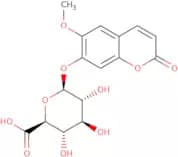
CAS:Scopoletin b-D-glucuronide is a synthetic compound that is modified by the addition of a fluorine atom to the methyl group in scopoletin. Scopoletin b-D-glucuronide has shown antiviral activity against herpes simplex virus type 1 and 2, with an IC50 value of 1.6 μM. It also has antiviral activity against HIV type 1 and HIV type 2, with an IC50 value of 0.5 μM. This compound also inhibits viral DNA synthesis, which may be due to its inhibition of host cell protein synthesis and subsequent inhibition of viral protein synthesis. Scopoletin b-D-glucuronide has been shown to have anti-inflammatory effects in a mouse model for rheumatoid arthritis, and it may be due to its suppression of prostaglandin synthesis or interference with leukocyte chemotaxis.Fórmula:C16H16O10Pureza:Min. 95%Peso molecular:368.29 g/molNaltrexone 3-D-glucuronide-D4
<p>Naltrexone 3-D-glucuronide-D4 is a carbohydrate. It is a glycosylation product of naltrexone. The compound has been synthesized by the methylation of naltrexone and the glycosylation of the resultant product with glucose. Naltrexone 3-D-glucuronide-D4 is a high purity, custom synthesis, synthetic carbohydrate with a CAS number.</p>Pureza:Min. 95%Sertraline carbamoyl glucuronide
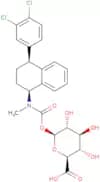
CAS:<p>Sertraline is a selective serotonin reuptake inhibitor (SSRI) that is used primarily in the treatment of depression and anxiety. It inhibits the serotonin transporter protein, making more serotonin available for binding to postsynaptic receptors. Sertraline also has a minor inhibitory effect on norepinephrine and dopamine reuptake, but its primary function is as a selective serotonin reuptake inhibitor. The major metabolite of sertraline is sertraline carbamoyl glucuronide, which is formed through glucuronidation by UGT2B7. This metabolite has been found to be bifurcated with one half being excreted in urine and the other half being excreted in faeces. The half that undergoes urinary excretion has been shown to have a half-life of 24 hours whereas the other half has a much shorter half-life of 2 hours. Carbamoylation of sertraline may</p>Fórmula:C24H25Cl2NO8Pureza:Min. 95%Peso molecular:526.36 g/mol5-Deoxy-L-lyxose
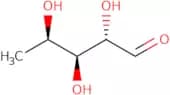
CAS:<p>5-Deoxy-L-lyxose is a marine bioactive molecule that belongs to the group of 5-deoxy sugars. Its ring structure is similar to that of ribulose, and it has been found in marine sponges. This compound has a hydroxyl group in its structure and can be oxidized to produce orange pigments. The compound's nmr spectra show it to be an isomer of benzoate, with the sodium salt being more soluble in water than the sodium salts of other 5-deoxy sugars. 5-Deoxy-L-lyxose is also conjugated with amino acids or peptides.</p>Fórmula:C5H10O4Pureza:Min. 95%Peso molecular:134.13 g/molMethyl a-D-mannofuranoside
CAS:Methyl a-D-mannofuranoside is a synthetic sugar that has been modified by the addition of fluorine at C-1 and methylation at C-2. This modification provides the compound with desired physical properties, such as increased stability and solubility. Methyl a-D-mannofuranoside can be used in the synthesis of oligosaccharides, which are complex carbohydrates consisting of three to ten monosaccharides linked together by glycosidic bonds. It is also used for click chemistry modifications.Fórmula:C7H14O6Pureza:Min. 95%Peso molecular:194.18 g/mol(R)-Ketoprofen b-D-glucuronide
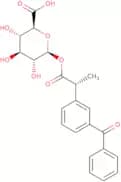
CAS:<p>(R)-Ketoprofen b-D-glucuronide is a synthetic modified sugar that is produced by the glucuronidation of ketoprofen, a nonsteroidal anti-inflammatory drug. The modification of ketoprofen with glucuronic acid can be achieved through an enzymatic process, which is catalyzed by UDP-glucuronyltransferase. This modification increases the solubility of ketoprofen and its ability to penetrate cells. (R)-Ketoprofen b-D-glucuronide has been shown to have antibacterial properties against Gram positive bacteria such as Staphylococcus aureus and Streptococcus pyogenes. It has also shown antiviral activity against HIV-1 due to its inhibition of reverse transcriptase, which is an enzyme important for viral replication.</p>Fórmula:C22H22O9Pureza:Min. 95%Forma y color:White to off-white solid.Peso molecular:430.4 g/molMethyl 2,3-O-isopropylidene-5-O-(4-toluenesulfonyl)-b-D-ribofuranoside
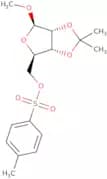
CAS:<p>Methyl 2,3-O-isopropylidene-5-O-(4-toluenesulfonyl)-b-D-ribofuranoside is a nucleoside derivative. It is a deprotected nucleoside that can be used as an alkylation agent. Methyl 2,3-O-isopropylidene-5-O-(4-toluenesulfonyl)-b-D-ribofuranoside is the sodium salt of 5'-O-(4-(methylsulfonyl)benzenesulfonate) -2'-deoxyadenosine. This compound is used in the preparation of other nucleosides, including 5'-O-(4-(methylsulfonyl)benzenesulfonate) -2'-deoxycytidine and 5'-O-(4-(methylsulfonyl)benzenesulfonate) -2'-</p>Pureza:Min. 95%Myo-inositol-d6
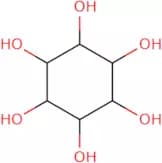
CAS:<p>Myo-inositol-d6 is a stable isotope of myo-inositol. It is used to monitor the biosynthesis of myo-inositol in yeast cells. Myo-inositol is a carbohydrate that has regulatory functions in yeast cells. Myo-inositol-d6 can be used as an extracellular bioassay for determining the uptake and intracellular distribution of myo-inositol in mammalian cells.</p>Fórmula:C6H12O6Pureza:Min. 95%Forma y color:PowderPeso molecular:186.19 g/mol1,2-Dichloro-1,2-dideoxy-myo-inositol
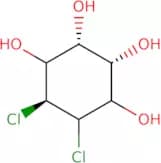
<p>1,2-Dichloro-1,2-dideoxy-myo-inositol is a methylated saccharide. It is used in the synthesis of complex carbohydrates and can be modified to include fluorine atoms. 1,2-Dichloro-1,2-dideoxy-myo-inositol has been shown to inhibit the growth of Staphylococcus aureus and Clostridium perfringens.</p>Pureza:Min. 95%a-D-Xylopyranosyl azide
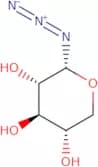
CAS:<p>a-D-Xylopyranosyl azide is a sugar that can be synthesized from the reaction of 1,2-dichloroethane with 2,3,4,6-tetra-O-acetyl-a-D-xylopyranose. This compound has a high purity and can be custom synthesized to order. It is used in glycosylation reactions to modify saccharides and oligosaccharides. It has been shown to be useful for click modification and fluorination reactions.</p>Pureza:Min. 95%3-Deoxy-3-fluoro-D-fructose
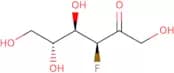
CAS:<p>3-Deoxy-3-fluoro-D-fructose is a monosaccharide that has been used as an inhibitor of glucose uptake and metabolism in the lymphocytic leukemia cell line. This compound has been shown to inhibit the glucose transporter GLUT1, which is responsible for the transport of glucose across the plasma membrane. 3-Deoxy-3-fluoro-D-fructose inhibits cancer cells by inhibiting galactitol production through inhibition of gluconeogenesis. It also inhibits oxidative phosphorylation in lymphocytic leukemia cells, leading to apoptosis. 3-Deoxy-3-fluoro-D-fructose has been shown to inhibit cancer growth by blocking glucose uptake in xenopus oocytes.</p>Pureza:Min. 95%2-Deoxy-D-ribose-anilide
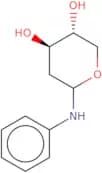
CAS:<p>2-Deoxy-D-ribose-anilide is a fluorinated monosaccharide that is used as a synthetic building block for the synthesis of oligosaccharides, polysaccharides, and other complex carbohydrates. This compound has been modified with methyl groups and click chemistry to form new types of sugars. 2-Deoxy-D-ribose-anilide is also available in high purity and can be used for glycosylation reactions.</p>Fórmula:C11H15NO3Pureza:Min. 95%Forma y color:Off-White To Light (Or Pale) Yellow SolidPeso molecular:209.24 g/mol1,4:3,6-Dianhydro- 2- O- methyl-D- glucitol
CAS:<p>1,4:3,6-Dianhydro-2-O-methyl-D-glucitol is a modified sugar that belongs to the group of carbohydrates. It is synthesized by the modification of 1,4:3,6-dianhydro-2,5-diO-methyl D glucitol with methyl iodide and sodium methoxide. The compound is used in pharmaceuticals as an excipient and in cosmetics as a moisturizer. It has been shown to be effective against influenza A virus.</p>Fórmula:C7H12O4Pureza:Min. 95%Peso molecular:160.17 g/mol1,3-O-Benzylidene-L-arabitol
CAS:1,3-O-Benzylidene-L-arabitol is an enantiomer of arabinitol. It has been shown to have cytotoxic effects on cultured human leukemia cells, but the mechanism of action is unclear. 1,3-O-Benzylidene-L-arabitol may inhibit glycosylation by inhibiting the formation of a key enzyme that catalyzes the transfer of glucose to serine in glycosphingolipids and glycosylation. 1,3-O-Benzylidene-L-arabitol also inhibits the synthesis of erythrosphingosine and psychosine by blocking galactosyl transferase.Fórmula:C12H16O5Pureza:Min. 95%Peso molecular:240.26 g/mol1,3,6-Tri-O-acetyl-2,4-dideoxy-2-phthalimido-b-D-glucopyranose
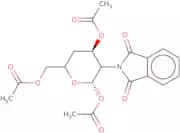
CAS:1,3,6-Tri-O-acetyl-2,4-dideoxy-2-phthalimido-b-D-glucopyranose is a modification of the sugar molecule. This product is a custom synthesis and can be used in research to synthesize complex carbohydrates. It is also a synthetic carbohydrate that has been fluorinated and saccharides have been methylated and glycosylated. It has CAS No. 1260591-45-4 and can be used as a monosaccharide or polysaccharide.Fórmula:C20H21NO9Pureza:Min. 95%Peso molecular:419.38 g/mol