Monosacáridos
Subcategorías de "Monosacáridos"
- Allosas(11 productos)
- Arabinosas(21 productos)
- Eritrosas(11 productos)
- Fructosas(9 productos)
- Fucosas(36 productos)
- Galactosamina(41 productos)
- Galactosa(261 productos)
- Glucosas(365 productos)
- Ácidos glucurónicos(51 productos)
- Glico-sustratos para enzimas(77 productos)
- Gulosas(6 productos)
- Idosas(4 productos)
- Inositoles(15 productos)
- Lyxosas(4 productos)
- Manosas(65 productos)
- O-glicanos(48 productos)
- Psicosas(3 productos)
- Ramnosas(10 productos)
- Ribosas(61 productos)
- Ácidos siálicos(100 productos)
- Sorbosas(4 productos)
- Azúcares(173 productos)
- Tagatosis(4 productos)
- Taloses(8 productos)
- Xilosas(20 productos)
Se han encontrado 6090 productos de "Monosacáridos"
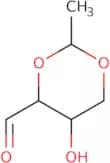
2,4-O-Ethylidene-D-erythrose
CAS:2,4-O-Ethylidene-D-erythrose is a trimerization product of glyoxal and acetaldehyde. It is an aldehyde that can be used as a precursor to other compounds. The hydrated form of 2,4-O-ethylidene-D-erythrose has been rationalized by the mesoxalic acid and water molecules to form the trimer. This compound can be produced from the glycolaldehyde and sulfoxide in an oxidation reaction with hydrogen peroxide. The acetylation of 2,4-O-ethylidene-D-erythrose produces isoxazolidines which are stereoselective.
Fórmula:C6H10O4Pureza:Min. 95%Peso molecular:146.14 g/mol1,6:3,4-Dianhydro-b-D-altropyranose
CAS:1,6:3,4-Dianhydro-b-D-altropyranose is a sugar that has been modified by methylation. It is a white powder with a melting point of 197°C. This product can be used as an intermediate in the synthesis of saccharides and polysaccharides. It can also be used as an intermediate for glycosylations and fluorinations. 1,6:3,4-Dianhydro-b-D-altropyranose is available in high purity and custom synthesis options.Fórmula:C6H8O4Pureza:Min. 95%Peso molecular:144.13 g/molL-Idonic acid-1,4-lactone
CAS:L-Idonic acid-1,4-lactone is a custom synthesis that is a glycoconjugate with a carbohydrate moiety. It can be used for the modification of glycoproteins and glycopeptides, and has shown to have anti-inflammatory properties. L-Idonic acid-1,4-lactone is a sugar that is made up of an idonic acid attached to an alpha (1→4)-linked D-glucose molecule. This product can be methylated or glycosylated and has been shown to have anticancer activity in animal models. L-Idonic acid-1,4-lactone is soluble in water and has been fluorinated at the 4 position on the glucose unit.Fórmula:C6H10O6Pureza:Min. 95%Peso molecular:178.14 g/mol1,2,3,4-Tetra-O-acetyl-b-D-arabinopyranose
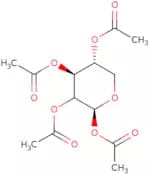
CAS:1,2,3,4-Tetra-O-acetyl-b-D-arabinopyranose is a custom synthesis of a carbohydrate. It is a tetra acetylated form of arabinopyranose that has been fluorinated. The fluorination process increases the reactivity of the sugar and allows for it to be glycosylated or methylated. This sugar can be used in the synthesis of oligosaccharides and complex carbohydrates. These can be used as sweeteners or functional food additives.Fórmula:C13H18O9Pureza:Min. 95%Peso molecular:318.28 g/mola-L-Fucose-1-phosphate
a-L-Fucose-1-phosphate is a Glycosylation, complex carbohydrate, Methylation, Click modification, Polysaccharide, Fluorination, saccharide, Modification, sugar, Oligosaccharide and Synthetic product. a-L-Fucose-1-phosphate is available for custom synthesis and can be ordered with high purity.
Pureza:Min. 95%1,4-Dideoxy-1,4-imino-D-xylitol HCl
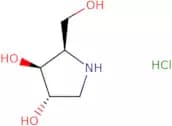
CAS:1,4-Dideoxy-1,4-imino-D-xylitol HCl (DDX) is a potent inhibitor of the enzyme carboxypeptidase A2. DDX has been shown to inhibit the growth of HIV in vitro and in vivo. DDX also inhibits the production of proinflammatory cytokines and neurotrophic factors from HL60 cells. It has been shown to be a potential drug target for the treatment of infectious diseases such as alphaviruses, which produce a severe neuroinvasive disease in humans. DDX binds to dna with high affinity and specificity, but does not bind to RNA or proteins. DDX inhibits mitochondrial membrane potential by binding to ATP synthase and blocking the synthesis of ATP. DDX has also been shown to have an anti-oxidative injury effect on mitochondria, which may contribute to its inhibition of viral replication.
Fórmula:C5H11NO3·HClPureza:Min. 95%Peso molecular:169.61 g/mol2-Keto-D-galactonic acid
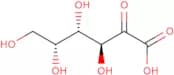
CAS:2-Keto-D-galactonic acid is a chemical compound that is used as an intermediate in the synthesis of antibiotics. It has been found to inhibit the growth of bacteria, such as Erwinia carotovora and Escherichia coli. The 2-keto-d-galactonic acid can be crystallized in two forms: an amorphous form or a crystalline form.
Pureza:Min. 95%Glufosfamide
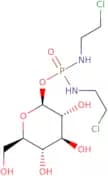
CAS:Glufosfamide is a cytotoxic drug that is used in the treatment of some types of cancer. It is a prodrug that requires conversion to its active form, glufosfamid, by esterase enzymes before it can exert its genotoxic effects. Glufosfamide has shown to be active against platinum-resistant ovarian cancer and solid tumours. This drug also has been shown to inhibit the growth of prostate cancer cells and miapaca-2 cells, which are derived from pancreatic cancer. Glufosfamide has been found to have low toxicity in mice, but there may be adverse reactions when combined with other drugs such as erythromycin or ketoconazole.
Fórmula:C10H21Cl2N2O7PPureza:Min. 95%Peso molecular:383.16 g/molFusidic acid acyl glucuronide
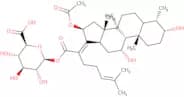
CAS:Fusidic acid acyl glucuronide is a high purity, custom synthesis, click modification of fusidic acid. It has been modified by fluorination and methylation. Fusidic acid acyl glucuronide is an Oligosaccharide, Polysaccharide, saccharide, sugar with a CAS No. 13013-66-6. It is a complex carbohydrate that has been synthesized using high purity, monosaccharides and polysaccharides.Fórmula:C37H56O12Pureza:Min. 95%Peso molecular:692.83 g/molPentaric acid
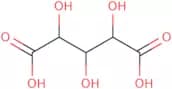
CAS:Pentaric acid is a crystalline, monocarboxylic acid with a hydroxyl group. It is used as an inhibitor of corrosion in metal and as a disinfectant. Pentaric acid can be found in urine samples and has been shown to be an effective inhibitor of the enzymatic reaction that produces azobenzene, which is associated with the development of bladder cancer. This compound also inhibits the growth of bacteria. Pentaric acid is used as an additive in some detergents and soaps because it can inhibit the growth of bacteria on surfaces.
Pentaric acid was first synthesized by German chemist Otto Wohlert in 1834. Hydrogen ions are released when pentaric acid dissolves in water, lowering the pH level and causing corrosion to metal surfaces. The corrosion inhibition properties of pentaric acid have been known since its discovery, but its anti-bacterial properties were not discovered until recently when researchers found that pentarFórmula:C5H8O7Pureza:Min. 95%Peso molecular:180.11 g/molL-Xylose-BSA
L-Xylose-BSA is a glycosylation product that has been modified with methylation, click modification, and fluorination. The compound is a complex carbohydrate that is classified as a polysaccharide. L-Xylose-BSA is a monosaccharide that has been synthesized using the Custom synthesis and high purity techniques. This saccharide is used in various types of research including glycosylation, methylation, click modification, and fluorination. L-Xylose-BSA can also be found under CAS No. 6525-83-8 or EC No. E 1451/1.Pureza:Min. 95%Fucose 2-nitrophenylhydrazone
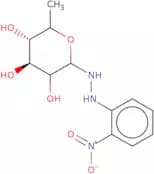
Fucose 2-nitrophenylhydrazone is a custom synthesis that is a modification of fucose. It has been used in methylation, click modification, and fluorination. This compound has been shown to be effective in the synthesis of oligosaccharides and polysaccharides. Fucose 2-nitrophenylhydrazone has also been used as an intermediate for the synthesis of saccharides such as monosaccharide and sugar.
Fórmula:C12H17N3O6Pureza:Min. 95%Peso molecular:299.11174L-Idaric acid 1,4-lactone
CAS:L-Idaric acid 1,4-lactone is a synthetic glycosylidic sugar that can be modified with fluorine compounds to create a variety of derivatives. It is used as a monomer in the synthesis of oligosaccharides, polysaccharides, and complex carbohydrates. L-Idaric acid 1,4-lactone can also be synthesized from methyl erythritol tetraacetate and glycerol in the presence of acetic anhydride.
Fórmula:C6H8O7Pureza:Min. 98%Forma y color:White PowderPeso molecular:192.12 g/mol3-Amino-2,3-dideoxy-D-myo-inositol
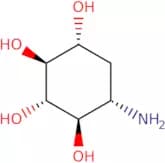
CAS:3-Amino-2,3-dideoxy-D-myo-inositol (3ADMI) is a gene product that belongs to the class of chemical biology. It is an actuator that has been shown to be able to bind and activate enzymes. 3ADMI is used as a substrate in the calibration of enzyme kinetics and as an analog for aminoglycosides. The conjugates of 3ADMI have been shown to prevent viral replication by inhibiting the synthesis of DNA or RNA.
Fórmula:C6H13NO4Pureza:Min. 95%Forma y color:White/Off-White SolidPeso molecular:163.17 g/molMannosucrose
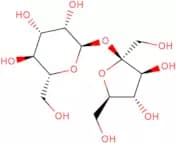
CAS:Mannosucrose (MS) is a natural sugar that is found in various plants, such as sugar cane and sugar beets. It is a disaccharide composed of two molecules of glucose linked by an alpha-1,2 glycosidic bond. Mannosucrose has been shown to have antioxidant properties and may be used as a functional sweetener for food products. This compound acts as a solute and can bind to the surface of the tongue's taste buds, which may result in its use as a microalgal particle to improve the taste of food products containing algae.
Mannosucrose also has been used as a model protein in order to study genetic mechanisms.Fórmula:C12H22O11Pureza:Min. 95%Peso molecular:342.3 g/molN-Acetyl-L-neuraminic acid
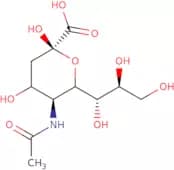
CAS:N-Acetyl-L-neuraminic acid is a glycosylation compound that is an important component of the cell wall of Gram negative bacteria. It is used in the synthesis of polysaccharides and in the formation of complex carbohydrates. N-Acetyl-L-neuraminic acid has been studied for its potential use as a drug delivery agent due to its ability to inhibit the activity of enzymes such as α-mannosidase, which can lead to tumor metastasis. This compound can be synthesized using methylation, fluorination, and click chemistry, or custom synthesized by ordering specific monosaccharides. N-Acetyl-L-neuraminic acid can also be modified with acetate groups to create an acetylated form for use in chemical analysis or as a substrate for enzymatic reactions.
Fórmula:C11H19NO9Pureza:Min. 95%Peso molecular:309.27 g/molEthyl a-D-thiomannopyranoside
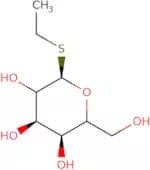
CAS:Ethyl a-D-thiomannopyranoside is an oligosaccharide that is synthesized by the methylation of a-D-mannopyranoside. This product is also known as 3,6-O-(2-acetamido)-a-D-glucopyranose, which is a type of saccharide. It has been fluorinated for use in structural studies. The modification of this product includes click chemistry and glycosylation to produce a complex carbohydrate with high purity and high molecular weight. The monosaccharides include glucose, galactose, and mannose. This product has been used as a synthetic sugar to produce oligosaccharides or polysaccharides.
Fórmula:C8H16O5SPureza:Min. 95%Peso molecular:224.28 g/mola-D-Xylopyranosyl azide
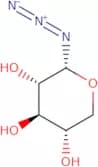
CAS:a-D-Xylopyranosyl azide is a sugar that can be synthesized from the reaction of 1,2-dichloroethane with 2,3,4,6-tetra-O-acetyl-a-D-xylopyranose. This compound has a high purity and can be custom synthesized to order. It is used in glycosylation reactions to modify saccharides and oligosaccharides. It has been shown to be useful for click modification and fluorination reactions.
Pureza:Min. 95%Hydroxyterbinafine b-D-glucuronide
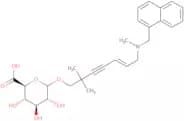
CAS:Hydroxyterbinafine b-D-glucuronide is a synthetic monosaccharide that has been modified by the addition of a fluorine atom. Hydroxyterbinafine b-D-glucuronide is an oligosaccharide or polysaccharide, which is composed of at least two saccharides. It is obtained from the hydrolysis of methylated hydroxyterbinafine. This compound has been shown to have antiviral, antifungal and anticancer activities.
Fórmula:C27H33NO7Pureza:Min. 95%Peso molecular:483.57 g/molAlphadolone 21-b-D-glucuronide
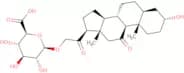
CAS:Alphadolone 21-b-D-glucuronide (ADG) is a synthetic compound that belongs to the group of carbohydrates. ADG is a sugar that has been modified with fluorination and methylation. It is also glycosylated and click modified. This product is custom synthesized for research purposes only.Fórmula:C27H40O10Pureza:Min. 95%Peso molecular:524.6 g/mol