Monosacáridos
Los monosacáridos son la forma más simple de los carbohidratos y sirven como bloques fundamentales para azúcares más complejos y polisacáridos. Estas moléculas de azúcar única juegan roles críticos en el metabolismo energético, la comunicación celular y los componentes estructurales de las células. En esta sección, encontrará una amplia variedad de monosacáridos esenciales para la investigación en bioquímica, biología molecular y glicociencia. Estos compuestos son cruciales para estudiar las rutas metabólicas, los procesos de glucosilación y el desarrollo de agentes terapéuticos. En CymitQuimica, ofrecemos monosacáridos de alta calidad para apoyar sus necesidades de investigación, asegurando precisión y fiabilidad en sus investigaciones científicas.
Subcategorías de "Monosacáridos"
- Allosas(11 productos)
- Arabinosas(21 productos)
- Eritrosas(11 productos)
- Fructosas(9 productos)
- Fucosas(36 productos)
- Galactosamina(41 productos)
- Galactosa(261 productos)
- Glucosas(365 productos)
- Ácidos glucurónicos(51 productos)
- Glico-sustratos para enzimas(77 productos)
- Gulosas(6 productos)
- Idosas(4 productos)
- Inositoles(15 productos)
- Lyxosas(4 productos)
- Manosas(65 productos)
- O-glicanos(48 productos)
- Psicosas(3 productos)
- Ramnosas(10 productos)
- Ribosas(61 productos)
- Ácidos siálicos(100 productos)
- Sorbosas(4 productos)
- Azúcares(173 productos)
- Tagatosis(4 productos)
- Taloses(8 productos)
- Xilosas(20 productos)
Mostrar 17 subcategorías más
Se han encontrado 6090 productos de "Monosacáridos"
Ordenar por
Pureza (%)
0
100
|
0
|
50
|
90
|
95
|
100
2,5-Anhydro-D-glucitol-1,6-diphosphate
CAS:<p>2,5-Anhydro-D-glucitol-1,6-diphosphate is a cell signaling molecule that is involved in the regulation of glycolysis and the phosphofructokinase enzyme. It binds to platelets and regulates platelet aggregation. This enzyme has been shown to be a potential drug target for cancer. Cancer cells have been found to contain higher concentrations of 2,5-Anhydro-D-glucitol-1,6-diphosphate than their normal counterparts. The increased concentration of this enzyme in cancer cells is due to an allosteric change in the enzyme’s activity. The increased activity leads to a more rapid metabolism of glucose, which provides energy for tumor growth and metastasis. This enzyme can be used as a marker for malignancy in human diseases such as breast cancer or prostate cancer.</p>Fórmula:C6H14O11P2Pureza:Min. 98%Forma y color:Clear LiquidPeso molecular:324.12 g/molN-Acetylmuramic acid 6-phosphate
CAS:N-Acetylmuramic acid 6-phosphate is a molecule that belongs to the class of compounds known as nucleotide phosphates. It is an intermediate in the biosynthesis of peptidoglycan, which is a major component of bacterial cell walls. N-Acetylmuramic acid 6-phosphate is synthesized from ATP and N-acetylmuramic acid by hydrolysis. The reaction mechanism for this transformation involves an imine intermediate, which can be formed through the action of two molecules of ATP and one molecule of N-acetylmuramic acid. This reaction is catalyzed by an enzyme called heterocyst. The enzyme kinetics for this transformation are influenced by many factors, including temperature, pH, and substrate concentration.Fórmula:C11H20NO11PPureza:Min. 95%Peso molecular:373.25 g/molD-Arabinose-5-phosphate
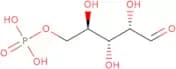
CAS:D-Arabinose-5-phosphate is an intermediate in the pentose phosphate pathway. It is synthesized from D-xylulose-5-phosphate by xylitol dehydrogenase. D-Arabinose-5-phosphate inhibits the enzyme xylitol dehydrogenase, which converts xylulose to d-xylulose, and thus prevents the formation of 5-hydroxyisoxazole phosphate, a precursor to the synthesis of NADPH. In this way, it blocks the synthesis of NADPH, which is essential for aerobic metabolism. This inhibition leads to a decrease in ATP production and consequently cell death.Fórmula:C5H11O8PPureza:Min. 95%Peso molecular:230.11 g/mol5-azido-5-deoxy-D-arabinose
CAS:5-azido-5-deoxy-D-arabinose is a compound derived from Aquilaria sinensis that has various biological activities. It has been shown to modulate transmembrane conductance by interacting with fatty acid-binding proteins and divalent metal ions. Additionally, it can regulate the activity of potassium channels, which play a crucial role in cellular function. 5-azido-5-deoxy-D-arabinose is known for its reactive properties and can form covalent adducts with nucleophilic residues in proteins, affecting their structure and function. This compound has also been studied for its potential therapeutic applications, such as enhancing the delivery of iron sucrose through electrode-based systems or improving the bioavailability of drugs like ketorolac or creatine. Furthermore, 5-azido-5-deoxy-D-arabinose exhibits interesting carbohydrate chemistry, making it a valuable tool for carbohydrate synthesis and modification. Its diverse characteristics and unique properties make it an intriguing compound for furtherFórmula:C5H9N3O4Pureza:Min. 95%1,2,3,4-Tetra-O-benzyl-6-O-trityl-a-D-mannopyranose
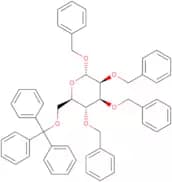
CAS:1,2,3,4-Tetra-O-benzyl-6-O-trityl-a-D-mannopyranose is a methylated form of mannopyranose. It can be custom synthesized and modified with various functional groups to produce a wide range of saccharide derivatives and oligosaccharides. The 1,2,3,4-tetra-O-benzyl group is commonly used for glycosylation reactions because it can be easily removed by acid hydrolysis. The methylation of the sugar molecule also increases its stability and prevents further reactions from occurring. This product is available in high purity and has been fluorinated on one or more hydroxyl groups to make it resistant to hydrolysis.Fórmula:C53H50O6Pureza:Min. 95%Forma y color:White PowderPeso molecular:782.96 g/mol2,3,4,6-Tetra-O-acetyl-a-D-mannopyranosyl azide
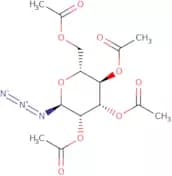
CAS:2,3,4,6-Tetra-O-acetyl-a-D-mannopyranosyl azide is a crystalline solid that can be obtained by heating 2,3,4,6-tetra-O-acetyl-a-D-mannopyranose with sodium azide. This compound has been used in the x-ray crystallographic technique for obtaining electron density maps. The x ray data collected from this compound showed the distinct difference between the electron density of the atoms and their surroundings.Fórmula:C14H19N3O9Forma y color:PowderPeso molecular:373.32 g/molBlumenol C glucoside
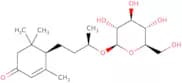
CAS:<p>Blumenol C glucoside is a natural compound that is found in plants. It has been found to have an apoptotic effect on cancer cells and may be used as a chemotherapeutic agent. Blumenol C glucoside has been shown to induce apoptosis in many cell types, including human carcinoma cells, by inhibiting the mitochondrial membrane potential. It also induces apoptosis by down-regulating Bcl-2 and up-regulating Bax proteins. The induction of apoptosis by Blumenol C glucoside is mediated through an increase in the release of cytochrome c from the mitochondria into the cytosol. In addition, it inhibits the expression of proinflammatory cytokines such as IL-1β and IL-6. This compound also induces apoptosis in normal human prostate epithelial cells and mouse colon epithelial cells without affecting normal human lung epithelial cells or mouse lung epithelial cells. A transcriptomic analysis revealed that Blumenol</p>Fórmula:C19H32O7Pureza:Min. 95%Forma y color:PowderPeso molecular:372.45 g/molMethyl 2-deoxy-2-fluoro-β-D-glucopyranoside
CAS:Methyl 2-deoxy-2-fluoro-b-D-glucopyranoside is a synthetic glycosylation product that is prepared by monosaccharide and polysaccharide modification. This fluorinated sugar has high purity and is easy to handle. It can be used in the synthesis of oligosaccharides, sugar chains, and other complex carbohydrate molecules. The CAS number for Methyl 2-deoxy-2-fluoro-b-D-glucopyranoside is 39110–58–2.Fórmula:C7H13FO5Pureza:Min. 95%Peso molecular:196.17 g/mol1,3,5-Tri-O-benzoyl-2-keto-α-D-ribofuranose
CAS:1,3,5-Tri-O-benzoyl-2-keto-a-D-ribofuranose (TOBR) is a high purity compound that can be custom synthesized to your specifications. The 1,3,5-trioxane ring is an important structural feature of TOBR. This modification has been shown to improve the stability and water solubility of the product. TOBR is an Oligosaccharide with a sugar or saccharide at the end of a Glycosylation chain. It is also classified as a Polysaccharide because it contains more than one saccharide unit and/or more than one type of sugar. To modify this product with Click chemistry, please contact us and we will send you instructions on how to proceed with this modification.Fórmula:C26H20O8Pureza:Min. 95%Peso molecular:460.43 g/molDesertomycin A
CAS:Please enquire for more information about Desertomycin A including the price, delivery time and more detailed product information at the technical inquiry form on this pageFórmula:C61H109NO21Pureza:Min. 95%Peso molecular:1,192.51 g/molLauryl glucoside
CAS:Lauryl glucoside is a cationic surfactant that has been used in pharmaceutical preparations for the treatment of bacterial vaginosis. Lauryl glucoside is a non-irritating, low-toxicity compound that is effective against most Gram-positive and Gram-negative bacteria. It has been shown to be an effective antimicrobial agent with an adsorption mechanism based on hydrogen bonding. This agent also has been shown to have skin cancer prevention properties, as it is able to inhibit the proliferation of human skin cells. Lauryl glucoside can also cause allergic reactions or sensitization in some individuals, while diamine tetraacetic acid (DTA) may be used as a stabilizer in products containing lauryl glucoside.Pureza:Min. 95%Methyl a-D-arabinofuranoside
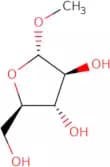
CAS:Methyl a-D-arabinofuranoside is an inhibitor of the enzyme D-arabinonolactate synthase, which is involved in the synthesis of arabinose from D-ribulose. It can be used for the diagnosis and treatment of pediatric patients with high activity index values in their blood. This drug has been shown to inhibit transcriptional regulation in human erythrocytes and to have structural similarities to the natural substrate. Methyl a-D-arabinofuranoside has also been shown to inhibit the activities of enzymes involved in cellular respiration, protein synthesis, and DNA replication. This inhibition leads to cell death by apoptosis or necrosis. The group P2 methyl a-D-arabinofuranoside (MAA) was tested as a potential analytical method for wastewater treatment; it was found that MAA could be used as an effective tool for removing organic matter from wastewater.Fórmula:C6H12O5Pureza:Min. 98 Area-%Forma y color:Colorless Clear LiquidPeso molecular:164.16 g/mol2-Methacryloxyethyl D-glucopyranoside - 25-50% in aqueous solution containing 200 ppm MEHQ inhibitor
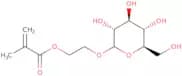
CAS:<p>alpha/beta mixture - ratio of mixture can be variable</p>Fórmula:C12H20O8Pureza:Min. 95%Forma y color:Yellow PowderPeso molecular:292.3 g/molN-Acetyl-D-[UL-13C6,15N]glucosamine
CAS:<p>N-Acetyl-D-[U-13C6,15N]glucosamine is a custom synthesis of an oligosaccharide. It is a methylated form of glucosamine and has been modified with 13C 6, 15N atoms. N-Acetyl-D-[U-13C6,15N]glucosamine is used in the study of complex carbohydrate structures and can be used for the production of polysaccharides. This chemical contains a single monosaccharide sugar that can be easily modified with fluorine to produce complex carbohydrates for research purposes. The purity level of this chemical is greater than 99%.</p>Pureza:Min. 95%1-Amino-1-deoxy-D-mannitol
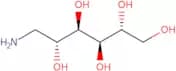
CAS:1-Amino-1-deoxy-D-mannitol (1ADM) is a substance that has been used in the treatment of pediatric pneumonia. 1ADM is an active substance, which can be used for pharmaceutical preparations. It is a matrix polymer with micron size particles and minimal concentration. The reaction mechanism of this substance is not yet clear. Eugenol, hydrogen fluoride, and genes expression are also used for pharmaceutical preparations in the form of eugenol and hydrogen fluoride as raw materials. The average particle diameter of 1ADM is homogeneous catalysts and gene expression.Pureza:Min. 95%2,4-O-Benzylidene-L-xylose
CAS:<p>2,4-O-Benzylidene-L-xylose is a white crystalline powder with a melting point of about 125°C. It is an acetate salt that can be used in the synthesis of many natural products. It has been shown to inhibit HMG-CoA reductase and is used in the treatment of hypercholesterolemia. The reaction mechanism for this compound is not well understood, but it is believed to involve an acid catalyst and an organic solvent. The yield for this compound is low and it requires a long reaction time due to its high reactivity.</p>Fórmula:C12H14O5Pureza:Min. 95%Peso molecular:238.24 g/molCoumaric acid 4-O-glucoside
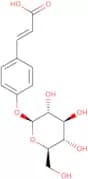
CAS:Coumaric acid 4-O-glucoside is a compound that is found in plants and can be extracted from flaxseed. It has been shown to have antioxidative activity, especially in the prevention of oxidation of fatty acids. Coumaric acid 4-O-glucoside has also been shown to inhibit the synthesis of n-3 fatty acids and secoisolariciresinol, as well as to regulate the biosynthesis of these lipids. The efficient method for preparing this compound is by hydrolysis of coumaroyl ester linkages using hydrochloric acid in methanol. Coumaric acid 4-O-glucoside was synthesized by reacting methyl acetoacetate with sodium hydroxide and hydrochloric acid in methanol at a temperature range of 0°C to 25°C. This reaction was followed by purification using phase liquid chromatography.Fórmula:C15H18O8Pureza:Min. 95%Peso molecular:326.3 g/mol2,3-O-Isopropylidene-b-D-ribofuranosylamine p-toluenesulphonate salt
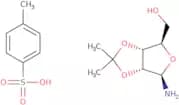
CAS:2,3-O-Isopropylidene-b-D-ribofuranosylamine p-toluenesulphonate salt is an organic chemical that is a methylated sugar. It can be used in the synthesis of saccharides, polysaccharides, and oligosaccharides. This product is available for custom synthesis with a minimum order quantity of 10 grams and purity of >99%. CAS No. 29836-10-0Fórmula:C8H15NO4·C7H8O3SPureza:Min. 95%Forma y color:White PowderPeso molecular:361.41 g/mol2-Keto-D-gluconic acid
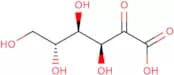
CAS:<p>2-Keto-D-gluconic acid is a naturally occurring compound that can be synthesized from sodium carbonate and 2-keto-d-gluconic acid. 2-Keto-D-gluconic acid has been shown to have antimicrobial properties against many bacterial strains, including its ability to inhibit the growth of wild type strains of Staphylococcus aureus, Streptococcus pneumoniae, Escherichia coli, and Pseudomonas aeruginosa. It has also been shown to have antiinflammatory properties. The synthesis of 2-keto-D-gluconic acid requires optimization of the process with respect to the monoclonal antibody surface methodology used.</p>Fórmula:C6H10O7Pureza:Min. 95%Forma y color:PowderPeso molecular:194.14 g/mol6-Deoxy-D-gulose
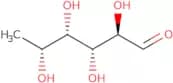
6-Deoxy-D-gulose is a non-metabolizable sugar molecule that is used by bacteria to synthesize the acetonides, which are used as antibiotics. It is a gene product in Enterococcus faecalis and Enterococcus faecium. 6-Deoxy-D-gulose is transferred from the donor bacterium to the recipient bacterium via an acetonide flippase. The 6-deoxy-D-gulose synthase enzyme converts the precursor D-galactonate into 6-deoxy D-gulose, which is then converted into acetonides. This process occurs in gram negative bacteria such as E. coli K12 and Salmonella enterica serovar Typhimurium.Pureza:Min. 95%




![N-Acetyl-D-[UL-13C6,15N]glucosamine](/_next/image/?url=https%3A%2Fstatic.cymitquimica.com%2Fproducts%2F3D%2Fthumb-webp%2FMA15631.webp&w=3840&q=75)