Monosacáridos
Los monosacáridos son la forma más simple de los carbohidratos y sirven como bloques fundamentales para azúcares más complejos y polisacáridos. Estas moléculas de azúcar única juegan roles críticos en el metabolismo energético, la comunicación celular y los componentes estructurales de las células. En esta sección, encontrará una amplia variedad de monosacáridos esenciales para la investigación en bioquímica, biología molecular y glicociencia. Estos compuestos son cruciales para estudiar las rutas metabólicas, los procesos de glucosilación y el desarrollo de agentes terapéuticos. En CymitQuimica, ofrecemos monosacáridos de alta calidad para apoyar sus necesidades de investigación, asegurando precisión y fiabilidad en sus investigaciones científicas.
Subcategorías de "Monosacáridos"
- Allosas(11 productos)
- Arabinosas(21 productos)
- Eritrosas(11 productos)
- Fructosas(9 productos)
- Fucosas(36 productos)
- Galactosamina(41 productos)
- Galactosa(260 productos)
- Glucosas(365 productos)
- Ácidos glucurónicos(51 productos)
- Glico-sustratos para enzimas(77 productos)
- Gulosas(6 productos)
- Idosas(4 productos)
- Inositoles(15 productos)
- Lyxosas(4 productos)
- Manosas(65 productos)
- O-glicanos(48 productos)
- Psicosas(3 productos)
- Ramnosas(10 productos)
- Ribosas(61 productos)
- Ácidos siálicos(100 productos)
- Sorbosas(4 productos)
- Azúcares(173 productos)
- Tagatosis(4 productos)
- Taloses(8 productos)
- Xilosas(20 productos)
Mostrar 17 subcategorías más
Se han encontrado 6088 productos de "Monosacáridos"
Ordenar por
Pureza (%)
0
100
|
0
|
50
|
90
|
95
|
100
Fulvestrant 17-b-D-glucuronide
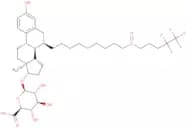
CAS:<p>Fulvestrant 17-b-D-glucuronide is a synthetic, high purity, custom synthesis of fulvestrant. It is modified with click chemistry and contains saccharides and oligosaccharides. Fulvestrant 17-b-D-glucuronide is used in the treatment of hormone receptor positive breast cancer in postmenopausal women who have been previously treated with an aromatase inhibitor.</p>Fórmula:C38H55F5O9SPureza:Min. 95%Peso molecular:782.9 g/molD-glucosyl--1,1' N-oleoyl-D-erythro-sphingosine
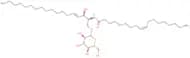
CAS:<p>D-glucosyl--1,1' N-oleoyl-D-erythro-sphingosine is a synthetic oligosaccharide with a fluorinated alpha-hydroxy group and a methylated nitrogen atom. It is also a complex carbohydrate that has been modified by glycosylation and polysaccharide modification. D-glucosyl--1,1' N-oleoyl-D-erythro-sphingosine can be used in custom synthesis, click modification, methylation, and sugar modification. This product has high purity and can be used in the synthesis of drugs or other chemical compounds.</p>Fórmula:C42H79NO8Pureza:Min. 95%Peso molecular:726.08 g/mol2,3,5-Tri-O-benzyl-D-arabinofuranose
CAS:<p>2,3,5-Tri-O-benzyl-D-arabinofuranose is a phosphorane that has been synthesised by the reaction of 2,3,5-trihydroxypentanoic acid and benzaldehyde. The synthesis of this compound involves the use of a stereoselective process to produce the desired product. This compound is able to inhibit both bacterial and fungal growth in vitro. Inhibition of bacterial growth is due to its ability to disrupt the synthesis of proteins and nucleic acids while the inhibition of fungal growth is due to its ability to interfere with chitin production.</p>Fórmula:C26H28O5Pureza:Min. 95%Forma y color:White PowderPeso molecular:420.5 g/mol2-Thioethyl-β-D-glucopyranoside
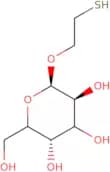
CAS:<p>2-Thioethyl-b-D-glucopyranoside is a methylated saccharide with a molecular weight of 228.2 g/mol. It is soluble in water and aqueous solutions, and has an odorless taste. This compound is used as a synthetic intermediate for the preparation of other saccharides, such as starch, cellulose, and glycogen. 2-Thioethyl-b-D-glucopyranoside can be custom synthesized to meet your specifications.</p>Fórmula:C8H16O6SPureza:Min. 95%Forma y color:White PowderPeso molecular:240.28 g/molL-Allose-6-phosphate disodium salt hydrate
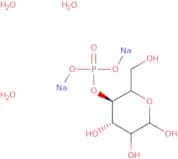
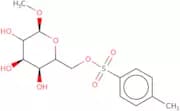
<p>A sugar phosphate</p>Fórmula:C6H13O9P·Na2·3H2OPureza:Min. 95%Peso molecular:358.15 g/molMethyl 6-O-p-toluenesulfonyl-a-D-glucopyranoside
CAS:<p>Methyl 6-O-p-toluenesulfonyl-a-D-glucopyranoside is a custom synthesis. It is an oligosaccharide and polysaccharide that can be modified with methylation and glycosylation. The carbohydrate has a CAS number of 6619-09-6, and the purity is high. This product has been fluorinated for synthetic purposes.</p>Fórmula:C14H20O8SPureza:Min. 95%Peso molecular:348.37 g/molFructose-3-phosphate sodium salt
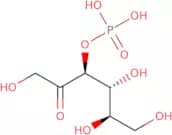
CAS:<p>Fructose-3-phosphate sodium salt is a reactive sugar molecule that belongs to the group of monosaccharides. It can be used as a cross-linking agent in polymerization reactions, such as those used in sample preparation for animal experiments or for magnetic resonance spectroscopy. Fructose-3-phosphate sodium salt is also used as a reactant in nephrology dialysis and has been shown to have beneficial effects on diabetic patients. This compound has the ability to increase the concentration of galactitol, a nonmetabolized form of glucose that can only be obtained from the diet. Galactitol is produced by the liver when blood glucose levels are high and helps to lower blood glucose levels through its action on insulin secretion and peripheral tissue sensitivity. Fructose-3-phosphate sodium salt may also act as an anti-inflammatory agent by inhibiting prostaglandin synthesis, which may be due to its inhibition of prostaglandin synthesis</p>Pureza:Min. 95%N-Acetylneuraminic acid 9-phosphate
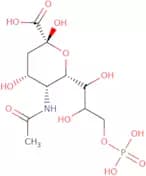
CAS:<p>N-Acetylneuraminic acid 9-phosphate is a sugar phosphate</p>Fórmula:C11H20NO12PPureza:Min. 95%Peso molecular:389.25 g/mol1,2,3,4,6-Penta-O-acetyl-5-thio-D-glucose
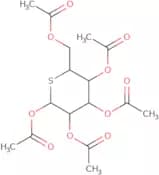
CAS:<p>1,2,3,4,6-Penta-O-acetyl-5-thio-D-glucose is a synthetic sugar that can be used as a building block in the synthesis of glycosides and oligosaccharides.</p>Fórmula:C16H22O10SPureza:Min. 95%Peso molecular:406.41 g/mol2-Acetamido-6-azido-2,6-dideoxy-D-glucopyranose
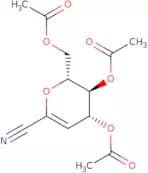
<p>2-Acetamido-6-azido-2,6-dideoxy-D-glucopyranose is a synthetic compound with an azide functional handle, so set up for click chemistry</p>Fórmula:C8H14N4O5Pureza:Min. 95%Peso molecular:246.22 g/mol4,5,7-Tri-O-acetyl-2,6-anhydro-3-deoxy-D-lyxo-hept-2-enononitrile
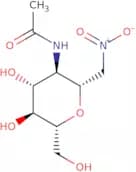
CAS:<p>4,5,7-Tri-O-acetyl-2,6-anhydro-3-deoxy-D-lyxo-hept-2-enononitrile is a modified sugar molecule that has been synthesized and fluorinated. It has a high purity and can be custom synthesized to order. Click modification of this molecule is possible with the addition of a methyl group. This product is used in the synthesis of oligosaccharides and polysaccharides for glycosylation studies.</p>Fórmula:C13H17NO7Pureza:Min. 95%Peso molecular:299.28 g/mol2-Acetamido-2-deoxy-β-D-glucopyranosylnitromethane
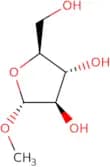
CAS:<p>2-Acetamido-2-deoxy-b-D-glucopyranosylnitromethane is a natural product that can be found in the extract of gladiolus. It has been shown to have antimalarial activity against Plasmodium falciparum and other species. 2-Acetamido-2-deoxy-b-D-glucopyranosylnitromethane inhibits the growth of bacteria by binding to the 50S ribosomal subunit, preventing transcription and replication. The high frequency of human activity has been shown using a patch clamp technique on human erythrocytes. This active form is metabolized through a number of metabolic transformations, including hydrolysis by esterases or glucuronidases, oxidation by cytochrome P450 enzymes, reduction by glutathione reductase, or conjugation with glucuronic acid.</p>Fórmula:C9H16N2O7Pureza:Min. 95%Forma y color:PowderPeso molecular:264.23 g/molMethyl a-L-arabinofuranoside
CAS:<p>Methyl a-L-arabinofuranoside is a microbial feed additive that is used to improve the quality of ruminal cellulose. This product has been shown to inhibit the activity of esterases and polysaccharides, which would otherwise break down cellulose so it can be digested by bacteria in the rumen. This supplement also inhibits microbial growth and has been shown to be an effective treatment for infectious diseases. Methyl a-L-arabinofuranoside is detectable in urine, feces, and milk one day after administration. It is broken down by uronic acid esterases into arabinose and methyl alcohol.</p>Fórmula:C6H12O5Pureza:Min. 95%Peso molecular:164.16 g/molα-D-Galactose-1-phosphate
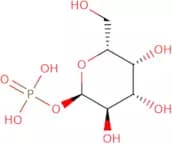
CAS:<p>α-D-Galactose-1-phosphate is a model organism for the study of galactose metabolism. It is an intermediate in the galactose pathway and provides a new approach to understanding the pathogenesis of metabolic disorders. α-D-Galactose-1-phosphate is involved in many enzymatic reactions, including the conversion of uridine diphosphoglucose (UDPG) to UDP glucose, which is a key step in glycolysis. The enzyme that catalyzes this reaction, UDP glucuronosyltransferase (UGT), has been shown to be defective in patients with galactosemia. α-D-Galactose 1 phosphate has also been used as a model for studying human gene expression, specifically protein genes. This molecule has been found to bind DNA polymerase II and inhibit transcriptional elongation at specific sites on DNA called RNA polymerase II pause sites.</p>Fórmula:C6H13O9PPureza:Min. 95%Forma y color:PowderPeso molecular:260.14 g/mol2-Acetamido-2-deoxy-D-gluconhydroximo-1,5-lactone
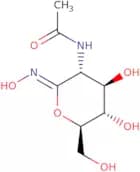
CAS:<p>2-Acetamido-2-deoxy-D-gluconhydroximo-1,5-lactone is a farnesyltransferase inhibitor that belongs to the group of techniques. It is used in the diagnosis of relapsed and resistant multiple myeloma. This drug has been shown to be a potent inductor of apoptosis in vitro and in vivo through inhibition of protein synthesis. 2-Acetamido-2-deoxy-D-gluconhydroximo-1,5-lactone also inhibits the growth of tumor cells and can be used as a potential chemotherapeutic agent for pediatric patients with relapsed or resistant myeloma.</p>Fórmula:C8H14N2O6Pureza:Min. 95%Peso molecular:234.21 g/mol1,2:4,5-Di-O-isopropylidene-b-D-erythro-2,3-hexodiulo-2,6-pyranose
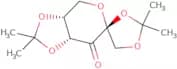
CAS:<p>1,2:4,5-Di-O-isopropylidene-b-D-erythro-2,3-hexodiulo-2,6-pyranose is an acidic compound that is a constituent of the ginseng plant. It has been shown to have biochemical properties as well as bioactivities. It can be synthesized in vivo from the amino acid L-lysine by the enzyme diammonium glyoxalate reductase. The compound has two chiral centers and four stereogenic centers. It is a trisubstituted diastereomer with oxygenated ring opening and chemical structures consisting of a pyranose ring and an ethylene glycol moiety.</p>Fórmula:C12H18O6Pureza:Min. 95%Peso molecular:258.27 g/molD-Glycero-D-talo-heptose
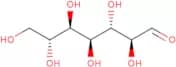
CAS:<p>D-Glycero-D-talo-heptose is a fluorescent probe used in fluorescence spectroscopy. It has been shown to bind to mannose and lyxose, which are carbohydrates with a structural similarity to D-glycero-D-manno-heptose. D-Glycero-D-talo-heptose undergoes dose dependent emission of light when excited at 488 nm. In addition, this compound can be used as a marker for liquid chromatography. The fluorescence of D -glycero -D -talo -heptose is quenched by the presence of ribose.</p>Fórmula:C7H14O7Pureza:Min. 95%Peso molecular:210.18 g/molAmmonium 8-azido-3,8-dideoxy-D-manno-octulosonate
<p>Ammonium 8-azido-3,8-dideoxy-D-manno-octulosonate is an oligosaccharide that is a modification of the natural polysaccharide mannoheptulose. It has been shown to be highly soluble in water and can be easily synthesized. Ammonium 8-azido-3,8-dideoxy-D-manno-octulosonate has been shown to inhibit the activity of glycosyltransferases and methyltransferases. This compound also has a high degree of purity, with minimal impurities or degradation products.</p>Pureza:Min. 95%a-D-Glucopyranosyl azide
CAS:<p>Please enquire for more information about a-D-Glucopyranosyl azide including the price, delivery time and more detailed product information at the technical inquiry form on this page</p>Fórmula:C6H11N3O5Peso molecular:205.17 g/mol(-)-2,3-O-Isopropylidene-D-threitol
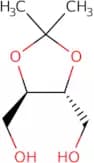
CAS:<p>(-)-2,3-O-Isopropylidene-D-threitol is a chiral compound with two stereoisomers. It is a crystalline solid that melts at 71°C and has a population of 50%. (-)-2,3-O-Isopropylidene-D-threitol is an important intermediate for the synthesis of polyethers with chiral centers. The catalytic asymmetric synthesis of (-)-2,3-O-isopropylidene-D-threitol is achieved by alkylation of (+)-2,3-(dimethoxyphosphinyl)propane with isopropanol. This reaction can be used to produce polyethers with chiral centers in high yields and enantioselectivity.</p>Fórmula:C7H14O4Pureza:Min. 95%Peso molecular:162.18 g/mol