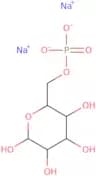
Monosacáridos
Los monosacáridos son la forma más simple de los carbohidratos y sirven como bloques fundamentales para azúcares más complejos y polisacáridos. Estas moléculas de azúcar única juegan roles críticos en el metabolismo energético, la comunicación celular y los componentes estructurales de las células. En esta sección, encontrará una amplia variedad de monosacáridos esenciales para la investigación en bioquímica, biología molecular y glicociencia. Estos compuestos son cruciales para estudiar las rutas metabólicas, los procesos de glucosilación y el desarrollo de agentes terapéuticos. En CymitQuimica, ofrecemos monosacáridos de alta calidad para apoyar sus necesidades de investigación, asegurando precisión y fiabilidad en sus investigaciones científicas.
Subcategorías de "Monosacáridos"
- Allosas(11 productos)
- Arabinosas(21 productos)
- Eritrosas(11 productos)
- Fructosas(9 productos)
- Fucosas(36 productos)
- Galactosamina(41 productos)
- Galactosa(260 productos)
- Glucosas(365 productos)
- Ácidos glucurónicos(51 productos)
- Glico-sustratos para enzimas(77 productos)
- Gulosas(6 productos)
- Idosas(4 productos)
- Inositoles(15 productos)
- Lyxosas(4 productos)
- Manosas(65 productos)
- O-glicanos(48 productos)
- Psicosas(3 productos)
- Ramnosas(10 productos)
- Ribosas(61 productos)
- Ácidos siálicos(100 productos)
- Sorbosas(4 productos)
- Azúcares(173 productos)
- Tagatosis(4 productos)
- Taloses(8 productos)
- Xilosas(20 productos)
Mostrar 17 subcategorías más
Se han encontrado 6088 productos de "Monosacáridos"
Ordenar por
Pureza (%)
0
100
|
0
|
50
|
90
|
95
|
100
α-Methylglyceric Acid
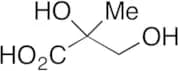
CAS:Producto controlado<p>Applications α-Methylglyceric Acid is a biogenic secondary organic aerosol used in air quality diagnosis.<br>References Ru, P., et. al.: Environ. Sci. Technol., 48, 8491 (2014); Napelenok, S.L., et. al.: Environ. Sci. Technol., 48, 464 (2014); Stone, E.A., et. al.: Environ. Chem., 9, 263 (2012)<br></p>Fórmula:C4H8O4Forma y color:NeatPeso molecular:120.11,6-Anhydro-β-D-mannopyranose
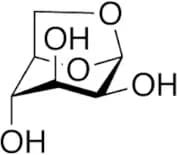
CAS:Producto controlado<p>Applications Monosaccharide anhydrides, new markers of toasted oak wood used for ageing wines and distillates.<br>References Goldberg, D., et al.: J. Agric. Food Chem., 47, 3978 (1999), Fu, P., et al.: Environ. Sci. Technol., 43, 286 (2009),<br></p>Fórmula:C6H10O5Forma y color:Off-WhitePeso molecular:162.14Ethylmalonic Acid
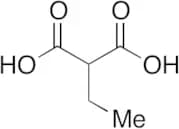
CAS:<p>Applications Ethylmalonic Acid is used as a diagnostic agent used in the diagnosis of Ethylmalonic encephalopathy which is a rare autosomal recessive inborn error of metabolism.<br>References Baertling, F. et al.: Eur. J. Pediat., 173, 1719 (2014); Sudo, Y. et al.: Hu,am Genome Var., 1, 15016 (2014);<br></p>Fórmula:C5H8O4Forma y color:NeatPeso molecular:132.12N6-Benzyladenine-7-glucoside
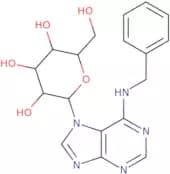
CAS:<p>N6-Benzyladenine-7-glucoside is a benzyladenine derivative that is the major precursor of dihydrozeatin, an important plant growth regulator. N6-Benzyladenine-7-glucoside has been shown to be a potent inhibitor of the uptake of radioactive n6-benzyladenine in tobacco leaves. It also inhibits the uptake of radioactive adenine and guanine in tabacum l. explants and tissues. The compound can inhibit cell division by interfering with hormonal treatments that promote growth and development. The inhibition of cell division may be due to interference with the auxin transport system in plants, which leads to decreased levels of endogenous auxins and growth regulators, such as cytokinins, gibberellins, abscisic acid, and ethylene.</p>Fórmula:C18H21N5O5Pureza:Min. 95%Forma y color:PowderPeso molecular:387.39 g/molL-Fucose - non animal origin
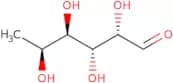
CAS:<p>L-Fucose is an aldohexose that is used as the building block for various glycoproteins and glycolipids. It is found in human serum and human pathogens. L-Fucose can be isolated from the hybridoma cell line by apical chromatography. The analytical method of L-fucose includes body formation, oligosaccharides, and glycan titration calorimetry. Structural analysis of L-fucose includes glycosylation, sugar analysis, and carbohydrate analysis. Fucose can also be used to produce oligosaccharides through enzymatic reactions with other sugars including glucose and galactose. This reaction produces a linkage between fucose and other sugars that are called glycosidic bonds.</p>Fórmula:C6H12O5Pureza:Min. 98 Area-%Forma y color:PowderPeso molecular:164.16 g/molPhloridzin dihydrate
CAS:<p>Phloridzin is a phenolic acid that is found in the cell walls of plants. It has been shown to be a potent antioxidant, with anti-inflammatory and anti-tumour properties. Phloridzin is also an inhibitor of the divalent metal ion-dependent diphenolase activity that causes oxidative DNA damage. The dihydrate form of phloridzin has been shown to inhibit cisplatin-induced nephrotoxicity in mice by reducing oxidative stress.</p>Fórmula:C21H24O10·2H2OPureza:Min. 95%Forma y color:Off-White PowderPeso molecular:472.44 g/molL-Menthylglucoside
CAS:<p>L-Menthylglucoside is a custom synthesis, complex carbohydrate. It has CAS number 16203-27-3 and is an Oligosaccharide and Polysaccharide. L-Menthylglucoside has been modified with methylation and glycosylation, which may be due to its Click modification. L-Menthylglucoside is a sugar that is high purity, fluorinated, and synthetic.</p>Fórmula:C16H30O6Pureza:Min. 95%Forma y color:PowderPeso molecular:318.41 g/molUDP-2-deoxy-2-fluoro-D-glucose sodium salt
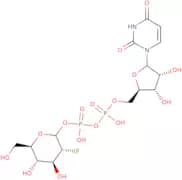
CAS:<p>UDP-2-deoxy-2-fluoro-D-glucose sodium salt (UDPFG) is a fluorinated analog of the sugar donor, UDP-glucose. It is an acceptor for the enzyme, glycosylation protein glucosyltransferase, which catalyzes the transfer of glucose to proteins. This compound has been shown to be an activating sugar donor in vitro and in vivo. In addition, it was found that UDFG can bind to the active site of glucosyltransferase in a hydrogen bond interaction that may be important for catalysis.</p>Fórmula:C15H21FN2O16P2·2NaPureza:Min. 95%Forma y color:PowderPeso molecular:568.29 g/molD-Glucose 3-sulfate sodium salt
CAS:<p>D-Glucose 3-sulfate sodium salt is a fluorinated, monosaccharide that can be used as a synthetic, oligosaccharide or complex carbohydrate. It is custom synthesized with glycosylation and polysaccharides and has been shown to be useful in click modification. D-Glucose 3-sulfate sodium salt is also methylated and sugar modified. The CAS number for this product is 89830-83-1. It has high purity and can be purchased at any lab supply store.</p>Fórmula:C6H11NaO9SPureza:Min. 98 Area-%Forma y color:PowderPeso molecular:282.2 g/molD-Arabinaric acid dipotassium salt
CAS:<p>D-Arabinaric acid dipotassium salt is a custom synthesis with complex carbohydrate, which can be modified by methylation, glycosylation, and carbonylation. It has CAS number 6703-05-5 and a high purity. This product is also fluorinated, which makes it an excellent synthetic reagent.</p>Fórmula:C5H6K2O7Pureza:Min. 95 Area-%Forma y color:White Off-White PowderPeso molecular:256.29 g/mol1,6-Dideoxynojirimycin
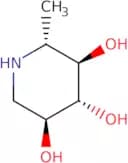
CAS:<p>Dideoxynojirimycin is a potent hydroxamic acid that inhibits glycosidases. It is used to treat metabolic disorders such as glycogen storage diseases. Dideoxynojirimycin has been shown to inhibit the activity of intestinal maltase, an enzyme involved in the digestion of carbohydrates. This drug also inhibits the synthesis of nucleic acids and proteins, which may be due to its ability to bind nucleophilic groups on enzymes and other biological molecules. The kinetic study showed that 1,6-dideoxynojirimycin has a stereoselective effect on mouse splenocytes, inhibiting their proliferation more effectively than 1,6-dideoxy-N-acetylneuraminic acid.</p>Fórmula:C6H13NO3Pureza:Min. 95%Forma y color:PowderPeso molecular:147.17 g/mol2-Acetamido-2-deoxy-b-D-glucopyranosyl amine
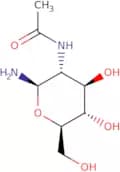
CAS:<p>2-Acetamido-2-deoxy-b-D-glucopyranosyl amine is a synthetic molecule that has shown to be an effective therapeutic agent for the treatment of juvenile idiopathic arthritis. It binds to the surface of cells and activates the immune system by generating antibodies against the disease. This drug has been shown to reduce disease activity in patients with juvenile idiopathic arthritis, as well as improve quality of life. 2-Acetamido-2-deoxy-b-D-glucopyranosyl amine is being developed for use in other autoimmune diseases such as systemic lupus erythematosus, rheumatoid arthritis, and psoriasis.</p>Fórmula:C8H16N2O5Pureza:Min. 95 Area-%Forma y color:PowderPeso molecular:220.22 g/mol(2R, 4S) - 3- Fluoro- 2,4- azetidinedimethanol
<p>(2R, 4S) - 3- Fluoro- 2,4- azetidinedimethanol is a fluorinated monosaccharide. It is a synthetic compound that has been modified by methylation and Click chemistry. The fluorination of the sugar allows for high purity and modification of the carbohydrate. This compound is used in the synthesis of oligosaccharides and polysaccharides.</p>Pureza:Min. 95%(-)-D-Noviose
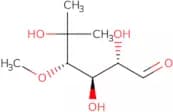
CAS:<p>(-)-D-Noviose is a naturally occurring sulfoxide that was first isolated from the tubercles of tuberculosis patients. It is a biosynthetic precursor to tiacumicin, an antibacterial agent. In addition, (-)-D-Noviose has been shown to act as a chaperone and inhibit cancer cells in vitro. (-)-D-Noviose binds to the cysteine residues of proteins, preventing their oxidation and subsequent aggregation. This prevents the cross-linking of proteins that leads to cellular damage and death.</p>Fórmula:C8H16O5Pureza:Min. 95%Peso molecular:192.21 g/mol1,2-Dideoxy-3,5-di-O-toluoyl-D-ribose
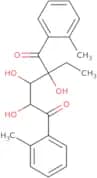
CAS:<p>1,2-Dideoxy-3,5-di-O-toluoyl-D-ribose is a synthetic sugar that can be used in the synthesis of complex carbohydrates. It has been modified with fluorine, methylation, and click chemistry. It is also available as a high purity product. 1,2-Dideoxy-3,5-di-O-toluoyl-D-ribose is an oligosaccharide that is used in glycosylation reactions to form polysaccharides or saccharides. Click chemistry allows for the modification of this sugar with other molecules such as amino acids or peptides. This modification may be useful for studying protein interactions or for drug development.</p>Fórmula:C21H22O5Pureza:Min. 95%Peso molecular:354.4 g/molUDP-b-L-arabinopyranose
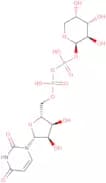
CAS:<p>UDP-b-L-arabinopyranose is a nucleotide sugar that is used in the synthesis of proteins and other macromolecules. It is synthesized from uridine and d-ribulose 5-phosphate by the enzyme ribulokinase. The reaction between UDP, b-L-arabinofuranose, and ATP, catalyzed by arabinofuranosyl transferase, produces UDP-b-L-arabinopyranose. This nucleotide sugar can be converted to UDP-b-(1→4)-glucuronate by the enzyme glucuronosyltransferase. This process plays an important role in plant physiology as well as in cell wall biosynthesis. The optimal pH for this conversion is 7.5 to 8.2.</p>Fórmula:C14H22N2O16P2Pureza:Min. 95%Forma y color:PowderPeso molecular:536.28 g/molepi-Inositol
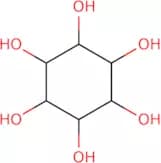
CAS:<p>Epi-inositol, also known as myo-inositol, is a member of the group of molecules known as sugar alcohols. It is a naturally occurring compound that is found in the human body and can be synthesized by the human body from glucose. Epi-inositol has been shown to have a number of biological effects, including inhibition of cell proliferation and energy metabolism in ovarian cancer cells. Epi-inositol has also been used in clinical trials for treatment of mood disorders such as depression.</p>Fórmula:C6H12O6Pureza:Min. 98 Area-%Forma y color:White PowderPeso molecular:180.16 g/molDL-Glyceraldehyde 3-phosphate - 45-55 mg/mL aqueous solution
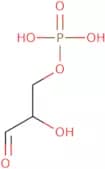
CAS:<p>Glyceraldehyde-3-phosphate dehydrogenase (GAPDH) is an enzyme that catalyzes the conversion of glyceraldehyde-3-phosphate to 1,3 bisphosphoglycerate. GAPDH is involved in glycolysis and the pentose phosphate pathway. It has been shown to be an important player in mediating cellular responses to hypoxia, inflammation, and oxidative stress. The glyceraldehyde-3-phosphate dehydrogenase gene has been found to be mutated in a number of cancers including breast cancer and colon cancer. This gene also has a role in inflammatory lesion development as well as energy metabolism. GAPDH also participates in the biochemical reactions that lead to neuronal death during neurodegenerative diseases such as Alzheimer's disease and Parkinson's disease.</p>Fórmula:C3H7O6PForma y color:Colorless Clear LiquidPeso molecular:170.06 g/molLentinan
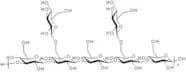
CAS:<p>The polysaccharide Lentinan is isolated from the mushroom L. edodes (shitake mushroom). The primary structure is a β-(1–3)-glucose backbone with two (1–6)-β-glucose branches for each five glucose resiodues. Lentinan is clinically used for cancer treatment both in China and Japan. According to the clinical studies published in and outside of China, lentinan-based drugs are used for the treatment of various cancers, including lung, gastric, colorectal and other cancers. In addition, lentinan-based drugs are also used for treating HIV, hepatitis and malignant pleural effusion.</p>Forma y color:Brown PowderD-Mannose-6-phosphate disodium salt hydrate
CAS:<p>D-Mannose-6-phosphate disodium salt hydrate (DMDSP) is an endogenous pentose phosphate metabolite that is found in the human body. DMDSP is generated from the metabolism of mannose and glucose and functions as a regulator of metabolic intermediates. It has also been shown to inhibit bacterial growth and function as a competitive inhibitor of bacterial DNA gyrase, an enzyme that maintains the integrity of bacterial DNA. Genetic polymorphism in the DMDP gene may be associated with changes in response to DMDSP. The reductive amination reaction can be used to synthesize this compound from L-aspartic acid, malic enzyme, and nicotinamide adenine dinucleotide phosphate.</p>Fórmula:C6H11O9PNa2·H2OPureza:Min. 95 Area-%Forma y color:White PowderPeso molecular:322.11 g/mol