Monosacáridos
Los monosacáridos son la forma más simple de los carbohidratos y sirven como bloques fundamentales para azúcares más complejos y polisacáridos. Estas moléculas de azúcar única juegan roles críticos en el metabolismo energético, la comunicación celular y los componentes estructurales de las células. En esta sección, encontrará una amplia variedad de monosacáridos esenciales para la investigación en bioquímica, biología molecular y glicociencia. Estos compuestos son cruciales para estudiar las rutas metabólicas, los procesos de glucosilación y el desarrollo de agentes terapéuticos. En CymitQuimica, ofrecemos monosacáridos de alta calidad para apoyar sus necesidades de investigación, asegurando precisión y fiabilidad en sus investigaciones científicas.
Subcategorías de "Monosacáridos"
- Allosas(11 productos)
- Arabinosas(21 productos)
- Eritrosas(11 productos)
- Fructosas(9 productos)
- Fucosas(36 productos)
- Galactosamina(41 productos)
- Galactosa(260 productos)
- Glucosas(365 productos)
- Ácidos glucurónicos(51 productos)
- Glico-sustratos para enzimas(77 productos)
- Gulosas(6 productos)
- Idosas(4 productos)
- Inositoles(15 productos)
- Lyxosas(4 productos)
- Manosas(65 productos)
- O-glicanos(48 productos)
- Psicosas(3 productos)
- Ramnosas(10 productos)
- Ribosas(61 productos)
- Ácidos siálicos(100 productos)
- Sorbosas(4 productos)
- Azúcares(173 productos)
- Tagatosis(4 productos)
- Taloses(8 productos)
- Xilosas(20 productos)
Mostrar 17 subcategorías más
Se han encontrado 6088 productos de "Monosacáridos"
Ordenar por
Pureza (%)
0
100
|
0
|
50
|
90
|
95
|
100
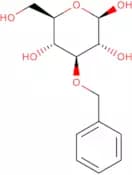
3-O-Benzyl-D-glucopyranose
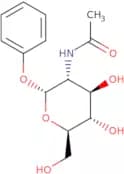
CAS:<p>3-O-Benzyl-D-glucopyranose is a molecule that has been optimized for its autodock score. It binds to the active site of peptidases, which are enzymes that break down proteins in the body. 3-O-Benzyl-D-glucopyranose is a nauclea that can be used as a pharmacokinetic (PK) or pharmacodynamic (PD) inhibitor. Nauclea have shown effectiveness against diabetes by preventing the breakdown of glucose, which is an important energy source for cells. 3-O-Benzyl-D-glucopyranose has also been found to be an effective inhibitor of DPPIV, which is an enzyme involved in breaking down insulin and other hormones in blood circulation. In vitro studies have shown that it may also have antiaging properties due to its ability to inhibit production of inflammatory cytokines such as IL1β, IL6, and TNFα.</p>Fórmula:C13H18O6Pureza:Min. 95%Forma y color:PowderPeso molecular:270.28 g/molPhenyl 2-acetamido-2-deoxy-α-D-glucopyranoside
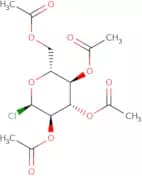
CAS:<p>Phenyl 2-acetamido-2-deoxy-a-D-glucopyranoside is a fluorinated sugar that was synthesized by chemical modification of a natural sugar. It is a white, crystalline powder and has an odorless taste. This product is custom synthesized and can be used as an intermediate in the production of other saccharides. Phenyl 2-acetamido-2-deoxy-a-D-glucopyranoside has been modified to include methyl groups and glycosyl groups, which are not present in the natural product.</p>Fórmula:C14H19NO6Pureza:Min. 95%Forma y color:SolidPeso molecular:297.3 g/mol2,3,4,6-Tetra-O-acetyl-α-D-glucopyranosyl chloride
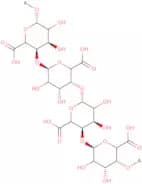
CAS:<p>2,3,4,6-Tetra-O-acetyl-a-D-glucopyranosyl chloride (TAOC) is a nuclear magnetic resonance (NMR) probe that has been used to study the structure of nuclei. It is synthesised by reacting acetyl chloride with sucrose in a reaction catalyzed by sodium hydroxide. The compound can be detected in quadrupole and resonance spectroscopy due to its high sensitivity to nuclear magnetic resonance. This NMR probe is typically used to study the structures of nuclei or for the analysis of polysaccharides.</p>Fórmula:C14H19ClO9Pureza:Min. 95%Forma y color:PowderPeso molecular:366.8 g/molPoly-D-galacturonic acid methyl ester
CAS:<p>Poly-D-galacturonic acid methyl ester (PDGME) is a natural compound that has been shown to possess anti-inflammatory and anti-diabetic properties. PDGME has been shown to increase the expression of pro-apoptotic proteins in mouse macrophages, as well as inhibit the activity of toll-like receptor 4, which may be due to its ability to induce caspase-independent cell death. PDGME also inhibits the growth of Clostridium difficile and other bacteria by inhibiting their enzyme activities. PDGME is water soluble and can be used as a reagent for biochemical studies.</p>Pureza:Min. 98 Area-%Forma y color:White Off-White Powder1,2:5,6-Di-O-isopropylidene-a-D-ribo-hexofuranose-3-ulose monohydrate
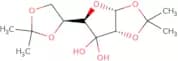
CAS:<p>1,2:5,6-Di-O-isopropylidene-a-D-ribo-hexofuranose-3-ulose monohydrate is a fluorinated carbohydrate that has been synthesized in our lab. It is a complex carbohydrate and can be used as a building block for glycosylation. The synthesis of this compound is done through the use of click chemistry to modify the sugar. We have high purity levels for this compound and can provide custom synthesis services for your needs.</p>Fórmula:C12H20O7·H2OPureza:Min. 95%Forma y color:White PowderPeso molecular:294.3 g/mol3-Deoxy-3-fluoro-D-galactose - Aqueous solution
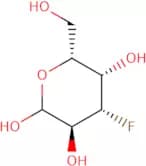
CAS:<p>3-Deoxy-3-fluoro-D-galactose (3DFGal) is a potential drug that has been shown to shift the metabolic pathway of gram-positive pathogens from glycolysis to gluconeogenesis. This compound may be used as a tool for studying the enzymatic reaction catalyzed by galactokinase, which is involved in the conversion of 3DFGal to D-galactose. 3DFGal is a stereospecific carbohydrate and can be used as a substrate for biochemical studies. The bacterial surface profile of 3DFGal has been investigated and it has been found that 3DFGal is not significantly toxic to Gram-negative bacteria. The kinetics of 3DFGal hydrolysis have been studied and it was found that the hydrolysis rate was increased when the solution was acidified with hydrofluoric acid.</p>Fórmula:C6H11FO5Pureza:Min. 98 Area-%Forma y color:PowderPeso molecular:182.15 g/mol3,4,5,7-Tetra-O-acetyl-2,6-anhydro-D-lyxo-hept-2-enononitrile
CAS:<p>3,4,5,7-Tetra-O-acetyl-2,6-anhydro-D-lyxo-hept-2-enononitrile is a synthetic compound that is used in the synthesis of glycosylation and oligosaccharide. This product has been modified with fluorine and methyl groups. The purity of this product is greater than 99%. 3,4,5,7-Tetra-O-acetyl-2,6-anhydro-D-lyxo-hept-2 -enononitrile is also known as CAS No. 120085–67–8.</p>Fórmula:C15H17NO9Pureza:Min. 95%Forma y color:PowderPeso molecular:355.3 g/mol1,6-Anhydro-2-deoxy-2-iodo-β-D-glucopyranose
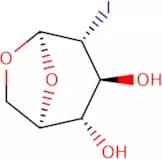
CAS:<p>1,6-Anhydro-2-deoxy-2-iodo-b-D-glucopyranose is a sugar that has been used in the synthesis of a number of organic compounds. It is an intermolecular hydrogen bond donor, and it forms hydrogen bonds with other molecules. The molecular structure of 1,6-Anhydro-2-deoxy-2-iodo-b-D-glucopyranose consists of a six carbon chain with three hydroxyl groups and two ether groups.</p>Fórmula:C6H9IO4Pureza:Min. 95%Forma y color:Off-White To Tan SolidPeso molecular:272.04 g/mol2,3,4,6-Tetra-O-acetyl-b-D-thiogalactopyranose
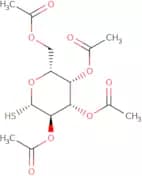
CAS:<p>2,3,4,6-Tetra-O-acetyl-b-D-thiogalactopyranose is a synthetic sugar that is prepared by the fluorination of D-galactopyranose and subsequent acetylation. This compound can be used for glycosylation reactions and as a substrate for click chemistry. It is an oligosaccharide with four monosaccharides in its backbone. The CAS number of 2,3,4,6-Tetra-O-acetyl-b-D-thiogalactopyranose is 50615-66-2.</p>Fórmula:C14H20O9SPureza:Min. 95%Forma y color:PowderPeso molecular:364.37 g/molL-Fucose-1-phosphate disodium
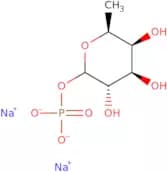
CAS:<p>L-Fucose-1-phosphate disodium salt is a high purity, synthetic, fluorinated carbohydrate that is used to modify saccharides. This modification can be accomplished by methylation or glycosylation. L-Fucose-1-phosphate disodium salt has been shown to be useful for glycosylation reactions with click chemistry. It has been shown to have a wide range of applications including modification of oligosaccharides and polysaccharides in the field of biotechnology.</p>Fórmula:C6H13O8P•Na2Pureza:Min. 95 Area-%Forma y color:White PowderPeso molecular:290.12 g/molL-Glucono-1,4-lactone
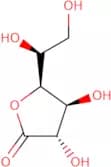
CAS:<p>L-Glucono-1,4-lactone is a substance that belongs to the group of compounds known as alpha hydroxy acids. It is produced in the body by an enzyme called l-gluconolactonase and is present in small quantities in many fruits and vegetables. L-Glucono-1,4-lactone has been shown to prevent skin aging and protect against UV light damage through its antioxidant properties. This compound can be found in sunscreens or it can be taken orally to provide protection from the sun. Clinical data on L-Glucono-1,4-lactone treatments are not yet available.</p>Fórmula:C6H10O6Pureza:Min. 95%Forma y color:PowderPeso molecular:178.14 g/mol2-Keto-D-gluconic acid hemicalcium monohydrate
CAS:<p>Enhances dissolution of soil minerals; intermediate in L-ascorbic acid syntheses</p>Fórmula:C6H9O7•(Ca)•H2OPureza:Min. 99 Area-%Forma y color:White PowderPeso molecular:231.19 g/mol2,3,4,6-Tetra-O-acetyl-β-D-mannopyranosyl azide
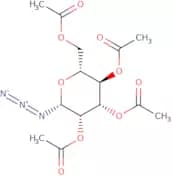
CAS:<p>2,3,4,6-Tetra-O-acetyl-β-D-mannopyranosyl azide is a crystallographic technique that can be used to determine the structure of molecules. This technique involves the use of x-ray diffraction analysis to produce images of crystal structures. The technique is useful for determining the three dimensional structure of molecules that are too small to be seen with other techniques such as electron microscopy.</p>Fórmula:C14H19N3O9Pureza:Min. 98 Area-%Forma y color:White Off-White PowderPeso molecular:373.32 g/molPhenyl 2-acetamido-3,4,6-tri-O-acetyl-2-deoxy-β-D-glucopyranoside
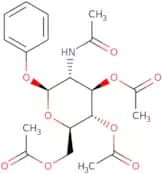
CAS:<p>Phenyl 2-acetamido-3,4,6-tri-O-acetyl-2-deoxy-b-D-glucopyranoside is a custom synthesis of the sugar phenyl 2-acetamido-3,4,6-tri-O-acetyl--2 deoxy--b D glucopyranoside. It is a modification of the monosaccharide and glycosylation. This synthetic compound has a CAS number of 1308921 9 and is used as an intermediate in the production of saccharides. Phenyl 2 acetamido 3,4,6 tri O acetyl 2 deoxy b D glucopyranoside is also classified as an oligosaccharide or complex carbohydrate.</p>Fórmula:C20H25NO9Pureza:Min. 95%Forma y color:White solid.Peso molecular:423.41 g/mol2-Acetamido-1,3-di-O-acetyl-2-deoxy-D-glucopyranose
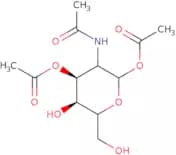
CAS:<p>2-Acetamido-1,3-di-O-acetyl-2-deoxy-D-glucopyranose is a synthetic sugar that is used in the synthesis of complex carbohydrates. It has been shown to be an effective fluorinating agent for glycosylations and can be methylated or click modified. 2-Acetamido-1,3-di-O-acetyl-2-deoxy-D-glucopyranose has high purity and can be custom synthesized to order.</p>Fórmula:C12H19NO8Pureza:Min. 95%Forma y color:White PowderPeso molecular:305.28 g/mol5-Thio-D-glucose-6-phosphate diammonium salt
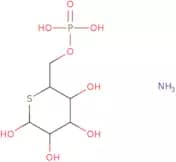
CAS:<p>Glucose 6-phosphatase substrate</p>Fórmula:C6H11O8PS·N2H8Pureza:Min. 95%Forma y color:PowderPeso molecular:310.26 g/mol3-Acetamido-1-benzylazetidine-2R,4S-diyl bis(methylene) diacetate
CAS:<p>This product is a custom synthesis. The chemical formula for this product is C8H11N2O4. This product has the molecular weight of 272.24 g/mol and the molecular formula is C8H11N2O4. This product is synthesized from 3-acetamido-1-benzylazetidine-2R,4S-diyl bis(methylene) diacetate monohydrate. It can be fluorinated, glycosylated, methylated, modified and oligosaccharide or monosaccharide saccharides. This product can be used in various fields such as pharmaceuticals, agrochemicals, food additives, cosmetics and so on.</p>Fórmula:C18H24N2O5Pureza:Min. 95%Peso molecular:348.39 g/molD-Erythrulose - Aqueous solution
CAS:<p>D-Erythrulose is a sugar that can be synthesized from the chemical structures of glycolaldehyde and carbonyl group. It can also be produced by hydrolysis of erythritol, which is found in plant cell walls. D-Erythrulose has been used as an alternative to glucose for fermentation processes because it does not inhibit the growth of most bacteria. D-Erythrulose has been shown to increase ATP levels in Escherichia coli K-12 cells and to affect the activities of enzymes involved in glycolysis, such as glyceraldehyde 3-phosphate dehydrogenase, phosphoglycerate kinase, and enolase. The metabolic pathways that produce D-erythrulose are found in many organisms, including Corynebacterium glutamicum, Brucella melitensis, and Brucella suis.</p>Fórmula:C4H8O4Pureza:Min. 95%Forma y color:Colorless PowderPeso molecular:120.1 g/mol3'-(5'-Deoxy-a-D-ribofuranoyl capecitabine
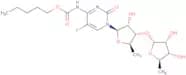
CAS:<p>3'-(5'-Deoxy-a-D-ribofuranoyl capecitabine is a modified form of the anticancer drug capecitabine, which is used in the treatment of breast cancer and metastatic colorectal cancer. 3'-(5'-Deoxy-a-D-ribofuranoyl capecitabine is synthesized by modification of the sugar moiety with a fluorinated methyl group, followed by glycosylation with a saccharide. The fluorination increases the lipophilicity and enhances the solubility of this compound, while retaining its cytotoxic activity. It has been shown to have an IC50 value of 0.1 μM against human colon carcinoma cells.</p>Fórmula:C20H30FN3O9Pureza:Min. 95%Peso molecular:475.47 g/molBenzyl 3,4-O-(2',3'-dimethoxybutane-2',3'-diyl)-a-D-mannopyanoside
CAS:<p>Benzyl 3,4-O-(2',3'-dimethoxybutane-2',3'-diyl)-a-D-mannopyanoside is a modification of an oligosaccharide. It is a complex carbohydrate that has been synthesized from a monosaccharide and methylated on the 3' hydroxyl group. This product is available as a custom synthesis and is offered in high purity. The CAS number for this compound is 1423035-45-3.<br>br><br>Benzyl 3,4-O-(2',3'-dimethoxybutane-2',3'-diyl)-a-D-mannopyanoside can be used as a sugar or fluorinated saccharide in glycosylation reactions with other molecules. It can also be used to produce polysaccharides by glycosylation with other molecules such as glucose, mannose, or sucrose.</p>Fórmula:C19H28O8Pureza:Min. 95%Peso molecular:384.42 g/mol