Monosacáridos
Los monosacáridos son la forma más simple de los carbohidratos y sirven como bloques fundamentales para azúcares más complejos y polisacáridos. Estas moléculas de azúcar única juegan roles críticos en el metabolismo energético, la comunicación celular y los componentes estructurales de las células. En esta sección, encontrará una amplia variedad de monosacáridos esenciales para la investigación en bioquímica, biología molecular y glicociencia. Estos compuestos son cruciales para estudiar las rutas metabólicas, los procesos de glucosilación y el desarrollo de agentes terapéuticos. En CymitQuimica, ofrecemos monosacáridos de alta calidad para apoyar sus necesidades de investigación, asegurando precisión y fiabilidad en sus investigaciones científicas.
Subcategorías de "Monosacáridos"
- Allosas(11 productos)
- Arabinosas(21 productos)
- Eritrosas(11 productos)
- Fructosas(9 productos)
- Fucosas(36 productos)
- Galactosamina(41 productos)
- Galactosa(261 productos)
- Glucosas(365 productos)
- Ácidos glucurónicos(51 productos)
- Glico-sustratos para enzimas(77 productos)
- Gulosas(6 productos)
- Idosas(4 productos)
- Inositoles(15 productos)
- Lyxosas(4 productos)
- Manosas(65 productos)
- O-glicanos(48 productos)
- Psicosas(3 productos)
- Ramnosas(10 productos)
- Ribosas(61 productos)
- Ácidos siálicos(100 productos)
- Sorbosas(4 productos)
- Azúcares(173 productos)
- Tagatosis(4 productos)
- Taloses(8 productos)
- Xilosas(20 productos)
Mostrar 17 subcategorías más
Se han encontrado 6088 productos de "Monosacáridos"
Ordenar por
Pureza (%)
0
100
|
0
|
50
|
90
|
95
|
100
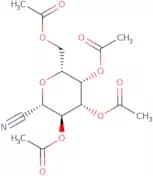
2,3,4,6-Tetra-O-acetyl-b-D-galactopyranosyl cyanide
CAS:<p>2,3,4,6-Tetra-O-acetyl-b-D-galactopyranosyl cyanide is a carbohydrate that is used in the synthesis of conjugates for use as immunogens. It has been modified to create a high purity product. Click chemistry is used to attach a fluorine atom to the sugar. The glycosylation reaction with the monosaccharides and disaccharides is then performed followed by methylation of the saccharide with methanol to produce 2,3,4,6-Tetra-O-acetyl-b-D-galactopyranosyl cyanide.</p>Fórmula:C15H19NO9Pureza:Min. 95 Area-%Forma y color:White Off-White PowderPeso molecular:357.31 g/molProbenecid acyl b-D-glucuronide
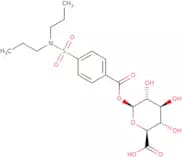
CAS:<p>Probenecid is a weak acid that is rapidly converted to an active metabolite in the body. It is used as an analgesic, antipyretic, and anti-inflammatory drug. Probenecid has been shown to inhibit the formation of biliary acids in animals and humans and has been used in the treatment of chronic inflammatory conditions such as rheumatoid arthritis. The most common route of administration for this drug is orally, although it can also be given intravenously or intramuscularly. Probenecid also acts as a nonsteroidal anti-inflammatory drug (NSAID). This means that it inhibits prostaglandin synthesis by blocking cyclooxygenase enzymes. This reduces inflammation, pain, and fever by inhibiting the production of prostaglandins that play a role in these processes.</p>Fórmula:C19H27NO10SPureza:Min. 95%Forma y color:White To Off-White SolidPeso molecular:461.48 g/molPropargyl a-D-glucopyranoside
CAS:<p>Propargyl a-D-glucopyranoside is a high purity custom synthesis sugar. It is synthesized by Click modification, fluorination, and glycosylation followed by methylation. Propargyl a-D-glucopyranoside can be used for the modification of oligosaccharides and monosaccharides to produce complex carbohydrates.</p>Fórmula:C9H14O6Pureza:Min. 95%Forma y color:PowderPeso molecular:218.2 g/molRaloxifene 4'-D-glucuronide
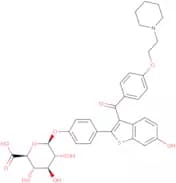
CAS:<p>Raloxifene 4'-D-glucuronide is a drug that is a prodrug of raloxifene, and it can be used to treat osteoporosis. The compound is metabolized by glucuronidation in the liver, and it has been found to have bioequivalence with the parent drug. Raloxifene 4'-D-glucuronide is marketed under the trade name Evista.</p>Fórmula:C34H35NO10SPureza:Min. 95%Forma y color:PowderPeso molecular:649.71 g/mol3,6-Di-O-methyl-D-glucose
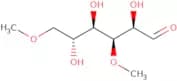
CAS:<p>3,6-Di-O-methyl-D-glucose is a glycopeptide sugar that is used as a terminal sugar in the cell wall of many gram-positive bacteria. It is found on the surface of most strains of Streptococcus pneumoniae and Staphylococcus aureus. 3,6-Di-O-methyl-D-glucose is an antigen for monoclonal antibodies against the streptococcal M protein and has been used to identify the carbohydrate chemistry of Streptococcus pneumoniae. 3,6-Di-O-methyl glucose may also be useful in the detection of cellulose derivatives by magnetic resonance spectroscopy or nitrocellulose membranes. The terminal sugars found on these membranes are hydrolyzed by acid and dry weight methods before being analyzed by gas chromatography or high performance liquid chromatography.</p>Fórmula:C8H16O6Pureza:Min. 95%Peso molecular:208.21 g/molMethyl 2-amino-2-deoxy-β-D-glucopyranoside hydrochloride
CAS:<p>Methyl 2-amino-2-deoxy-β-D-glucopyranoside hydrochloride is a synthetic compound that is a sugar derivative. The methyl group in this molecule can be used for the synthesis of saccharides, oligosaccharides, and other complex carbohydrates. This product has a CAS number of 3867-93-4. It is soluble in water and has a purity of at least 98%.</p>Fórmula:C7H16ClNO5Pureza:Min. 95%Forma y color:White PowderPeso molecular:229.66 g/molCMP-Neu5Ac sodium salt
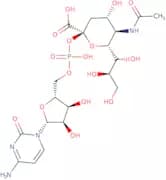
CAS:<p>CMP-Neu5Ac sodium salt (CMP-sialic acid) is a compound of the monosaccharide N-acetylneuraminic acid (Neu5Ac) O-linked with the nucleotide cytidine-5’-monophosphate (CMP). CMP-sialic acid is a substrate for sialyltransferases, which attach sialic acid to a growing oligosaccharide chain. This sugar nucleotide is produced in cytoplasm and then transported into Golgi lumen by a nucleotide-sugar transporter, where it is used in sialylation reactions on glycoproteins and glycolipids.</p>Fórmula:C20H30NaN4O16PPureza:(%) Min. 85.0%Forma y color:White Off-White PowderPeso molecular:636.43 g/molRepaglinide acyl-D-glucuronide
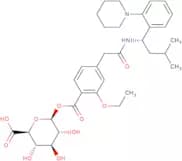
CAS:<p>Repaglinide is a drug that belongs to the class of drugs called meglitinides. It is used in the treatment of type 2 diabetes mellitus and has been shown to lower blood sugar levels. Repaglinide is metabolized to repaglinide acyl-D-glucuronide, its active form, by esterases in the liver. The majority of this metabolite is excreted in urine as an acyl glucuronide. A small amount of this metabolite is excreted into bile and undergoes enterohepatic circulation, resulting in reabsorption and conjugation with glucuronic acid. This process results in a decrease in the amount of repaglinide acyl-D-glucuronide that circulates through the body and prolongs its activity.</p>Fórmula:C33H44N2O10Pureza:(%) Min. 97%Forma y color:White PowderPeso molecular:628.71 g/molMethyl 2,3-di-O-benzyl-α-D-glucopyranoside
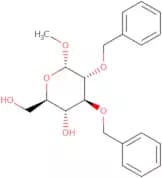
CAS:<p>Methyl 2,3-di-O-benzyl-a-D-glucopyranoside is a chiral sugar that can be synthesized by sulfidation of methyl 1,2,3,4-tetra-O-benzyloxycarbonyl-a-D-glucopyranoside. This sugar was used in the synthesis of oxathianes and sulfones as well as other synthetic methodology.</p>Fórmula:C21H26O6Pureza:Min. 95%Forma y color:PowderPeso molecular:374.43 g/molL-Iduronic acid sodium salt
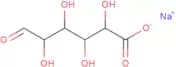
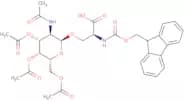
CAS:<p>L-iduronic acid (IdoA) (Collins, 2006) is the major uronic acid component of the glycosaminoglycans dermatan sulfate, chondroitin sulfate and heparin. Iduronic acid is also present in heparan sulfate, although in a minor amount relative to glucuronic acid. Glycosaminoglycans represent a physiologically important group of molecules involved in a variety of biological functions, such as, cell proliferation, cell-to-cell communication, wound healing, coagulation, morphogenesis, and pathogenesis. Glycosaminoglycans present an intriguing target for the design of new approaches for diagnostic and therapeutic agents against various infectious diseases (Kamhi, 2013).</p>Fórmula:C6H9NaO7Pureza:Min. 95%Forma y color:Slightly Yellow PowderPeso molecular:216.12 g/mol2-Acetamido-3,4,6-tri-O-acetyl-2-deoxy-α-D-galactopyranosyl-Fmoc serine
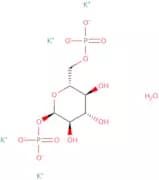
CAS:<p>2-Acetamido-3,4,6-tri-O-acetyl-2-deoxy-α-D-galactopyranosyl-Fmoc serine is an amino sugar that has been shown to be a supplement for soybean cultivars. It is a basic compound that is obtained from the condensation of glycine and acetamidodeoxygalactose. This amino sugar can be used as a matrix in genetic engineering and tissue culture experiments with soybean plants. Transgenic soybeans have been created using 2AAGFS as the source of galactose for glycoprotein synthesis. Soybean plants with transgenes are also able to synthesize high levels of seed protein, which may increase the quality of soybean products.</p>Fórmula:C32H36N2O13Pureza:Min. 95 Area-%Forma y color:White PowderPeso molecular:656.63 g/molα-D-Glucose-1,6-diphosphate tetrapotassium hydrate
CAS:<p>Inhibitor of hexokinase; activator of phosphofructokinase-1</p>Fórmula:C6H14O12P2•4K•(H2O)nPureza:Min. 95%Forma y color:PowderPeso molecular:496.51 g/mol3-Azido-3-deoxy-1,2:5,6-di-O-isopropylidene-a-D-glucofuranose
CAS:<p>3-Azido-3-deoxy-1,2:5,6-di-O-isopropylidene-a-D-glucofuranose is a synthetic sugar that has been modified by Fluorination, Monosaccharide, Synthetic, Oligosaccharide, complex carbohydrate, CAS No. 13964-23-3 and Glycosylation. It is also a Polysaccharide with modifications of Click modification and Methylation. 3A3DG can be used to modify the sugar content of glycoproteins and glycolipids in order to study their role in cellular processes such as transcriptional regulation and apoptosis. This product is available for custom synthesis in quantities from milligrams to kilograms.</p>Fórmula:C12H19N3O5Pureza:Min. 95%Forma y color:Yellow PowderPeso molecular:285.3 g/molSucrose-6-acetic ester
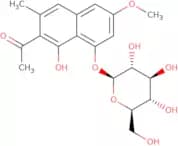
CAS:<p>Sucrose-6-acetic ester is a product of the reaction between sucrose and acetic anhydride. It is a white crystalline compound that reacts with chlorinating agents to form sulfoxide compounds. Sucrose-6-acetic ester can be converted to acetylsalicylic acid, which is used to synthesize aspirin. The reaction selectivity of this process relies on the enzyme catalysis of acetylation and triphosgene as well as an acidic or basic catalyst. Acetylation is carried out in organic solvents and requires a crystallization process for purification. This product also has fatty acid properties, which are insoluble in water and other polar solvents.</p>Fórmula:C14H24O12Pureza:Min. 95%Forma y color:White PowderPeso molecular:384.33 g/molTorachrysone 8-O-glucoside
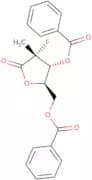
CAS:<p>Torachrysone 8-O-glucoside is a natural product found in the rhizome of Chinese medicinal plant Rhubarb. It is an antiinflammatory that has been shown to be effective in vitro against inflammation induced by spleen, blood, and the stomach. Torachrysone 8-O-glucoside has also been shown to have protective effects on the kidney and bladder.</p>Fórmula:C20H24O9Pureza:Min. 95%Forma y color:White PowderPeso molecular:408.4 g/mol3,5-Di-O-benzoyl-2-deoxy-2-fluoro-2C-methyl-D-ribono-1,4-lactone
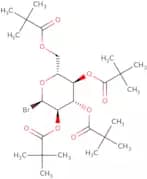
CAS:<p>3,5-Di-O-benzoyl-2-deoxy-2-fluoro-2C-methyl-D-ribono-1,4-lactone is a synthetic compound with the molecular formula C6H12F6O8. It has a molecular weight of 536.14 and an empirical formula of C24H32F6O8. 3,5-Di-O-benzoyl -2,3,4,5,-tetra-, 2C-, methyl -D-, ribo-, 1,4-, lactone is soluble in water and it can be synthesized from D-(+)-glucose and methyl 4-(trifluoromethyl)benzoate in three steps. The structure of 3,5 Di O benzoic acid was first determined by XRD analysis. The compound is a white crystalline solid with melting point at 180°C to 181°C and boiling</p>Fórmula:C20H17FO6Pureza:Min. 97 Area-%Forma y color:White Off-White PowderPeso molecular:372.34 g/mol2,3,4,6-Tetra-O-pivaloyl-a-D-glucopyranosyl bromide - stabilised with CaCO3
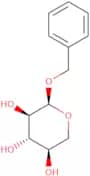
CAS:<p>Intermediate in the synthesis of dapagliflozin</p>Fórmula:C26H43BrO9Pureza:Min. 95%Forma y color:White To Off-White SolidPeso molecular:579.52 g/molBenzyl a-D-xylopyranoside
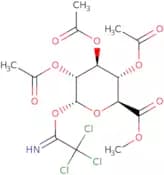
CAS:<p>Benzyl a-D-xylopyranoside is a benzyl galactofuranose that is synthesized from the condensation of benzaldehyde and D-xylose. This compound has been shown to be an excellent target molecule for the detection of Mycobacterium tuberculosis, as it constitutes about 10% of the mycolic acid in this organism. Benzyl a-D-xylopyranoside can also be used to detect other bacteria such as Actinomyces, Streptomyces, and Corynebacterium. The yield of this compound is high and its regiospecificity is complete.</p>Fórmula:C12H16O5Pureza:Min. 95%Forma y color:PowderPeso molecular:240.25 g/mol2,3,4-Tri-O-acetyl-a-D-glucuronide methyl ester trichloroacetimidate
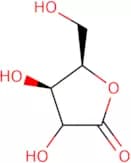
CAS:<p>2,3,4-Tri-O-acetyl-a-D-glucuronide methyl ester trichloroacetimidate (TOG) is a synthetic glycosylation reagent that has been used for the synthesis of complex carbohydrates. It is an O-glycosidase inhibitor and is used in the preparation of saccharides with a high degree of substitution. TOG can be used to modify saccharides, oligosaccharides, and polysaccharides.</p>Fórmula:C15H18Cl3NO10Pureza:Min. 98 Area-%Forma y color:White PowderPeso molecular:478.66 g/molD-Ribonic acid-1,4-lactone
CAS:<p>D-ribono-1,5-lactone is a useful intermediate for the synthesis of bioactive compounds including antivirals.</p>Fórmula:C5H8O5Forma y color:White PowderPeso molecular:148.11 g/mol