Monosacáridos
Los monosacáridos son la forma más simple de los carbohidratos y sirven como bloques fundamentales para azúcares más complejos y polisacáridos. Estas moléculas de azúcar única juegan roles críticos en el metabolismo energético, la comunicación celular y los componentes estructurales de las células. En esta sección, encontrará una amplia variedad de monosacáridos esenciales para la investigación en bioquímica, biología molecular y glicociencia. Estos compuestos son cruciales para estudiar las rutas metabólicas, los procesos de glucosilación y el desarrollo de agentes terapéuticos. En CymitQuimica, ofrecemos monosacáridos de alta calidad para apoyar sus necesidades de investigación, asegurando precisión y fiabilidad en sus investigaciones científicas.
Subcategorías de "Monosacáridos"
- Allosas(11 productos)
- Arabinosas(21 productos)
- Eritrosas(11 productos)
- Fructosas(9 productos)
- Fucosas(36 productos)
- Galactosamina(41 productos)
- Galactosa(261 productos)
- Glucosas(365 productos)
- Ácidos glucurónicos(51 productos)
- Glico-sustratos para enzimas(77 productos)
- Gulosas(6 productos)
- Idosas(4 productos)
- Inositoles(15 productos)
- Lyxosas(4 productos)
- Manosas(65 productos)
- O-glicanos(48 productos)
- Psicosas(3 productos)
- Ramnosas(10 productos)
- Ribosas(61 productos)
- Ácidos siálicos(100 productos)
- Sorbosas(4 productos)
- Azúcares(173 productos)
- Tagatosis(4 productos)
- Taloses(8 productos)
- Xilosas(20 productos)
Mostrar 17 subcategorías más
Se han encontrado 6088 productos de "Monosacáridos"
Ordenar por
Pureza (%)
0
100
|
0
|
50
|
90
|
95
|
100
Octahydro-1,2,9-tris-acetoxy- (1S,2R,9S,9aS) -quinolizin- 6- one
<p>Octahydro-1,2,9-tris-acetoxy-(1S,2R,9S,9aS)-quinolizin-6-one is an oligosaccharide that is a sugar modified with fluorine. It is a synthetic carbohydrate and has the CAS number 57714-00-3. The molecular weight of this compound is 784.61 g/mol. This compound can be custom synthesized to meet your needs and specifications. It has been methylated and glycosylated and has undergone click chemistry modifications.</p>Pureza:Min. 95%2,3,4,6-Tetra-O-acetyl-1-azido-1-deoxy-α-D-galactopyranosyl cyanide
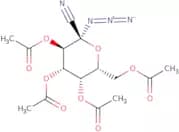
CAS:<p>A solar thermal collector is a device that absorbs the sun's heat, or thermal energy, and converts it to useful heat energy. It consists of a dark-colored surface (usually metal) that absorbs sunlight and transfers the heat by radiation to a fluid such as water or oil, which then carries the heat away for use. The efficiency of this type of collector depends on the quantity of sunlight that reaches it, the temperature difference between the hot fluid and ambient air, and its design. A typical solar thermal collector has an efficiency of about 10%.</p>Fórmula:C15H18N4O9Pureza:Min. 95%Forma y color:White/Off-White SolidPeso molecular:398.32 g/molL-Fucose
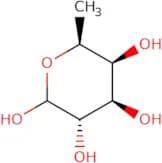
CAS:<p>Fucose (Fuc, 6-deoxy L-galactose) has a methyl group at C6 in place of a hydroxyl group and this gives the molecule a greater degree of hydrophobicity than galactose (Collins, 2006). L-fucose is found in fucoidan, a polysaccharide that occurs in the brown seaweeds (Phaeophyceae) (Percival, 1967). Fucose is also a key component in many mammalian N- and O-linked glycans, glycolipids, blood group substances and Lewis antigens (Becker, 2003). In human milk, neutral (fucosylated) oligosaccharides (HMO) contain fucose at the terminal position (e.g. 2â -fucosyllactose and lactodifucopentaose). They represent 35% to 50% of the total HMO content and many in vitro studies suggest that HMOs directly modulate immune responses, acting either locally on cells of the mucosa-associated lymphoid tissues or systemically to inhibit the expression of inflammatory genes, mainly cytokines (Plaza-Diaz, 2018).</p>Fórmula:C6H12O5Pureza:Min. 98 Area-%Peso molecular:164.16 g/mol5,6-O-Isopropylidene-3-C-methyl-D-mannono-1.4-lactone
<p>5,6-O-Isopropylidene-3-C-methyl-D-mannono-1.4-lactone is a fluorinated monosaccharide that can be modified with other chemicals to create a variety of products. This chemical is used in the synthesis of oligosaccharides and polysaccharides. 5,6-O-Isopropylidene-3-C-methyl-D-mannono-1.4-lactone has a CAS number of 105853-. It has been shown to be high purity and is also available for custom synthesis. 5,6--O--isopropylidene--3--C--methyl--D--mannono--1.4--lactone can be synthesized from methylation, click modification, and fluorination reactions on glycolaldehyde.</p>Pureza:Min. 95%5-O-Allyl-2,3,4-tri-O-benzyl-D-ribitol
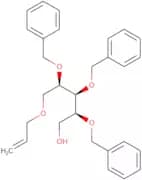
CAS:<p>5-O-Allyl-2,3,4-tri-O-benzyl-D-ribitol is an acid that has been used in preparative organic chemistry. It is a benzyloxymethyl derivative of ribose, which can be converted to the corresponding methyl ether by hydrolysis with sodium methoxide in methanol. 5-O-Allyl-2,3,4-tri-O-benzyl-D-ribitol functions as an isomer and dimerization reagent for the preparation of propenyl derivatives. 5-O-Allyl 2,3,4 tri O benzyl D ribitol has been shown to inhibit Influenza A H1N1 strains in vitro with a 50% inhibitory concentration (IC50) of 1 μM.</p>Fórmula:C29H34O5Pureza:Min. 90.0 Area-%Forma y color:Yellow Clear LiquidPeso molecular:462.58 g/mol2-Amino-2-deoxy-D-allose hydrochloride
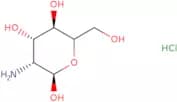
CAS:<p>2-Amino-2-deoxy-D-allose hydrochloride is a structural isomer of 2-amino-2-deoxy-daltrose. This substance has a nuclear magnetic resonance spectrum that is consistent with the proposed structure. The coupling constants are in agreement with the expected values for this type of molecule. A mass spectrum of this substance shows peaks corresponding to the molecular ion, a tetrazole fragment, and the two vicinal hydrogens. The measurement of 2-amino-2-deoxy-daltrose by nuclear magnetic resonance spectroscopy is shown below:</p>Fórmula:C6H13NO5·HClPureza:Min. 95%Peso molecular:215.63 g/molMethyl 2,3,4-tri-O-benzyl-6-O-triisopropylsilyl-a-D-glucopyranoside
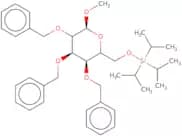
<p>Methyl 2,3,4-tri-O-benzyl-6-O-triisopropylsilyl-a-D-glucopyranoside is an oligosaccharide that is synthesized by the process of fluorination and glycosylation. It can be used as a synthetic building block to produce complex carbohydrates and polysaccharides. This compound is a monosaccharide that has been modified with methyl groups on the 2, 3, 4, and 6 positions. Methyl 2,3,4-tri-O-benzyl-6-O-triisopropylsilyl glucopyranoside can be used for click modification reactions. The CAS number for this compound is</p>Fórmula:C37H52O6SiPureza:Min. 95%Peso molecular:620.91 g/molEsculin sesquihydrate
CAS:<p>Sugars formed by photosynthesis are essential for plants nutrition and they can be carried by a sophisticated system called phloem from the leaves to the root tips. Since the phloem is a delicate tissue composed of various specialized cell types, the study of its structure and functions remains a challenging task. Recently, fluorescent coumarin glucoside derivatives, including esculin (Plant Physiology 2015, 1211-1220) have been used as phloem probes. Among the probes tested, only esculin and fraxin are transported, while skimmin is not, suggesting a certain specifity of natural coumarin glucosides for the transporter AtSUC2.</p>Fórmula:C30H38O21Pureza:Min. 98.0 Area-%Peso molecular:734.62 g/molEstradiol 3-sulfate 17β-glucuronide dipotassium
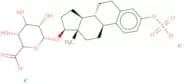
CAS:<p>Estradiol 3-sulfate 17b-glucuronide dipotassium salt is an estradiol ester that is a metabolite of estradiol. It has been shown to be an intermediate in the synthesis of estrone sulfate and other steroid hormones. Estradiol 3-sulfate 17b-glucuronide dipotassium salt is formed from estradiol by the addition of one molecule of sulfuric acid followed by the addition of glucuronic acid, which results in a salt form. It may also be formed by oxidation of allylic hydroperoxides and photooxygenation in families with oxygenated moieties. Irradiation leads to formation of oxygenated steroids. The alkene reactivity depends on the substitution pattern, the cyclic reactivity depends on the ring size and substitution pattern, and the reactivity with peroxides depends on the position of substitution.</p>Fórmula:C24H32O11S•K2Pureza:Min. 95%Forma y color:White to off-white solid.Peso molecular:606.77 g/molMethyl 2,3,5-tri-O-benzyl-β-D-ribofuranoside
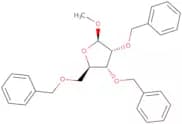
CAS:<p>Methyl 2,3,5-tri-O-benzyl-b-D-ribofuranoside is a glycosylation reagent that can be used in the synthesis of oligosaccharides and polysaccharides. It is used to modify saccharides with fluorine or methyl groups and can be used to synthesize complex carbohydrates. Methyl 2,3,5-tri-O-benzyl-b-D-ribofuranoside is also an intermediate for click chemistry reactions. This product has high purity and can be custom synthesized to meet customers' needs.</p>Fórmula:C27H30O5Pureza:Min. 95%Forma y color:Pale yellow oil.Peso molecular:434.52 g/molmyo-Inositol 1,2,4,5,6-pentakisphosphate
<p>Myo-inositol 1,2,4,5,6-pentakisphosphate (IP) is a phosphate of inositol that is found in the cytosol. It is an important component of polyphosphates and can be used for oxygen transport. It has been shown to inhibit the growth of cancer cells by binding to monoclonal antibodies that are targeted against CD20 and CD22 on cancer cells. IP also inhibits the activity of kinases and phosphatases in mammalian cells. This may be due to the inhibition of cytokine release from macrophages treated with IL-1β. Inositol phosphates are involved in many cellular responses including platelet-derived growth factor activation, cell proliferation, and protein synthesis.</p>Fórmula:C6H17O21P5Pureza:Min. 95%Peso molecular:580.06 g/mol1,2,3,4-Tetra-O-benzyl-α-D-mannopyranoside
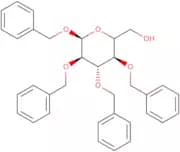
CAS:<p>1,2,3,4-Tetra-O-benzyl-a-D-mannopyranoside is an active drug that belongs to the group of thyromimetics. It is a prodrug that is hydrolyzed in vivo to 1,2,3,4-tetra-O-acetyl-a-D-mannopyranose. This drug has been shown to be effective in treating nervous system diseases such as sclerosis and endogenous disease. The acetylation of the benzyl group on this molecule prevents it from being metabolized by enzymes that are found in the liver. The unmodified form of this drug is rapidly absorbed into the blood and reaches high concentrations quickly.</p>Fórmula:C34H36O6Pureza:Min. 95%Forma y color:Clear LiquidPeso molecular:540.65 g/mol3-O-Methyl-α-D-glucopyranose
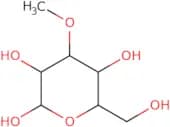
CAS:<p>3-O-Methyl-α-D-glucopyranose is a synthetic, fluorinated monosaccharide. This compound is a custom synthesis, and it can be used as an intermediate in glycosylation reactions. 3-O-Methyl-α-D-glucopyranose is typically used for the modification of polysaccharides by methylation or fluorination. It also has potential applications in the production of high purity sugar compounds.</p>Fórmula:C7H14O6Pureza:Min. 95%Peso molecular:194.18 g/mol5-O-tert-Butyldiphenylsilyl-2,3-O-isopropylidene-D-ribofuranose
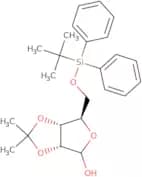
CAS:<p>5-O-tert-Butyldiphenylsilyl-2,3-O-isopropylidene-D-ribofuranose is a synthetic compound that is an inhibitor of adenosine deaminase. This drug has been shown to inhibit the synthesis of nucleic acids and other biological molecules such as amino acids and proteins. 5-O-tert-Butyldiphenylsilyl-2,3-O-isopropylidene ribofuranose is used in organic chemistry as a chiral analog for naturally occurring compounds such as adenosine. 5BPSSIROdR inhibits the enzyme adenosine deaminase by binding to its active site and preventing it from converting adenosine into inosine.</p>Fórmula:C24H32O5SiPureza:Min. 95%Forma y color:PowderPeso molecular:428.59 g/molD-Galactosamine hydrochloride
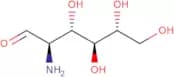
CAS:<p>D-Galactosamine (GalN) is an aldohexose (2-Amino-2-deoxygalactose) in which the hydroxyl group at position 2 is replaced by an amino group (Collins, 2006). Galactosamine (as the N-Acetyl derivative) forms a key part of both N- and O-linked glycoproteins, glycolipids and glycosaminoglycans. Treatment of experimental animals with D-galactosamine / lipopolysaccharide causes lethal liver injury characterized by apoptosis of the hepatocyte and it is used as a laboratory model to study the effect of therapeutic agents (Hirono, 2001).</p>Fórmula:C6H14ClNO5Peso molecular:215.63 g/molRef: 3D-G-1500
1gA consultar5gA consultar10gA consultar50gA consultar2500mgA consultar-Unit-ggA consultar4-Penten-1-yl 2,3,4,6-tetra-O-acetyl-b-D-glucopyranoside
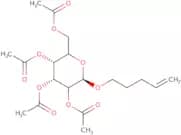
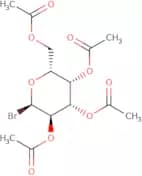
CAS:<p>4-Penten-1-yl 2,3,4,6-tetra-O-acetyl-b-D-glucopyranoside is a carbohydrate that is synthesized by the modification of an existing molecule. It is a custom synthesis and can be modified with click chemistry to create new compounds. This compound has a high purity and is soluble in water. It can be used for saccharide or polysaccharide synthesis as well as glycosylation reactions. This product's CAS number is 50256-33-2 and it has been assigned the chemical name Methylation, saccharide, Polysaccharide, Click modification, CAS No. 50256-33-2, Modification, Oligosaccharide, Custom synthesis, Glycosylation, High purity, Carbohydrate, sugar, Synthetic, Fluorination.</p>Fórmula:C19H28O10Pureza:Min. 95%Peso molecular:416.42 g/mol2,3,4,6-Tetra-O-acetyl-a-D-galactopyranosyl bromide - 2% CaCO3
CAS:<p>Donor for Koenigs-Knorr type galactosylation and other anomeric substitutions</p>Fórmula:C14H19BrO9Pureza:One SpotForma y color:PowderPeso molecular:411.2 g/molL-Arabonic acid-1,4-lactone
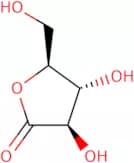
CAS:<p>L-Arabonic acid-1,4-lactone (LL) is the product of the reaction between L-arabinose and trifluoroacetic acid. LL is an enantiomer of D-arabinose and has a pK a of 6.5, which makes it a weak base. This compound has been shown to be a hydroxyl group donor in human liver and is also used as a chaperone for protein folding.</p>Fórmula:C5H8O5Pureza:Min. 95%Forma y color:White PowderPeso molecular:148.11 g/mol1-Chloro-2-deoxy-3,5-di-O-toluoyl-a-D-ribofuranose
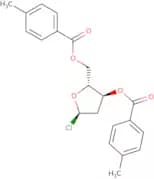
CAS:<p>1-Chloro-2-deoxy-3,5-di-O-toluoyl-a-D-ribofuranose (also known as Hoffer’s chlorosugar) is a synthetic building block used in nucleic acid research to afford an array of both alpha and beta linked 2’-deoxyribose derivatives. Naturally occurring nucleosides are typically beta linked and the efficient synthesis of alpha linked analogues, which are often more stable, offers access to interesting variations in 3D structure and biochemical reactivity.</p>Fórmula:C21H21ClO5Pureza:Min. 90 Area-%Forma y color:PowderPeso molecular:388.84 g/mol